There are some financial mistakes you can bounce back from. A bad stock pick, an impulse buy, even a holiday overspend. Then there is gambling away your retirement savings. That is a different category entirely. It is the kind of decision that sits with you long after the cards are gone and the screens go dark.
This is not a lecture. It is something closer to a reckoning. Across the United States and the world, millions of people are quietly making this exact mistake right now. Some know it. Many do not. Let’s dive in.
A Booming Industry With a Human Cost

The numbers behind gambling are staggering, and not in the way casinos like to advertise. U.S. commercial gaming revenue reached an annual record of $66.5 billion in 2023, according to the American Gaming Association’s Commercial Gaming Revenue Tracker. That is not a typo. Sixty-six billion dollars, in one year, from one country. Think about that number for a moment.
That total surpassed 2022’s previous high of $60.5 billion by roughly ten percent, marking the industry’s third straight record revenue year. The machine keeps growing. Sports gaming revenues in particular are exploding, with total sports betting revenue reaching $11 billion in 2023, a forty-six percent increase from the previous year.
Behind those glittering industry figures is a much quieter story. Every dollar the casino wins, someone lost. And for a growing number of people approaching retirement age, those losses are not coming from a fun budget. They are coming straight from the nest egg.
Where Does the Money Actually Come From?

Here is a question the gambling industry would rather you not ask: when people bet, what spending are they cutting to afford it? The answer, revealed by serious academic research, is deeply uncomfortable. In a study of millions of financial transactions by hundreds of thousands of U.S. households, researchers found that the money is overwhelmingly coming from funds that people used to use for savings and long-term investments.
Researchers found that legalization of sports betting reduces net investments by nearly fourteen percent. A rough calculation suggests that every one dollar of betting reduces net investment by just over two dollars. That is extraordinary. You are not just losing what you bet. You are losing twice that in long-term wealth potential.
This increase does not displace other gambling or consumption but significantly reduces savings, as risky bets crowd out positive expected value investments. These effects concentrate among financially constrained households, as credit card debt increases, available credit decreases, and overdraft frequency rises. Retirement savings are often the first casualty.
The Sports Betting Explosion and Older Adults

Sports betting used to require a trip to a physical location. Now it requires exactly one thumb movement. The vast majority of this money comes from online betting, where people can place bets by pushing a few buttons on their phone while lying in bed at two in the morning. That level of friction-free access changes behavior in ways people genuinely underestimate.
Sports betting has skyrocketed in popularity since the Supreme Court struck down a federal ban less than a decade ago, and Americans bet nearly $150 billion on sports in 2024, according to the American Gaming Association. Older adults have not been immune. The rate of gambling problems among sports bettors is at least twice as high as it is for other gamblers, according to the National Council on Problem Gambling.
One in five Americans placed a sports bet in the past twelve months, according to a NerdWallet survey. That is not a fringe behavior anymore. It is mainstream. And for anyone approaching retirement age with a fixed or finite pool of savings, every bet carries compounding risk that younger bettors simply do not face.
The Science of Loss Chasing: Why You Cannot Stop

Honestly, the hardest part to admit is that the losing streak itself becomes the trap. Loss chasing, the compulsion to keep betting in order to win back what you have already lost, is one of the most well-documented patterns in behavioral finance. It feels rational in the moment. It almost never is.
Researchers at UCLA and USC determined that access to legal online sports betting led to lower credit scores and higher rates of bankruptcies. That study examined credit bureau data of more than four million American consumers. Their results suggest that gambling legalization does harm consumer financial health.
In separate research papers, academics found that households in states where gambling was legalized saw significantly reduced savings, as well as lower investments in assets like stocks that are generally considered more financially sound. Meanwhile, states that legalized sports betting saw their residents’ aggregate credit scores decrease while bankruptcies increased. Loss chasing does not just feel bad. It shows up in the data, systemically, across millions of people.
Retirement Age Is Uniquely Vulnerable

Let’s be real: losing money in your twenties and losing money at sixty-three are completely different situations. A thirty-year-old can rebuild over decades. Someone approaching retirement has almost no runway left. Retirement is a moment when some are particularly at risk, especially of failing to adjust their betting in proportion to their lower income.
Older adults have less time and fewer financial resources to recover from social, financial, and particularly medical and psychiatric consequences resulting from disordered gambling. There is something quietly devastating about that sentence. Less time. Fewer resources. And the damage hits harder.
Older adults often live on fixed incomes such as pensions or retirement savings, leaving little room for financial mismanagement. Gambling losses can quickly erode their financial security, affecting their ability to cover essential expenses like housing, healthcare, and food. It is not an abstract risk. It is groceries and heating bills and doctor appointments.
The 4% Rule and Why One Bad Bet Breaks It

Financial planners have long relied on a simple guideline: the 4% rule is a guideline that many retirees use to estimate how much money they can withdraw each year without running out. Popularized in the 1990s, it states that you can safely withdraw 4% of your portfolio during your first year of retirement and then adjust for inflation after that.
The idea is that over the course of a thirty-year retirement, investment returns would offset some withdrawals. The 4% rule is designed to protect your portfolio and help make sure you never run out of money in retirement. By pulling out only 4% and allowing the rest to grow, you can budget a safe withdrawal rate for thirty years or more.
Now imagine pulling not four percent but fifteen or twenty percent in one impulsive gambling session. The math collapses completely. Retiring during a downturn, or in this case gambling away early withdrawals, can severely impact your savings. If your balance drops significantly, even your 4% withdrawal represents a larger slice of a now smaller pie, which can amplify losses. The damage compounds, quietly and without mercy.
Debt, Bills, and the Spiral Nobody Talks About
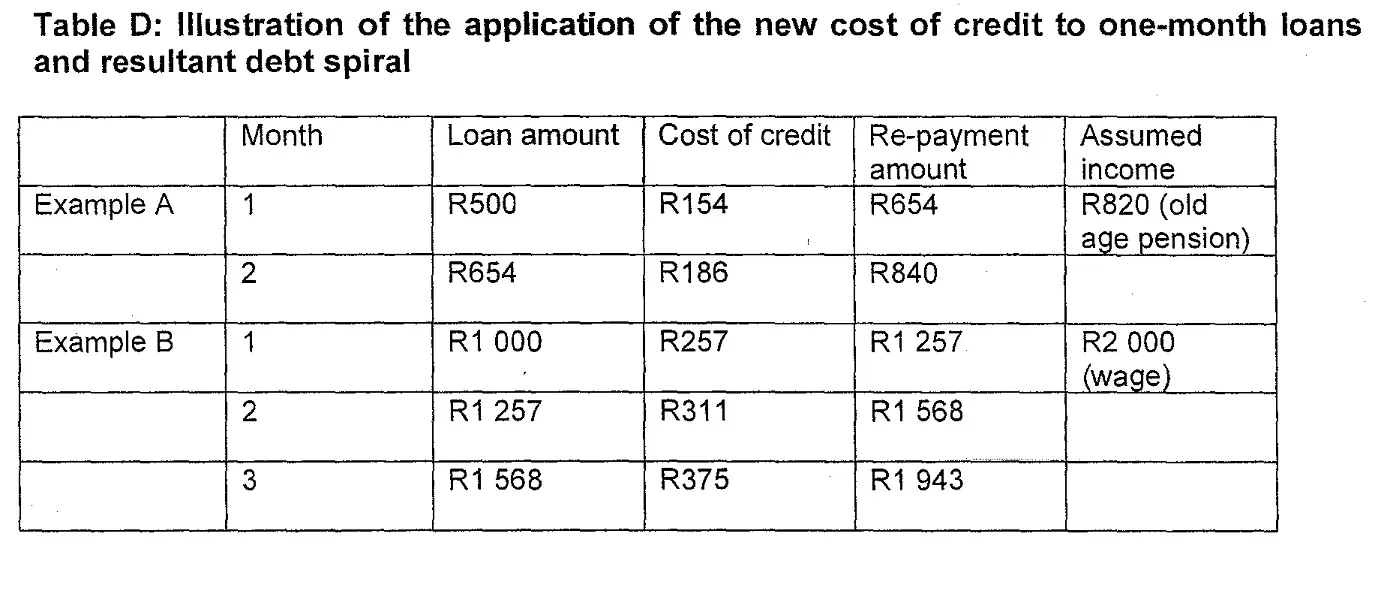
The financial wreckage of gambling rarely stops at the gambling itself. It spreads. One quarter of sports bettors say they have been unable to pay a bill because of wagers they made, and some say they bet their rent money on sporting events. Nearly a third of sports bettors say they have debts they attribute to gambling.
Over fifteen percent of sports bettors say they have taken out a personal loan to fund their wagers, and twelve percent have taken out high-interest payday loans to bankroll their bets. More than half of sports bettors say they carry a credit card balance from month to month. These are not fringe numbers from people in crisis. These are the averages across regular sports bettors in 2025.
Some studies have linked the burgeoning gambling industry to lower consumer credit scores, higher credit card debt, and less household savings. With access on their cellphones, gamblers can bet more often and easily than in traditional casinos, heightening concerns about problem gambling and the financial fallout. What starts as a game ends as a debt spiral, and retirement savings are often what gets liquidated to fill the gap.
The Psychological Trap: Gambling as Escape

It would be too simple to say people gamble out of greed. For many, especially older adults, something much deeper is happening. Late-life problem gambling may develop as vulnerable individuals gamble to escape anxiety and depression consequent to deteriorating physical well-being and social support.
A decline in income in retirement can be a factor which precipitates the passage from social gambling behavior to problem gambling. Gamblers may wish to make up for a loss of income through winnings from gambling by increasing their participation. It is a seductive trap. The casino feels like a solution to the exact problem it is making worse.
Older adults whose gambling involves emotional escape are more likely to develop disordered gambling patterns and encounter gambling-related harms. Older adults may experience specific age-related physical and social problems that increase anxiety and depressive symptoms, which can motivate gambling as the means to ease negative mood states. Understanding this pattern is the first step toward breaking it.
The Problem Gambling Numbers Are Bigger Than People Think

Most people assume problem gambling affects a small sliver of the population. The actual figures are more sobering. A 2022 review of studies across fourteen countries estimated an adult prevalence of problem or pathological gambling of roughly one and a quarter percent, and estimated that nearly two and a half percent of adults engaged in moderate risk or at-risk gambling.
The global gambling yield, the total amount of money lost by consumers to the gambling industry, is estimated to reach over five hundred thirty billion dollars by 2025. That is the money flowing in the wrong direction, away from savings, pensions, and retirement accounts, and into casino coffers.
Around sixteen percent of sports bettors say they worry they cannot control their gambling, and nine percent say they have already sought treatment for gambling addiction. One third of bettors say they have hidden sports betting debts from a loved one. Secrecy and shame are themselves warning signs. They keep the problem going far longer than it should.
What the Research Is Telling Policymakers (And What They Should Tell You)

There is a genuine tension at the heart of modern gambling policy. Governments simultaneously encourage saving for retirement while aggressively licensing and taxing gambling products. Many states have legalized sports gambling while also creating incentives for citizens to save more money for retirement. These two directives are in direct tension with each other, and money that goes toward gambling is being pulled away from savings.
One research team concluded that as legalized sports betting gains traction, it potentially undermines government efforts aimed at promoting savings through tax incentives and financial literacy programs. Think about the contradiction. The same government that nudges you toward your 401(k) is also licensing the app that drains it.
In light of research findings, academics argue it is imperative for policymakers to consider the broader financial implications of legalization. Targeted interventions, stricter regulation of gambling advertisements, and support for safer investment opportunities are described as crucial to protecting financially vulnerable populations. The recommendations exist. The political will to act on them, that is still catching up.
The Conclusion: Some Bets Are Never Worth Taking

There is no version of gambling your retirement fund that ends well. The house does not just have an edge. It has a structural, mathematical, psychological, and legal advantage over you in every single transaction. That is not opinion. That is how the product is designed.
The research from Northwestern, UCLA, USC, and the NBER all points to the same conclusion: gambling does not just take the money you bet. It takes the compounding returns on investments you never made, the credit score you needed for emergencies, and the savings cushion that was supposed to carry you through thirty years of retirement.
Retirement savings are not “extra” money. They are the product of decades of discipline and delayed gratification. Gambling with them is not a calculated risk. It is borrowing from your future self, with terrible terms and no repayment plan. If this article made you pause and think about someone you know, or even yourself, that is exactly the right reaction. What would you do differently if you could start over?