Most people have a mental image of “getting smarter” that looks suspiciously like a dusty classroom or a pile of dense textbooks with way too many footnotes. The truth is, some of the most brain-expanding books ever written read more like a good conversation than a lecture. Reading isn’t just a pastime – it’s an investment in your cognitive development, and the right books can spark new ideas, challenge your present beliefs, and broaden your perspective. The five books below don’t ask you to suffer through them. They pull you in, and before you know it, you’re sharper.
1. Thinking, Fast and Slow – Daniel Kahneman
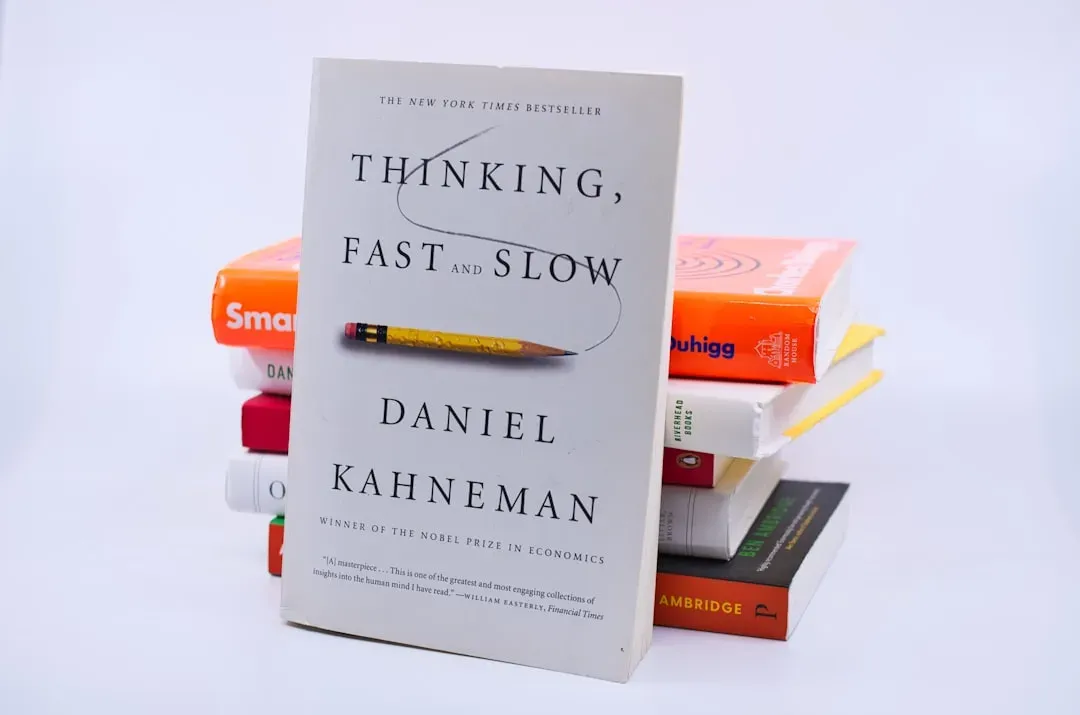
Thinking, Fast and Slow is a popular science book by Israeli-American psychologist Daniel Kahneman, and its main thesis is a differentiation between two modes of thought: “System 1” is fast, instinctive and emotional; “System 2” is slower, more deliberative, and more logical. The book delineates rational and non-rational motivations associated with each type of thinking process, and summarizes several decades of research to suggest that people have too much confidence in human judgment. It sounds like a psychology textbook on paper. In practice, it reads like a detective story about your own brain.
The book has sold more than 2.6 million copies, was selected as one of The New York Times Book Review’s ten best books of the year, and was chosen by The Wall Street Journal as one of the best nonfiction books of the year. As one of the most popular nonfiction books of its decade, it has generated a profound impact on politics, business, healthcare, and many scientific and scholarly fields. Kahneman’s prose is warm, full of anecdotes, and almost dangerously relatable – you will recognize yourself in every bias he describes, and that’s precisely the point.
2. Mindset: The New Psychology of Success – Carol S. Dweck
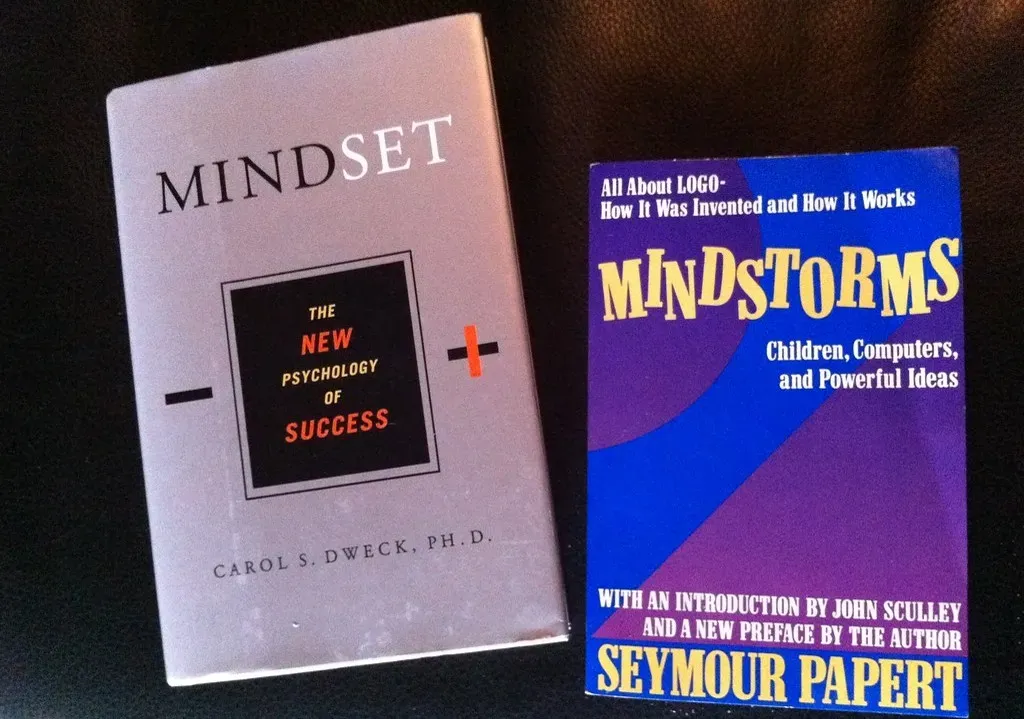
After decades of research, world-renowned Stanford University psychologist Carol S. Dweck discovered a simple but groundbreaking idea: the power of mindset. In this book, she shows how success in school, work, sports, the arts, and almost every area of human endeavor can be dramatically influenced by how we think about our talents and abilities. People with a fixed mindset – those who believe that abilities are fixed – are less likely to flourish than those with a growth mindset – those who believe that abilities can be developed. It’s a concept that sounds obvious once you hear it, and yet it rewires how you approach every challenge you face after reading it.
Dweck’s growth mindset framework has transformed educational and organizational approaches to learning and development by emphasizing persistence and effort over fixed ability beliefs. In a seminal study, Dweck and colleagues tested growth-mindset interventions among 1,594 students attending 13 high schools across the United States. The intervention was delivered in one to two class sessions, and at the end of the term, students at risk for high school dropout showed higher core academic GPAs and were more likely than control students to have completed core courses satisfactorily. The science is real, the writing is accessible, and the book never once makes you feel like you’re in a lecture hall.
3. Sapiens: A Brief History of Humankind – Yuval Noah Harari

Harari’s main argument is that Homo sapiens came to dominate the world because they are the only animal that can cooperate flexibly in large numbers. He argues that prehistoric H. sapiens were a key cause of the extinction of other human species such as the Neanderthals, and that the ability of H. sapiens to cooperate in large numbers arises from its unique capacity to believe in things existing purely in the imagination, such as gods, nations, money, and human rights. That’s the kind of framing that makes you put the book down just to stare at the ceiling for a moment. History never felt this sweeping or this personal before.
Harari describes the Scientific Revolution as an innovation in European thought whereby elites became willing to admit to and try to remedy their own ignorance, and he describes this as one driver of early modern European imperialism and of the current convergence of human cultures. It’s worth noting that some academics have raised concerns about Harari’s broad generalizations. Reviewing the book in The Washington Post, evolutionary anthropologist Avi Tuschman pointed out contradictions in Harari’s approach, but nonetheless wrote that “Harari’s book is important reading for serious-minded, self-reflective sapiens.” In The Guardian, philosopher Galen Strawson noted that “much of Sapiens is extremely interesting, and it is often well expressed.” Read it critically, and you’ll get even more out of it.
4. The Power of Habit – Charles Duhigg

The Power of Habit uncovers the fascinating science behind our habits and how they can be changed. Pulitzer Prize-winning reporter Charles Duhigg takes readers from the boardrooms of Procter & Gamble to the civil rights movement, presenting a whole new understanding of human nature and its potential. At its core, the book provides an exhilarating argument: understanding how habits work is the key to achieving success in life, business, and beyond. Most books about habits tell you what to do. This one actually explains why habits form in the first place – and that’s a very different thing.
The book offers strategies for positively reshaping habits, unlocking the potential for personal transformation. Duhigg walks through the “habit loop” – the cue, the routine, and the reward – with stories that are genuinely gripping rather than dry. Those who read and apply knowledge consistently show much higher improvement in critical thinking and problem-solving skills than those who engage with new ideas rarely or never. Duhigg makes applying that knowledge feel almost automatic – and if that’s not appropriate for a book about habits, nothing is.
5. Outliers: The Story of Success – Malcolm Gladwell

Outliers explores the world of high-achievers and what makes them different. Gladwell argues that we focus too much on successful people themselves and not enough on the unique culture, family, and experiences that set them apart. From software billionaires to great soccer players, Gladwell explores what factors contribute to exceptional success. The book is both entertaining and thought-provoking, making it a must-read for anyone interested in achieving greatness. It reads like a series of fascinating case studies, not like a self-help manual demanding anything of you.
Outliers is a comprehensive look at different successful people, from Bill Gates to the Beatles, and the book analyzes what sets them apart, then breaks it down for the rest of us. Gladwell’s central thesis forces you to rethink the mythology of individual genius – and once you’ve read it, you can’t quite look at success stories the same way again. Exposure to diverse ideas and narratives through reading enhances cognitive flexibility, and regular readers perform significantly better on divergent thinking tasks than non-readers. Outliers is exactly the kind of book that exercises that flexibility while keeping you fully entertained throughout.
Why These Books Work When Others Don’t

Reading strengthens intelligence, both in solving new problems (fluid intelligence) and in using what you’ve already learned (crystallized intelligence). The books on this list share a common quality: they are written by people who are deeply serious about ideas but who also respect the reader’s time and patience. The cognitive benefits of reading extend far beyond simple information acquisition, and contemporary research confirms that regular reading fundamentally reshapes brain architecture and enhances multiple dimensions of mental function. None of the five books on this list feel like obligations.
A 2023 survey by The Economist and YouGov shows that if you read just one book a year, you already read more than roughly 46% of Americans. That’s a striking fact – and it means the bar for gaining a meaningful intellectual edge through reading is genuinely low. Those who read regularly show significantly higher improvements in memory, critical thinking, and problem-solving skills compared to those who read rarely or never, and daily readers also report greater emotional intelligence and improved empathy. Each of the five books here rewards that modest investment many times over.