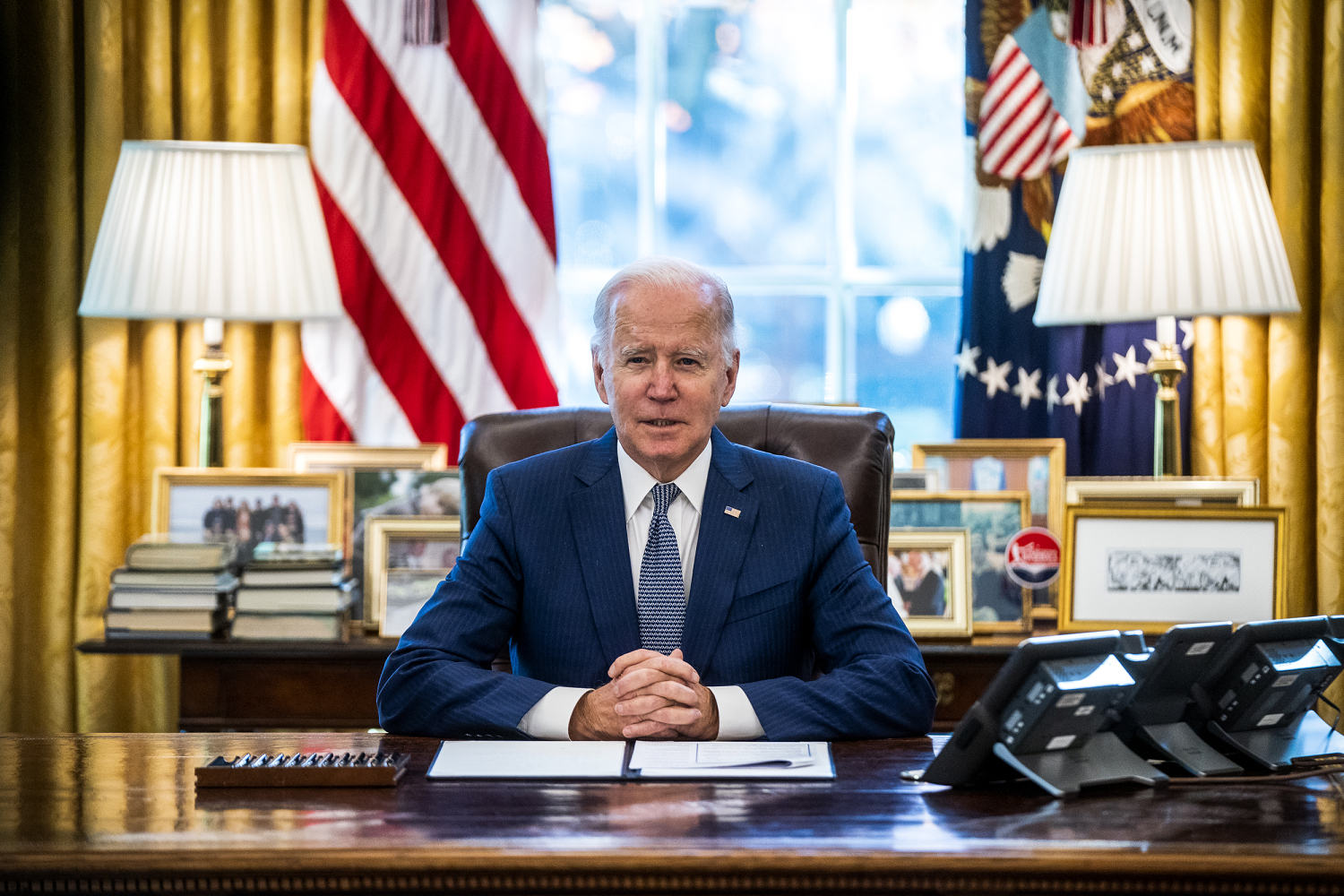
Trump’s Persistent Allegations Ignite Scrutiny (Image Credits: Media-cldnry.s-nbcnews.com)
Washington – The Justice Department shelved an investigation into former President Joe Biden’s reliance on an autopen for official signatures, a matter President Donald Trump had pressed for scrutiny.[1][2]
Trump’s Persistent Allegations Ignite Scrutiny
President Trump repeatedly accused Biden of using the mechanical signature device to mask cognitive decline. He demanded a broad inquiry in June into Biden and his aides, claiming they affixed autopen signatures without the former president’s awareness.[1]
The Republican-led House Oversight Committee echoed these concerns in an October report. Lawmakers deemed certain executive actions signed via autopen as illegitimate, arguing Biden’s mental state left him unaware of their contents. Trump later announced in November that he would cancel such orders from Biden’s tenure.[1]
Biden countered sharply in a June statement. “Let me be clear: I made the decisions during my presidency,” he declared. He insisted he personally approved pardons, executive orders, legislation, and proclamations, dismissing contrary suggestions as “ridiculous and false.”[1]
From Launch to Quiet Closure
Justice Department pardon attorney Ed Martin initiated the probe as interim U.S. attorney for the District of Columbia. The former “weaponization” czar handed it off amid his transition, and it continued under current U.S. Attorney Jeanine Pirro.[1]
Pirro, a longtime Trump supporter and former Fox News host, oversaw the effort’s wind-down in recent months. Prosecutors never presented the case to a grand jury, unlike other high-profile matters from her office.[1][2]
A person familiar with the matter highlighted the core obstacle. It proved difficult to pursue charges absent a clear, applicable criminal statute, leading to the investigation’s abandonment.[1]
Lack of Records Complicates Presidential Tool
Autopens have served presidents for decades, replicating handwritten signatures on documents. No official logs track their use, leaving the frequency of Biden’s reliance unclear.[1]
Veteran prosecutors expressed early doubts about viable evidence for charges. The New York Times reported that three sources confirmed the office’s inability to construct a case, underscoring internal hurdles.[2]
Pirro’s office declined comment, adhering to policy against confirming or denying probes. The White House directed questions to the Justice Department.[1]
A Wider Pattern of Unsuccessful Pursuits
This outcome fits a series of Justice Department efforts targeting Trump’s critics since his return to office. Prosecutors attempted charges against former FBI Director James Comey and New York Attorney General Letitia James, but a federal judge dismissed both cases in November.[1]
- Criminal subpoenas went to Minnesota officials, including Gov. Tim Walz and Minneapolis Mayor Jacob Frey, over alleged interference in immigration enforcement; no charges followed.
- Pirro’s office recently sought indictments against six Democratic lawmakers for a social media video advising military personnel against unlawful orders; a grand jury declined.
- Legal experts criticized the Minnesota inquiry as legally weak with free speech implications.
These setbacks highlight challenges in translating political directives into courtroom successes.[2]
Key Takeaways
- The autopen probe ended without charges due to no identifiable criminal statute.
- Trump allies led the effort, yet prosecutors deemed evidence insufficient.
- Biden maintained full control over his decisions, rejecting claims of impropriety.
The shelving of the autopen investigation reveals the limits of wielding federal probes against routine presidential practices. As legal boundaries persist, questions linger about accountability in high office. What do you think about the role of autopens in governance? Tell us in the comments.