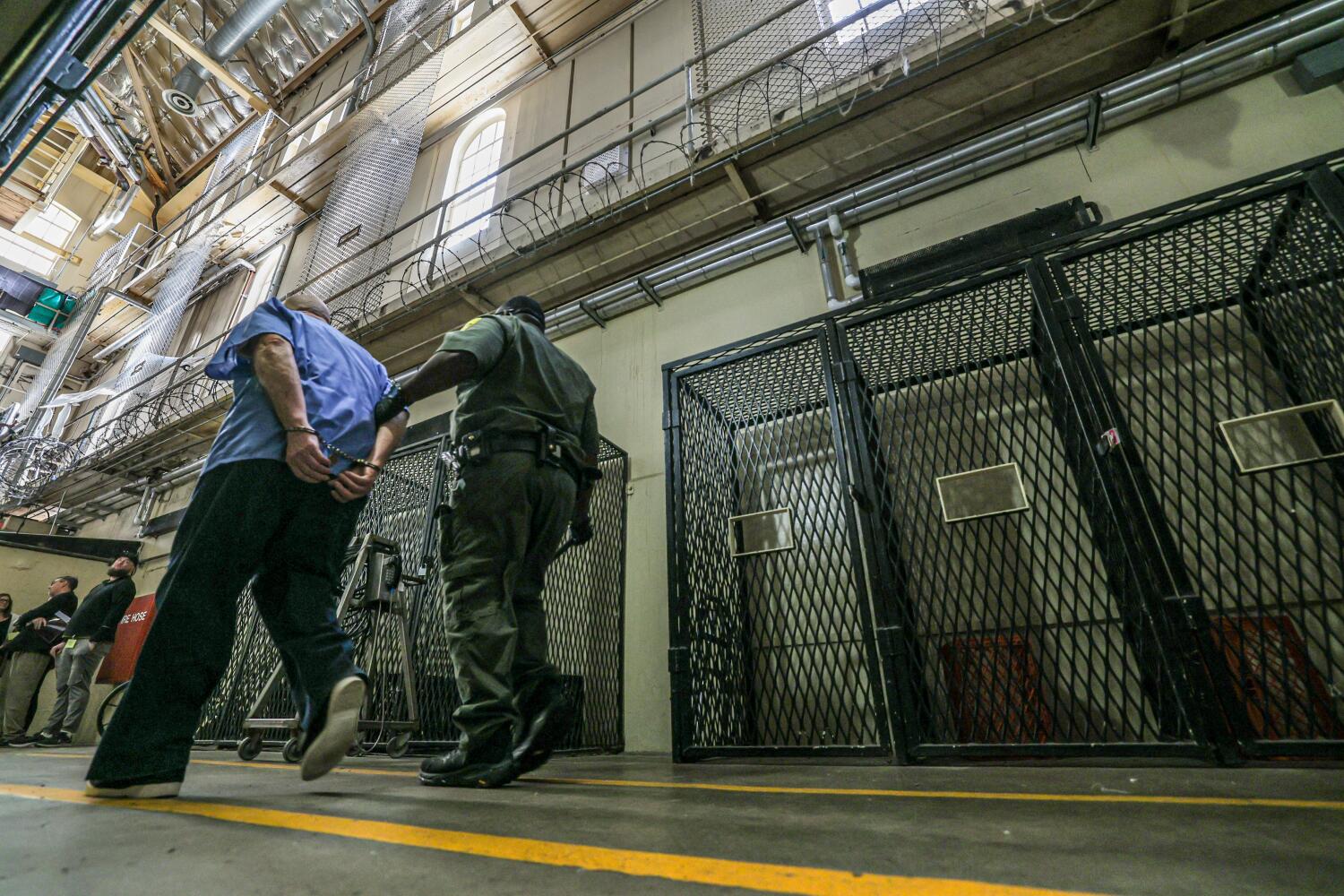
A Dramatic Turn Toward Rehabilitation (Image Credits: Ca-times.brightspotcdn.com)
California – Governor Gavin Newsom departs office having fundamentally altered the state’s approach to incarceration, prioritizing rehabilitation amid a sharp drop in prison populations.[1][2]
A Dramatic Turn Toward Rehabilitation
The state’s prison system shrank significantly under Newsom’s watch. Fewer inmates meant fewer facilities and redirected funds toward programs aimed at preparing people for release. Sentencing reforms from Newsom’s era and predecessor Jerry Brown contributed to low recidivism rates, with many resentenced individuals avoiding new serious crimes.[3]
Newsom suspended the death penalty in 2019 and ordered death row dismantled at San Quentin two years later. These moves symbolized a broader pivot. Resources poured into education, workforce training, and reentry support. Officials noted that 95% of incarcerated people eventually return to communities, prompting the question: What kind of neighbors will they become?[4]
Prison closures followed the population decline. Investments in rehabilitation promised long-term public safety gains. Studies showed participants in such programs experienced 43% lower recidivism, yielding taxpayer savings of $4 for every $1 spent.[5]
San Quentin’s Stunning Makeover
San Quentin emerged as the flagship of Newsom’s vision. The former death chamber gave way to the $239 million San Quentin Learning Center, unveiled in February 2026 after 18 months of construction. This 81,000-square-foot complex features three buildings: a technology and media center with podcast studios and coding classes, an education hub partnering with universities for high school and college courses, and a community space with a café and Bay-view classrooms.[5][4]
The design emphasized dignity, natural light, and green principles, tripling classroom space in a campus-like setting. Incarcerated residents and staff contributed input. Broader site upgrades include new housing in the old East Block, expanded recreation, and art installations. Newsom described it as turning a symbol of the old system into the crown jewel of a new one.[5]
Supporters hailed the changes. Darrell Steinberg, former Senate leader, called it an even broader definition of justice. Union leader Neil Flood praised it as more than bricks and mortar, bringing hope to corrections.[5]
Expert Voices from the CalMatters Panel
CalMatters hosted a panel on February 25, 2026, at the Los Angeles Central Library to debate the system’s evolution. Moderated by reporter Joe Garcia, it featured Los Angeles County District Attorney Nathan Hochman, Heidi Rummel of the Post-Conviction Justice Project, and corrections veteran Dave Lewis.[1]
- Rummel stressed hope’s power: “The power of hope really can move mountains and I’ve seen it in so many people I’ve worked with.” She advocated releasing those trapped by outdated, racist 1980s sentencing.
- Hochman, after visiting San Quentin, shifted views: “Even people who… should remain in prison the rest of their lives, that doesn’t mean we shouldn’t invest in them while they’re in prison so they maybe can do something productive.”
- Lewis urged rethinking prisons: “We can prevent the next victim from happening by providing opportunities.”
The discussion balanced victim justice with offender growth. Panelists agreed environments fostering change deter future crime.[2]
What Lies Ahead for California’s Justice System
Newsom’s tenure ends soon, leaving uncertainty. Will the next governor sustain these investments amid budget pressures and crime debates? Tough-on-crime sentiments persist, yet evidence supports rehabilitation’s effectiveness.
Key changes include:
- Suspension of the death penalty and death row closure.
- Prison population reductions and facility repurposing.
- $2.1 billion in public safety spending since 2019, with violence prevention grants.
- Expansion of the California Model to other prisons, prioritizing staff wellness and programming.
Key Takeaways:
- Rehabilitation cuts recidivism and boosts public safety.
- San Quentin now models nationwide innovation.
- Future leaders must weigh evidence against political pressures.
Newsom’s reforms challenge old paradigms, proving accountability and compassion align. As California eyes its next chapter, the choice between recycling problems or fostering change looms large. What do you think about the shift? Tell us in the comments.