Every generation thinks it has discovered science fiction. Then it picks up one of these books and realizes the genre was always several steps ahead. Sci-fi has never just been about spaceships or robots – at its core, it has always been about us: our fears, our ambitions, and the civilizations we might one day become or destroy.
In audiobooks alone, science fiction combined with fantasy holds the largest share of sales among all audiobook categories, generating over $1.6 billion in revenue in 2021. The numbers only keep climbing. In the UK, the Science Fiction and Fantasy category generated nearly £25 million more in value sales compared to 2023, showing year-on-year increases across all territories. People are hungry for these stories. Honestly, I think that says everything.
So which novels earned their permanent place at the top? Let’s dive in.
1. Dune by Frank Herbert (1965)

If any single novel deserves the title of Mount Everest in science fiction, it is Dune. Dune is the best-selling science fiction novel of all time, and the series is considered a classic of the genre. That is not a minor achievement. That is the whole conversation.
Dune is a 1965 epic science fiction novel by Frank Herbert, originally published as two separate serials in Analog magazine. It tied with Roger Zelazny’s This Immortal for the Hugo Award for Best Novel and won the inaugural Nebula Award for Best Novel in 1966. Two major awards right out of the gate.
The manuscript was rejected by nearly twenty book publishers. One editor prophetically wrote, “I might be making the mistake of the decade, but…” Sterling E. Lanier, an editor of Chilton Book Company, had read the Dune serials and offered a $7,500 advance for the rights to publish them as a hardcover book. The rest, quite literally, is history.
Dune won the inaugural Nebula Award for Best Novel and the Hugo Award in 1966 and was later adapted into a 1984 film, a 2000 television miniseries, and a three-part film series, with the first film in 2021, a sequel in 2024, and a confirmed third movie coming out in 2026. Its cultural reach shows absolutely no signs of stopping.
2. 1984 by George Orwell (1949)
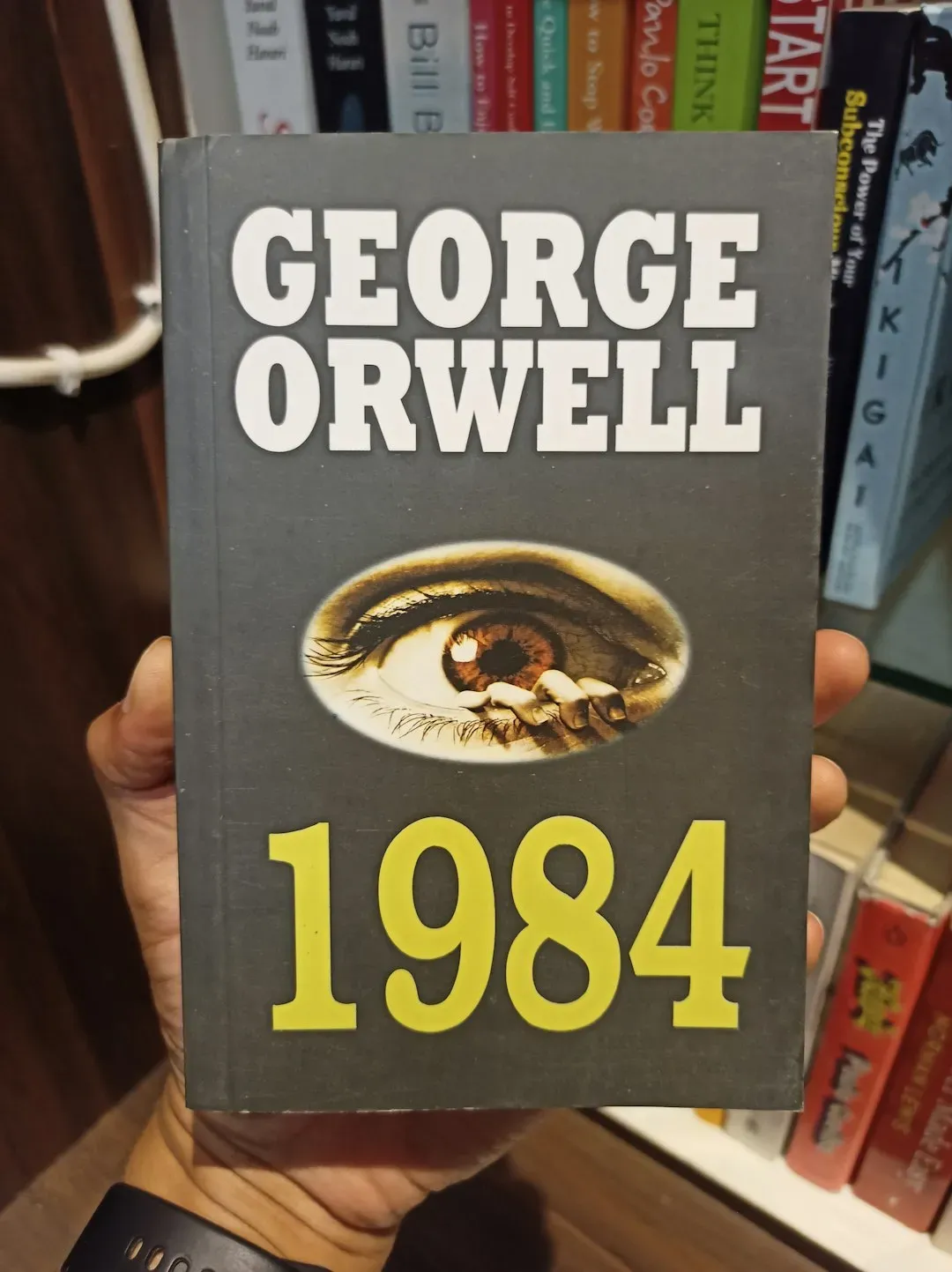
There are books that predict the future. Then there is 1984. Orwell’s dystopian masterwork has become so culturally embedded that we literally use its vocabulary in everyday conversation – “Big Brother,” “doublethink,” “thoughtcrime.” That is an almost unheard-of level of linguistic influence for a novel.
One of the towering books in the dystopian genre, 1984 has sold more than 30 million copies, and its haunting themes are why. The entire show Big Brother takes its name from the panopticon of government in this novel. A television format named after a book character. Let that sink in.
Titles like 1984 remain relevant due to their critiques of surveillance and authoritarianism, aligning with contemporary political climates. In 2026, this feels less like a warning from the past and more like reading the news. That is either impressive or terrifying, depending on your mood.
3. Foundation by Isaac Asimov (1951)
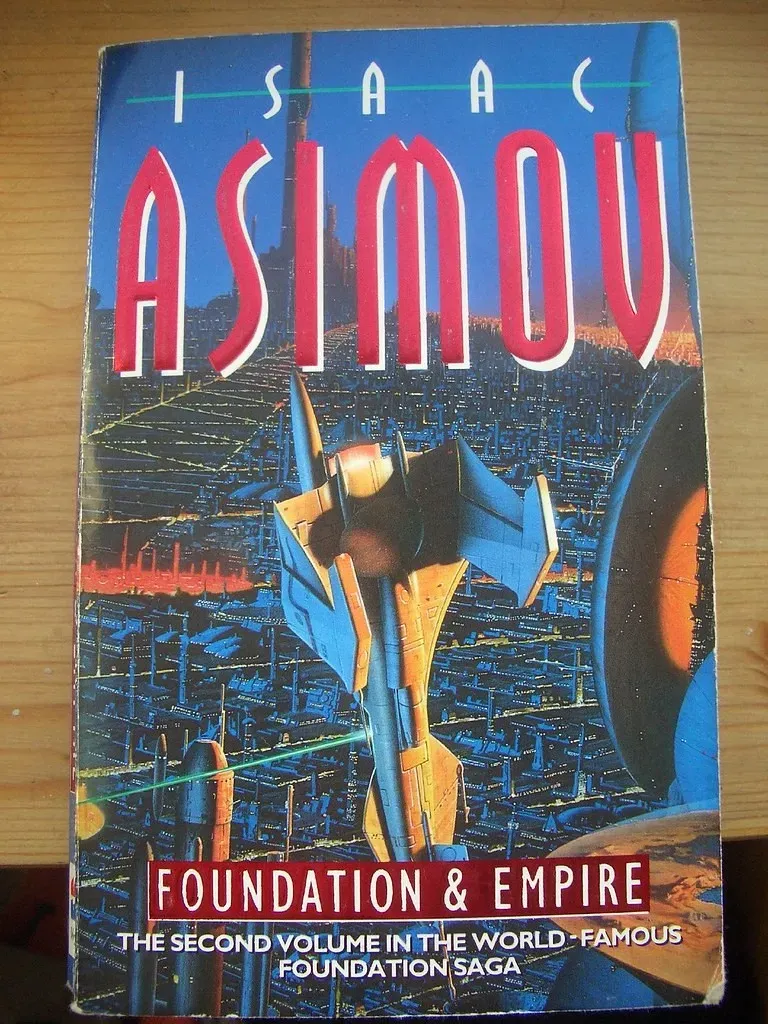
Isaac Asimov essentially invented the idea of writing epic civilizational science fiction on a truly galactic scale. Foundation is not just a novel. It is the blueprint for an entire genre. Think of it as the original “universe-building” project, decades before anyone coined that phrase.
Asimov is a prolific author known for the Foundation series and the Robot series. His works have had a significant and lasting impact on the genre. Understated, but fair. The Foundation series has now been adapted into an Apple TV+ series, proving its stories remain compelling to entirely new generations.
The first novel in Isaac Asimov’s classic science-fiction masterpiece, the Foundation series was nominated as one of America’s best-loved novels by PBS’s The Great American Read. It sits comfortably on that list alongside literary giants that have nothing to do with spaceships. That tells you something important about the novel’s literary weight.
4. The Hitchhiker’s Guide to the Galaxy by Douglas Adams (1979)
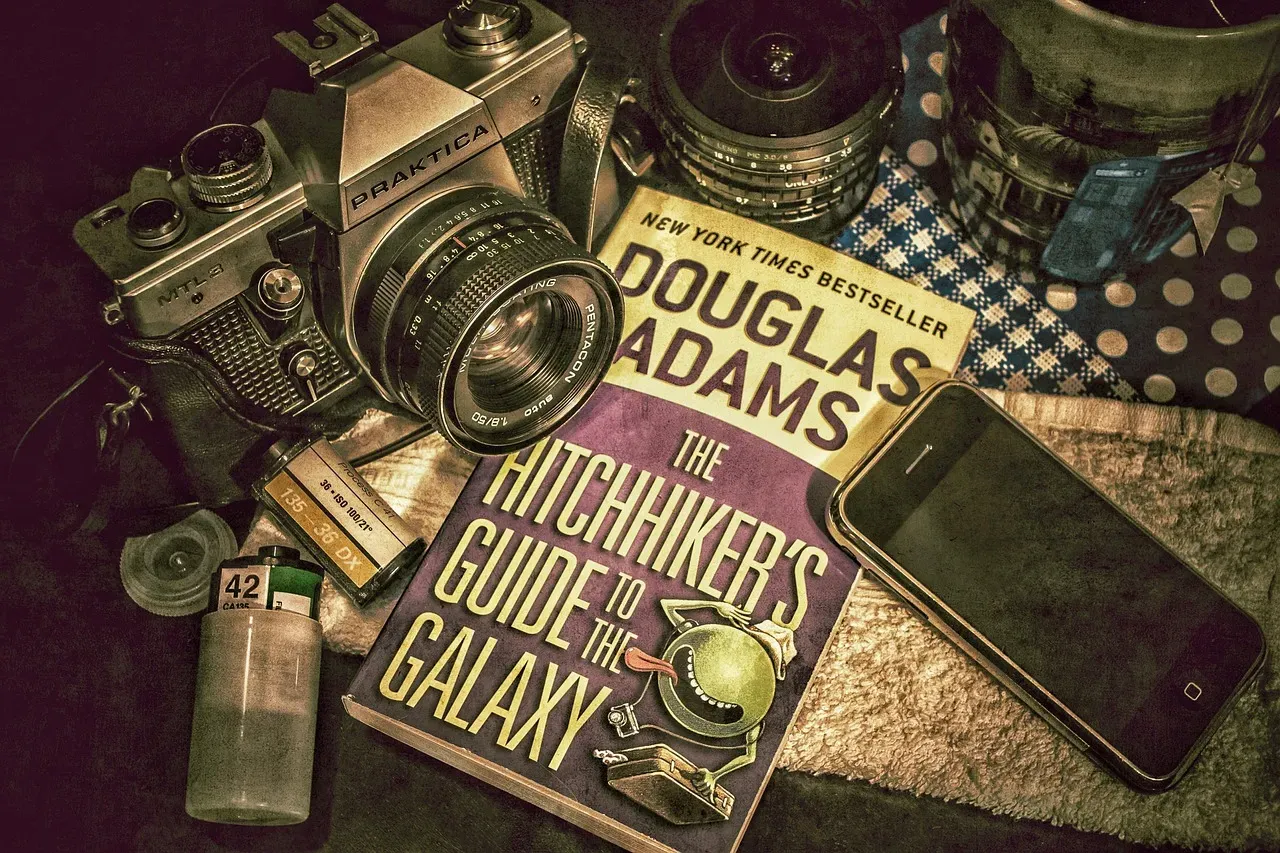
Here is the thing about Douglas Adams – he snuck genuine philosophical depth inside one of the funniest books ever written. The answer to life, the universe, and everything is 42. Absurd? Yes. Also somehow satisfying? Absolutely, yes.
Originally a BBC radio comedy before becoming a novel, the book has sold in enormous quantities and spawned a multimedia franchise spanning radio, TV, film, stage, and games. Neal Stephenson and others have followed in combining science fiction with broader cultural and technological themes, but Adams was doing this with pure comedy decades before it became fashionable.
The Hitchhiker’s Guide remains one of the most recommended introductory sci-fi books precisely because it is so accessible, and yet it quietly dismantles humanity’s cosmic self-importance in every chapter. That is a genuinely difficult trick to pull off. Adams made it look effortless.
5. Brave New World by Aldous Huxley (1932)
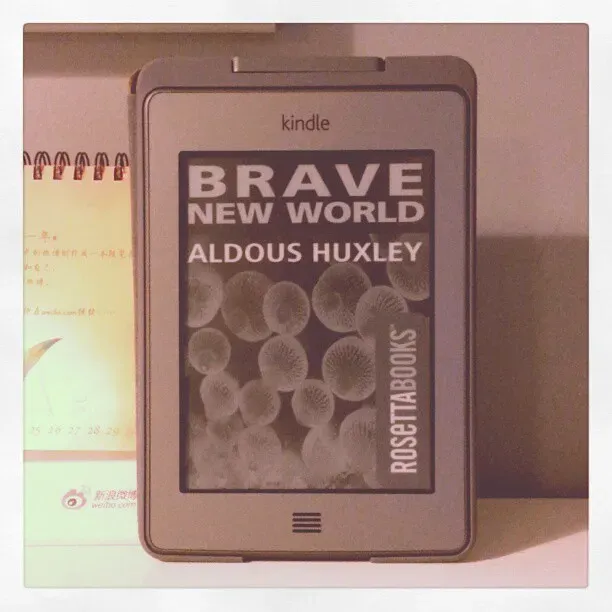
If 1984 is the nightmare of the state forcing you into misery, Brave New World is somehow more unsettling – it is the nightmare of people choosing their own comfortable cage and calling it happiness. Brave New World is a dystopian novel by English author Aldous Huxley, written in 1931 and published in 1932. Nearly a century old, and it has never felt more relevant.
The novel explores a future society built around consumerism, conditioning, and engineered contentment. There are no tyrants in the traditional sense. Everyone is just… fine. Pacified. Which is arguably more frightening than outright oppression. Huxley essentially predicted the smartphone era in the 1930s, and that is not an exaggeration.
The debates between Orwell’s vision and Huxley’s vision – control through pain versus control through pleasure – have been a staple of political and cultural commentary for decades. Neither seems to have definitively won that argument, which perhaps says everything about the world we now actually live in.
6. Fahrenheit 451 by Ray Bradbury (1953)

Fahrenheit 451 is regarded as Ray Bradbury’s greatest work. The novel is about a future society where books are forbidden, and it has been acclaimed for its anti-censorship themes and its defense of literature against the encroachment of electronic media. You have to appreciate the irony of a book about burning books becoming one of the most celebrated books of all time.
Bradbury was the recipient of the 2000 National Book Foundation’s Medal for Distinguished Contribution to American Letters and the 2007 Pulitzer Prize Special Citation, among numerous other honors. Few genre writers have received that level of mainstream literary recognition.
What makes Fahrenheit 451 truly special is how it is not really about firemen or flames at all. It is about intellectual surrender. About a society so addicted to distraction that it voluntarily dismantles its own capacity for critical thought. I think Bradbury himself might have been shocked at how closely today’s attention economy mirrors his fictional one.
7. Neuromancer by William Gibson (1984)
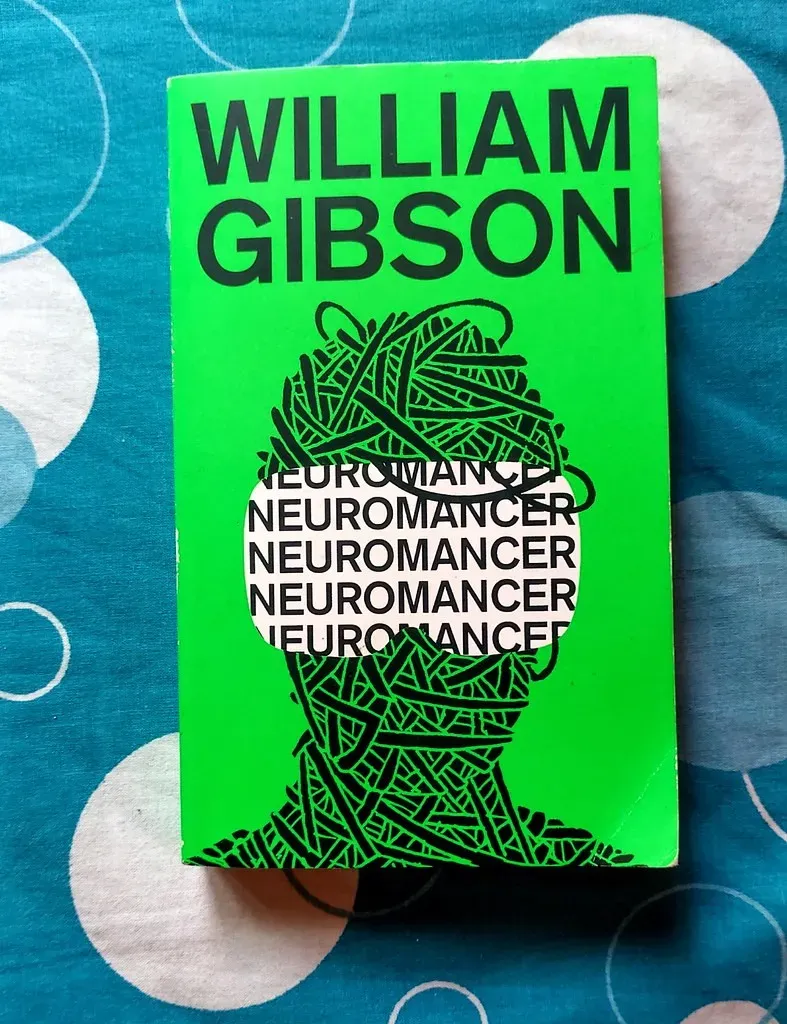
William Gibson pioneered the cyberpunk subgenre with Neuromancer, a seminal work in the genre known for its influence on technology and culture. That influence is almost incalculable. Every hacker movie you have ever seen, every neon-drenched sci-fi city, every “jacking into the network” metaphor – Gibson got there first.
Published the same year as the Apple Macintosh and the first commercial internet connections, Neuromancer described a world of data, corporate power, and digital identity that readers at the time found fantastical. Decades later, it reads less like fiction and more like a technical manual with better prose.
Gibson invented the term “cyberspace” in this novel. A word that billions of people eventually used to describe their daily reality. That is the kind of cultural footprint that goes beyond genre. It is the kind of thing that happens maybe once or twice in a century of literature.
8. Ender’s Game by Orson Scott Card (1985)
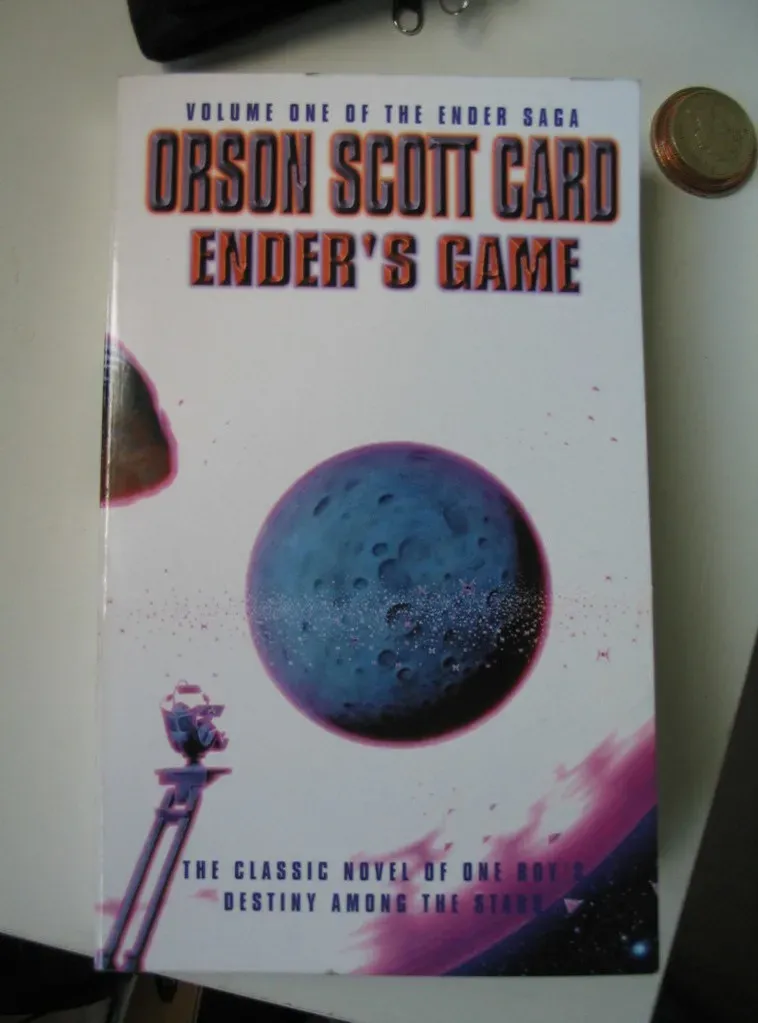
Ender’s Game won the Nebula Award for Best Novel in 1985 and the Hugo Award for Best Novel in 1986, considered the two most prestigious awards in science fiction. Sweeping both major awards in consecutive years is an achievement that very few novels have ever managed.
Reception of the book has been largely positive, and it has become suggested reading for military organizations such as the United States Marine Corps. That is a remarkable real-world crossover for a science fiction novel. Military strategists using a sci-fi book as training material is not something that happens every decade.
Card achieved an unprecedented “double-double” when the sequel, Speaker for the Dead, duplicated the Hugo and Nebula sweep the following year. Two books, back to back, each winning both major awards. The genre has never quite seen anything like that before or since. Ender’s Game is confrontational, morally complex, and genuinely uncomfortable – which is exactly why it endures.
9. The Left Hand of Darkness by Ursula K. Le Guin (1969)

Ursula K. Le Guin did things with science fiction that nobody else dared attempt. The Left Hand of Darkness was a quiet revolution – a novel that explored a planet populated by humans with no fixed biological sex, and in doing so, forced readers to confront every assumption they had ever made about gender, politics, and identity.
It won both the Hugo and Nebula Awards in 1970 and is widely considered one of the most important works in 20th-century American literature. Not just science fiction. All of literature. Le Guin built entire anthropologies in her novels – full cultures with languages, religions, and social structures – with the precision of an academic and the soul of a poet.
Ursula K. Le Guin’s gender-bending classic of interplanetary diplomacy is frequently recommended as one of the best sci-fi books of all time. That recommendation has not faded at all since the book’s publication, and if anything, the conversations it sparks feel even more culturally urgent in 2026 than they did in 1969.
10. Slaughterhouse-Five by Kurt Vonnegut (1969)

Kurt Vonnegut did not write a conventional war novel or a conventional science fiction novel. He somehow wrote both at once, mixed them together with dark humor and genuine grief, and created something that resists every attempt at categorization. “So it goes.” Two of the most devastating words in all of American fiction.
Goodreads members have voted Slaughterhouse-Five onto lists including Best Books Ever and Books That Everyone Should Read At Least Once. The phrase “voted on by readers” matters here. This is not just critical acclaim – it is a book that ordinary people return to, decade after decade, because it still hits differently every time.
The time-travel elements in Slaughterhouse-Five are not decoration. They are the point. The fractured, non-linear structure of Billy Pilgrim’s experience reflects the way trauma actually works on the human mind. Vonnegut smuggled a profound psychological insight into a sci-fi framework. That takes real genius, honestly.
11. Do Androids Dream of Electric Sheep? by Philip K. Dick (1968)

Philip K. Dick asked questions that philosophy departments are still arguing about today: What separates a human being from a sophisticated imitation of one? Where does empathy begin and end? If a being can simulate emotion perfectly, does the simulation become real? These are not small questions. They are the central questions of the AI era we are now living in.
Philip K. Dick is famous for mind-bending and thought-provoking works like Do Androids Dream of Electric Sheep?, which inspired the Blade Runner film. Blade Runner has become one of the most visually influential films in cinema history, and every frame of it traces back to Dick’s original novel.
Remarkably, Dick spent much of his life in near-poverty and was not considered a mainstream literary figure during his lifetime. Today, his ideas are embedded in popular culture so deeply that most people absorbing them have no idea they come from a struggling science fiction writer who died in 1982. That feels deeply, tragically ironic.
12. The Martian Chronicles by Ray Bradbury (1950)
The Martian Chronicles depicts Earth’s colonization of Mars, which leads to the extinction of an idyllic Martian civilization. In the face of oncoming nuclear war, many of the settlers return to Earth, and after Earth’s destruction, a few surviving humans return to Mars to become the new Martians. As a premise, that is staggeringly ambitious for a book published in 1950.
Best known alongside Fahrenheit 451, The Martian Chronicles is one of the most celebrated 20th-century American works of science fiction and horror. The two books together established Bradbury as the poet laureate of American science fiction, a title nobody has seriously challenged since.
What makes The Martian Chronicles unusual is its elegiac tone. This is not triumphant space exploration literature. It is melancholic, deeply aware of human failure, and shot through with the kind of nostalgia that makes you miss a place you have never been. It is, in the most precise sense, beautiful – something that hard science fiction rarely manages to be.
13. Snow Crash by Neal Stephenson (1992)

Neal Stephenson is renowned for novels such as Snow Crash and Cryptonomicon, combining science fiction with historical and technological themes. Snow Crash is the one that changed everything. It introduced the concept of the “Metaverse” in 1992 – a virtual-reality successor to the internet where people interact through digital avatars.
The fact that technology companies in the 2020s have spent billions of dollars attempting to build something that looks exactly like Stephenson’s fictional Metaverse is a testament to how precisely he imagined the future. Whether they succeeded or not is a separate debate. That this novel inspired genuine corporate billion-dollar investment is simply astonishing.
Snow Crash also introduced the concept of the “avatar” as a digital representation of a person. That word is now used billions of times per day by people who have probably never heard of Stephenson. Alongside Gibson’s “cyberspace,” Stephenson gave the digital age two of its most defining vocabulary words. That is an almost incomprehensible linguistic legacy for two novelists.
14. Hyperion by Dan Simmons (1989)

Hyperion is the science fiction equivalent of Chaucer’s Canterbury Tales – a group of pilgrims travelling to a mysterious, deadly destination, each telling their own story along the way. The structure is immaculate. The execution is overwhelming. It is a book that rewards patience in ways that almost no other sci-fi novel does.
It won the Hugo Award for Best Novel in 1990 and is consistently ranked among the greatest science fiction novels ever written by readers and critics alike. The Shrike – the enigmatic, terrifying entity at the heart of the story – is one of the most genuinely frightening creatures in all of literature. Not just genre fiction. All literature.
Simmons built a universe so rich and internally consistent that readers coming to it decades later often describe the experience as discovering an entire civilization, not just a novel. The subsequent books in the series have their fans and detractors, but the original Hyperion stands completely alone. It is one of those books that makes you understand why people become science fiction readers in the first place.
15. The War of the Worlds by H.G. Wells (1898)
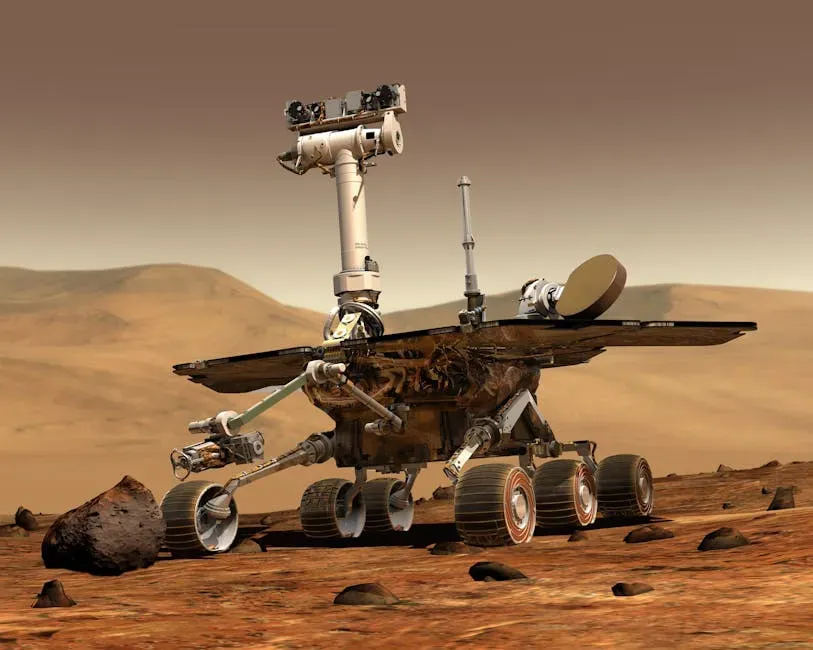
H.G. Wells is often referred to as the father of science fiction. His classics like The War of the Worlds and The Time Machine laid the foundation for the entire genre. It is a phrase that gets overused in literary commentary, but in Wells’ case it is simply accurate. Without him, this entire list might not exist.
Published in 1898, The War of the Worlds described a Martian invasion of England with such visceral realism that when Orson Welles adapted it for a 1938 radio broadcast, a portion of the American public famously believed it was genuine news. No other science fiction novel has ever provoked a real-world panic at that scale. It remains, to this day, the most socially disruptive piece of genre fiction ever produced.
The science fiction genre has produced numerous best-selling books, driven by cultural relevance, film adaptations, and critical acclaim. Key trends include the dominance of dystopian narratives, space exploration themes, and the enduring popularity of classic novels. Wells started nearly all of those trends over 125 years ago, and they have never stopped. That is legacy on a scale that is genuinely hard to comprehend.
A Genre That Refuses to Stand Still
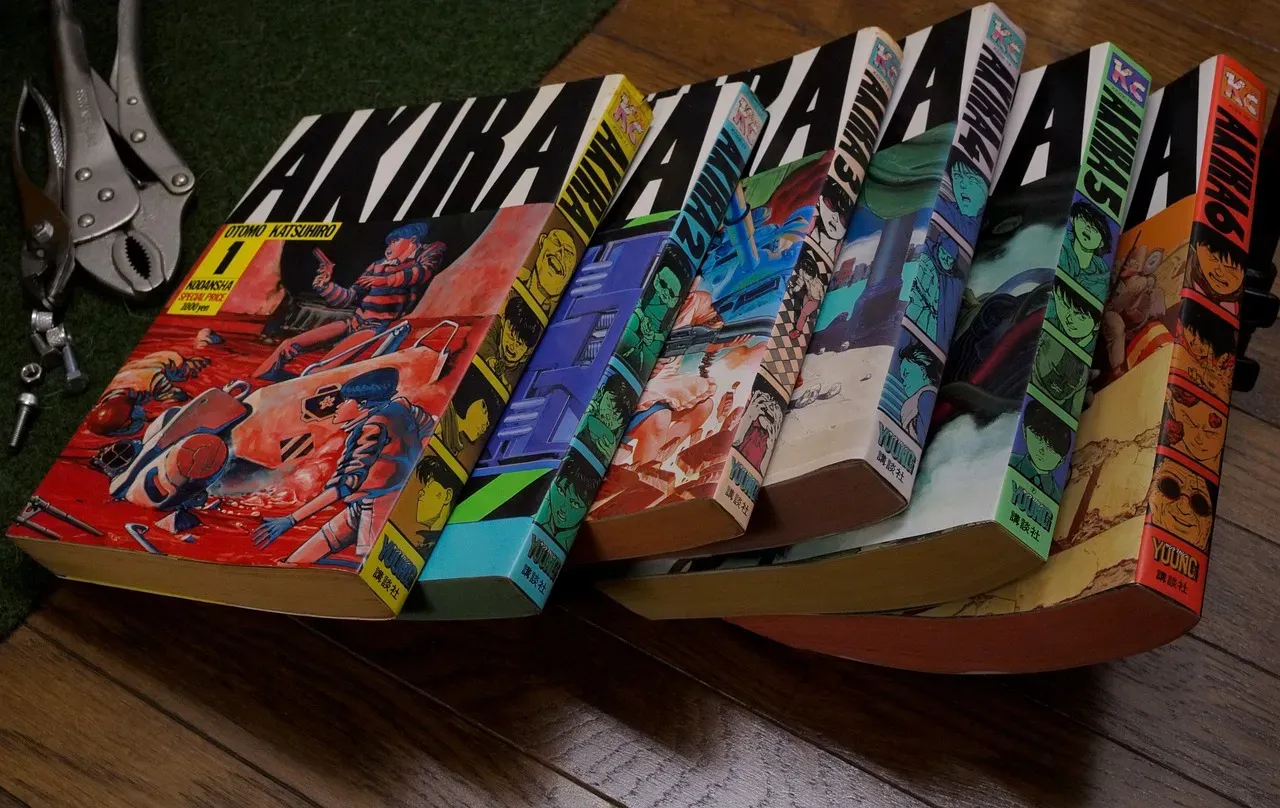
What is remarkable about this list is how these books span more than a century of human imagination, and yet every single one of them speaks to questions we are still wrestling with today. Surveillance. Identity. What it means to be human. Environmental collapse. The seduction of comfort over freedom. These are not dated concerns.
The science fiction genre has seen significant growth over the past decade, driven by diverse storytelling, Afrofuturism, and the intersection of technology with social commentary. New voices are entering the genre constantly, and the best of them are building on the foundations laid by every novel on this list.
Science fiction, at its finest, is the literature of consequence. It asks: if we keep going in this direction, where do we end up? The fifteen novels above answered that question in ways that have shaped culture, technology, politics, and language for generations. That is not something most literary fiction can claim.
So – do you agree with this list, or is there a novel that absolutely should have made it here? The debate, as always with science fiction, is half the fun.