There is something almost voyeuristic about reading the private writings of history’s most powerful figures. Stripped of their public performances and carefully crafted speeches, they become human again – uncertain, funny, petty, brilliant, and sometimes heartbreaking. These pages were never meant for your eyes. That is precisely what makes them so fascinating.
History has a way of flattening real people into marble statues. Diaries crack the marble wide open. So let’s dive in.
Samuel Pepys: The Man Who Saw Everything and Wrote It All Down
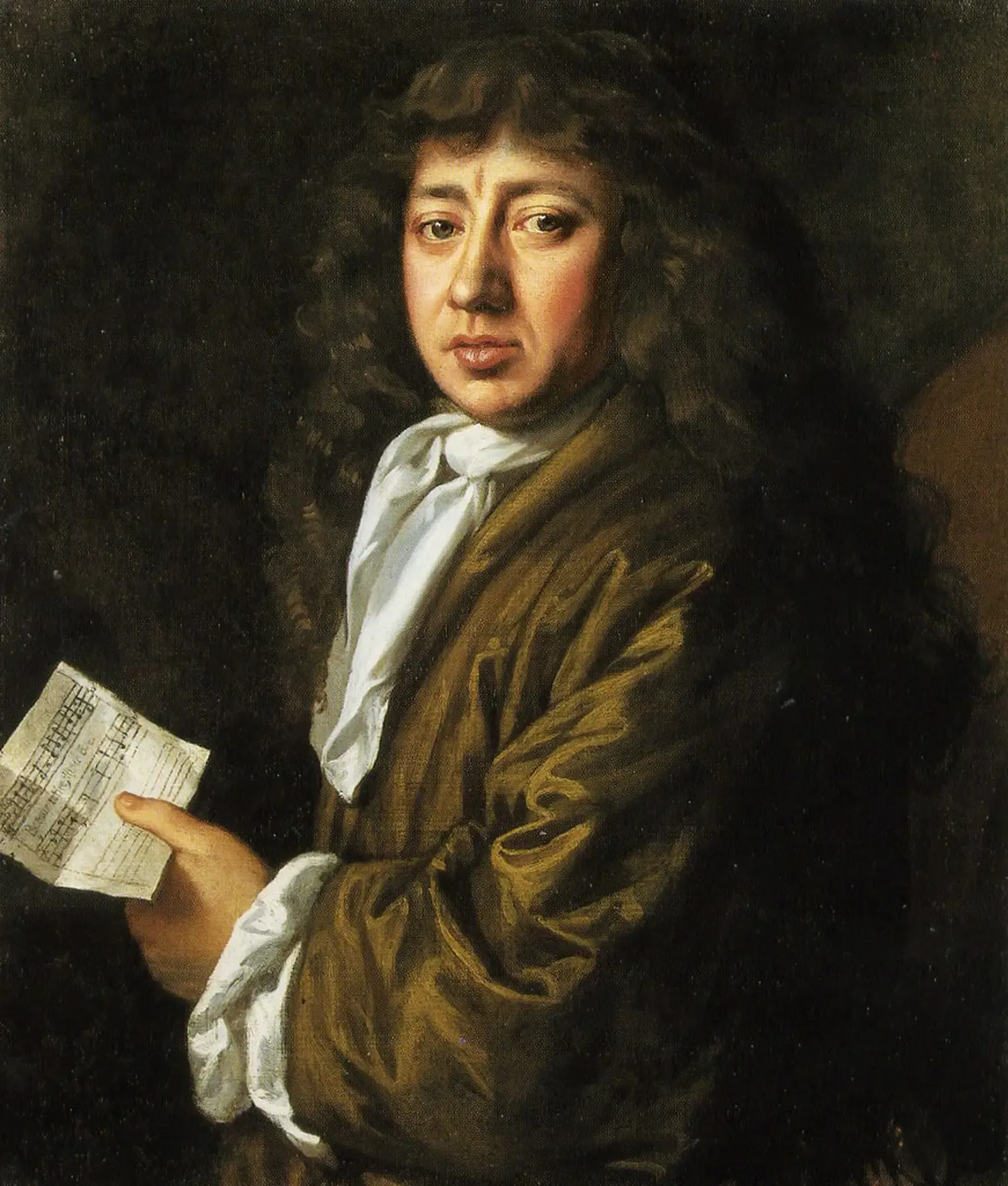
The detailed private diary that Samuel Pepys kept from 1660 until 1669 was first published in the 19th century and is now considered one of the most important primary sources of the Stuart Restoration. Here was a man who was, in the grand scheme of things, a mid-level English civil servant – and yet he had the sharp eyes and restless curiosity of a journalist born four centuries too early. Honestly, the world got lucky.
The diary was not intended for publication but served as a personal reflection on his daily experiences from 1660 to 1669. Pepys’s use of shorthand allowed him to express unfiltered thoughts and observations, including both major historical events such as the Great Fire of London and the Plague, and the minutiae of his personal life. He wrote about buying wigs, sneaking wine during Lent, attending theatre, and watching London burn with equal measures of drama.
By using a shorthand system, Pepys was able to put a great amount of information to paper in a short space of time, and secrecy may have been an advantage too – his wife Elizabeth would not have had knowledge of the shorthand. His diary is also an important source for our understanding of the development of the English language, and is cited over 1,700 times in the Oxford English Dictionary.
Written by English politician Samuel Pepys between 1660 and 1669, the diary was first published in 1825 to much critical fanfare. Providing firsthand accounts of epoch-defining Restoration era episodes like the Great Fire of London and the city’s bubonic plague outbreak, Pepys’s meticulously crafted journals went on to become an indispensable primary source for historians of England’s Stuart Restoration.
Abraham Lincoln: Private Notes in His Hat
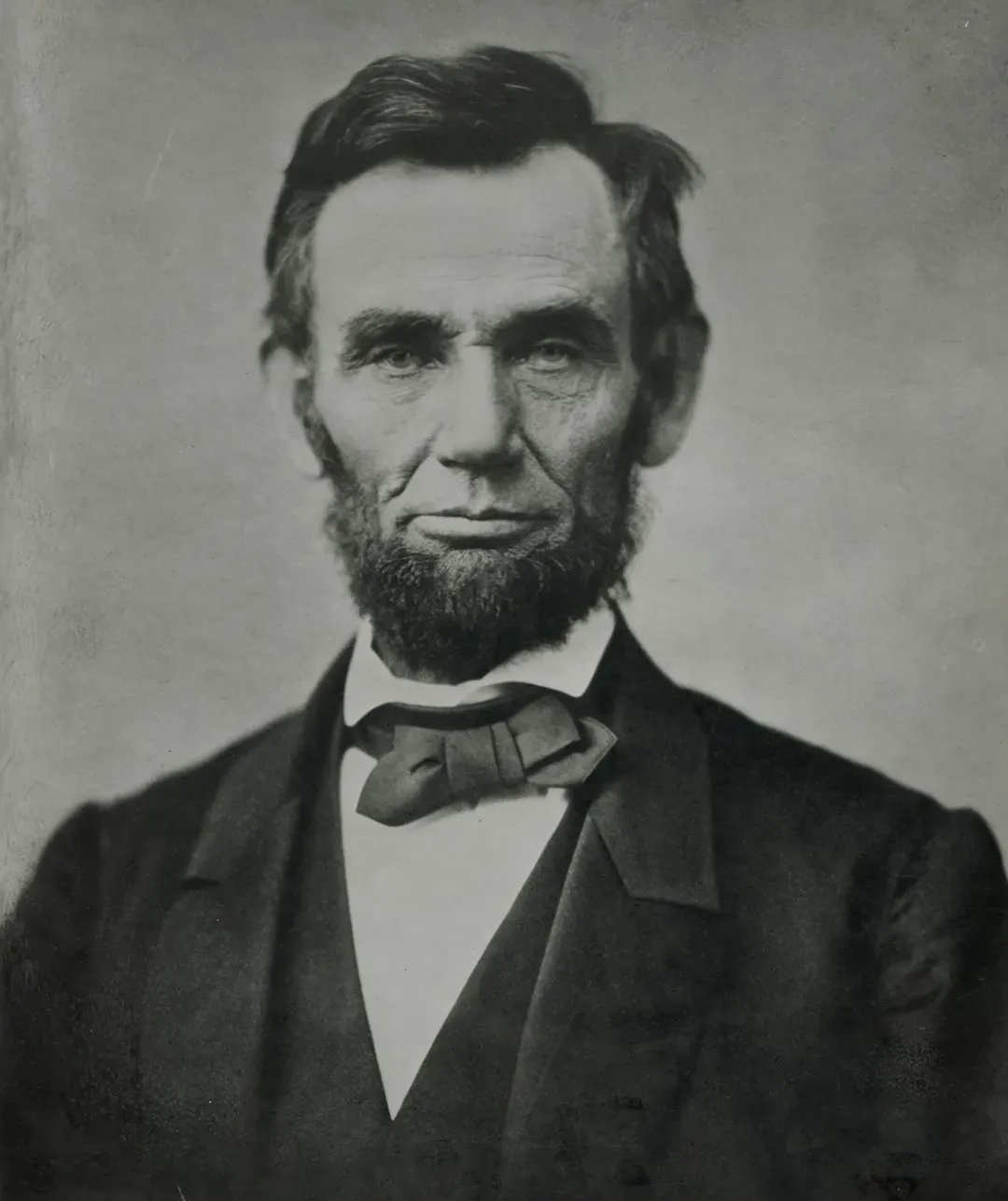
Lincoln never kept a traditional diary. Full stop. Abraham Lincoln did not keep a diary; however, there are many other primary sources that can be examined to better understand his thoughts and reflections. What he did instead was something arguably more intimate – and more revealing.
A deeply private man, closed off to even those who worked closely with him, Abraham Lincoln often captured what he called his “best thoughts” in short notes to himself. He would work out personal stances on the biggest issues of the day, never expecting anyone to see these frank, unpolished pieces of writing, which he’d then keep close at hand, in desk drawers and even in his top hat.
After Lincoln’s assassination in 1865, his secretaries John Nicolay and John Hay found and saved many of these notes. Lincoln did not title, date, or sign his ruminations, yet there was never a question about the author – the slain president’s distinctive handwriting made for easy identification. Nicolay and Hay dutifully included these jottings in their twelve-volume Complete Works of Abraham Lincoln, published in 1894.
Struggling with a keen sense of failure and deeply wounded by his defeat in a bid for a Senate seat, Lincoln confessed his feelings in a note he never expected anyone to see. It read: “Twenty-two years ago Judge Douglas and I first became acquainted. We were both young then; he a trifle younger than I. Even then, we were both ambitious; I, perhaps, quite as much so as he. With me, the race of ambition has been a failure – a flat failure.” Few moments in presidential history feel so raw.
Harry S. Truman: Blunt, Unfiltered, and Occasionally Furious
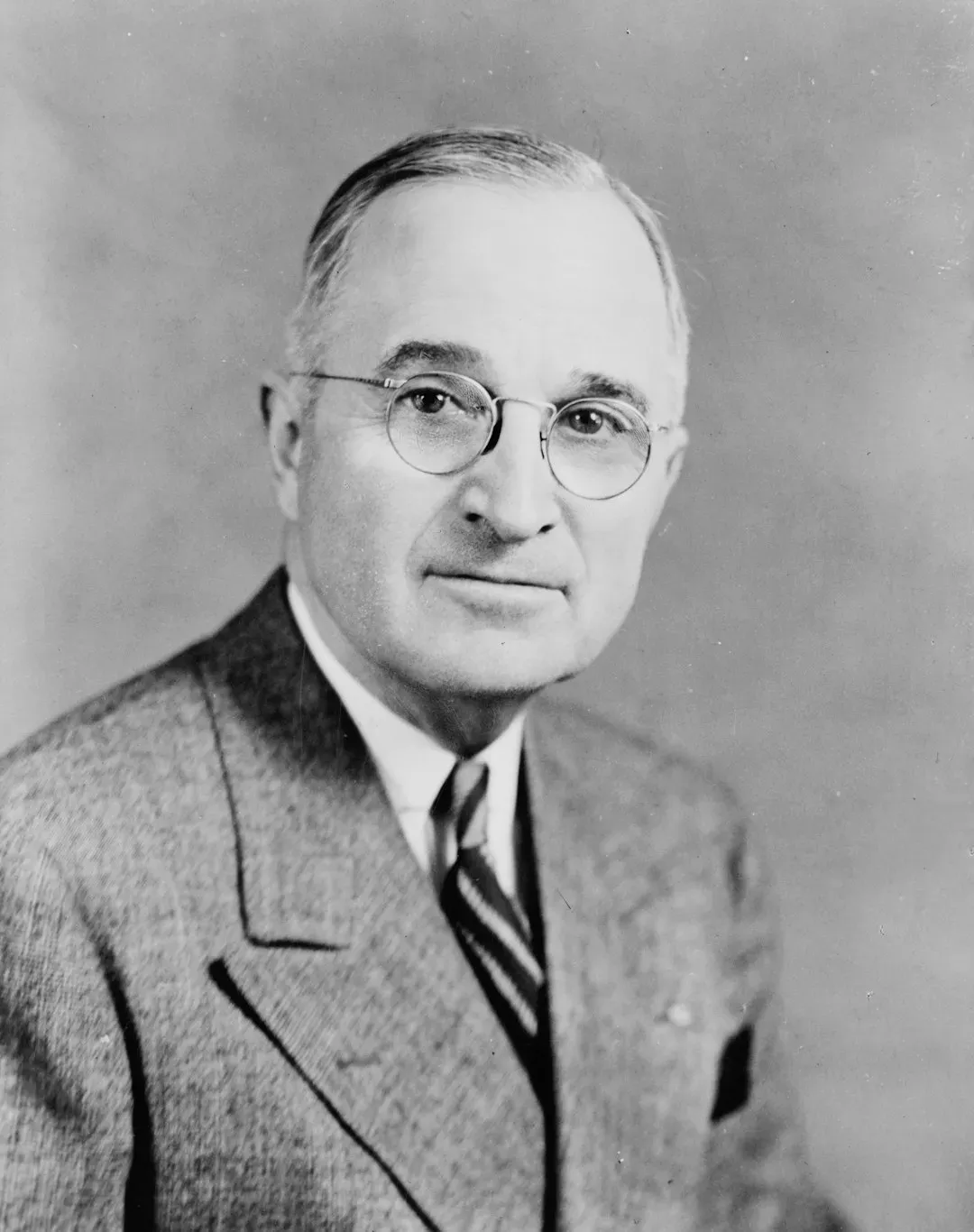
If Lincoln was guarded, Truman was the opposite. His private papers read like the thoughts of a man who had zero patience for pretense and even less for diplomatic niceties. Think of him as the world’s most powerful person who also wrote angry letters he usually did not send.
Historian Robert Hugh Ferrell compiled the book from a newly opened collection of several hundred boxes of Truman’s papers that had been recently moved to the Harry S. Truman Presidential Library and Museum in Independence, Missouri. The material consists of diary entries and memoranda, mostly handwritten and informal, as well as personal letters, many of which were never sent because of Truman’s habit of writing when angry, to let off steam.
Much of the material deals with Truman’s feelings about the political and military decisions he faced, such as the use of the atomic bomb. About two-thirds of the book covers the years of his presidency, 1945 to 1953. His assessments of other world leaders included references to Joseph Stalin, whom he privately described as someone he nonetheless “liked.”
Of that momentous decision to drop the bomb, Truman wrote: “We have discovered the most terrible bomb in the history of the world…This weapon is to be used against Japan between now and August 10th.” Tellingly, while he acknowledged the destructive power of nuclear weapons, Truman’s diaries show that the Commander-in-Chief had no hesitation in ordering its use. The gap between public composure and private conviction is rarely more striking.
Winston Churchill: The War Diary Hidden in Scribbled Shorthand
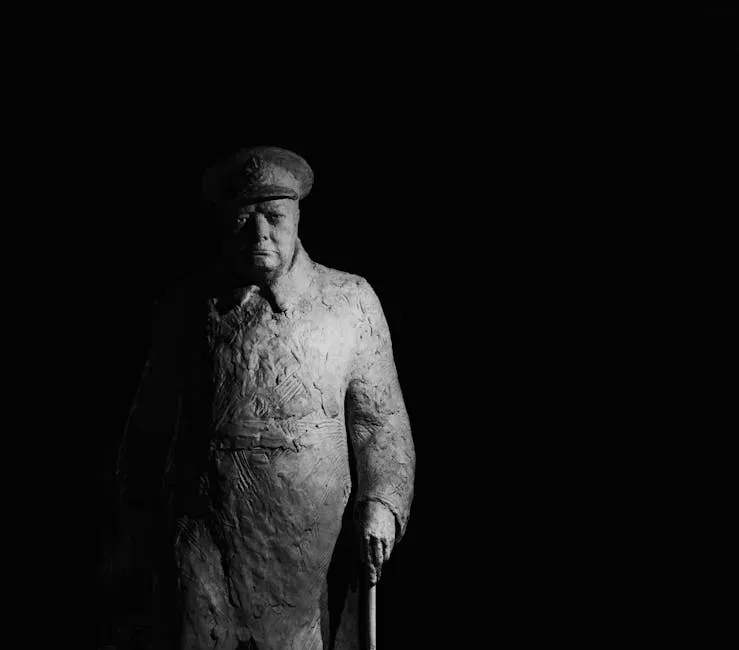
Churchill was many things – orator, war leader, writer, painter, and brick-layer in his spare time. He was also, it turns out, someone whose daily movements were tracked with remarkable precision in a wartime engagement diary now considered a treasure trove of historical data.
Winston Churchill’s World War II engagement diary covering 1939 to 1945 is the subject of a major digital history project. A calendar entry written in italicized shorthand and faded black ink reads: “6:00 Gen. Sikorski (Private Door),” dated November 14, 1939. The innocuous appointment in Churchill’s calendar is a window into the underground tactics he and others took in resistance to Adolf Hitler and Nazi Germany in the early days of the war.
Hidden gems of historical significance and humor are sprinkled throughout the diary. Churchill’s wartime engagement diary, which covers his daily schedule from 1939 to 1945, is filled with thousands of entries. Lunches next to mobilization orders. Tea times squeezed between invasion strategies. The sheer normality of it all, amid total war, is almost incomprehensible.
Published in October 2012 by Bloomsbury Publishing in collaboration with the Churchill Archives Centre, the Churchill Archive is a digital library of modern international history, including more than 800,000 original documents produced between 1874 and 1965. The full scope of what Churchill committed to paper across his lifetime remains staggering.
Charles Darwin: The Voyage Journal That Changed Everything
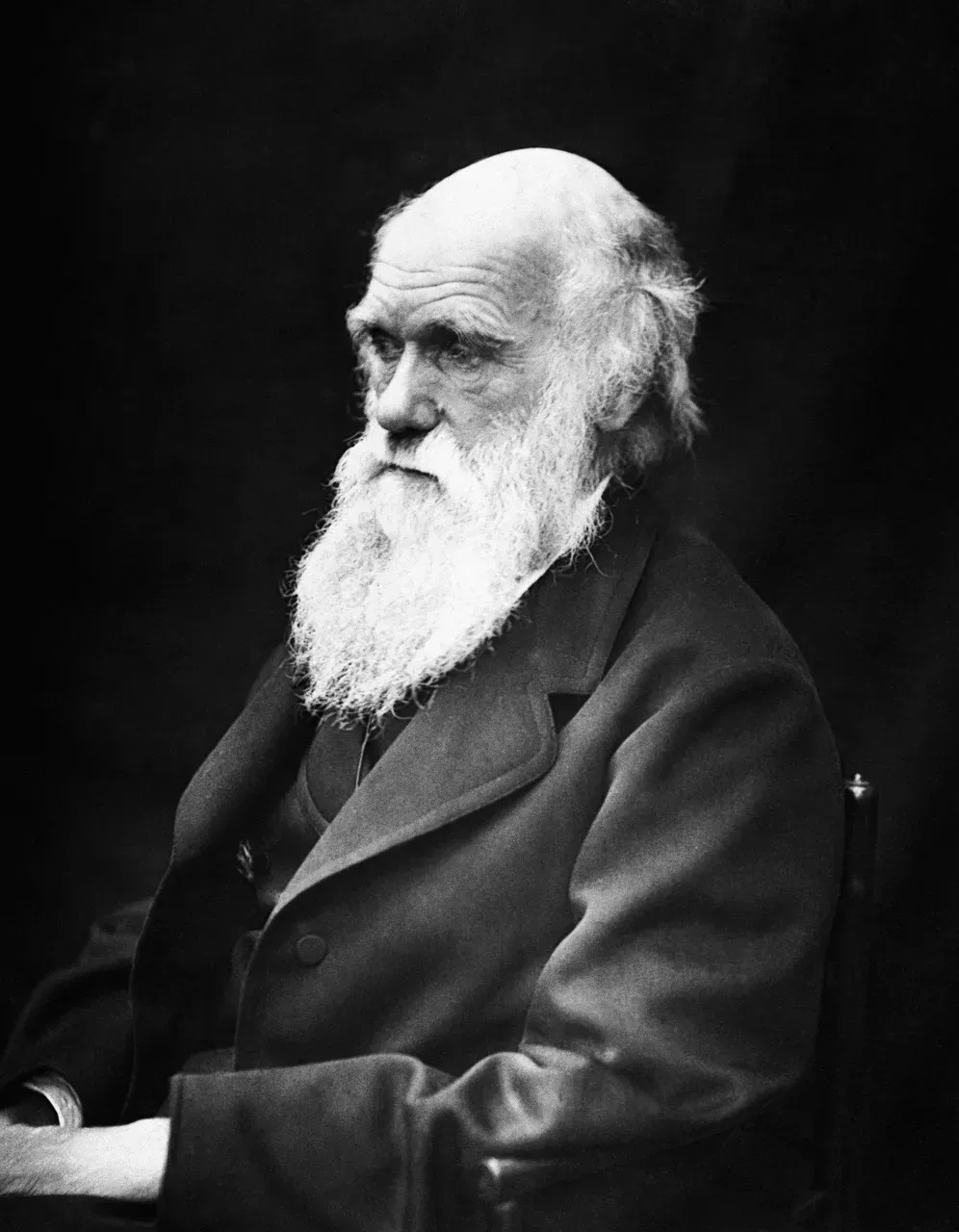
Most people know Darwin for the theory. Far fewer know that his journals from the HMS Beagle voyage are among the most extraordinary scientific diaries ever produced. They read like adventure, written by a man who had no idea yet that he was about to upend biology forever.
Charles Darwin’s diaries provide crucial insights into his scientific thought process and discoveries. His most famous voyage aboard the HMS Beagle revealed observations that would later form the basis of his theory of evolution by natural selection. Darwin kept meticulous notes across years at sea, recording everything from earthquakes to the texture of ocean mud.
It is not all science, however. In his diaries, Darwin also provides a unique document shedding light on everything from South American politics to what it was really like being away at sea for months at a time. In one notable entry, he recalls a close shave with a certain General Rosas, a bloodthirsty military leader in Patagonia, while at other times Darwin simply uses the pages of his journal to praise the beauty of the starry night sky or of the Andes mountains.
Famed British naturalist Charles Darwin was a dedicated archivist. He kept what he called a “little diary” of notable events in his personal and professional life, beginning at the age of 29 by backtracking and recording everything of his life that he remembered up to that point, then continuing to update the diary until months before his death in 1881.
George Orwell: Diaries of a Man Who Was Always Watching
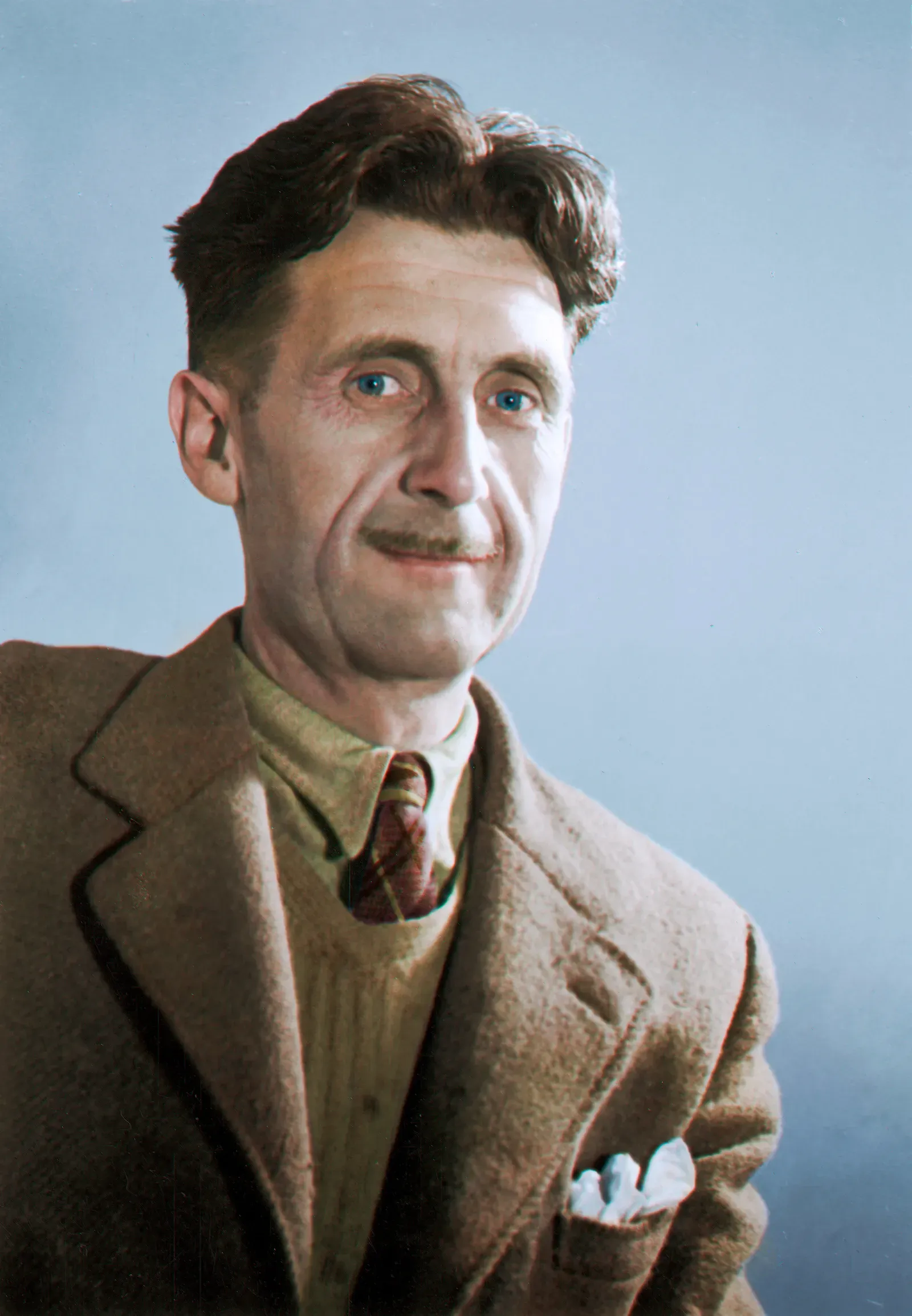
George Orwell is remembered for his fiction. His diary, however, reads almost like a draft of that fiction – scribbled observations of a world coming apart at the seams, recorded with ice-cold clarity. It is worth every sentence.
Known for his sharp critiques of totalitarian regimes and social injustices, George Orwell’s diaries touch on everything from everyday life in mid-20th-century Britain to his experiences during the Spanish Civil War. He was someone who watched the world the way a doctor examines a patient – constantly, carefully, and without flinching.
Orwell began documenting his observations during the Spanish Civil War, remarking on the chaos and lack of authority control, which deeply influenced his political writings, reflected later in works like “Homage to Catalonia.” The connection between what he saw in the streets and what ended up on the page in his novels is direct and unmistakable.
He wrote of seeing the wreckage of several houses on his way to the grocery and noted the strange speed of human adaptability during wartime London. It is a chilling image – bombs and grocery lists in the same morning. Orwell had a gift for making the extraordinary feel terrifyingly mundane.
Marie Curie: Notebooks So Radioactive They Are Still Dangerous
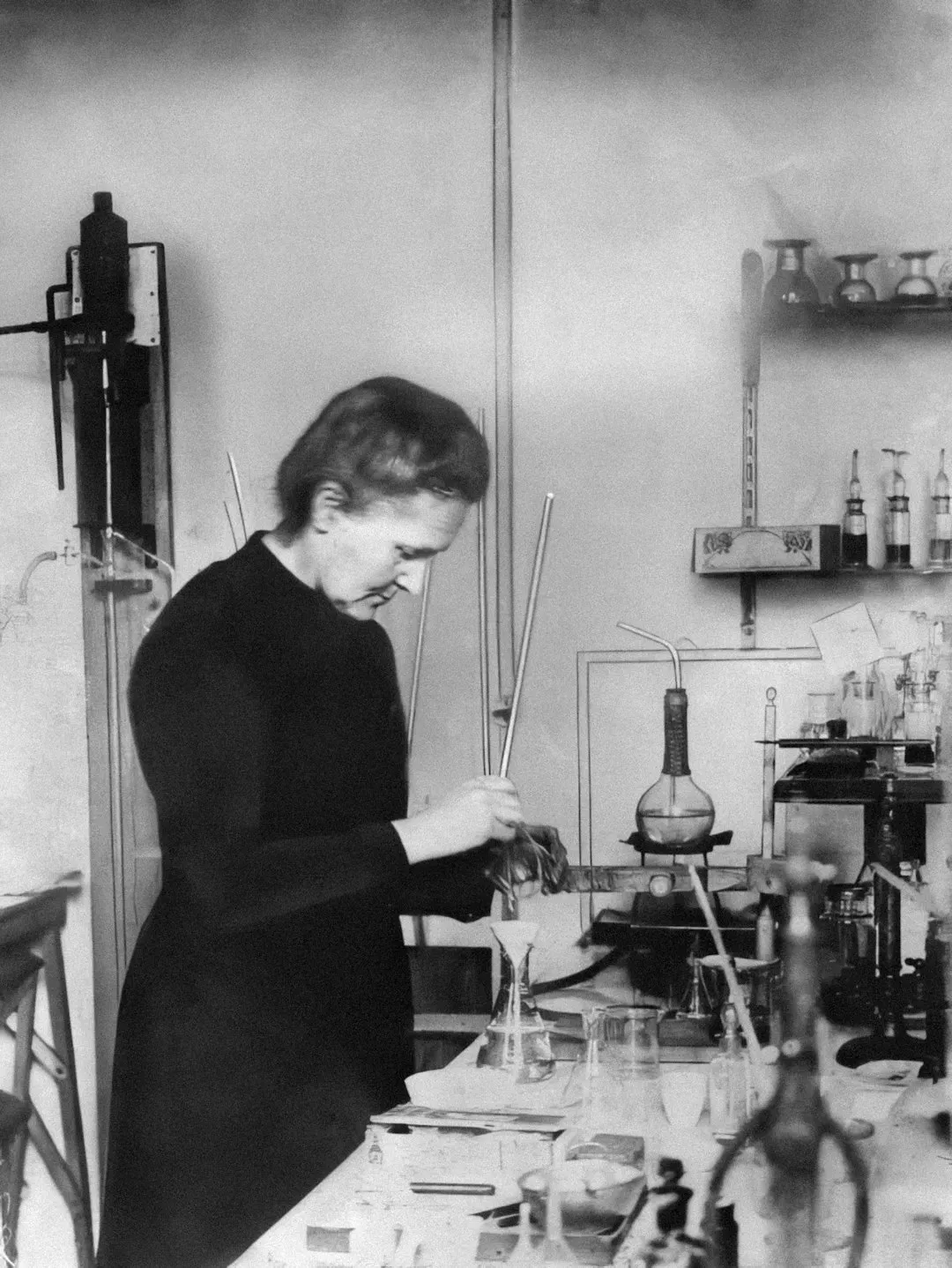
Here is a fact that should stop you in your tracks. Marie Curie’s personal journals are so thoroughly contaminated with radioactive material that they pose a genuine physical hazard to anyone who reads them today. That is not a metaphor. That is science.
The first woman to win a Nobel Prize, Marie Curie pioneered research into radioactivity. Her notes and journals are on display at the Bibliothèque Nationale in Paris, with many of her discoveries contained within them. The notebooks document an entire lifetime of scientific pursuit, from early experiments to the isolation of radium and polonium.
Whilst it is widely known that Curie’s health suffered as a consequence of her work, it also impacted her belongings and journals. Due to the potential dangers posed by the radioactive levels, French authorities keep her notebooks in lead-lined boxes and visitors to the Bibliothèque Nationale must sign a liability waiver before viewing them. I think that is the most extraordinary sentence in the history of archival science.
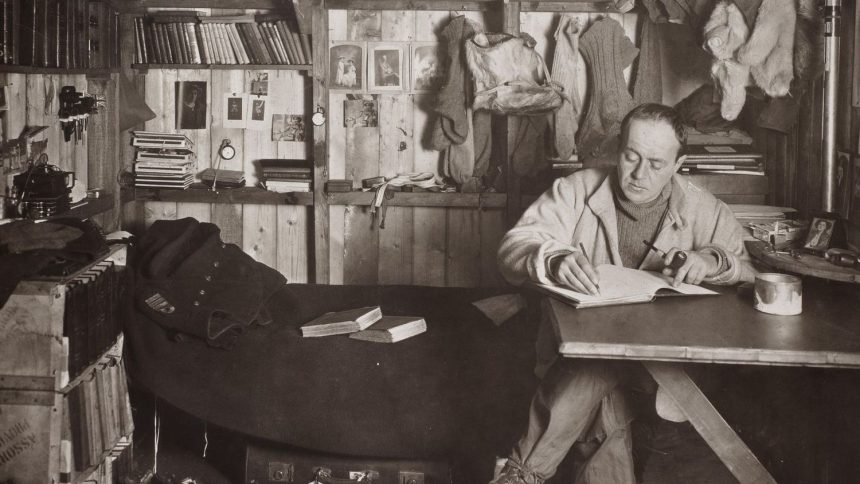
Captain Robert Falcon Scott: Writing Until the Very End
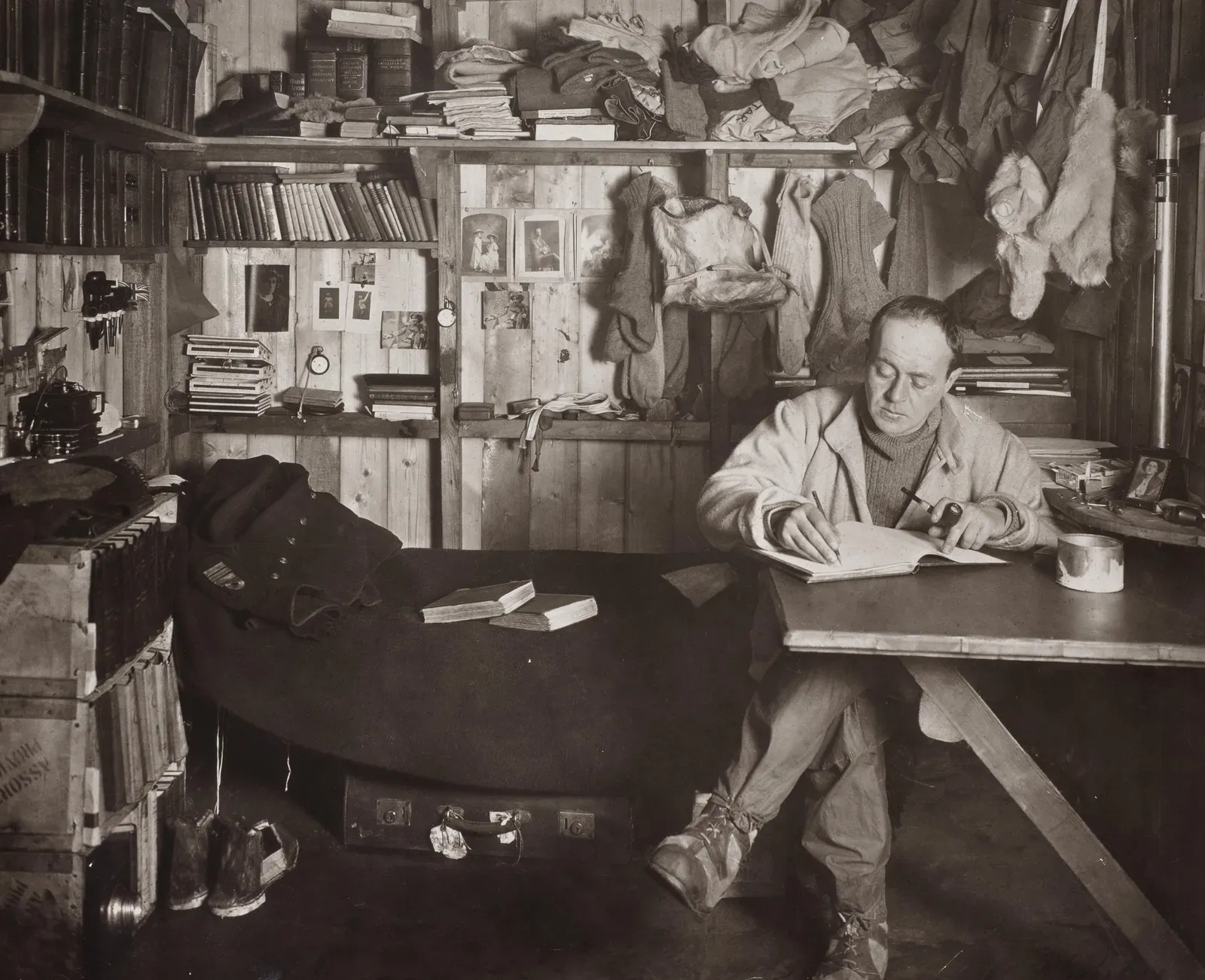
Not all diaries end with the writer safely at home. Captain Robert Falcon Scott’s journal is one of the most heartbreaking documents in the history of human endurance. He kept writing when almost no one else would have had the strength – or the will.
First published in 1913, Captain Scott’s harrowing account of his expedition to the South Pole in 1910 to 1912 became the stuff of legend. Scott’s diaries, discovered with his body, caught the public imagination in a way few tales of exploration ever have. The fact that they existed at all is a minor miracle of human determination.
The Polar Party’s unflagging stamina, bravery, and spirit on their tragic return from the South Pole after finding they had been beaten to their goal by the Norwegian Roald Amundsen is as gripping and inspiring as any fiction. The final entries, written in his last days while hopelessly trapped in a tiny tent by a raging blizzard, are among the most poignant and haunting passages ever written.
Scott’s personal journal was discovered with his body in the Antarctic after his failed second expedition and greatly inspired the public imagination. Following the first expedition to his party’s demise on the second, we are given a poignant and intimate account of life on the edge through his journal entries. Even in dying, he wanted the world to know what had happened and to understand it fully.
Frida Kahlo: A Visual Diary Like No Other
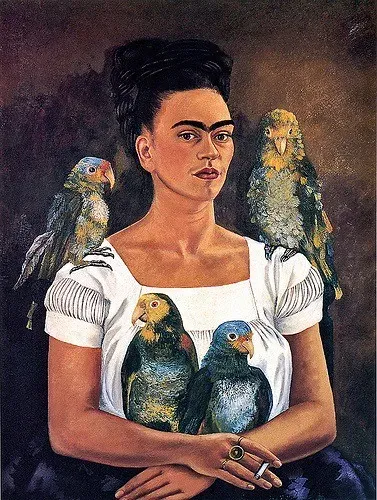
Most people look at Frida Kahlo’s paintings and see the art. What they often miss is that the paintings and her private diary were essentially the same conversation. Both were a way of processing pain, identity, and a ferociously uncompromising inner life.
Painter Frida Kahlo’s powerful and brightly-colored canvases incorporated bold and surreal imagery inspired by Mexican folklore, representing the country’s native plants and animals, and she is recognized as one of the most important artists of the 20th century. The written and illustrated diaries she kept during the last 10 years of her life, published as “The Diary of Frida Kahlo: An Intimate Self-Portrait,” offer a glimpse not only of her creative process, but of her tumultuous relationship with her husband, artist Diego Rivera.
Through the mass export of cultural images via the internet, the art and philosophy of Frida Kahlo have become known to all. Her art style was heavily indebted to Mexican popular culture and folk art, using this as a basis to explore questions of identity, postcolonialism, gender, class, and race within Mexican society.
After her death, her work was relatively unknown until it was rediscovered by art historians and activists. By the 1990s, she had become a well-recognized and beloved figure in art history, regarded as an icon for the Chicanos, feminists, and the LGBTQ+ community, and celebrated as emblematic of Mexican national and indigenous traditions. Her diary did not launch that legacy. It deepened it in ways that no painting alone could.
Leonardo da Vinci: The Genius Who Never Stopped Scribbling
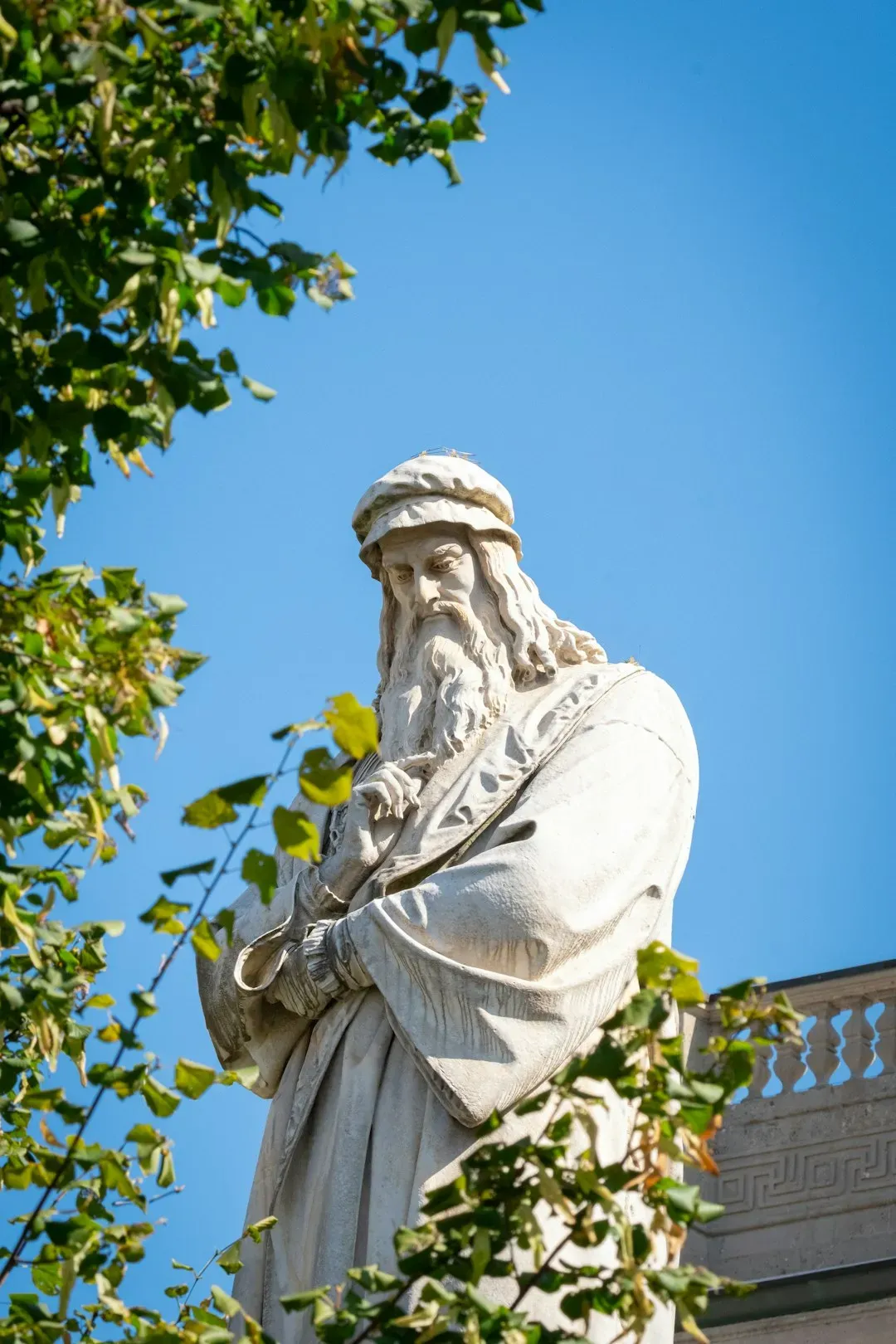
If you ever feel behind on your to-do list, consider Leonardo da Vinci. The man invented the helicopter, studied human anatomy, painted the Mona Lisa, and somehow still found time to fill thousands of notebook pages with questions about the universe. His journals are less a diary and more a direct feed into one of the most extraordinary minds in human history.
Though primarily revered as a Renaissance artist and scientist, Leonardo da Vinci also maintained journals that contain a blend of scientific diagrams, musings, and personal anecdotes. His diary entries are often a clear demonstration of a mind at work, leapfrogging from mechanical inventions to studies of nature and human anatomy. Reading them feels like trying to keep up with someone who is always three steps ahead.
Offering first-person witness to some of the most pivotal moments in human history, these private musings helped shape the way we look at history. Da Vinci’s notebooks in particular represent something beyond historical record. They are a mirror of human curiosity at its most unrestrained – and they continue to reveal new details to researchers even now, centuries after they were written.
Historical diaries and journals help us picture what it was like to live in the past and remind us of the role that our choices play in shaping the future. Da Vinci’s journals have inspired engineers, surgeons, architects, and artists for over five hundred years. It is hard to think of another set of private notebooks that has done more work in the world simply by existing.
Conclusion: What These Pages Tell Us About Power and Humanity

The most remarkable thing about all of these diaries is not the history they contain. It is the humanity. Here are people who shaped the world – who launched wars, discovered continents, wrote constitutions, and changed science forever – and in their private pages, they worried, doubted, joked, grieved, and wondered whether they were doing enough.
For both the dedicated historian and the wider reader alike, diaries offer an unrivalled glimpse into past lives. Not only do they record the mundane, they can often serve as unique eyewitness accounts of major historical events. Of course, journals and diaries have their limitations too. People do not write in their diaries with the aims of historical accuracy and neutrality in mind. Even so, the imperfections are the point.
A perfect account would tell us what happened. An imperfect, honest, private one tells us who these people actually were. And honestly, that is the story worth reading. Which of these diaries surprised you most? Let us know in the comments.