History is full of wild guesses that turned out to be exactly right. Some of the most startling moments in science, astronomy, and world events were quietly sketched out centuries – sometimes millennia – before anyone had the tools or the context to understand them. These weren’t always mystical visions or divine revelations. Sometimes they were pure philosophical reasoning, mathematical observation, or eerie literary imagination. What makes them remarkable is just how precisely reality eventually caught up with them.
1. Democritus and the Atom: A Theory 2,000 Years Ahead of Its Time

Around 450 BCE, the philosopher Leucippus and his student Democritus proposed that all matter consists of tiny, indivisible particles they called “atomos,” meaning “uncuttable” or “indivisible.” This was not the result of laboratory experiments or scientific instruments. This remarkable insight came not through experimentation but through philosophical reasoning. Democritus argued that if you kept dividing matter into smaller and smaller pieces, you would eventually reach a particle that could not be divided further – the atom.
Due to the great influence of Aristotle, Democritus’s theory would have to wait almost 2,000 years before being rediscovered. Aristotle’s competing theory of four classical elements dominated Western thought for centuries, pushing atomism into the shadows. Democritus theorized that all material bodies are made up of indivisibly small “atoms.” Aristotle famously rejected atomism in On Generation and Corruption, refusing to believe that the whole of reality is reducible to a system of atoms. As it turned out, though, Democritus was right.
2. The Maya Dresden Codex: Predicting Solar Eclipses for 700 Years
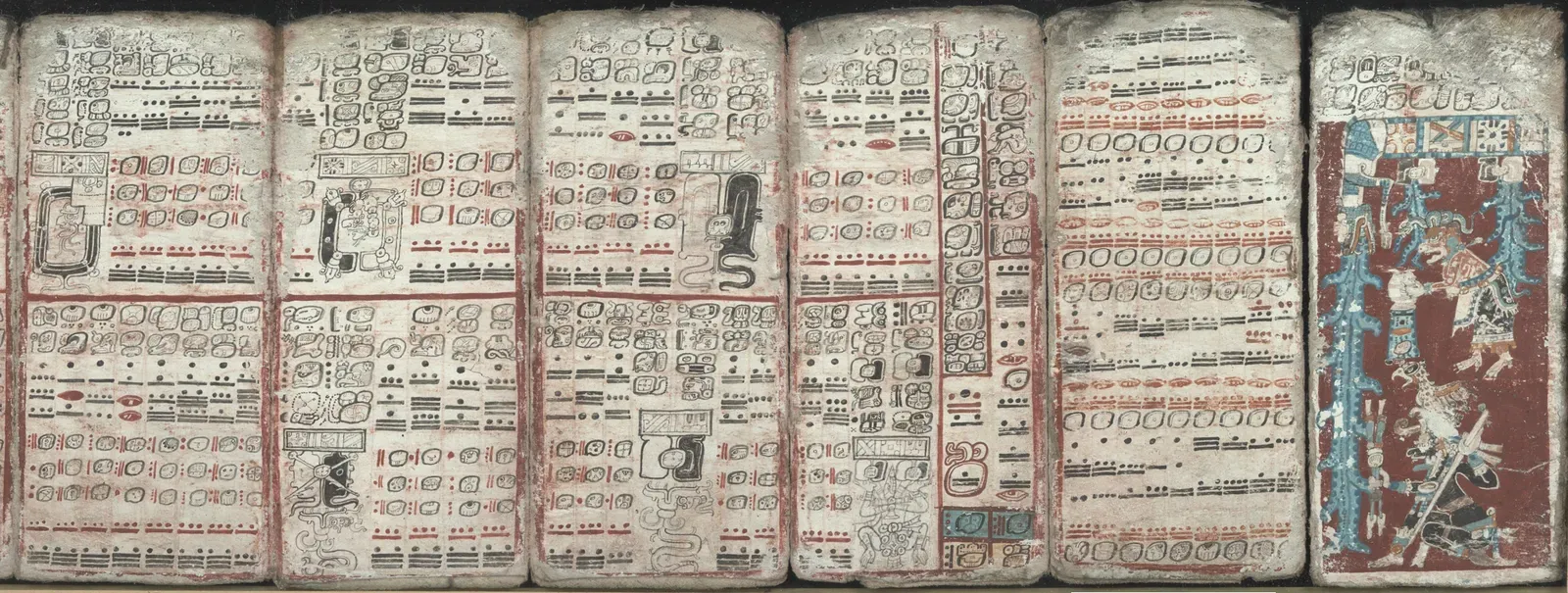
The Maya civilization possessed the remarkable ability to forecast solar eclipses with stunning accuracy for over 700 years, using nothing more than careful observation and mathematical genius. A groundbreaking study published in Science Advances reveals how these Mesoamerican sky-watchers developed and maintained their sophisticated prediction system through the famous Dresden Codex. The codex itself is a bark-paper manuscript, and only four texts are known to have survived, the oldest and best preserved of those being the Dresden Codex, which dates to around 1200 CE.
Earlier theories had assumed the Maya simply restarted the table when it ended, but the researchers discovered something far more precise. The Maya used overlapping cycles – resetting their tables at 223- or 358-lunar-month intervals, corresponding to the saros and inex eclipse cycles known today. The points of reset corrected tiny discrepancies that accumulated over time, allowing predictions to remain accurate for more than 700 years. This level of mathematical precision rivals modern computational methods, achieved without telescopes, computers, or even metal tools.
3. Nostradamus and the Great Fire of London
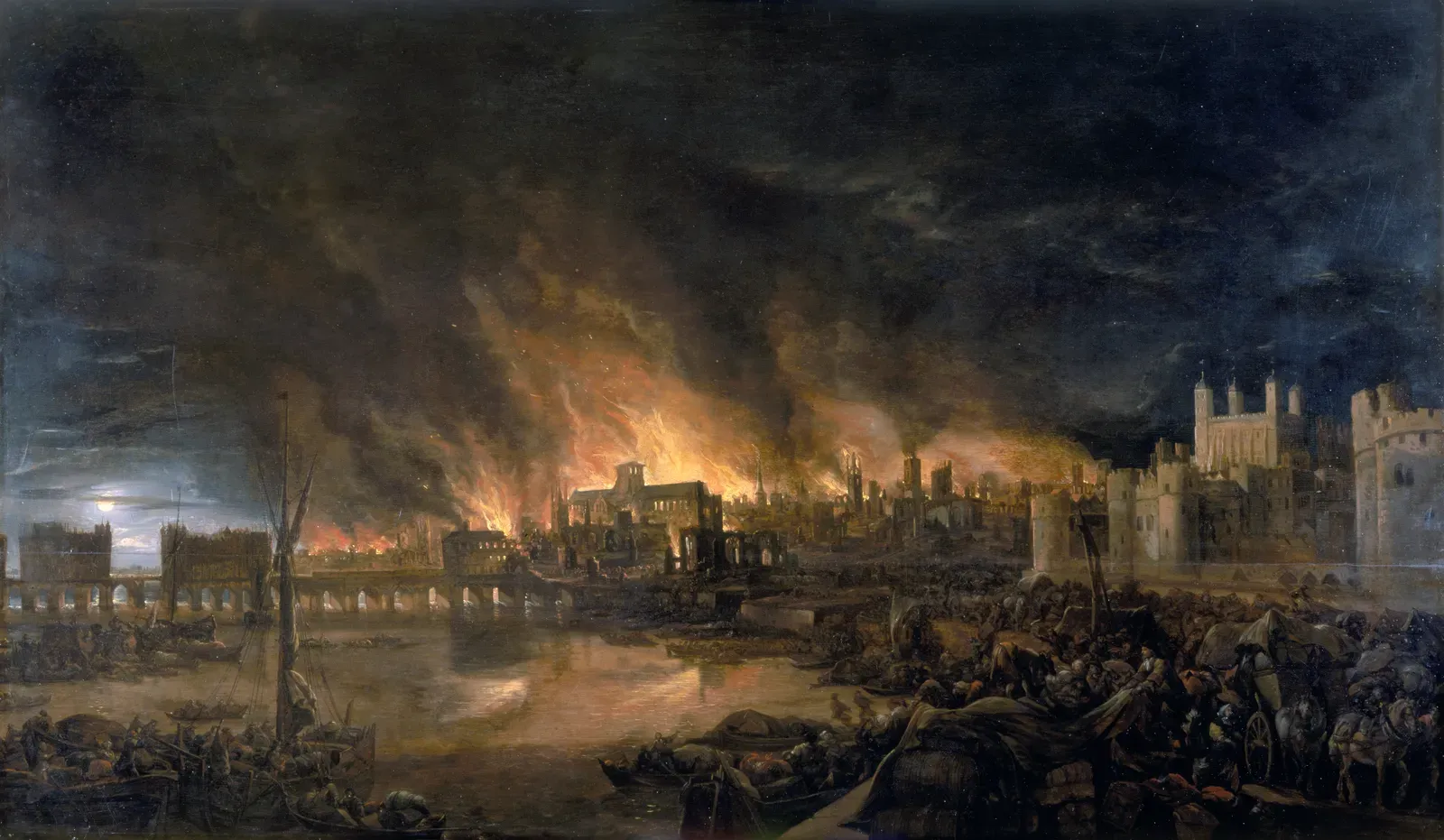
Nostradamus began making prophecies about 1547, and he published his prophecies in a book entitled Centuries in 1555. He wrote his prophecies in quatrains: four lines of rhyming verse. Among the many hundreds of quatrains he penned, one stands out for its historical specificity. There is one Nostradamus prediction that absolutely hit the proverbial nail on the head: his prophecy of the Great Fire of London. That devastating fire occurred exactly a century after the Frenchman’s death in 1666.
Partner offer
In his book “Les Propheties,” he wrote, “The blood of the just will be demanded of London, Burnt by fire in the year 66.” This prediction accurately foresaw the devastating fire that swept through London in September 1666, which destroyed much of the city. Skeptics, of course, are not silent on this. Skeptics such as James Randi suggest that his reputation as a prophet is largely manufactured by modern-day supporters who fit his words to events that have already occurred, a process sometimes known as “retroactive clairvoyance.” No Nostradamus quatrain is known to have been interpreted as predicting a specific event before it occurred, other than in vague, general terms. The debate has never been fully settled, and likely never will be.
4. Jules Verne and the Moon Landing: One Century Early
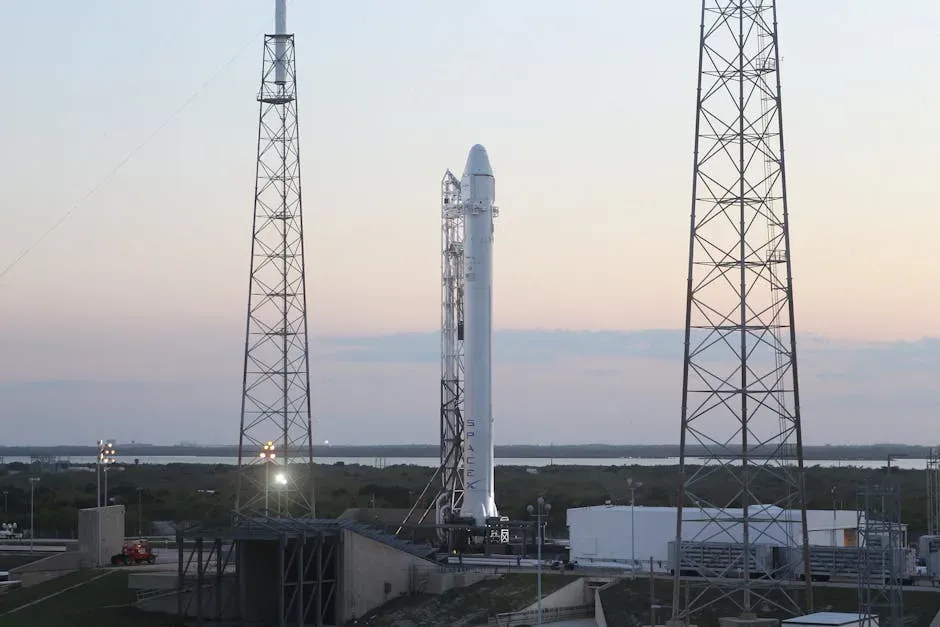
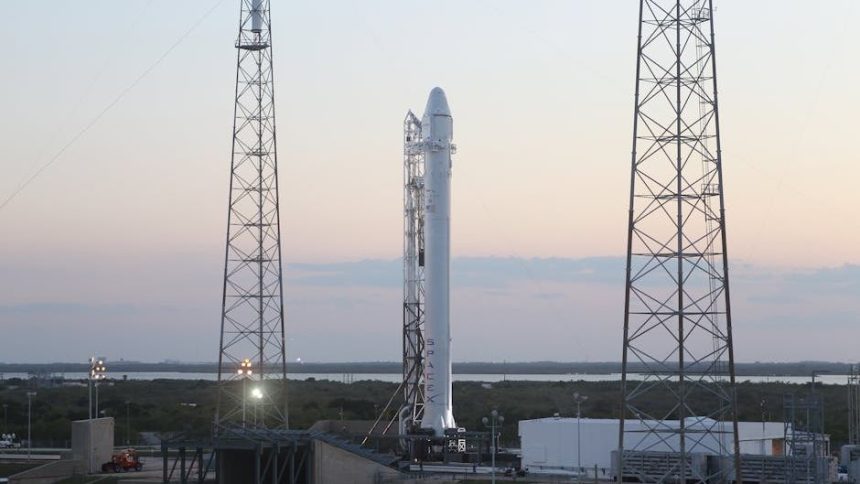
Jules Verne, famous for his books, also penned one called From the Earth to the Moon in 1865. Writing over a century before man actually landed on the moon, Verne’s story details this accomplishment with astonishing accuracy. Not only does he predict the achievement but he included some calculations that would later prove incredibly close to the real figures. What makes the parallels genuinely difficult to dismiss is how specific they are. In his book, the rocket launch is placed in Florida, which is now the site of the Kennedy Space Center, where the famous Apollo missions were launched from. Verne also placed the crew number at three and called his spacecraft Columbiad. The real Apollo 11 command module was named Columbia and its crew size was three.
In his fictional novel From the Earth to the Moon, Verne outlined that a space cannon titled The Columbiad would leave Earth in December from Florida in the United States and fly three astronauts to the moon. The astronauts would become weightless in space. 104 years later, Apollo 11, with its command module named Columbia, took off in December from Florida, United States, with three astronauts who found themselves weightless in space. Whether Verne was an extraordinary visionary or an extraordinarily lucky novelist is still a matter of discussion, but the details are hard to chalk up entirely to coincidence.
5. Aristotle’s Prediction of Automation and Mechanized Labor

Aristotle wrote in 350 BCE that mechanical devices would eventually replace human labor in manufacturing. He predicted that automated tools would work independently, freeing humans from repetitive tasks. Writing at a time when production was entirely dependent on human and animal labor, this was not a modest claim – it was a sweeping reimagining of what civilization might look like. His ancient vision of mechanized production closely describes modern factory automation and robotics.
Aristotle framed this idea within a broader philosophical thought experiment about what would happen if tools could act on their own without human direction. The Industrial Revolution, which began roughly 2,100 years after Aristotle’s writing, began fulfilling the first layer of that vision. Throughout history, visionaries, scientists, and philosophers have made bold claims about the future that seemed impossible at the time. While many predictions fell flat, some ancient forecasts turned out to be remarkably accurate, often centuries before the technology or events they described became reality. Today, with robotics and artificial intelligence reshaping factory floors across the globe, Aristotle’s philosophical thought experiment reads less like speculation and more like a quietly patient forecast.
Partner offer
Planning a trip to Vegas?
Compare hotel rates and show tickets on VEGAS.com.