History has a funny way of picking its heroes. We tend to imagine the people who changed the world as generals, presidents, or visionary scientists with iron-willed purpose. The truth is far more surprising. Fate has a habit of tapping the most unexpected shoulders.
Some of civilization’s biggest turning points were set in motion by a bored security guard, a curious farm boy, a messy scientist who forgot to clean up before a holiday, and a young woman who simply refused to move. These were not people chasing legacy. They were just living their lives, until the world pivoted around them. Here’s who they were, and what they accidentally gave us.
1. Alexander Fleming: The Doctor Who Forgot to Clean Up

Honestly, what kind of scientist leaves dirty petri dishes in the sink before going on vacation? Alexander Fleming did, in the summer of 1928. He was in such a rush to leave that he accidentally left a stack of dirty Petri dishes in his laboratory sink, dishes that were smeared with staphylococcus, a bacterium that causes boils, sore throats, and food poisoning.
When Fleming returned weeks later, he found something remarkable in the mess in his sink. One of the petri dishes was dotted with bacteria everywhere except for where some mold was growing. The area around it was clear, as if protected by an unseen barrier. Upon closer inspection, he realized that the mold, a rare form of Penicillium notatum, had secreted a substance that killed several strands of deadly bacteria.
From that accidental encounter with penicillium mold in 1928, one of medicine’s most important advances occurred through pure serendipity. Penicillin went on to become the world’s first broadly effective antibiotic, saving hundreds of millions of lives. Dr. Fleming published his remarkable discovery, and almost no one noticed at first, which just makes the whole story feel even more improbable.
2. Frank Wills: The Security Guard Who Brought Down a President

You would not expect a piece of duct tape to end a presidency. Yet that is exactly what happened on the night of June 17, 1972, when a young security guard made an observation that would shake American democracy to its core. Frank Wills, at the age of 24, was working as a private security guard at the Watergate office building on the shores of the Potomac River, the location of the Democratic National Committee headquarters.
In the early hours of the morning, Wills noticed a piece of duct tape on one of the door locks during his first round. The tape was placed over the latch bolt to prevent the door from latching shut. He removed the tape and continued his patrol. Thirty minutes later, Wills returned to the door and noticed there was more tape on the same door. Without hesitation, Wills rushed to the lobby telephone and called the police.
Wills’ chance discovery knocked down the first domino of the Watergate scandal and eventually led to the resignation of President Richard Nixon in August 1974. His discovery at the Watergate Office Building led to one of the largest political scandals in the history of the United States. The arrest and eventual conviction or guilty pleas of the five men uncovered wiretaps, slush funds, political sabotage, and unjustified firings. Wills himself received only a $2.50 weekly raise and died largely forgotten in 2000, one of history’s most ironic injustices.
3. Henrietta Lacks: The Woman Whose Cells Never Died
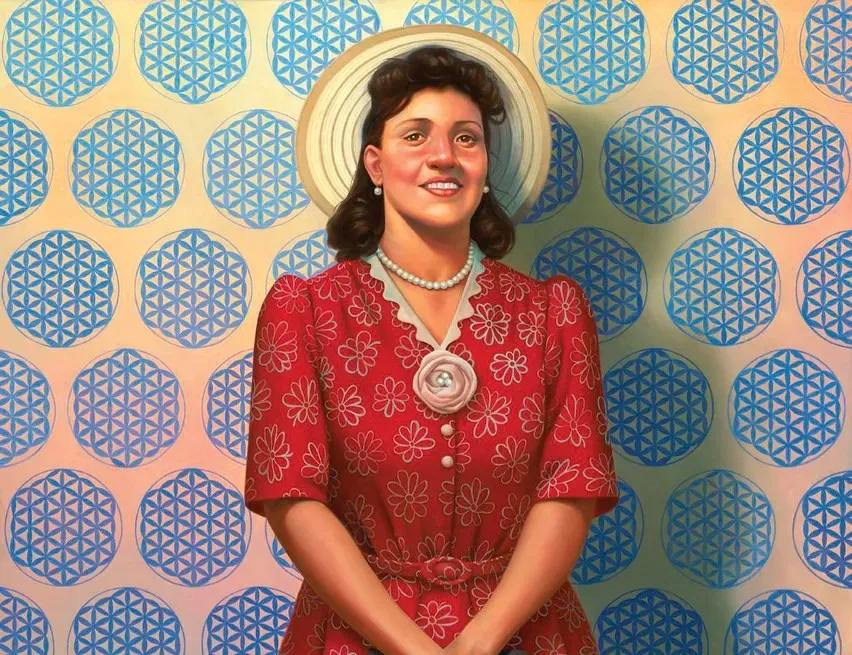
Henrietta Lacks never consented to changing medicine forever. She was simply a patient, a mother, a woman seeking treatment. In early 1951, Henrietta began experiencing abnormal vaginal bleeding and sought care at Johns Hopkins Hospital. Doctors discovered a malignant cervical tumor, and she began undergoing radium treatments. Without her knowledge or consent, doctors took samples of her cancerous and healthy cervical cells.
Unlike other cells that typically died within days in lab cultures, Henrietta’s cells proved astonishingly resilient. They multiplied indefinitely, making them the first known “immortal” human cells. Henrietta passed away on October 4, 1951, at the age of 31, but her cells would go on to change the landscape of modern medicine.
The NIH analyzed the scientific literature involving HeLa cells and found over 110,000 publications that cited the use of HeLa cells between 1953 and 2018. They have been widely used in biomedical research to study diseases like cancer, genetic engineering, to test drug candidates, and in groundbreaking medical discoveries including the polio vaccine, the HPV vaccine, and chemotherapy. Despite their massive contributions to science, Henrietta’s cells were taken without her or her family’s knowledge, raising major ethical concerns. Her family remained unaware until the mid-1970s, by which time HeLa cells had been commercialized, distributed worldwide, and used in thousands of studies, while the Lacks family struggled financially and lacked proper healthcare.
4. Percy Spencer: The Engineer With the Melted Chocolate Bar

Let’s be real. Most people who notice something melting in their pocket just chalk it up to a hot day and move on. Percy Spencer was not most people. Spencer was so fascinated by the sinking of the Titanic that he became a scientist. He joined the Navy, trained as a radio electrician, and ultimately became a civilian expert on radar during World War II, earning the Distinguished Public Service Award, and he did it all without ever having graduated from high school. After the war, Spencer worked for Raytheon Manufacturing.
In 1946, Percy Spencer, an engineer for the Raytheon Corporation, was working on a radar-related project. While testing a new vacuum tube, he discovered that a chocolate bar he had in his pocket melted more quickly than he would have expected. He became intrigued and started experimenting by aiming the tube at other items, such as eggs and popcorn kernels.
The microwave oven was born from that sticky, chocolatey pocket moment. Today, it is hard to imagine a kitchen, office break room, or college dorm without one. A man who never finished high school, chasing a mystery melt in his shirt pocket, handed the world one of its most ubiquitous appliances. It is genuinely difficult to make that up.
5. Wilson Greatbatch: The Engineer Who Wired the Wrong Resistor
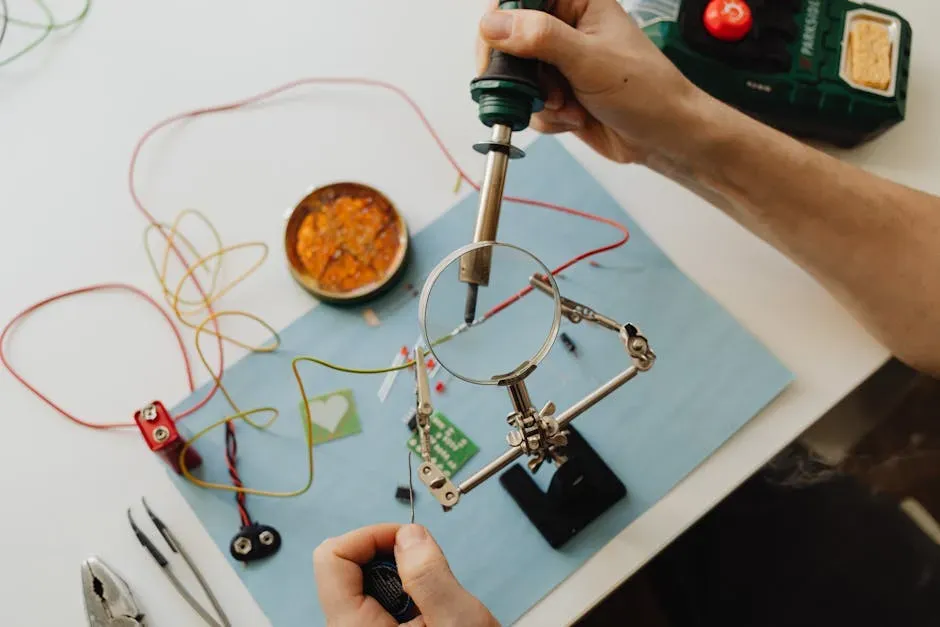
Engineering is an unforgiving field. One wrong component, and everything can fall apart. Unless, of course, you are Wilson Greatbatch, in which case, one wrong component saves millions of lives. While building a heart rhythm recorder around 1956, engineer Wilson Greatbatch accidentally installed a 1-megaohm resistor instead of a 10-kilohm part. The circuit produced steady electrical pulses, eerily heartlike. He realized they could pace a faltering heartbeat and set about miniaturizing and sealing the device.
Working with surgeon William Chardack, he developed an implantable unit, and in 1960, the Chardack-Greatbatch pacemaker was successfully implanted in a patient in Buffalo. Greatbatch’s designs and later lithium-iodide batteries extended device lifetimes dramatically. A misplaced component value brought a lifesaving rhythm to millions.
In 1956, engineer Wilson Greatbatch was attempting to build a heart rhythm recording device when he accidentally used the wrong resistor. This caused the circuit to emit electrical pulses, which mimicked the function of a heart’s natural rhythm. Greatbatch’s mistake led to the creation of the implantable pacemaker, a life-saving device that has kept millions of people’s hearts beating for decades. There is something deeply poetic about life-sustaining technology born from a simple miscategorization of parts.
6. Claudette Colvin: The Teenager Who Sat Down for Justice
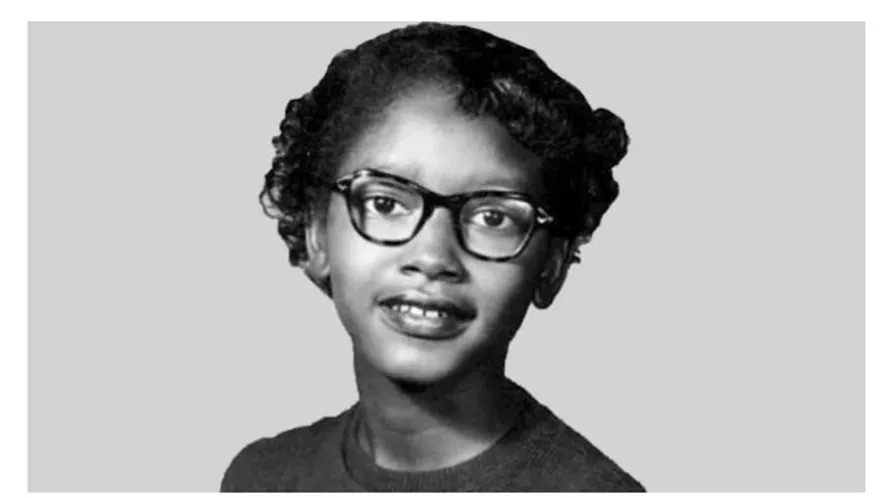
Before Rosa Parks, there was Claudette Colvin. She was fifteen years old, and she was angry, and she was not moving. Before Rosa Parks refused to give up her seat, there was Claudette Colvin, a fifteen-year-old African-American student in Montgomery, Alabama, who in March 1955 refused to move to the back of a segregated bus. Colvin’s arrest and subsequent legal challenge, Browder v. Gayle, laid crucial groundwork for the landmark Supreme Court decision that desegregated buses in Montgomery. Despite her courage, Colvin’s story was overshadowed by those deemed more “acceptable” by civil rights leaders of the era.
Nine months before Rosa Parks took her stand, 15-year-old Claudette Colvin refused to give up her seat to a white passenger on a Montgomery bus. Arrested and shunned, Colvin’s act of defiance was overshadowed by her age and the colorism of the era. Civil rights leaders feared her case was too controversial to champion.
Today, historians recognize Colvin’s bravery as a pivotal moment in the fight for civil rights, showing that sometimes history is made not by the famous, but by the determined and fearless young people who refuse to accept injustice. She was an accidental pioneer, a teenager who simply decided that enough was enough, and by doing so helped crack open one of America’s most entrenched systems of oppression.
7. Roy Plunkett: The Chemist Who Found Nothing in an Empty Tank

Here is a scenario that most scientists would find maddening. You open a tank that should be full of gas, and it appears empty, yet somehow weighs exactly the same as it should. Most people would shrug and call maintenance. On April 6, 1938, DuPont chemist Roy Plunkett was experimenting with tetrafluoroethylene gas to make new refrigerants at the Jackson Laboratory in New Jersey. Tanks that should have contained gas were mysteriously empty but weighed the same. Inside, the gas had polymerized into a slick, white solid: polytetrafluoroethylene, or PTFE. It was incredibly inert, with one of the lowest coefficients of friction known.
DuPont trademarked Teflon in 1945. PTFE soon found critical wartime roles, lining pipes that handled corrosive uranium hexafluoride in the Manhattan Project. From there it moved into cookware, medical devices, plumbing, and aerospace. You are probably cooking on the accidental byproduct of a failed refrigerant experiment right now.
Plunkett was not trying to invent non-stick pans. He was trying to find a new kind of refrigerant. He found something far stranger and far more durable. The world’s kitchens have never been the same since.
8. Gavrilo Princip: The Young Man Who Ignited a World War
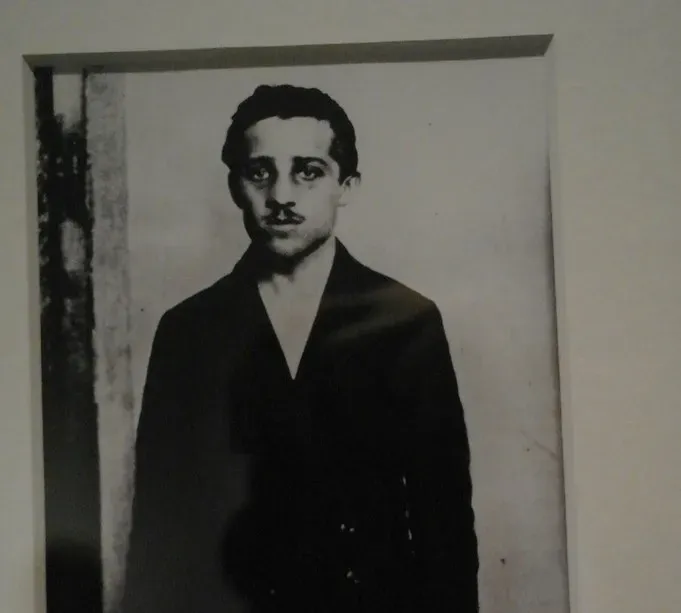
This one is darker than the others, and worth sitting with. The entire trajectory of the twentieth century was altered by a nineteen-year-old in Sarajevo who almost failed to carry out his plan. Gavrilo Princip was just nineteen years old when he made history with a single, fateful act in Sarajevo in 1914. As a member of a group of Bosnian Serb nationalists, Princip fired the shots that killed Archduke Franz Ferdinand of Austria and his wife, Sophie. This assassination is widely regarded by historians as the spark that ignited World War I, a conflict that would claim over 16 million lives and redraw the map of Europe.
A wrong turn in Sarajevo stopped the car beside Princip, enabling the Archduke’s assassination and World War I. The motorcade had taken an unplanned route after an earlier assassination attempt failed that same morning. Princip, who had given up and stopped at a deli, found the Archduke’s car idling right in front of him. It is staggering to think how much of what followed hinged on a wrong turn.
The collapse of empires like the Austro-Hungarian, Ottoman, Russian, and German states followed, leaving a power vacuum that shaped much of the twentieth century. The harsh terms of the Treaty of Versailles, which ended the war, fueled resentment and economic hardship in Germany, conditions that contributed directly to the rise of Adolf Hitler and the outbreak of World War II. One wrong turn, one desperate young man, and the entire century tilted.
9. Philo Farnsworth: The Farm Boy Who Invented Television

Imagine a fourteen-year-old drawing diagrams on a school chalkboard to explain to his teacher how he plans to transmit images electronically. Most teachers would smile politely and move on. Philo Farnsworth’s teacher kept those sketches. Philo Farnsworth was just a farm boy in Utah when he began dreaming up inventions that would change the world. By the age of 21, in 1927, he had created the first fully functional all-electronic television system. His invention made it possible to broadcast moving images and sound into living rooms around the world, forever changing entertainment, news, and even politics.
Farnsworth’s breakthrough laid the foundation for the global television industry, which today reaches over 1.7 billion households. He was not a wealthy inventor with a sprawling laboratory. He was a teenager working on a farm in Idaho, inspired by the rows of plowed fields he saw every day, which he imagined as horizontal scanning lines. That simple agricultural image became the conceptual basis for modern television.
Farnsworth spent much of his later life battling patent disputes, particularly with RCA, and never quite reaped the financial rewards his invention deserved. Still, every news broadcast, streaming service, and sports event beamed into homes across the planet traces its lineage back to that farm boy with an audacious idea.
10. Spencer Silver: The Chemist Who Invented a Glue That Did Not Stick

Imagine spending months developing a new adhesive and producing something that barely sticks at all. That is precisely what happened to Spencer Silver in 1968, and it turned out to be one of the most useful failures in commercial history. It was in 1968, while working for the company 3M, that chemist Spencer Silver received an assignment to invent a new adhesive that was stronger and more powerful than what was currently on the market. At the end of his research, he had achieved just the opposite, a mixture that adhered but was easily dislodged. At the time, Spencer believed he had failed. In fact, he had just changed the history of the paper industry.
It all began when 3M scientist Spencer Silver was trying to create a super-strong adhesive. Instead, he accidentally invented a weak, pressure-sensitive adhesive that did not stick well except when applied lightly. Initially dismissed as a failed experiment, Silver’s mistake was later transformed into the iconic Post-it Note after his colleague Art Fry needed something to keep bookmarks in his hymn book from falling out.
The Post-it Note is now one of the best-selling office products in history. It took more than a decade between Silver’s failed adhesive and Art Fry’s hymn-book bookmark problem for the invention to find its true form. Sometimes the world simply is not ready for what you accidentally made. It just needs the right person to see the possibility in the mistake.
11. Mohamed Bouazizi: The Street Vendor Who Sparked a Revolution

Mohamed Bouazizi had no political agenda. He had no movement, no manifesto, no followers. He was a young Tunisian fruit vendor trying to earn enough to support his family. Tunisian street vendor Mohamed Bouazizi never had any dreams bigger than saving enough money to rent or buy a pickup truck, but he became one of the most notable historical figures who changed the world when he set himself on fire in December 2010.
Bouazizi’s decision changed history, inspiring the nationwide unrest that resulted in the overthrow of Tunisian dictator Zine El Abidine Ben Ali. The Tunisian uprising, in turn, led to the Arab Spring movement that ultimately toppled regimes in Egypt and Libya.
His act was one of desperation, not calculated protest. He was a man pushed beyond endurance by humiliation and poverty. Yet it ignited a chain reaction that reshaped entire governments across North Africa and the Middle East. A single act of defiance set into motion a chain of events that altered the course of history. The world changed not because a general commanded it, but because one exhausted young man had finally had enough.
12. Ignaz Semmelweis: The Doctor Who Begged His Colleagues to Wash Their Hands

It sounds almost too simple to be revolutionary. Wash your hands. That’s the whole discovery. Yet when Ignaz Semmelweis proposed it in the 1840s, the medical establishment called him delusional. Ignaz Semmelweis, a Hungarian physician working in Vienna in the 1840s, made a discovery that would save countless lives. He realized that handwashing drastically reduced deadly infections in maternity wards. At the time, doctors moved between autopsies and childbirth without washing their hands, leading to rampant puerperal fever among new mothers. Semmelweis’s insistence on cleanliness met with ridicule and resistance from his peers, who bristled at the suggestion they could be responsible for their patients’ deaths.
He was not trying to reinvent medicine. He was trying to figure out why women were dying in one ward at dramatically higher rates than another. The only difference turned out to be that the deadlier ward was staffed by doctors who came directly from performing autopsies. Semmelweis introduced chlorinated lime handwashing, and mortality rates plummeted. His colleagues still refused to believe him.
Semmelweis died in 1865, largely unrecognized, reportedly in a psychiatric institution. It was only after Louis Pasteur and Joseph Lister developed germ theory that the world caught up with what he had already proven. Today, handwashing remains one of the single most effective public health interventions ever identified. Every hospital protocol, every surgical scrub, every soap dispenser in a clinic traces back to a physician whose peers thought he was simply making them feel bad. He was right. They were wrong. Millions of lives hang in the balance of that vindication.
Conclusion: Destiny Has No Job Requirements

Behind many world-changing discoveries and pivotal moments stand regular people who never intended to make history. That is perhaps the most comforting and unsettling truth this list reveals. Comforting, because it means anyone could matter enormously. Unsettling, for exactly the same reason.
A messy lab. A piece of duct tape. A wrong resistor. A fruit cart in Tunisia. A teenager on a bus. The machinery of civilization has been redirected by each of these. These accidental discoveries and unplanned moments remind us that history often hinges on ordinary people being extraordinarily observant or persistent. While we celebrate great achievements and planned innovations, sometimes the most profound changes come from simple mistakes, lucky accidents, and everyday people who choose to pay attention when something unexpected happens.
Which of these twelve stories surprised you the most? And here is the question worth sitting with: how many civilization-shaping moments are happening right now, completely unnoticed, by people who think they are just having an ordinary day?