There’s a very particular feeling that comes from finishing a book and having your jaw literally drop. Not a polite little surprise, but that full-body, heart-racing, “wait, what just happened?” moment that sends you immediately flipping back through chapters to find all the clues you missed. It doesn’t happen often. Most novels telegraph their endings well before the final page, even the good ones.
The novels on this list are different. They are the rare kind of stories that play with your expectations so masterfully that the ending hits like a truck you genuinely never heard coming. Whether through unreliable narrators, hidden timelines, or brilliantly disguised reveals, these books have defined what it means to truly shock a reader. Let’s dive in.
1. Gone Girl by Gillian Flynn (2012)
Let’s be real: it’s almost impossible to talk about shocking literary endings without starting here. Gone Girl is a crime thriller novel published by Crown Publishing Group in 2012, and it quickly became popular, making the New York Times Best Seller list. Critics acclaimed the book for its use of unreliable narration, plot twists, and suspense.
Gone Girl is a masterclass in psychological suspense, exploring the dark complexities of marriage, deception, and public perception. The story alternates between Nick and Amy’s perspectives, keeping readers unsure of who is telling the truth. Flynn’s writing dissects manipulation, media influence, and the masks we wear in relationships, culminating in an ending that is both shocking and unsettling.
By the end of its first year in publication, Gone Girl had sold over two million copies in print and digital editions. In 2016, the book had sold more than 15 million copies. By 2019, it was reported that the book had sold 20 million copies. The so-called “Gone Girl effect” led to a deluge of stories told by unreliable female narrators, and from its initial hardback publication in June 2012 through to June 2022, roughly 680 books were published with the name “girl” in the title. That’s the size of the cultural footprint one ending can leave.
2. The Silent Patient by Alex Michaelides (2019)
Honestly, the setup of this one sounds almost too simple to be as mind-bending as it turns out to be. Alex Michaelides’ The Silent Patient is a tightly woven psychological thriller about Alicia Berenson, a woman who stops speaking after murdering her husband, and the therapist determined to uncover the truth. The novel’s genius lies in its clever misdirection and exploration of obsession, perception, and trauma, keeping readers engaged until the final pages.
Alicia’s refusal to talk turns a domestic tragedy into something far grander, a mystery that captures the public imagination and casts Alicia into notoriety. The price of her art skyrockets, and she is hidden away from the tabloids at the Grove, a secure forensic unit in North London. Theo Faber is a criminal psychotherapist who has waited a long time for the opportunity to work with Alicia. His determination to get her to talk takes him down a twisting path into his own motivations.
The Silent Patient was Michaelides’ first novel and was the biggest-selling debut in the world in 2019. It spent more than a year on the New York Times bestseller list and sold in a record-breaking forty-nine countries. It also won the Goodreads Choice Award 2019 in the Mystery and Thriller category. The ending is the kind that sends you back to page one.
3. Atonement by Ian McEwan (2001)
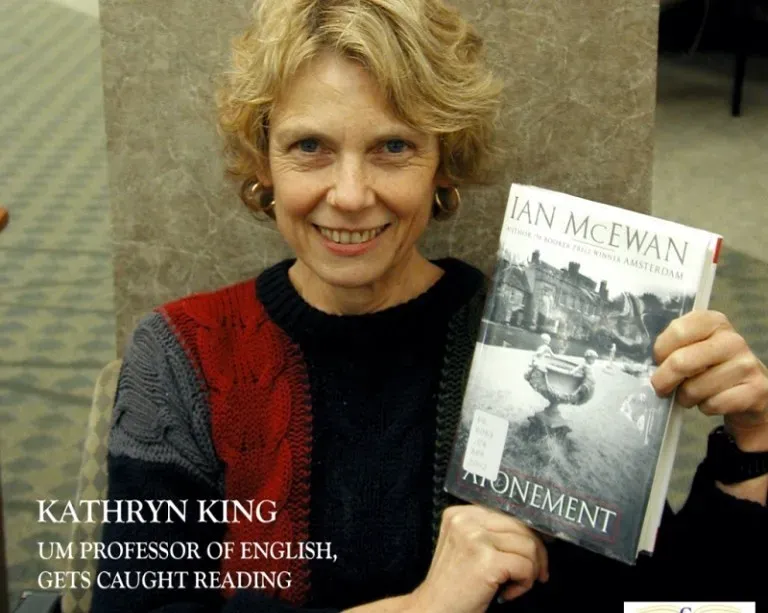
Few endings in literary fiction are as devastating and brilliant as what Ian McEwan pulls off here. Shortlisted for the 2001 Booker Prize, Atonement revolves around 13-year-old Briony Tallis’s misinterpretation of a romantic encounter between her sister and her lover, leading to dire consequences. Set across three distinct time periods from the start of the Second World War to the end of the twentieth century, Atonement delves into the notion of responsibility, innocence, and guilt.
Ian McEwan’s complex tale of wrongdoing culminates in a shocking metafictional twist that transforms the entire experience of reading the novel. McEwan’s Atonement examines guilt, imagination, and the consequences of a single moment. A childhood misinterpretation spirals into lifelong tragedy, shadowed by war and lost love. The novel’s ending is both metafictional and devastating, revealing that the narrative we’ve read may itself be an act of attempted atonement.
Think of it like watching a film, only to be told in the final scene that the director was actually in the movie the whole time. Ian McEwan is a masterful writer, and this tale of love, betrayal, and war was an instant classic upon publication. It’s one of those endings that doesn’t just surprise you. It redefines everything you thought you were reading.
4. And Then There Were None by Agatha Christie (1939)
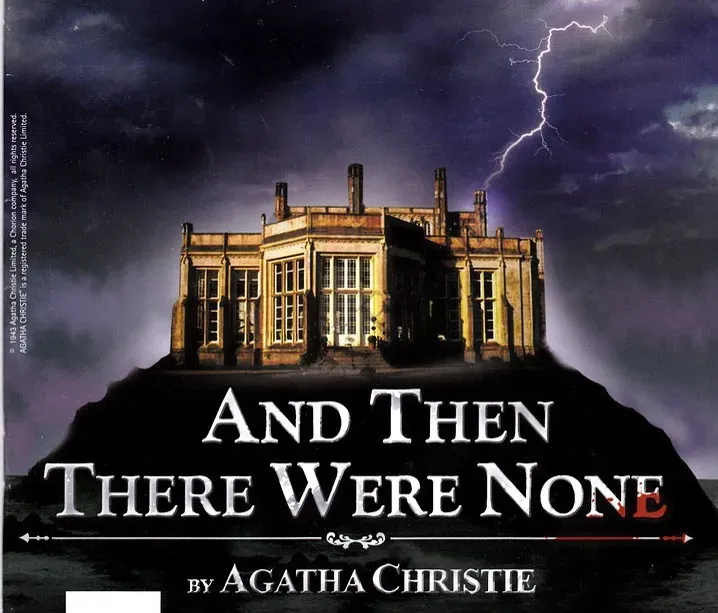
Agatha Christie invented the modern twist ending. That’s not an exaggeration. And Then There Were None is an absolute classic. Ten strangers turn up on Indian Island, only to have the host accuse each of them of murder. They start confessing to secrets and then they start dying.
Agatha Christie is the grand ruler of twisted, shocking, and downright unforgettable endings you . On Goodreads, And Then There Were None holds an average rating of 4.27 based on over 1.6 million ratings. Those numbers don’t lie. Generations of readers have been blindsided by how Christie resolves the impossible puzzle at the heart of this story.
Here’s the thing: even when you know something shocking is coming, Christie still manages to conceal exactly how the entire game was played. The solution, when it arrives, is so logical it almost makes you laugh at yourself for missing it. It’s pure literary magic from the undisputed queen of the genre.
5. The Murder of Roger Ackroyd by Agatha Christie (1926)
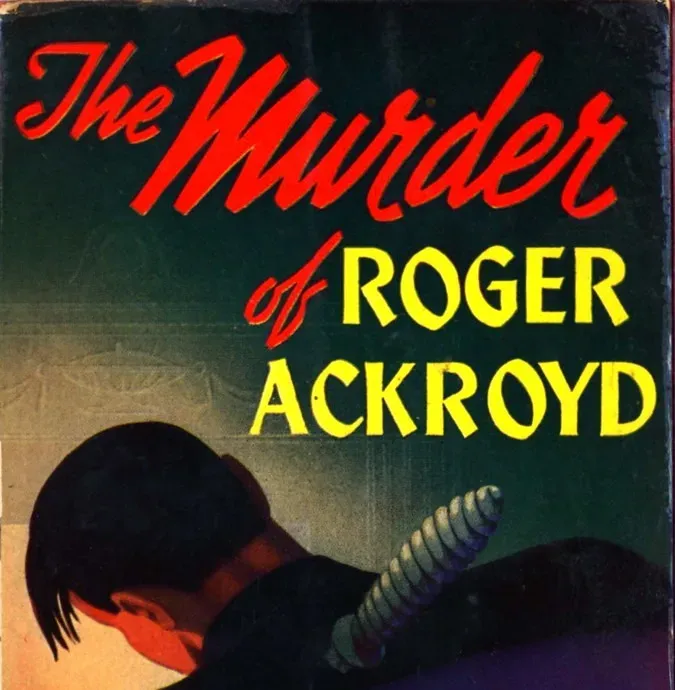
If And Then There Were None is Christie’s most beloved puzzle, The Murder of Roger Ackroyd may be her most controversial masterpiece. In the village of King’s Abbot, a widow’s sudden suicide sparks rumors that she murdered her first husband and was being blackmailed while carrying on a secret affair with the wealthy Roger Ackroyd. The next day, Ackroyd is murdered in his locked study. With plenty of potential suspects, it’s up to the famous detective Hercule Poirot to uncover the real killer.
Thanks to its famed innovative twist ending, this book is widely considered one of the most influential mysteries ever written. When it was first published, the ending genuinely outraged some readers who felt Christie had broken the rules of the genre. Others called it a stroke of genius. The debate still rages nearly a century later.
Browsing library shelves, readers have gravitated back to this novel more than once, a sucker for the surprise ending long after they know what is coming. There’s something almost perversely pleasurable about rereading it with full knowledge, watching Christie play her hand with absolute confidence. It belongs on every list of great literary deceptions ever written.
6. We Were Liars by E. Lockhart (2014)

Don’t let the young adult label fool you. This novel has one of the most emotionally savage endings in recent memory. We Were Liars is a haunting, beautifully written novel about privilege, family secrets, and memory. Told through fragmented recollections, the story follows Cadence Sinclair as she attempts to piece together a traumatic summer on her family’s private island.
The book follows Cadence and her three cousins, known as the Liars, who spend every summer with their families gathered on a private island. When she returns to the usual vacation spot at 17, everything is different, only she can’t remember exactly why. You’ll find it nearly impossible to wrench yourself away from the compelling story as Cadence’s memories slowly start to resurface.
Lockhart’s prose is lyrical yet precise, conveying grief, denial, and the fragility of memory. The ending delivers a shocking revelation that forces readers to reinterpret the narrative, revealing the true cost of silence and denial. Its unpredictability is emotionally devastating, making the novel resonate with both young adult and adult audiences. On Goodreads, We Were Liars has garnered over 1.4 million ratings.
7. Life of Pi by Yann Martel (2001)

This is a rare case where the twist isn’t a plot mechanic. It’s a philosophical gut-punch. Yann Martel’s Life of Pi is a survival story, spiritual meditation, and philosophical exploration all in one. After a shipwreck, Pi Patel is stranded at sea with a Bengal tiger named Richard Parker, forcing him to confront fear, faith, and human resilience. The narrative presents two alternative versions of events, asking readers to choose which truth they prefer.
The ending is unpredictable because it reframes the story as a moral and existential question, rather than a conventional plot twist. Martel explores themes of storytelling, belief, and survival, demonstrating how perspective shapes reality. It’s a book that doesn’t just change at the end. It makes you question what you were reading from the very first page.
I think what makes Life of Pi so powerful is that the twist isn’t designed to shock you for sport. It’s designed to make you choose. It’s a literary triumph that lingers long after the last page. That choice says something profound about who you are as a reader and perhaps as a human being. Not many novels can claim that.
8. Gone Girl’s Genre Twin: Behind Her Eyes by Sarah Pinborough (2017)
Sarah Pinborough’s Behind Her Eyes boasts a twist ending so shocking that you just knew it would be adapted for film or TV. Sure enough, Netflix’s popular adaptation of Behind Her Eyes is streaming right now. When a book gets adapted purely on the strength of its ending, you know it must be something special.
The psychological thriller follows Louise, a single mom who gets pulled into the middle of a marriage that isn’t what it seems. David is Louise’s boss. The pair shared a kiss at a bar before Louise started work. Then Louise strikes up a friendship with Adele, who happens to be married to David. The tension between these three characters builds slowly, almost like a pressure cooker.
The finale of Behind Her Eyes is genuinely one of the most divisive endings in recent thriller fiction. Some readers loved it so much they texted their friends immediately after finishing. Others felt borderline betrayed. On Goodreads, Behind Her Eyes has accumulated over 212,000 ratings. No matter which camp you fall into, you absolutely will not see it coming.
9. Shutter Island by Dennis Lehane (2003)
Shutter Island immerses readers in a claustrophobic psychological thriller set in a mental institution for the criminally insane. U.S. Marshal Teddy Daniels investigates the disappearance of a patient, only to confront layers of deception and his own inner demons. Lehane’s use of atmosphere, paranoia, and psychological tension makes the story compelling, while the ending reframes the entire narrative, blending reality with delusion.
Themes of trauma, guilt, and denial highlight human vulnerability. The novel’s unpredictability is not merely a twist but a profound exploration of the mind, making it an enduring example of how psychological thrillers can combine suspense with deep emotional resonance. It’s a story that works on two levels simultaneously, which is an incredibly difficult thing to pull off in fiction.
Reading Shutter Island is like walking through a hall of mirrors where every reflection is slightly wrong. You keep adjusting, keep recalibrating your sense of what is real, and then the floor drops out beneath you. It’s been compared to the best of Hitchcock, and honestly, that comparison holds up.
10. The Sense of an Ending by Julian Barnes (2011)

This is quiet literary fiction with a twist buried so elegantly inside the prose that many readers miss the full force of it until hours after finishing. Imperfect memories, edited, deleted and rewritten, are the focus of Julian Barnes’ 2011 Booker Prize-winning novel. Tony Webster, a middle-aged retiree, finds his tranquil life disrupted as two childhood friends re-enter his life, along with a mysterious lawyer’s letter. Through a tangled web of guilt, remorse, and personal responsibility, Tony is forced to confront the messy events of his youth.
With a twist you almost certainly won’t see coming, The Sense of an Ending examines the subjectivity of truth, while Barnes, through one of modern fiction’s most unreliable narrators, shows we are never best placed to tell the story of our own lives. That last idea is the real knife. The book’s central argument is that memory is not a recording. It’s a revision.
The novel is slim, barely 150 pages in most editions, which makes what Barnes achieves feel almost audacious. In less than half the space of a typical thriller, he plants a bomb of a revelation and detonates it in the final pages. It’s the kind of ending you carry around with you for days, quietly rearranging your understanding of everything Tony told you.
11. Fingersmith by Sarah Waters (2002)

There’s no doubt that Sarah Waters is one of the finest mystery writers working today, and Fingersmith is a prime example of her skills. Taking place from the points of view of several different characters, Waters’ finely wrought plot makes it impossible for readers to ever fully get a grasp on the slippery workings of the intriguing women who drive this story.
The narrative revolves around plots to swindle people out of fortunes, lock them away in mental asylums, seductions, betrayals, and abandonments; it’s kind of all you want in a page-turner and more. Sarah Waters’ tale of deception and unexpected secrets follows Sue Trinder, an orphan raised by an adoptive mother in a den of thieves.
What may shock you most is how the story flips at the very last minute and astounds you with the pacing and complex scheming that’ll definitely blow your guesses out of the water. Waters’ historical Victorian setting adds layers of moral complexity that make the twist feel earned rather than cheap. The film loosely based on this novel, Park Chan-wook’s The Handmaiden, is also considered outstanding. Both the novel and film are essential experiences.
12. My Sister’s Keeper by Jodi Picoult (2004)

This is one of those books where the ending splits readers right down the middle, and that division is exactly the point. My Sister’s Keeper is one of those books whose ending you just love or just despise. In fact, readers are so polarized that when it was adapted for the screen, the screenwriters changed the ending. That’s how powerful, and how controversial, it turns out to be.
In a nutshell, it’s a story about a couple who decide to have another baby when their much-loved daughter is diagnosed with leukemia, for the purpose of using that other child for a bone marrow transplant. The ethical stakes are enormous from the very first chapter, and Picoult spends the entire novel making you think you know how the moral argument will resolve itself.
Yes, the ending is a shocker. Yes, it’s not what you expect. The author took a lot of moxie and guts to write an ending like this, one that readers didn’t expect. It’s one of those rare books where the surprise doesn’t feel like a gimmick. It feels like the only honest way the story could have ended.
13. Where the Crawdads Sing by Delia Owens (2018)

Millions of readers picked this up expecting a sweeping, lyrical nature story. What they got was something else entirely. For years, Kya Clark has survived alone in the marshes of the North Carolina coast. Dubbed the Marsh Girl by the locals, she raises herself in nature after her family abandons her. As she comes of age, she begins to yearn for something more than her loneliness.
An exquisitely written tale, Where the Crawdads Sing is one of the best book club books with a twist to read. The novel blends murder mystery, courtroom drama, and lyrical nature writing in a way that feels unlike almost anything else published in the last decade. On Goodreads, it carries an average rating of 4.37 across more than 3.6 million ratings.
The reveal in the final pages reframes the entire novel in a matter of paragraphs. Where the Crawdads Sing is genuinely a WTF kind of book. The brilliance is that the clue is hidden in plain sight throughout the story. Once you know the truth, you see the breadcrumbs everywhere, and it changes how you read every earlier scene.
14. The Secret Keeper by Kate Morton (2012)
Kate Morton is essentially a master architect of plot, and The Secret Keeper is perhaps her finest construction. At an event at the family farm in the English countryside, 16-year-old Laurel witnesses a shocking crime that challenges everything she knows about her beloved mother. Fifty years later, Laurel and her sisters are meeting at the farm to celebrate their mother’s ninetieth birthday, and Laurel realizes that this is her last chance to discover the truth about that long-ago day.
This book is always on lists of favorite reads. It is a Gothic, dual-timeline page-turner about families and their secrets, a novel that rewards rereading even with full knowledge of all the twists and turns. Morton constructs her mysteries like a master jeweler, placing every stone with deliberate precision so the finished piece only reveals itself at the very end.
The final revelation in The Secret Keeper is not just a surprise about what happened. It’s a complete reimagining of who these characters actually are. Identity, memory, love, and survival all collapse into a single stunning moment. Morton executes the misdirection so gracefully that you never once feel manipulated, only completely fooled.
15. The Plot by Jean Hanff Korelitz (2021)
This one is a thriller about thrillers, which makes its own ending particularly delicious. In The Plot, a washed-up writer working as a professor steals a promising manuscript from one of his MFA students after he dies and tries to pass the masterpiece off as his own. Someone knows he didn’t write the novel himself, and it’s not long before they try to get even.
When Evan Parker, one of Jacob’s more arrogant students, lays out the plot of his novel-in-progress, Jacob knows it’s going to be huge. When Evan dies before completing his narrative, Jacob decides to steal the premise and present it as his own. He becomes a household name after publishing his latest work of fiction. Then, just as he’s reaching the height of fame, he receives a shocking message that threatens to expose him.
What’s genuinely clever here is that Korelitz plays a meta-game with the reader throughout the entire novel. You’re always aware of layers, always sensing that something beneath the surface is shifting. It takes a skilled writer to be able to truly shock a reader, guiding them in one direction while preparing a surprise in another. The craft lies in subtle foreshadowing, avoiding obvious clichés while striking the right balance between unpredictability and a convincing revelation. It’s this alchemy that transforms a good story into an unforgettable one. Korelitz earns her ending completely.
A Final Thought on the Art of the Surprise

There is a certain art to a good plot twist. There is something so memorable about books with a twist. The juxtaposition of what you thought was going to happen and what actually occurred sticks in your mind long after you’ve finished the book. That’s ultimately what separates a great twist from a cheap one: whether it reshapes the entire story in retrospect or simply startles you for a moment before fading.
The novels on this list all do the harder, rarer thing. They rewrite what you thought you had already read. These are the books that made jaws drop, forced readers to reread entire chapters, and immediately had them texting friends: “PLEASE read this so I can talk about it.” That reaction is the real measure of a perfect ending.
Every single one of these fifteen novels earns its place on this list for delivering something genuinely unforgettable. Whether you’re a lifelong thriller reader or someone who rarely strays from literary fiction, there’s something here that will absolutely blindside you. Which one do you plan to read first?