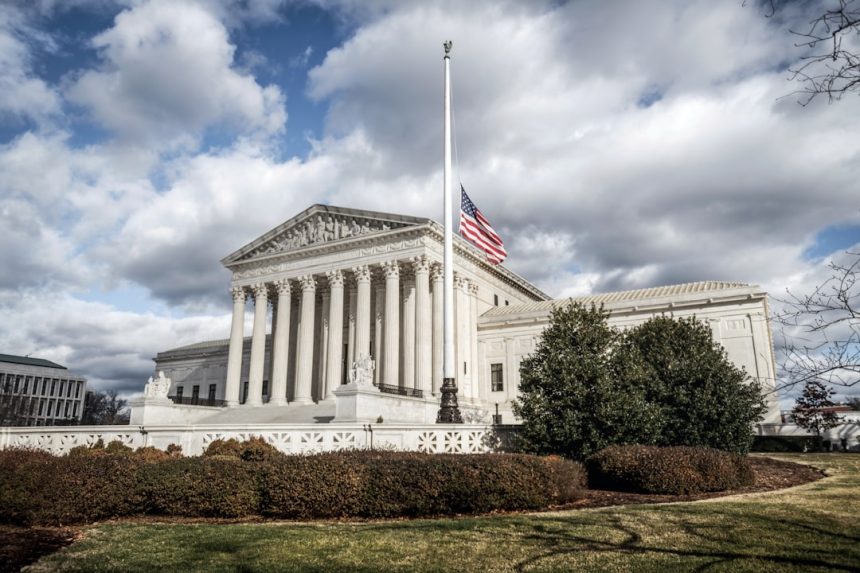
Rare Bipartisan Consensus on Core Free Speech Principle (Image Credits: Unsplash)
The U.S. Supreme Court issued a strong rebuke to state efforts to regulate therapeutic speech on Tuesday, ruling that Colorado’s ban on so-called conversion therapy for minors likely violates the First Amendment. In an 8-1 decision, justices from across the ideological spectrum agreed the law discriminates against certain viewpoints expressed by licensed counselors.[1][2] The ruling, which remands the case for further review, highlights tensions between professional regulation and constitutional protections for speech, with potential fallout for similar measures in states like Nevada.
Rare Bipartisan Consensus on Core Free Speech Principle
Justice Neil Gorsuch authored the majority opinion in Chiles v. Salazar, emphasizing the First Amendment’s role as a bulwark against government-imposed orthodoxy. He wrote that the Constitution protects the right of all to speak freely, safeguarding even dissenting views in the marketplace of ideas.[1] This stance drew support from an unusually broad coalition, including liberal justices Elena Kagan and Sonia Sotomayor, who joined a concurrence acknowledging the law’s one-sided suppression of debate.
Kagan noted that because the state favored one perspective while silencing another, the constitutional violation was clear.[1] Only Justice Ketanji Brown Jackson dissented, arguing the regulation targeted professional conduct in medical care rather than pure speech, and fell within states’ authority to protect patients from harmful practices.[2] The near-unanimous vote underscored a shared commitment to viewpoint neutrality, even amid polarizing topics.
Origins of the Colorado Challenge
Kaley Chiles, a licensed Christian counselor in Colorado, brought the suit after the state enacted a 2019 law prohibiting licensed therapists from engaging in practices aimed at changing a minor’s sexual orientation or gender identity. Chiles described her approach as talk therapy focused on exploring identity, distinct from discredited methods like aversion techniques.[3][4]
The law permitted therapies affirming a minor’s self-identified orientation or gender but barred efforts to reduce same-sex attractions or align identity with biological sex. Lower courts had applied a lenient standard of review, but the Supreme Court held that the statute warranted strict scrutiny as content- and viewpoint-based speech regulation.[2] Colorado defended the measure as a health and safety regulation, exempting religious ministries and family discussions.
Direct Threat to Nevada’s Longstanding Ban
Nevada lawmakers passed Senate Bill 201 in 2017, imposing penalties on licensed health professionals who provide conversion therapy to minors. The law, signed by then-Gov. Brian Sandoval and effective from 2018, covers physicians, psychologists, social workers, and others, though it spares pastoral counseling.[3]
Legal experts now predict challenges to Nevada’s statute, given its parallels to Colorado’s. Recent expansions via Senate Bill 165 in 2025 added behavioral health practitioners to the list. Neither Gov. Joe Lombardo’s office nor Attorney General Aaron Ford’s responded to inquiries on next steps.[3] At least 23 states maintain similar restrictions, placing them at risk of litigation.
- Nevada (2017): Targets licensed professionals treating minors.
- Colorado (2019): Focuses on changing orientation or identity.
- California and New York: Early adopters with broad prohibitions.
- Expansions in 2025: Nevada added more practitioner types.
- Exemptions common: Clergy and non-licensed counselors often spared.
Reactions Highlight Deep Divisions
Chiles hailed the outcome as a pursuit of truth, offering families broader options without state interference.[4] Colorado Attorney General Phil Weiser decried it as a setback for shielding youth from discredited practices rejected by major medical groups. Advocacy organizations like Silver State Equality warned that the decision hampers licensing boards’ ability to curb dangerous techniques, potentially reframing therapy as untouchable speech.[3]
Progressives framed the ruling as endangering LGBTQ youth, while free speech defenders celebrated it as a check on compelled affirmation. The decision echoes prior high court protections for counselors refusing abortion referrals, reinforcing speech rights in professional settings.[4]
This ruling reaffirms that the First Amendment tolerates no favorites in public discourse, even in sensitive therapeutic contexts. As lower courts revisit these bans, the balance between patient safety and expressive freedom will face fresh tests. What implications do you see for policies in your state? Share your thoughts in the comments.
Key Takeaways
- 8-1 decision deems Colorado ban viewpoint-discriminatory, remanding for strict scrutiny.
- Bipartisan support highlights free speech’s cross-ideological appeal.
- Nevada’s 2017 law faces similar vulnerability, affecting licensed providers.