
Some books are so famous that people think they already know what they’re about – without ever truly reading them. They carry a kind of cultural weight, an assumed meaning passed down through film adaptations, classroom summaries, and pop culture shorthand. The result? Entire generations have formed powerful opinions about books they’ve fundamentally misread.
Honestly, it’s one of the strangest phenomena in literary history. A novel can be celebrated, quoted, adapted into blockbuster films – and still be profoundly misunderstood. These six books are proof of exactly that. Let’s dive in.
1. The Great Gatsby by F. Scott Fitzgerald – Not a Celebration of the American Dream

Here’s the thing about The Great Gatsby: almost everything people think they know about it is wrong. The Great Gatsby is synonymous with parties, glitz, and glamour, but this is just one of many misunderstandings about the book that began with its very first publication, in April 1925. The lavish parties, the jazz, the champagne – readers and Hollywood alike seized on the spectacle and decided that was the whole story.
In our culture’s collective memory, greatly influenced by Hollywood, Gatsby embodies the Roaring Twenties. Yet there are in fact only three party scenes in the novel, the first of which is frankly sordid. Of the other two, one sparkles with glamour; the other is so disappointing that Gatsby abruptly ends the festivities. That’s not a celebration. That’s a critique dressed in a tuxedo.
Fitzgerald challenges the idea of the American Dream by showing how it is often unattainable for those who are not born into wealth. Through the characters of Jay Gatsby and Tom Buchanan, Fitzgerald demonstrates how the American dream is a misconception – and as the novel progresses, it becomes clear that it is only attainable for those born into wealth and privilege.
Shortly after the novel was published in April 1925, Fitzgerald declared that “of all the reviews, even the most enthusiastic, not one had the slightest idea what the book was about.” Popular reviewers read it as crime fiction. “Fitzgerald’s Latest A Dud” ran a headline in the New York World. The novel achieved only so-so sales, and by the time of the author’s death in 1940, copies of a very modest second print run had long since been remaindered. Think about that. One of the greatest American novels ever written was a commercial flop when it debuted.
2. Lolita by Vladimir Nabokov – A Villain’s Trap, Not a Love Story
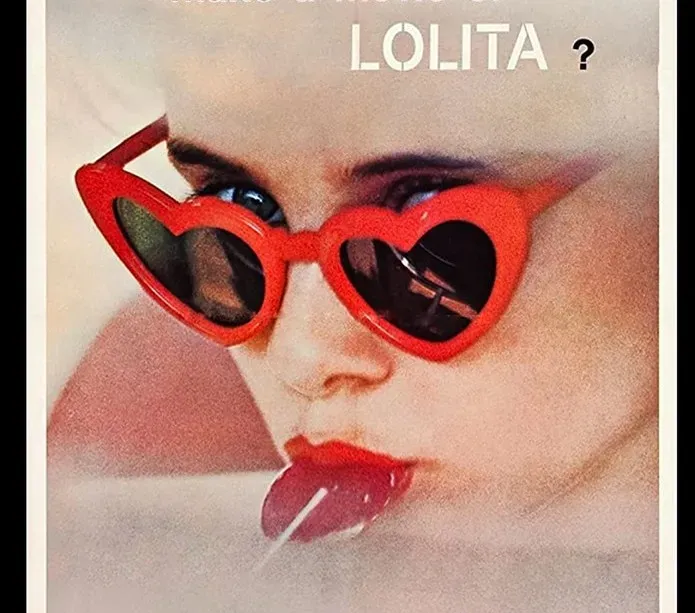
Few misreadings in literary history are as damaging – and as persistent – as the idea that Nabokov’s Lolita is a love story. The images most people associate with the word “Lolita” aren’t from Nabokov’s novel but from the fantasy built around it. Seventy years after its publication, Lolita has been misread, misused, and misunderstood. The tragedy of a girl named Dolores Haze has been overshadowed by an aesthetic the book never meant to create.
Lolita does not feature a seductress. It is not a love story, much as Humbert Humbert may bamboozle some readers into believing it is. That’s the entire point – Nabokov built Humbert as a charming, persuasive, deeply unreliable narrator whose eloquence is itself an act of manipulation. Many readers will be taken in by Humbert’s narration, missing the marks of estranging unreliability or detecting only some of the narrator’s tricks.
Despite Nabokov’s clear portrayal of Dolores as a victim, popular culture has repeatedly distorted her image. The term “Lolita” has evolved far beyond the novel, becoming a shorthand for a seductress, rather than a victim. That is a staggering reversal of the author’s intent. The film adaptations have only deepened this misunderstanding. Stanley Kubrick’s 1962 film famously softens the novel’s disturbing themes. Kubrick viewed Lolita as a love story – one of heart-breaking and passionate love – resulting in a film that plays like a flirtatious rom-com. It is from this adaptation that the iconic visuals were born.
Critics have noted that, since the novel is a first-person narrative by Humbert, it gives very little information about what Lolita is like as a person – in effect, she has been silenced by not being the book’s narrator. As scholar Nomi Tamir-Ghez writes: “Not only is Lolita’s voice silenced, her point of view… is rarely mentioned and can be only surmised by the reader.” The novel is a masterwork of moral horror. The beauty of the prose is the trap – and far too many readers have walked right into it.
3. Wuthering Heights by Emily Brontë – A Gothic Horror, Not a Romance
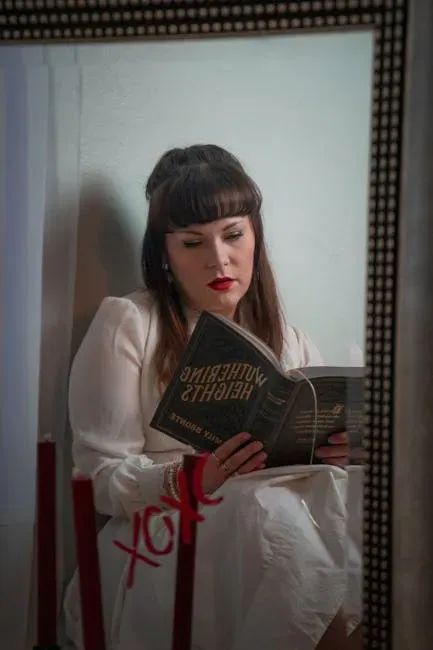
Ask almost anyone what Wuthering Heights is about and they’ll say: a great love story. Ask any serious literary scholar the same question and they’ll barely contain their exasperation. It is simply a mistake to mislabel Wuthering Heights as a romance. To do so ignores the visceral horror that greeted the book’s publication in 1847: critics recoiled from its “vulgar depravity and unnatural horrors,” warning that it was a book that should never have been written.
In part, we have to thank the 1939 film adaptation of Wuthering Heights, starring Laurence Olivier as Heathcliff, for discombobulating the populace’s understanding of Brontë’s text. Produced by MGM, it was touted as “The Greatest Love Story Of Our Time…Or Any Time!” The film depicted Heathcliff and Catherine as star-crossed lovers torn apart by societal expectations. That framing stuck. Decades of readers never recovered from it.
In the original novel, Heathcliff is not a misunderstood lover, but a domestic tyrant: he hangs his pregnant wife’s dog, physically abuses the younger generation, and exhumes Cathy’s rotting corpse in a frenzy of necrophilic obsession. That’s not Bridgerton. That is something far darker. The most common misunderstanding is to confuse romance with Romanticism. Wuthering Heights is certainly not lower-case-‘r’ romantic.
The 2026 film trailer says it’s “inspired by the greatest love story .” But after Cathy spurns Heathcliff and marries her wealthier neighbor in the novel, Heathcliff becomes vindictive and abusive. It is then difficult to square his unending love for Catherine with his extreme cruelty toward others. As a Fordham University scholar noted, if Heathcliff were alive today, you’d be getting a restraining order, not writing him love letters.
4. Frankenstein by Mary Shelley – The Monster Is Not the Villain
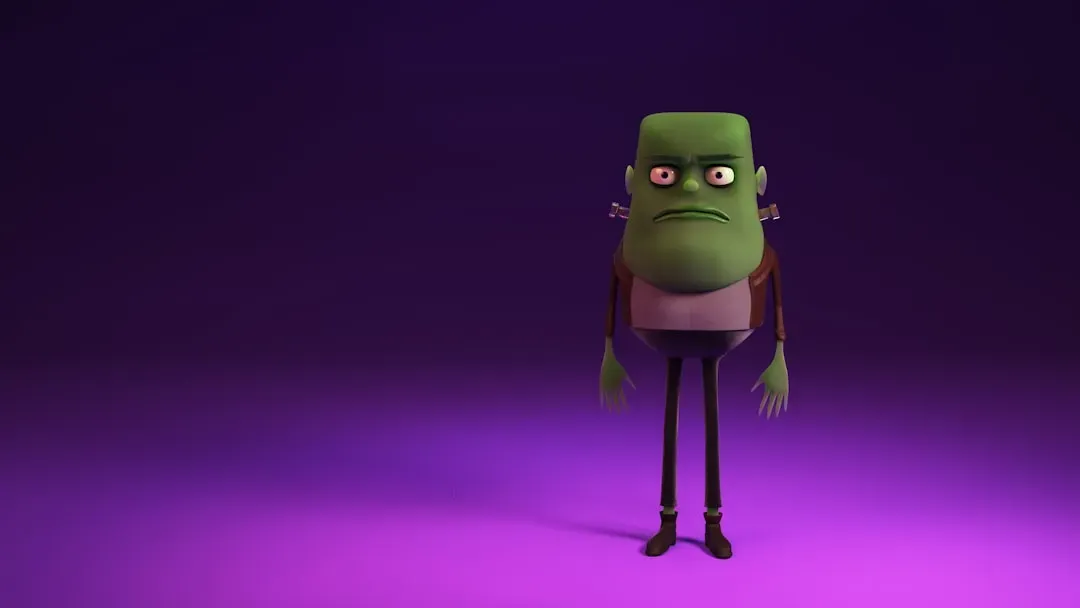
Say the word “Frankenstein” and most people picture a green-faced bolt-necked creature stumbling around in a black-and-white film. The book is always accompanied by misreadings or misapprehensions, such as the famous conflation of the creator with the unnamed creature – so people talk of “Frankenstein” instead of Frankenstein’s monster – or the belief that the creator is “Doctor Frankenstein,” when in the book he is but a humble student. That tells you almost everything about how thoroughly pop culture has consumed and distorted this novel.
What is remarkable about Shelley’s complicated structure is how she set things up so that it becomes a genuine surprise when the monster begins to speak for himself for the first time. We go from thinking that the creature is repugnant in his monstrosity to realizing that he’s eloquent and persuasive, and maybe more human than his creator. That is the entire moral center of the novel – and most film versions erase it completely.
Shelley was aware of experiments with galvanism, which used electricity on corpses to communicate the spark of life to the dead, and she seems to be reflecting on how these experiments disrespect the humanity of other human beings. Shelley explores the ethical consequences in the pursuit of scientific knowledge, when ambition overpowers people’s sense of what they owe to one another. This is a novel about responsibility, abandonment, and what happens when a creator refuses to love what he has made.
Shelley was just a teenager when she began writing it, in 1816. The circumstances of its genesis are well known: to occupy the time, she and her companions held a competition to see who could come up with the best ghost story. From this event, we got not only what is arguably the first science fiction novel, Frankenstein, but the first vampire novel too. Two centuries later, we still can’t seem to read either of them correctly.
5. The Catcher in the Rye by J.D. Salinger – A Cry for Help, Not Teen Whining
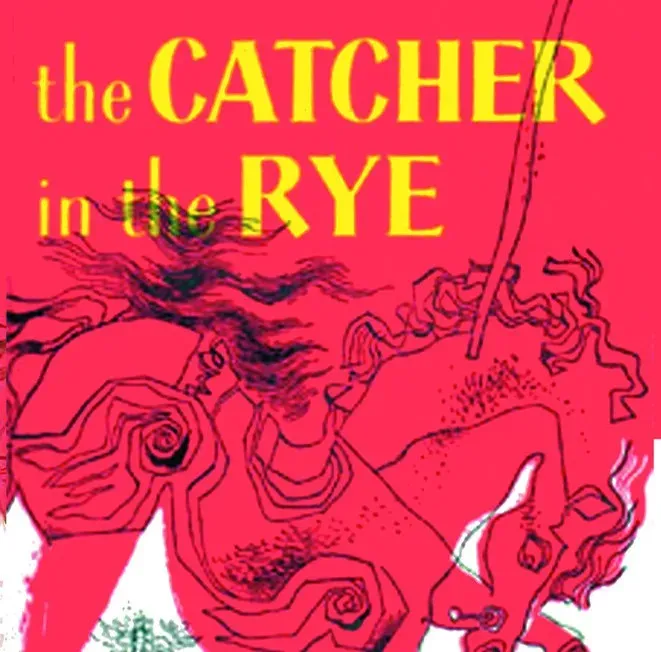
Holden Caulfield might be the most unfairly dismissed narrator in American fiction. Generations of readers – and plenty of teachers, too – have written him off as a whiny, privileged teenager who complains about phonies while being one himself. That reading is lazy. Worse, it misses the entire point. Holden’s struggle with the phoniness of the world is brought on by the death of his younger brother, which plunges him into severe depression, causing him to fail almost all of his classes and be expelled from school. These are pretty serious problems for a teenager to be dealing with, and he receives almost no support.
As writer E. Ce Miller has stated, “Holden’s story remains largely misunderstood by those who critique his character.” This is not to say that he is a likable character – that’s up for debate – but he is often misunderstood by readers who simplify his mental health issues as mere teenage angst. There’s a big difference between angst and grief-induced psychological collapse. Salinger knew that. Most readers don’t.
Many people see Holden Caulfield as a whiny teenager, but recent studies in adolescent psychology reveal that Holden’s voice mirrors real struggles with depression and anxiety, which were less understood in the 1950s. The book was banned in several U.S. schools for its language and themes, often labeled as “corrupting youth” – but this ignores its nuanced critique of societal expectations. Modern educators are increasingly using it to open discussions about mental health.
I think the discomfort most adults feel around Holden is actually a clue. He refuses to perform okayness. He sees through performance and cant – and that makes people, especially people invested in institutions, deeply uncomfortable. The novel’s frequent misreading shows how society often avoids uncomfortable truths about youth. Instead of corruption, it offers compassion for lost souls trying to find their place.
6. Fahrenheit 451 by Ray Bradbury – It Was Never Really About Censorship
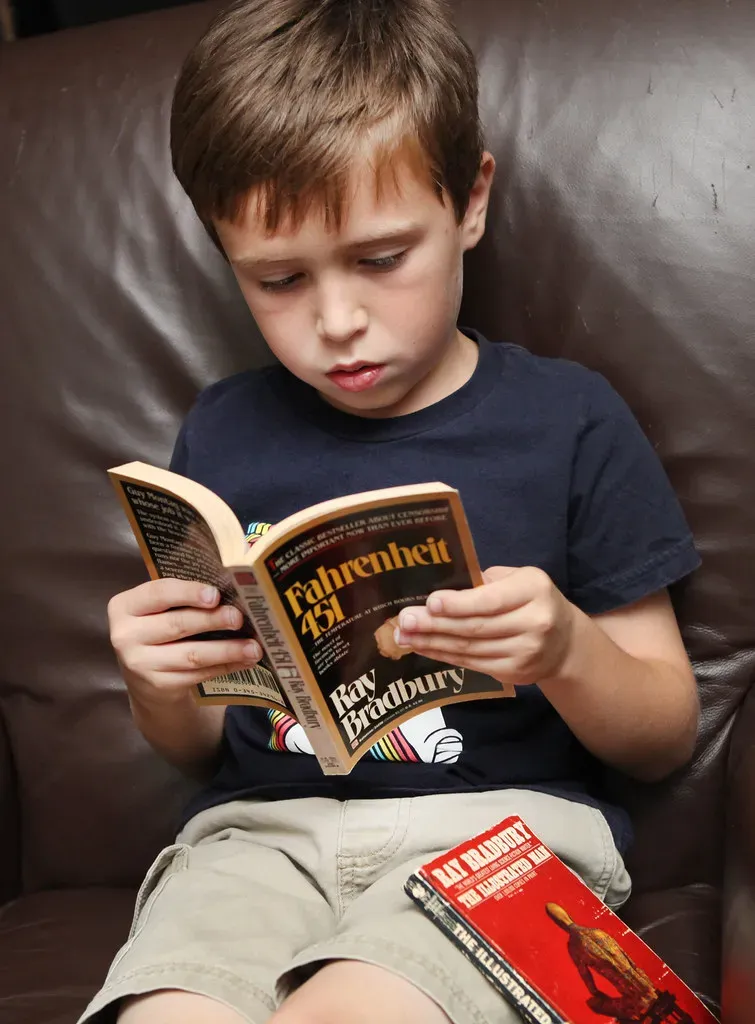
This might be the most surprising entry on the list, because the censorship reading feels so obvious. A world where the government burns books? Of course it’s about censorship. Except – the author himself said it wasn’t. Fahrenheit 451, which is set in the future where “firemen” are employed to burn books, is often interpreted as being about the dangers of state-enforced censorship. However, Bradbury himself believed that this missed the point.
Bradbury proclaimed that the novel is “not about censorship, it’s about the moronic influence of popular culture through local TV news, the proliferation of giant screens, and the bombardment of factoids.” To Bradbury, Fahrenheit 451 is really about the mind-numbing effect of TV, which, in the novel, turns people away from literature. Think about what that means in 2026, in a world of infinite scrolling and fifteen-second video clips. The novel has never been more relevant – or more thoroughly misread.
It’s a little like mistaking the smoke for the fire. The books aren’t being burned by a tyrannical government operating in secret. They’re being burned because people stopped caring about them first. The state just finished what the culture started. That is a far more chilling idea than simple authoritarian censorship – because it requires no villain other than collective distraction.
Works like these are sometimes banned, frequently misunderstood, and invariably discussed for years to come. Bradbury’s warning was always pointed inward, at us, at our appetite for easy entertainment over difficult thought. It’s hard to say for sure whether he’d be horrified or grimly satisfied by how accurately his fictional world has mapped onto the real one. What’s certain is that most people reading the novel still miss that deepest layer entirely.
Conclusion

These six novels share something profound: they were each misread almost from the moment they appeared, and in many cases, the misreading has only deepened over time. Film adaptations, pop culture shorthand, and school curricula that skim surfaces rather than dig into meaning have all played a role. Gatsby became a party. Lolita became an aesthetic. Heathcliff became a romantic hero. The monster became the name of his creator. Holden became a punchline. Bradbury’s warning became its own opposite.
The good news? Every one of these books rewards a slow, careful, suspicious second reading. Maybe the real question isn’t what these novels mean – it’s whether we’re brave enough to let them mean what they actually say.
Which of these misreadings surprised you most? Tell us in the comments.