Some crimes do more than shock us. They hold up a mirror to the entire legal system, exposing cracks so deep that the public simply cannot look away. From packed courtrooms to televised trials and wrongful convictions overturned decades too late, certain cases have permanently reshaped the way ordinary people think about fairness, guilt, and the law.
It’s a strange thing, honestly, how a single verdict can unravel assumptions that millions of people spent a lifetime building. The seven cases below didn’t just make headlines. They changed minds, sparked reforms, and in some instances, rewritten the rulebook entirely. Let’s dive in.
1. The Scottsboro Boys (1931): When “Justice” Wore a White Hood
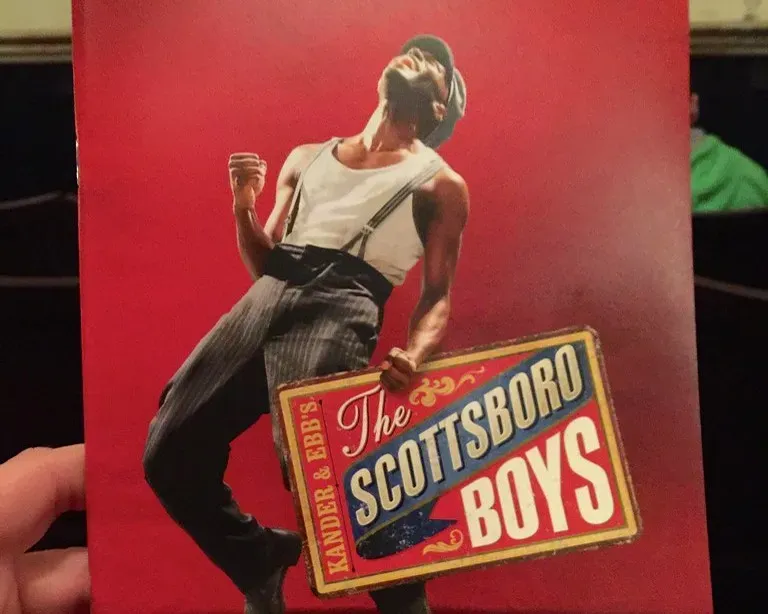
On March 25, 1931, nine African American teenagers were accused of raping two white women aboard a Southern Railroad freight train in northern Alabama. What followed wasn’t a fair trial. It was a spectacle. The teens, some as young as 13, were quickly arrested, nearly lynched by a mob, and subjected to rushed, deeply biased trials. All-white juries convicted them despite weak and contradictory evidence, and sentenced most to death.
In 1932, the U.S. Supreme Court overturned the convictions in Powell v. Alabama on the grounds that the defendants had not received adequate legal counsel in a capital case. A series of retrials and reconvictions followed, and the Scottsboro Boys collectively served more than 100 years in prison. The case became a national wound. As a political and social movement and a cultural symbol, the Scottsboro case played an immeasurable part in undermining the structures of white supremacy in Alabama, the South, and throughout the nation.
2. The O.J. Simpson Trial (1995): Race, Fame, and a Nation Divided
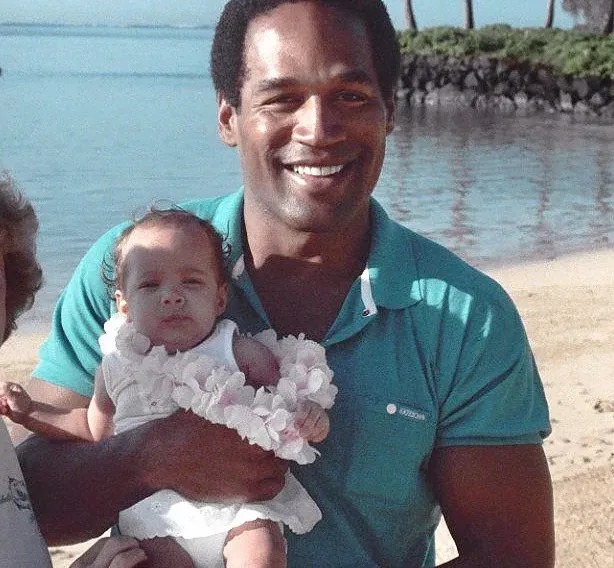
In 1995, former NFL star and actor O.J. Simpson was tried for the murders of his ex-wife, Nicole Brown Simpson, and her friend, Ronald Goldman. The trial, dubbed “The Trial of the Century,” was televised live, captivating the nation and dramatically shifting public views on race, celebrity, and the American criminal justice system. Think about that for a moment. A single trial, broadcast into millions of living rooms, effectively split America along racial fault lines.
It also advanced the use of forensic DNA evidence, highlighting its potential and limitations in the courtroom. The impression left was of a hydra-headed drama: a classic Hollywood celebrity legal melodrama, a race-relations story, a marriage-gone-acrid, a foray into detective work and genetics, a primer on the jury system. To this day, surveys show that Black and white Americans still tend to interpret the verdict in fundamentally different ways. I think that alone tells you everything about what this trial revealed.
3. The Scottsboro of the Modern Era: The Central Park Five (1989)

In 1989, five young African American and Latino teenagers were wrongfully accused, convicted, and imprisoned for the brutal assault and rape of a white female jogger in New York City’s Central Park. The case not only exposed deep flaws in the criminal justice system but also highlighted the impact of racial prejudice, media sensationalism, and the devastating consequences of rushed justice. The Central Park Five were interrogated by police for hours without the presence of their parents or legal counsel. Under intense pressure and fear, the boys eventually gave false confessions, implicating themselves and each other in the crime.
In 2002, after the men had served between 6 and 13 years in prison, Matias Reyes, a convicted serial rapist and murderer, confessed to the assault, providing a detailed account of the crime that matched the evidence. DNA testing confirmed his confession, and it was determined that Reyes had acted alone. Following Reyes’ confession and the supporting DNA evidence, the convictions of the Central Park Five were vacated in December 2002. In 2003, the Central Park Five filed a civil lawsuit against New York City for malicious prosecution, racial discrimination, and emotional distress. City officials fought the case for more than a decade before finally settling for $41 million. The case remains a defining emblem of how quickly the system can devour the innocent.
4. Miranda v. Arizona (1966): The Arrest That Gave Everyone Their Rights

In 1966, Miranda v. Arizona revolutionized the landscape of American criminal justice. The case stemmed from Ernesto Miranda’s arrest and confession to crimes without being informed of his rights to counsel and against self-incrimination. Here’s the thing: before this ruling, police could interrogate someone for hours, extract a confession, and use it against them in court without ever mentioning a lawyer. Most people had no idea they even had the right to stay silent.
Partner offer
The U.S. Supreme Court’s decision led to the establishment of Miranda rights, ensuring that individuals are aware of their rights when taken into custody. The issue was clear: are police constitutionally required to inform people in custody of their rights to remain silent and to an attorney? The Court found that the Fifth and Sixth Amendments require exactly that, and if the police fail to do so, a criminal court judge may rule that any statements made by the accused cannot be admitted as evidence during trial. Today, every police procedural on television says those words. The phrase became so embedded in daily culture that people recite it almost like a nursery rhyme. That’s the power of one case.
5. Gideon v. Wainwright (1963): The Right to Not Face a Courtroom Alone
In 1963, Gideon v. Wainwright reshaped the American legal system’s approach to criminal justice. The case arose when Clarence Earl Gideon, charged with a felony, was denied a court-appointed attorney due to Florida’s laws. His subsequent appeal to the U.S. Supreme Court led to a landmark ruling affirming the constitutional right to counsel for all defendants in criminal trials. Before this, if you couldn’t afford a lawyer, you were essentially on your own. That’s not justice. That’s a lottery.
In a unanimous decision, the Court held that the Sixth Amendment guarantee of counsel is a fundamental right, and the 14th Amendment extends that right to defendants in state courts, including those charged with felony offenses. This decision significantly enhanced the fairness of the judicial process, ensuring legal representation for those unable to afford it. It’s hard to say for sure whether the system has lived up to this promise in every courtroom since then, but the principle itself became bedrock. No more standing alone against the full weight of the state.
6. The Sacco and Vanzetti Case (1920–1927): Politics, Prejudice, and the Gallows
Nicola Sacco and Bartolomeo Vanzetti, Italian immigrants and anarchists, were controversially convicted of murdering a paymaster and a guard during a robbery in Braintree, Massachusetts, in 1920. The trial, marked by anti-immigrant sentiment and political bias, led to their execution in 1927. The evidence against them was shaky, and many legal scholars at the time openly questioned whether they received a fair trial. The political climate, not the facts, seemed to determine their fate.
The case ignited global protests and debates on judicial fairness and due process, highlighting the challenges faced by immigrants and political radicals in early 20th-century America. Looking back from where we sit today in 2026, this case feels remarkably modern in its dynamics. Replace “Italian anarchist” with nearly any marginalized group, and the pattern repeats across the decades. The Sacco and Vanzetti case forced the public to ask an uncomfortable question that echoes to this day: can courts be trusted to stay blind when politics isn’t?
7. The Murder Trial That Put DNA in the Spotlight: O.J. to the Innocence Project Era
The vacated conviction of the Central Park Five, and the broader wave of exonerations it triggered, highlighted the devastating issue of false confessions. The issue of false confessions has become a major topic of study and efforts at criminal justice reform, particularly for juveniles. What began as individual tragedies became a systemic crisis. The case catalyzed calls for interrogation reforms, recording of police interviews, greater forensic vigilance, and attention to racial bias in charging and prosecution decisions.
Throughout American history, certain criminal cases have not only captivated the nation but have also fundamentally transformed its legal landscape, leading to significant changes in laws, courtroom procedures, and societal attitudes toward justice. DNA evidence, once a novelty introduced awkwardly in the O.J. Simpson courtroom, is now a cornerstone of modern forensic law. Due to the hard work of many legal experts around the world, more and more wrongful convictions are being overturned, with innocent people exonerated of crimes they never committed. The system, slowly and imperfectly, is learning to correct itself. Whether that’s enough remains an open question that every generation has to answer for itself.
These seven cases are more than historical footnotes. Each one cracked something open, whether it was a courtroom rule, a cultural assumption, or a collective illusion about fairness. The law didn’t change because legislators woke up one morning feeling generous. It changed because ordinary people watched these cases unfold, felt something visceral, and refused to go back to how things were before. That’s the real engine of justice: not the gavels, but the outrage. What does it make you feel, knowing that some of these lessons still haven’t been fully learned?
Partner offer
Planning a trip to Vegas?
Compare hotel rates and show tickets on VEGAS.com.