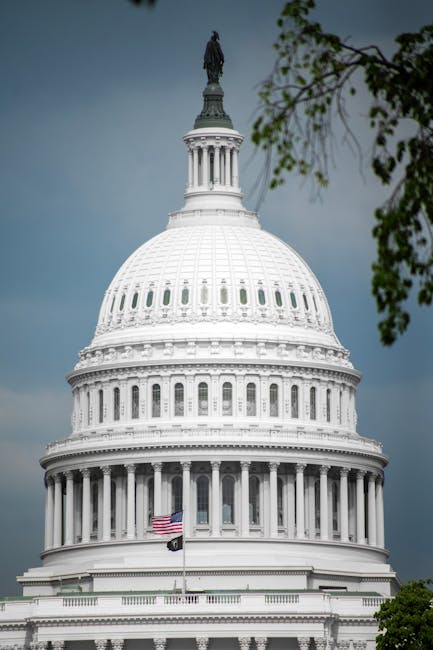
Senate Rejects Sanders-Led Resolutions (Image Credits: Pexels)
Nevada – U.S. Senators Catherine Cortez Masto and Jacky Rosen joined a bipartisan majority last week to reject efforts to halt arms sales to Israel amid escalating regional tensions. The vote highlighted deepening divisions within the Democratic Party over U.S. support for the Jewish state during conflicts involving Iran-backed groups. Both Nevada Democrats cast votes against resolutions that would have blocked already-approved deals, prioritizing strategic alliances over mounting progressive pressure.[1][2]
Senate Rejects Sanders-Led Resolutions
The Senate convened on April 15, 2026, to consider two joint resolutions of disapproval introduced by Sen. Bernie Sanders of Vermont. The first targeted a $295 million sale of bulldozers to Israel, while the second aimed to stop a $152 million transaction for 12,000 1,000-pound bombs. Lawmakers defeated the motion to discharge the first resolution, S.J. Res. 32, by a vote of 40-59.[2]
Senators Cortez Masto and Rosen each voted nay on the measure, aligning with all Republicans and a handful of fellow Democrats. The bulldozers deal had already been finalized, as had the bombs sale, making the resolutions symbolic challenges to ongoing U.S. policy. Supporters argued the equipment bolstered Israel’s defenses against threats from Hamas, Hezbollah, and Iran.[1]
Nevada Representatives Prioritize U.S. Security Interests
In a state with a significant Jewish community and strong ties to Israel, the Nevada senators emphasized practical considerations over ideological debates. Their votes ensured continuity in military support at a time when Israel contributed to U.S. efforts against Iranian nuclear sites and proxies. Over the past 30 months, Israeli operations had weakened Hamas following the group’s October 7, 2023, attack that killed 1,200 people and led to civilian kidnappings.[1]
The decisions drew praise from pro-Israel advocates who viewed the resolutions as untimely handicaps. Israel had aided U.S. airstrikes and intelligence operations, particularly amid the blockade of the Strait of Hormuz pressuring Iran’s economy. Cortez Masto and Rosen’s stance reflected a commitment to long-standing alliances amid broader geopolitical strains.[3]
Exposing Cracks in Democratic Unity
The votes revealed a stark party split, with 40 Democrats supporting the bulldozer resolution and 36 backing the bombs measure – record numbers for such efforts. Only seven Democrats, including Nevada’s pair, voted against both, alongside Senate Minority Leader Chuck Schumer and others like John Fetterman and Kirsten Gillibrand. This marked a shift from earlier attempts, like one in July 2025 where fewer Democrats joined Sanders.[3]
Progressive voices, including Sanders, framed the sales as fueling conflict. Sanders stated that Americans preferred tax dollars invested domestically rather than in what he called Netanyahu’s wars. Yet the resolutions failed without Republican backing, underscoring bipartisan support for the sales.[1]
- Chuck Schumer (D-NY)
- Richard Blumenthal (D-CT)
- Jacky Rosen (D-NV)
- Chris Coons (D-DE)
- Catherine Cortez Masto (D-NV)
- John Fetterman (D-PA)
- Kirsten Gillibrand (D-NY)
Strategic Context of U.S.-Israel Ties
Israel’s military purchases occurred against a backdrop of heightened threats. The nation had crippled Hezbollah and devastated Hamas infrastructure since late 2023. U.S. aid, exceeding $3.8 billion annually plus supplemental packages, underpinned these capabilities.[3]
Blocking the sales risked emboldening Iran, whose proxies continued attacks. The U.S. relied on Israeli intelligence and strikes to degrade Iranian assets, including nuclear facilities struck the previous year. Nevada’s senators recognized that sustaining these deals advanced American interests in the region.[1]
| Resolution | Value | Yea (Block) | Nay (Continue) |
|---|---|---|---|
| Bulldozers (S.J. Res. 32) | $295M | 40 | 59 |
| 1,000-lb Bombs | $152M | 36 | 63 |
Key Takeaways:
- Nevada’s Democratic senators voted with Republicans to preserve arms flows to Israel.
- The defeats highlighted progressive gains but bipartisan resolve on alliances.
- Sales support Israel’s fight against Iran proxies, aiding U.S. goals.
The Senate’s actions reaffirmed the durability of U.S.-Israel partnerships even as domestic politics evolved. Nevada voters, watching their representatives navigate these divides, witnessed a defense of strategic priorities. What do you think about the senators’ votes? Tell us in the comments.