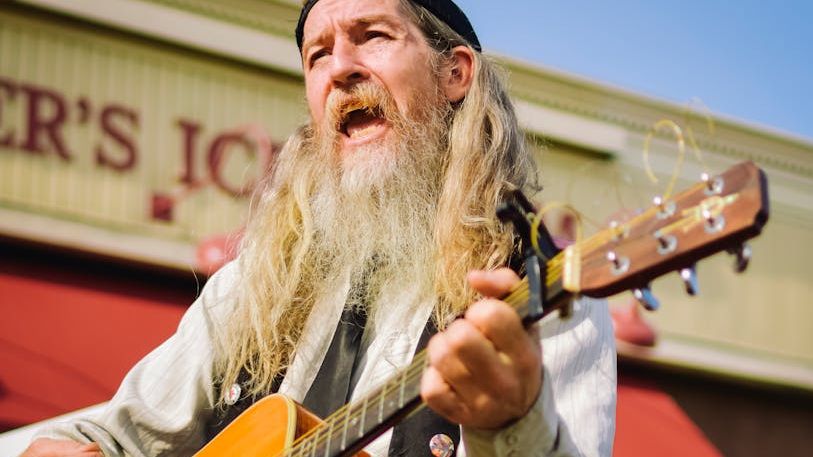
A Childhood Lost to Reform Schools and Prisons (Image Credits: Pexels)
David Allan Coe, whose raw songwriting fueled outlaw country’s rebellious spirit, passed away on April 29, 2026, at the age of 86.[1][2] The singer, known for penning anthems of defiance like “Take This Job and Shove It,” spent much of his youth behind bars before transforming hardship into hits that resonated across generations. His widow confirmed the death to Rolling Stone, leaving fans mourning a figure who lived as wildly as he sang.[1]
A Childhood Lost to Reform Schools and Prisons
Born on September 6, 1939, in Akron, Ohio, Coe faced a turbulent start. Reform authorities sent him to the Starr Commonwealth for Boys at age nine after early misbehavior. He spent the next two decades cycling through correctional facilities, including three years at the Ohio Penitentiary.[2]
Convictions included possession of burglary tools, auto theft, and indecent materials. Coe later exaggerated tales, such as claiming time on death row for killing an inmate, though records showed no murder charge. Inside, he discovered music, drawing inspiration from inmates like Screamin’ Jay Hawkins, who encouraged his songwriting. Release came in 1967, setting the stage for a Nashville odyssey.[1]
Arrival in Nashville and the Birth of an Outlaw
Coe arrived in Music City with little more than a hearse for shelter, parking it near the Ryman Auditorium to busk. He signed with Plantation Records and released his debut, Penitentiary Blues, in 1970, blending blues and country with prison-inspired themes. The album captured his hard-edged roots, earning notice in underground circles.[2]
Soon, Columbia Records came calling after Tanya Tucker’s chart-topping version of his “Would You Lay With Me (In a Field of Stone).” Coe adopted the “Mysterious Rhinestone Cowboy” guise, complete with a Lone Ranger mask and sparkling suit, performing unpredictably – sometimes riding a Harley onstage. This persona aligned him with the 1970s outlaw movement alongside Waylon Jennings and Willie Nelson, though peers saw through some embellishments. Waylon Jennings once noted Coe’s sincerity amid the chaos.[2]
Signature Songs That Echoed Rebellion
Coe’s pen produced timeless tracks that others turned into gold. Johnny Paycheck rode “Take This Job and Shove It” to number one in 1977, spawning a film and blue-collar solidarity. His own “You Never Even Called Me By My Name,” dubbed the perfect country song with its humorous epilogue, peaked at number eight.[3]
- “The Ride” (1983), a ghostly encounter tale that hit number four on Billboard.
- “Mona Lisa Lost Her Smile” (1984), reaching number two.
- “Longhaired Redneck,” defending working-class grit against stereotypes.
- “Tennessee Whiskey,” later revived by others.
Over 40 albums marked his output, from concept records like Human Emotions to collaborations with Pantera on Rebel Meets Rebel. Eight Top 40 Billboard country singles underscored his chart presence, even as his solo peaks varied.[4]
Controversies, Legal Woes, and Unyielding Defiance
Coe courted scandal with X-rated albums Nothing Sacred and Underground Album, featuring slurs and raunch that drew racism accusations – he denied them, pointing to his Black drummer and prison shows. A Confederate flag on his guitar fueled debates, yet he condemned bigotry at times. Six marriages and child support battles added to the tabloid lore.[5]
Legal troubles persisted. In 2015, he pleaded guilty to tax obstruction, owing nearly $1 million; probation followed in 2016. A 2013 Florida crash left him injured, but he toured relentlessly into his 80s, surviving COVID-19 at 82. Father to five children, including podcaster Tyler Mahan Coe, he embodied the outlaw ethos to the end.[2]
A Legacy Forged in Fire and Song
His representative captured the sentiment: “David was a Country Music treasure and loved his fans. Most importantly, he was a true outlaw and a great singer, songwriter, and performer.”[5] Coe’s widow echoed the loss: “One of the best singers, songwriters, and performers of our time… I’ll never forget him and I don’t want anyone else to ever forget him either.”[1] Though never a Hall of Famer by vote, his influence rippled through genres, from Kid Rock tours to modern revivals.
The man who turned prison blues into platinum defiance leaves a catalog that still challenges Nashville’s polish. Fans remember not just the hits, but the unfiltered life that birthed them – a testament to resilience amid rebellion.