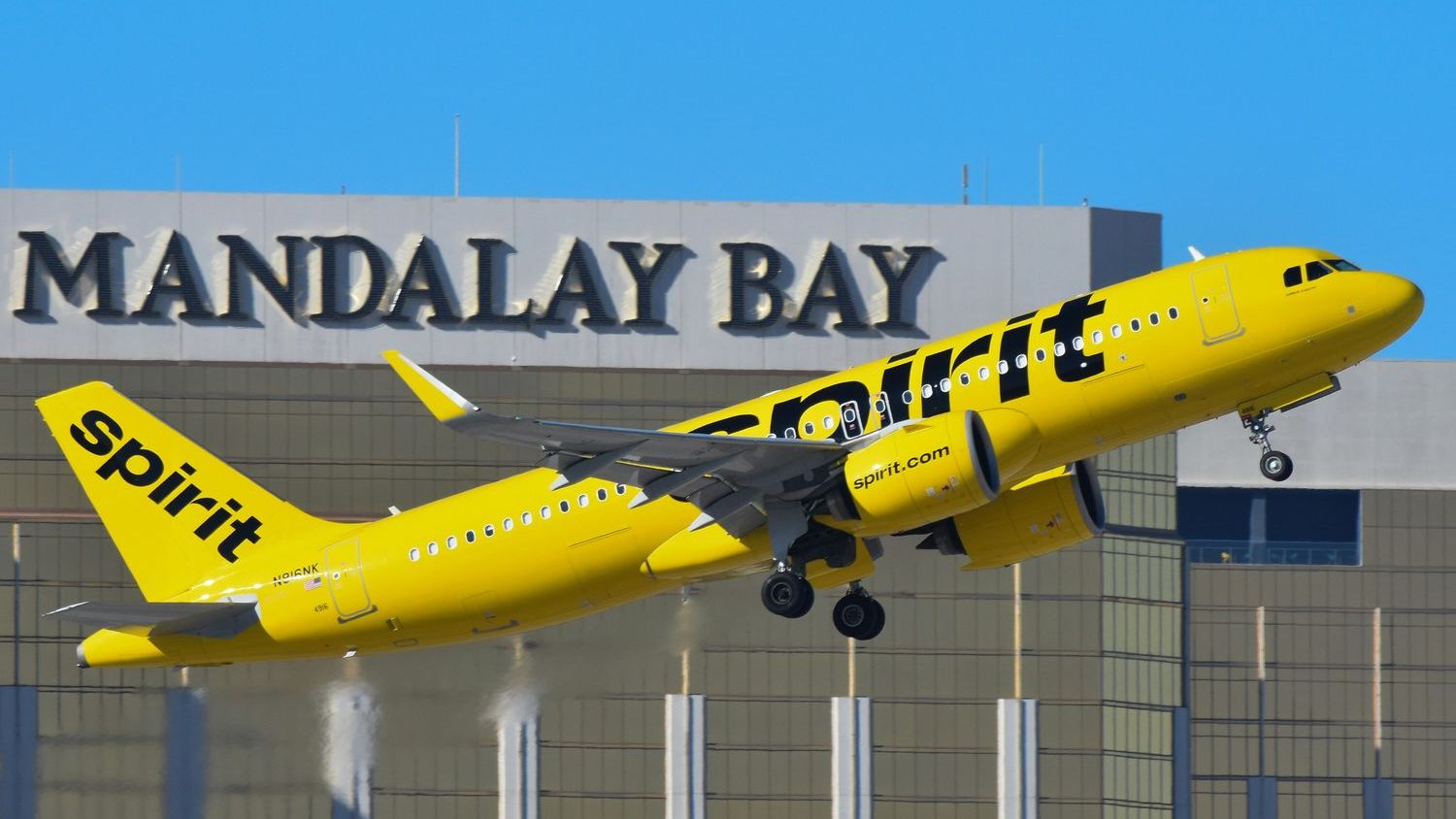
Why the end of Spirit Airlines could mean higher fares for everyone – Image for illustrative purposes only (Image credits: Unsplash)
Las Vegas — Budget travelers who relied on Spirit Airlines for cheap getaways to the Strip now confront a stark new reality. The carrier halted all operations on May 2, 2026, after 34 years in business, leaving passengers at Harry Reid International Airport scrambling for alternatives.[1][2] Empty ticket counters and canceled flights marked the end of an era that had kept airfares competitive for leisure destinations like Las Vegas. Officials at the airport urged affected flyers to seek refunds through credit card issuers or booking agents while exploring options with other carriers.
Stranded Passengers Greeted by Silence
Passengers arrived at Harry Reid International Airport early on May 2 expecting routine check-ins, only to find Spirit’s counters abandoned and flight boards flashing cancellations. One traveler, identified as Bill, pulled his suitcase to the gate for a flight to John Wayne Airport in Orange County but discovered no staff or service available.[3] He pivoted to Southwest Airlines, which covers many of Spirit’s former routes.
Others faced similar disruptions. Alexandra Siegel completed online check-in but could not board her flight and awaited a refund with no immediate resolution from the airline. Her friend managed to rebook elsewhere, highlighting the patchwork of solutions passengers pursued. Olivia Villegas, a frequent visitor, lamented that inexpensive trips to Las Vegas had become a thing of the past. The airport confirmed Spirit had served 16 direct markets from the hub, all now operated by competing airlines.[2][4]
Even non-Spirit customers felt the ripple effects. Jerry and Sharon Guzdziol, en route from Las Vegas to Detroit on Delta, discovered their nonstop had sold out to displaced Spirit passengers. Delta rebooked them through Raleigh-Durham, delaying their arrival by hours without compensation or amenities.[3]
Spirit’s Footprint in Las Vegas Travel
Spirit Airlines played a pivotal role in making Las Vegas accessible to price-sensitive leisure seekers. In the first quarter of 2026 alone, it transported 419,917 passengers through Harry Reid, ranking as the eighth-busiest carrier there.[1] The airline averaged 70 daily flights to 10 destinations, including high-volume routes to Santa Ana and Burbank in California, both now handled primarily by Southwest.
Its ultra-low-cost model pressured rivals to offer competitive pricing, particularly for vacation hubs like Las Vegas. Spirit carried about 50,000 passengers nationwide on its final day of operations, with a notable presence in leisure markets. The carrier’s statement captured the moment: “It is with great disappointment that on May 2, 2026, Spirit Airlines started an orderly wind-down of our operations, effective immediately. All flights have been canceled, and customer service is no longer available.”[1]
Partner offer
Financial woes accelerated the collapse. Spirit reported over $2.5 billion in losses since 2020, filed for Chapter 11 bankruptcy twice — in November 2024 and August 2025 — and grappled with $8.1 billion in debts amid soaring jet fuel prices tied to the Iran war. A proposed $500 million government bailout fell through.
Fewer Options Mean Steeper Prices
The exit of Spirit reduces capacity on key routes, setting the stage for fare increases. Aviation analysts predict average round-trip prices could jump 23 percent — roughly $60 — on paths where the carrier once flew, as demand outstrips supply.[5] Las Vegas, a prime leisure destination, stands particularly vulnerable, with experts warning of broader pressure on ticket costs.
Spirit’s model had long disciplined the market by offering bare-bones service at rock-bottom rates. Without that competitive force, established carriers hold greater leverage. Capacity at Las Vegas had already shrunk, with Spirit offering half as many seats in May 2026 compared to the prior year. Tourism officials and unions had cautioned that the shutdown would harm consumers through elevated airfares and eliminate around 17,000 jobs industry-wide.[1]
Rival Carriers Step In with Rescue Fares
Several airlines moved quickly to accommodate displaced Spirit customers, offering capped or discounted tickets for limited periods. The U.S. Department of Transportation highlighted these efforts, including special pricing to ease rebooking.
- Frontier Airlines: Systemwide rescue fare discounts and a $199 GoWild All-You-Can-Fly Summer Pass; expanding on over 100 ex-Spirit routes with nine new additions and 15 daily flights across 18 markets.[1]
- Allegiant Air: 50 percent back in Allways Rewards points on rebooked itineraries through May 12, using code ALLWAYSTHERE.[4]
- United Airlines: One-way fares capped at $199 to $299 on select routes.
- JetBlue: $99 rescue fares for 72 hours.
- Southwest: Special fares available at counters through May 6.[5]
Travelers must provide proof of original Spirit bookings, though availability varies and some fares exceed Spirit’s originals. Refunds process automatically for credit card purchases, while voucher holders await bankruptcy proceedings.
What Lies Ahead for Vegas Bound Flyers
While ultra-low-cost competitors like Frontier and Allegiant plan expansions, the timeline for fully backfilling Spirit’s slots remains uncertain — potentially three to six months. Summer travel peaks could see the sharpest price hikes before new capacity arrives.[5]
Las Vegas tourism, fueled by affordable access, now navigates reduced options. Frequent budget flyers may shift plans, opt for driving or buses, or accept pricier tickets. The loss underscores how one carrier’s low-fare pressure benefited everyday travelers, leaving a void that higher costs now fill for those chasing neon lights on a dime.
Partner offer
Planning a trip to Vegas?
Compare hotel rates and show tickets on VEGAS.com.