Some detectives show up once and vanish. Others walk into a first book and stay for decades, sometimes outliving their authors. The novels below are the debut appearances of characters who went on to anchor some of crime fiction’s longest-running series.
Each entry covers the book, the year it appeared, and what followed. The details come from publication history that is well established, so nothing here depends on recent news.
A Study in Scarlet (1887): Sherlock Holmes
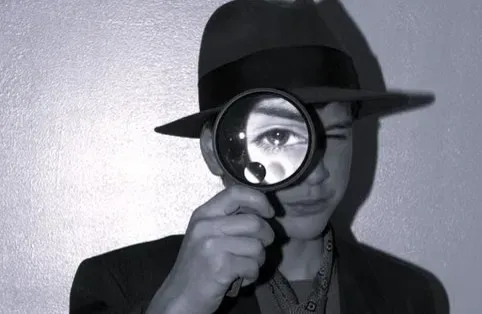
Arthur Conan Doyle’s first Sherlock Holmes story appeared in Beeton’s Christmas Annual in 1887. It also introduced Dr. John Watson, who narrates and gives readers a way into Holmes’s methods. The book is short and a little lopsided, with a long flashback to the American West in its second half.
Doyle went on to write four novels and fifty-six short stories about the detective. Few characters in fiction have been adapted as often, and new versions of Holmes keep appearing on screen and in print.
The Mysterious Affair at Styles (1920): Hercule Poirot

Agatha Christie’s first published novel brought Belgian detective Hercule Poirot to readers in 1920. The story is set in an English country house, and Captain Hastings narrates it. That pairing of a brilliant outsider and a loyal, slightly dim friend echoed Holmes and Watson.
Poirot appeared in dozens of novels and short stories across more than five decades. Christie published his final case, Curtain, in 1975, the year before her death.
Whose Body? (1923): Lord Peter Wimsey

Dorothy L. Sayers introduced Lord Peter Wimsey in Whose Body? in 1923. He’s an aristocratic amateur who hides sharp intelligence behind a light, chatty manner. His valet Bunter helps him with his investigations.
Sayers developed Wimsey over several novels, and the series grew more serious as it went. Later books such as Gaudy Night and Busman’s Honeymoon add the character of Harriet Vane, who gives the series emotional depth.
The Maltese Falcon (1930): Sam Spade

Dashiell Hammett’s The Maltese Falcon was serialized in Black Mask magazine in 1929 and 1930, then published as a novel in 1930. It features San Francisco private eye Sam Spade. Hammett wrote the book in a spare, objective style that gave hard-boiled fiction much of its template.
Spade is an unusual entry on this list, because he’s the lead of only one novel. He did appear in a few short stories, so his run was brief. Still, his influence on later private eyes was large, which is why he belongs in a discussion of series characters.
Partner offer
The Big Sleep (1939): Philip Marlowe

Raymond Chandler published The Big Sleep in 1939, introducing Los Angeles private investigator Philip Marlowe. Chandler’s prose is known for its sharp similes and moody view of the city. The plot is famously tangled, and even Chandler reportedly couldn’t explain every detail of it.
Marlowe returned in several more novels, including Farewell, My Lovely and The Long Goodbye. Chandler completed seven novels in the series, and other authors have written new Marlowe books since.
Fer-de-Lance (1934): Nero Wolfe

Rex Stout introduced Nero Wolfe in Fer-de-Lance in 1934. Wolfe is a very large, orchid-growing genius who rarely leaves his New York brownstone. His assistant Archie Goodwin does the legwork and narrates.
Stout kept writing about Wolfe for about forty years, ending with A Family Affair in 1975. That’s a remarkably steady run for a series built on such a fixed set of habits.
Last Seen Wearing (1952)? Not Quite: Fell of Dark Alternatives, Starting with Inspector Maigret in Pietr the Latvian (1931)

Georges Simenon’s Pietr the Latvian, published in 1931, was the first Maigret novel. It introduced Paris police commissaire Jules Maigret, who solves cases through patience and an understanding of people rather than through flashy deduction.
Simenon wrote dozens of Maigret novels and stories over several decades. The books are short, atmospheric, and still widely read in translation.
Rogue Male Aside, Start with Rebus: Knots and Crosses (1987)

Ian Rankin’s Knots and Crosses, published in 1987, introduced Edinburgh detective John Rebus. At the time, nobody could have known it would turn into one of the best known British police series. Rankin has said little of that early work was planned as a long series.
Rebus later returned in many novels, and the character’s career has been extended well beyond a normal police retirement. Rankin brought him back in new books after the original run ended, which shows how durable the character proved.
A Is for Alibi (1982): Kinsey Millhone

Sue Grafton published A Is for Alibi in 1982, introducing Santa Teresa private investigator Kinsey Millhone. The title began an alphabet series, a structure that gave readers a clear sense of where the story was headed.
Grafton reached Y Is for Yesterday in 2017. She died in 2017 before writing a Z book, and her family has said the series would end without one.
Partner offer
Planning a trip to Vegas?
Compare hotel rates and show tickets on VEGAS.com.