When Americans speak of the “Founding Fathers,” they usually have a group of about six men in mind: George Washington, Thomas Jefferson, Ben Franklin, James Madison, and John Adams, for sure, and maybe Alexander Hamilton or Samuel Adams. Let’s be real, that’s about the extent of what most of us learned in school. We know the flashy signatures, the faces on the money, the monuments scattered across Washington. Yet here’s the thing that might surprise you: there were many men and women who played an important role in shaping America in its infancy who are not as well known. This is especially the case for women and minorities.
Today “founders” has replaced “founding fathers” in our lexicon to denote the place of women in America’s founding properly. Further, under-represented groups such as African-Americans and Native Americas are recognized as founders. Turns out, the real story of American independence involves far more players than the traditional textbook heroes. Some gave their fortunes. Some risked their lives. Some wrote the words that swayed public opinion before the first shot was fired. But they’ve slipped into the shadows of history.
The Polish Immigrant Who Financed the Revolution

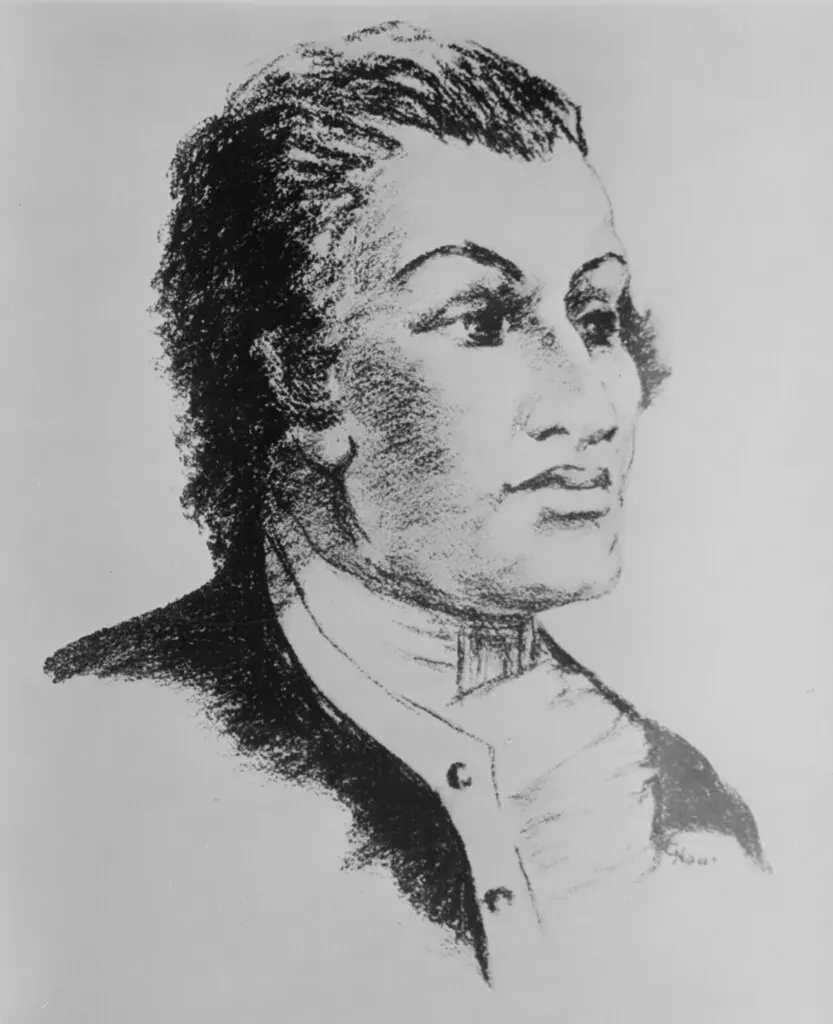
Haym Salomon was a Polish-born American merchant best known for his actions during the American Revolution, where he was one of the prime financiers to the Continental Congress. Most people have never heard his name, which is honestly shocking when you consider what he did. From the period from 1781 to 1784, records show Salomon’s fundraising and personal lending helped provide over $650,000 in financing to General George Washington in his war effort.
Here’s where it gets dramatic: during the critical moments before Yorktown in 1781, Washington desperately needed funds to move his army south to trap the British. Washington determined that he needed at least $20,000 to finance the campaign. When Morris told him there were no funds and no credit available, Washington said: “Send for Haym Salomon”. Salomon raised the money, enabling the final decisive victory. Think about that. Without this Jewish immigrant broker, the war might have ended differently. The financier died suddenly and in poverty on January 6, 1785, in Philadelphia. Due to the failure of governments and private lenders to repay the debt incurred by the war, his family was left penniless at his death at age 44. The hundreds of thousands of dollars of Continental debt Salomon bought with his own fortune were worth only about 10 cents on the dollar when he died.
An Enslaved Spy Who Turned the Tide at Yorktown


The next name you should know is James Armistead Lafayette, an enslaved man who became one of the most effective spies of the Revolutionary War. James Armistead Lafayette was an enslaved African American who served the Continental Army during the American Revolutionary War under the Marquis de Lafayette, and later received a legislative emancipation. As a double agent, he reported the activities of Benedict Arnold after he had defected to the British and of Lord Charles Cornwallis during the run-up to the siege of Yorktown. He fed the British false information while disclosing very accurate and detailed accounts to the Americans.
What makes his story even more incredible is how he operated. Posing as a runaway slave, James joined former Continental Army officer Benedict Arnold’s camp in Portsmouth, Virginia ostensibly as a spy for the British. This role allowed Armistead to gain Arnold’s confidence, in part by guiding British troops through local roads. Imagine the guts that required. He could have been executed at any moment. Perhaps the most significant contribution James made to the war effort was when he provided evidence that Cornwallis was sending 10,000 troops from Portsmouth, Virginia to Yorktown, Virginia. Thanks to his warning, Lafayette was able to alert Washington in time. Washington and French General Rochambeau incorporated James’ information into their plan for a joint American and French blockade and bombardment that caught the British off guard and eventually led to their surrender on October 19, 1781.
Frustratingly, after the war ended, James returned to slavery. Although Virginia enacted a manumission act in 1782 allowing for the freedom of any slave who had fought in the Revolutionary War, James Armistead remained the property of William Armistead. James had served as a spy, not a soldier, and did not carry a gun. However, James persisted and succeeded with the support of William Armistead and Lafayette’s personal 1784 testimonial as to James’s service. On January 9, 1787, Virginia’s governor signed James’s petition, which both houses of the assembly had passed.
The Woman Who Wrote Revolution Into Being

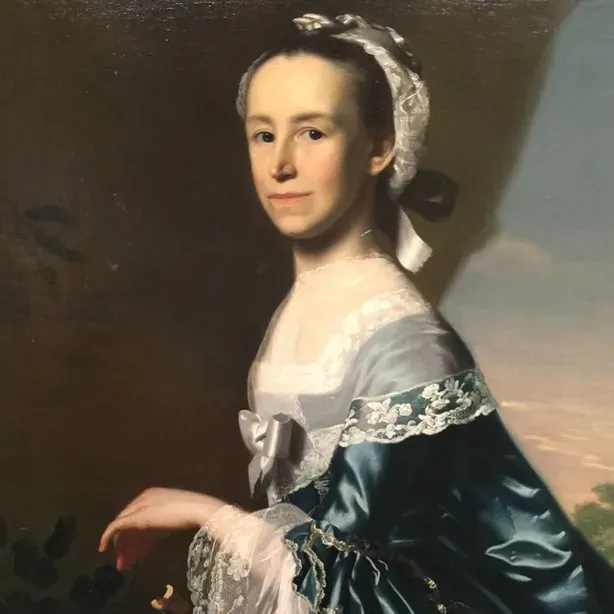
Mercy Otis Warren was an American activist poet, playwright, and pamphleteer during the American Revolution. During the years before the Revolution, she had published poems and plays that attacked royal authority in Massachusetts and urged colonists to resist British infringements on colonial rights and liberties. At a time when women were expected to remain silent on political matters, Warren wielded her pen like a weapon.
Warren wrote several plays, including the satiric The Adulateur, directed against Governor Thomas Hutchinson of Massachusetts, The Adulateur foretold the War of Revolution. Her plays weren’t just entertainment. They were scathing political commentary that shaped public opinion against British rule. She corresponded with John Adams, Thomas Jefferson, and George Washington as an intellectual equal. That wasn’t typical for anyone, let alone a woman in the 1770s.
In 1805, Warren published one of the earliest histories of the American Revolution, a three-volume History of the Rise, Progress, and Termination of the American Revolution. This was among the first nonfiction book published by a woman in America, and she was the third woman to publish a book of poems. She documented the Revolution from an insider’s perspective, having witnessed many of the era’s key events firsthand through her husband’s political career.
The Forgotten Signer Who Signed Everything

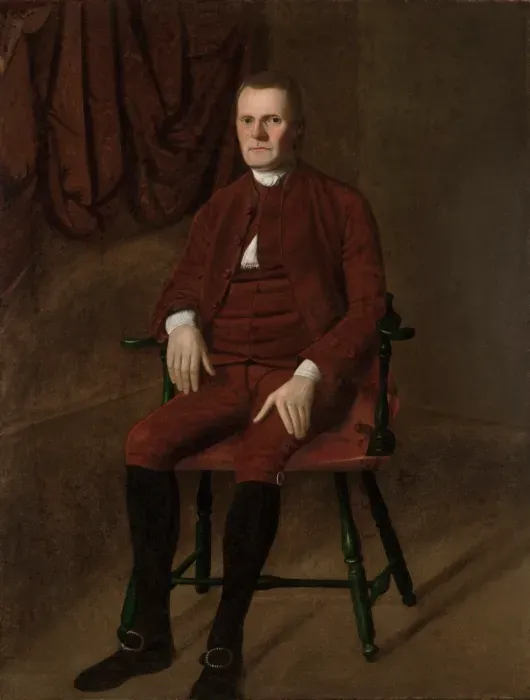
Roger Sherman was another devout evangelical from Connecticut, Sherman was the only Patriot to sign all four of the great American founding documents: the Continental Association, the Declaration of Independence, the Articles of Confederation, and the Constitution. Let that sink in for a second. Franklin, Adams, Jefferson? None of them signed all four. Sherman did.
Roger Sherman had served in the First and Second Continental Congresses, Connecticut House of Representatives and Justice of the Peace before attending the Constitutional Convention as a delegate. After the Constitution was ratified he served in both the U.S. House of Representatives and the U.S. Senate representing his home state of Connecticut. He was the only Founder to sign all four of the major founding documents, the Continental Association, Declaration of Independence, Articles of Confederation, and the U.S. Constitution. Couldn’t be bothered to show up for everything? Apparently the more famous founders had other priorities.
The Minister Who Signed the Declaration

John Witherspoon was a Scots Presbyterian minister, president of Princeton, and teacher of James Madison, Witherspoon was elected to serve in the Continental Congress, and signed the Declaration of Independence (the only clergyman to do so). This Scottish immigrant brought not just religious conviction but also political philosophy that would shape the thinking of future leaders. He educated a generation of revolutionary thinkers at Princeton, including Madison, who would go on to become the architect of the Constitution.
Witherspoon’s influence extended far beyond his signature on that famous document. His students spread throughout the new nation, carrying his ideas about republicanism, liberty, and governance. Without his intellectual contributions filtered through dozens of influential students, the philosophical foundations of American government might have looked quite different.
The Biracial Patriot Who Challenged Slavery

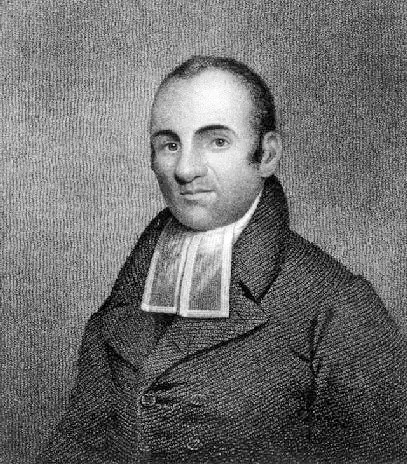
Haynes was the son of a white mother and African father, and worked as an indentured servant before enlisting in the colonial militia – many don’t realize that more than 5,000 Africans (both enslaved and free) fought in the Revolutionary War. Lemuel Haynes took his experience and used it to challenge the nation’s greatest contradiction. A writer and poet, Haynes penned in 1776 an influential essay called “Liberty Further Extended” in response to the Declaration of Independence. A treatise against slavery, Haynes argued that liberty for one group of people justly meant freedom for all.
His argument was radical and ahead of its time. While the Founding Fathers debated taxation and representation, Haynes pointed out the glaring hypocrisy: how could a nation founded on liberty continue to enslave human beings? Haynes went on to become a preacher, where his congregations included both white and Black worshippers (not the norm of the day.) He lived the principles of equality that many others only discussed in theory.