It’s easy to assume that the tools and technologies shaping our daily lives are products of recent decades. We tap screens, drive cars, and pour water from a faucet without pausing to think about who first dreamed these things up. Whether it is your phone’s alarm clock or the navigation system in your car, many devices that help us comfortably live our lives are embedded in our day-to-day routine, and some of the most advanced technologies we use today actually came up many thousands of years ago, thanks to the genius of ancient civilizations. The story of human ingenuity stretches back much further than most of us imagine – and these six inventions prove it.
The Wheel: Humanity’s Most Defining Round Trip

The oldest known wheel found in an archaeological excavation is from Mesopotamia and dates to around 3500 BC. The wheel was invented around 3500 BCE in Mesopotamia, and was actually predated by inventions like the lever and pulley, the plough, and needlework. Given the complexity of the wheel-axle combination, the wheel was not initially invented for transportation purposes. Instead, it has been claimed that wheels were first used by potters – and it was a potter’s wheel for Mesopotamia. The use of wheels for transportation only happened around 300 years later.
The spoked wheel was invented around 2000 BCE in Anatolia. The design, which is still in use today, features a central hub connected to the rim by thin rods known as spokes. Spokes improved travel by making the wheel lighter, easier to repair, and more shock-absorbent than solid wheels. Originally designed for warfare, spoked wheels are now common in motorbikes, mountain bikes, and even roller skates. Wheels turned long journeys into manageable trips, making trade and exploration easier. Chariots and war carts changed warfare, while carts and rollers made the construction of large structures easier. From early gear systems and mechanical clocks to grain mills and modern vehicles, the wheel sparked countless other inventions.
Roman Concrete: The Self-Healing Building Material That Beats Modern Science

The ancient Romans were masters of engineering, constructing vast networks of roads, aqueducts, ports, and massive buildings whose remains have survived for two millennia. Many of these structures were built with concrete: Rome’s famed Pantheon, which has the world’s largest unreinforced concrete dome and was dedicated in 128 C.E., is still intact, and some ancient Roman aqueducts still deliver water to Rome today. Meanwhile, many modern concrete structures have crumbled after just a few decades. Roman concrete structures have lasted over 2,000 years, compared to 50 to 100 years for modern concrete, offering insights for developing more durable and sustainable building materials today.
Research in 2023 found that lime clasts, previously considered a sign of poor aggregation technique, react with water seeping into any cracks. This produces reactive calcium, which allows new calcium carbonate crystals to form and reseal the cracks. These lime clasts have a brittle structure that was most likely created in a “hot-mixing” technique with quicklime rather than traditional slaked lime, causing cracks to preferentially move through the lime clasts, thus potentially playing a critical role in the self-healing mechanism. More recently, in a 2025 study, engineers compared the raw material and energy requirements of Roman-style concrete to those of modern Portland cement. They found that while Roman-style mixes require more water and initial energy input, their longer lifespan could make them more sustainable over time.
Aqueducts: Ancient Plumbing That Still Flows Today

Over a period of 500 years – from 312 BCE to 226 CE – eleven aqueducts were built to bring water to Rome from as far away as 92 kilometers (57 miles). Some of those aqueducts are still in use. Gravity and the natural slope of the land allowed aqueducts to channel water from a freshwater source, such as a lake or spring, to a city. As water flowed into the cities, it was used for drinking, irrigation, and to supply hundreds of public fountains and baths. An ancient type of technology, aqueducts were used by civilizations like the Romans to transport water over long distances. These engineering marvels used gravity and a system of arches and channels to supply cities with fresh water for public baths, drinking, and irrigation, showcasing an advanced understanding of hydraulics and civil engineering.
The Aqua Virgo, built in 19 BC, is still in use today. It continues to supply water to several of Rome’s most famous fountains – including the iconic Trevi Fountain. That’s right: the coin you toss into the fountain is carried by water flowing through a system that is more than two millennia old. Near the Peruvian town of Nazca, an ancient pre-Columbian system of aqueducts called puquios were built and are still in use today. They were made of intricately placed stones, a construction material widely used by the Nazca culture.
Paper: The Original Information Technology

The use of paper dates back 2,000 years to when Ts’ai Lun, a Chinese court official, first made it in Lei-Yang, China. He achieved this feat by mixing water with hemp, rags, and mulberry bark and squeezing out the water. Afterward, he hung up thin mats to dry in the sun. The invention of paper drastically changed how information could be stored and transmitted between different people around the world. Ancient Egyptians found a way of writing on papyrus paper around 3000 B.C., meaning the concept of a flat writing surface predates even Cai Lun’s refined process by millennia.
The invention of paper led to an increase in literacy as well as better communication. It enabled people to record their thoughts and ideas that may otherwise have been forgotten or lost over time. Today, paper is still used in many different forms. It is an essential part of everyday life and can be seen almost everywhere, from books, newspapers, and magazines to receipts, cards, and envelopes. Even with the rise of computing power, paper continues to be a reliable medium for retaining important information. Despite the digitization of information these days, this ancient invention has not gone out of fashion. The global demand for paper is still expected to rise steadily throughout the next decade.
The Compass: An Ancient Invention That Didn’t Know Its Own Purpose
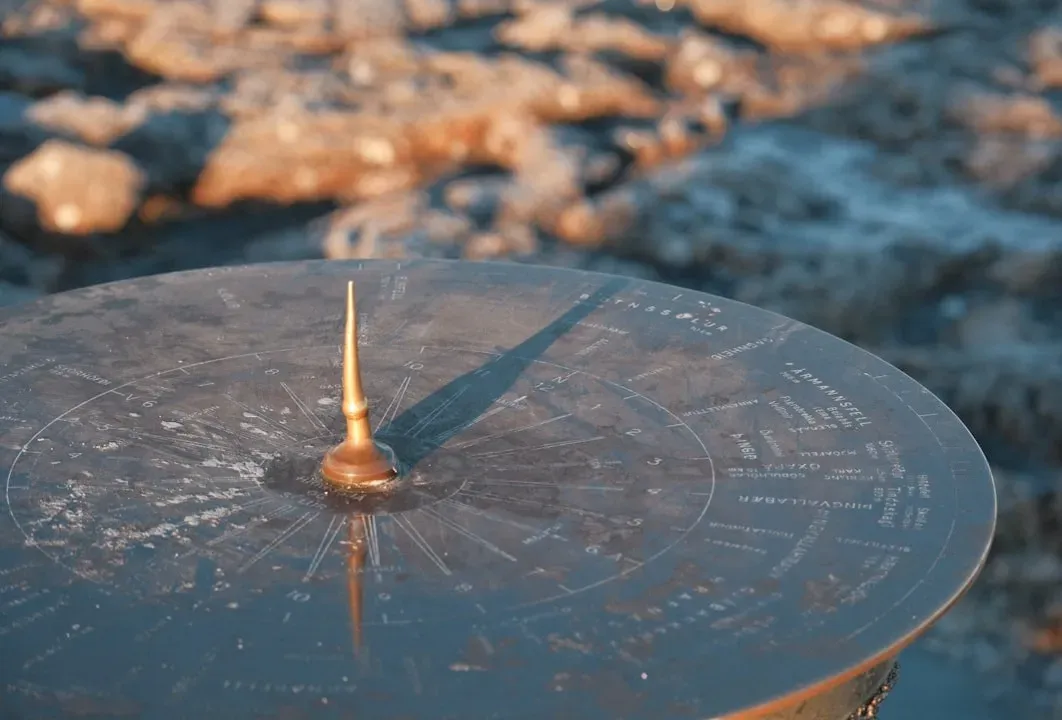
The magnetic compass is almost 2,000 years old and originates from Han China, from around 200 CE to 220 CE. For several centuries after its invention, however, it was used for geomancy and feng shui rather than navigation. It was only between 850 CE and 1050 CE that the compass started to be used for navigation. The first compass was invented in China during the Han dynasty between the 2nd century BC and 1st century AD; it was made of lodestone, a naturally magnetized iron ore, the attractive properties of which they had been studying for centuries.
It was used for navigation for the first time during the Song Dynasty, between the 11th and 12th centuries, and soon after, the technology spread to the West through nautical contact. The compass enabled mariners to navigate safely far from land, opening up the world for exploration and the subsequent development of global trade. An instrument still widely used today, the compass has transformed our knowledge and understanding of the Earth forever. The first mention of the compass in Europe dates from 1190 and is from Alexander Neckam’s De naturis rerum (On the Natures of Things). It is unclear whether the invention found its way to the Middle East and Europe via China, or if these places invented the compass independently.
The Alarm Clock: Ancient Greece’s Wake-Up Call

The alarm clock is one of today’s most commonly used gadgets, and it also originates from ancient Greece. The first alarms used by ancient Greeks were nothing like the ones today. They used an integrated mechanism to time the alarm, which would sound off delicate water organs or drop pebbles into drums. The ancient Greek philosopher Plato (428–348 BCE) was said to possess a large water clock with an unspecified alarm signal similar to the sound of a water organ; he used it at night, possibly for signalling the beginning of his lectures at dawn.
The Hellenistic engineer and inventor Ctesibius (285–222 BCE) fitted his clepsydras with a dial and pointer for indicating the time, and added elaborate alarm systems which could drop pebbles on a gong or blow trumpets at pre-set times. The first mechanical alarm clocks appeared in the 15th century, and were set by pushing a pin into one of a series of holes on a clock face. From that ancient water organ echoing through a Greek courtyard to the smartphone vibrating on a modern bedside table, the core concept – a device that forces you awake at a chosen moment – has never really changed. It is one of the most quietly persistent ideas in all of human history, and it still wakes the world every single morning.