



Imagine flipping through dusty manuscripts written thousands of years ago and stumbling upon descriptions that sound eerily like smartphones, airplanes, or even quantum physics. Sounds like science fiction, right? Yet scattered across ancient civilizations are texts containing knowledge that seems impossibly advanced for their time. Some describe phenomena we’ve only recently understood through modern science, while others hint at technologies we’re still trying to perfect.
These aren’t just vague prophecies or lucky guesses. We’re talking about specific descriptions of atomic theory, astronomical measurements accurate to decimal points, and medical procedures that wouldn’t be “discovered” again for millennia. The question that keeps historians and scientists up at night is simple: How did they know? Let’s dive into some of the most mind-blowing examples.
The Rigveda’s Atomic Structure


Written somewhere between 1500 and 1200 BCE, the ancient Indian Rigveda contains passages describing matter as composed of infinitely small particles called “anu” (atoms). The text describes these particles as indivisible and eternal, forming all physical reality through various combinations. This concept wouldn’t resurface in Western science until John Dalton proposed atomic theory in 1803.
What’s truly shocking is how the Rigveda goes further. It suggests these particles are in constant motion and bound by invisible forces. The ancient sages even proposed that destroying these particles would release tremendous energy. Sound familiar? That’s essentially E=mc² described millennia before Einstein was born.
Scholars remain divided on whether this represents genuine scientific insight or philosophical speculation that happened to align with later discoveries. Either way, the accuracy is unsettling.
The Antikythera Mechanism’s Cosmic Calculations


Discovered in a shipwreck off the Greek island of Antikythera in 1901, this corroded bronze device dates back to around 100 BCE. For decades, nobody could figure out what it was. Then X-ray analysis revealed something extraordinary: an ancient analog computer designed to predict astronomical positions and eclipses decades in advance.
The mechanism contained at least 30 meshing bronze gears calculating the movements of the sun, moon, and planets with shocking precision. It even accounted for the elliptical orbit of the moon, a detail that wouldn’t be mathematically described until Kepler in the 17th century. The craftsmanship required knowledge of differential gearing that historians believed didn’t exist until medieval times.
Recent research suggests the device might have predicted the positions of all five planets known to ancient Greeks. We didn’t build anything this sophisticated again until the 14th century astronomical clocks. The technology simply vanished from history for over a thousand years.
Sushruta Samhita’s Surgical Precision


This ancient Indian medical text, compiled around 600 BCE, reads like a modern surgical textbook. Sushruta describes over 300 surgical procedures, 120 surgical instruments, and detailed anatomical studies. But here’s where it gets wild: he documented plastic surgery techniques including rhinoplasty (nose reconstruction) that wouldn’t appear in Western medicine until World War I.
The text explains cataract surgery through a procedure called couching, where a curved needle is used to push the clouded lens aside. Archaeological evidence confirms this surgery was actually performed, with success rates that seem impossible without modern understanding of eye anatomy. Sushruta even described sterilization methods using heat and described the importance of cleanliness, concepts that wouldn’t be accepted in Europe until the 19th century germ theory.
His classification of surgery into eight categories and description of anesthesia using cannabis and wine mixtures demonstrates a systematic approach to medicine that rivals contemporary practices. The level of anatomical detail suggests dissection and observation that contradicts what we thought ancient societies were capable of.
The Baghdad Battery’s Electric Mystery


Unearthed near Baghdad in 1936, these clay jars dating from around 250 BCE contain copper cylinders and iron rods. When filled with acidic liquid like vinegar or wine, they generate about 1.1 volts of electricity. The question that haunts archaeologists: Why would the ancient Parthians need batteries?
Some researchers believe they were used for electroplating gold onto silver objects, a process we didn’t officially invent until 1805. Others suggest they might have been used in early medical treatments, as ancient texts mention “tingling” treatments for ailments. The possibility that ancient civilizations understood electrochemistry fundamentally challenges our timeline of technological development.
Skeptics argue they might have been used for storing sacred scrolls or had religious purposes. But replicas have proven they genuinely produce electricity. Whether intentional or accidental, someone in ancient Mesopotamia created a functioning battery two millennia before Alessandro Volta.
The Vedic Description of Light Speed


The medieval Indian scholar Sayana, commenting on the Rigveda in the 14th century, calculated the speed of light with remarkable accuracy. Using measurements from ancient texts describing the sun’s chariot traversing certain distances, he arrived at approximately 186,000 miles per second. The actual speed of light is 186,282 miles per second.
This calculation came from analyzing verses about Surya, the sun god, and interpreting the poetic measurements as literal distances. While some dismiss this as coincidental pattern-matching in ancient poetry, the mathematical precision is harder to explain away. European scientists wouldn’t accurately measure light speed until Ole Rømer’s observations in 1676.
The methodology Sayana used suggests ancient Vedic scholars possessed sophisticated mathematical frameworks for understanding cosmic phenomena. Whether they actually measured light speed or stumbled upon the number through astronomical observations remains hotly debated.
The Piri Reis Map’s Antarctic Coastline

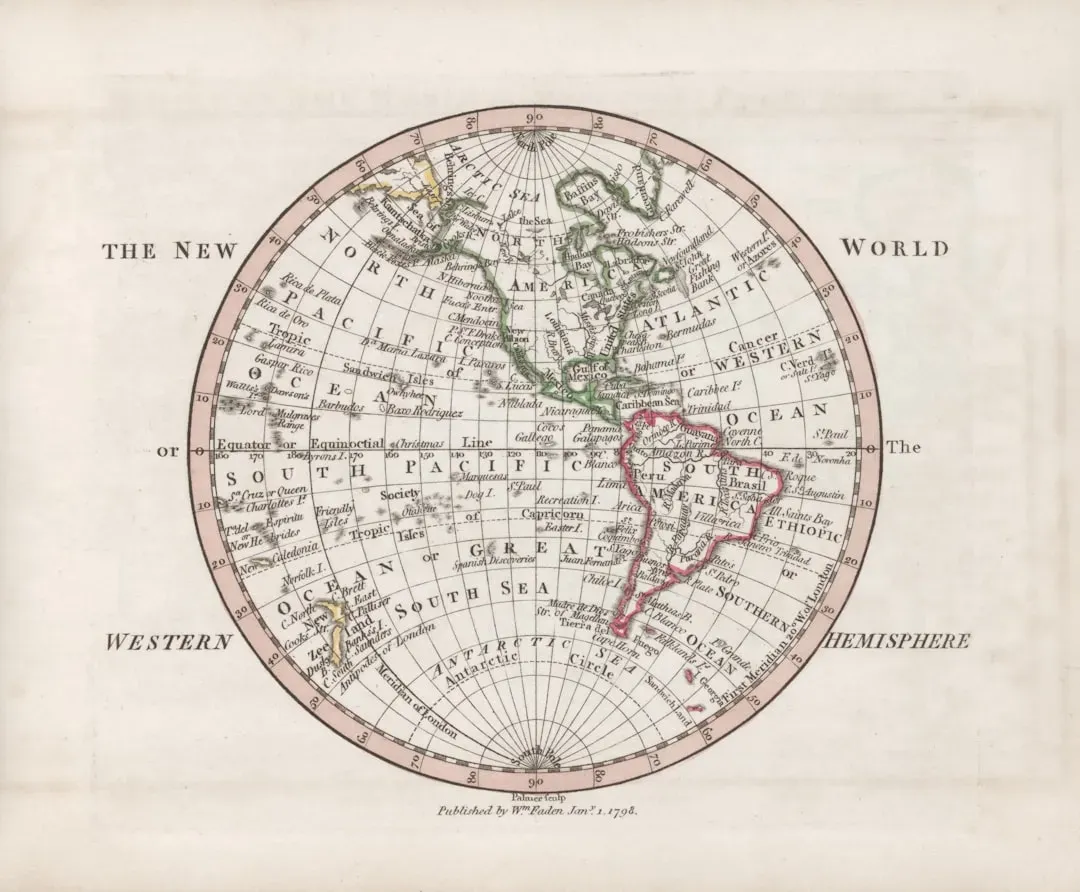
In 1513, Ottoman admiral Piri Reis created a world map that shouldn’t exist. It accurately depicts the coastline of Antarctica beneath the ice, showing geographical features we didn’t confirm until 1958 using modern sonar equipment. The problem? Antarctica wasn’t officially discovered until 1820, and its ice-free coastline hasn’t been visible for at least 6,000 years.
Piri Reis claimed he compiled his map from about twenty older source maps, some dating back to the time of Alexander the Great. This suggests ancient civilizations possessed detailed geographical knowledge of a continent that was supposedly unknown. The map’s accuracy in depicting South American coastlines and Caribbean islands also exceeds what early 16th-century explorers should have known.
Conventional explanations struggle with this one. How could ancient mapmakers chart Antarctica before it was covered in ice? Some suggest advanced ancient seafaring civilizations, while skeptics argue the similarities are exaggerated or coincidental. But the map exists, and its details remain difficult to explain.
Ancient Greek Nanotechnology in the Lycurgus Cup

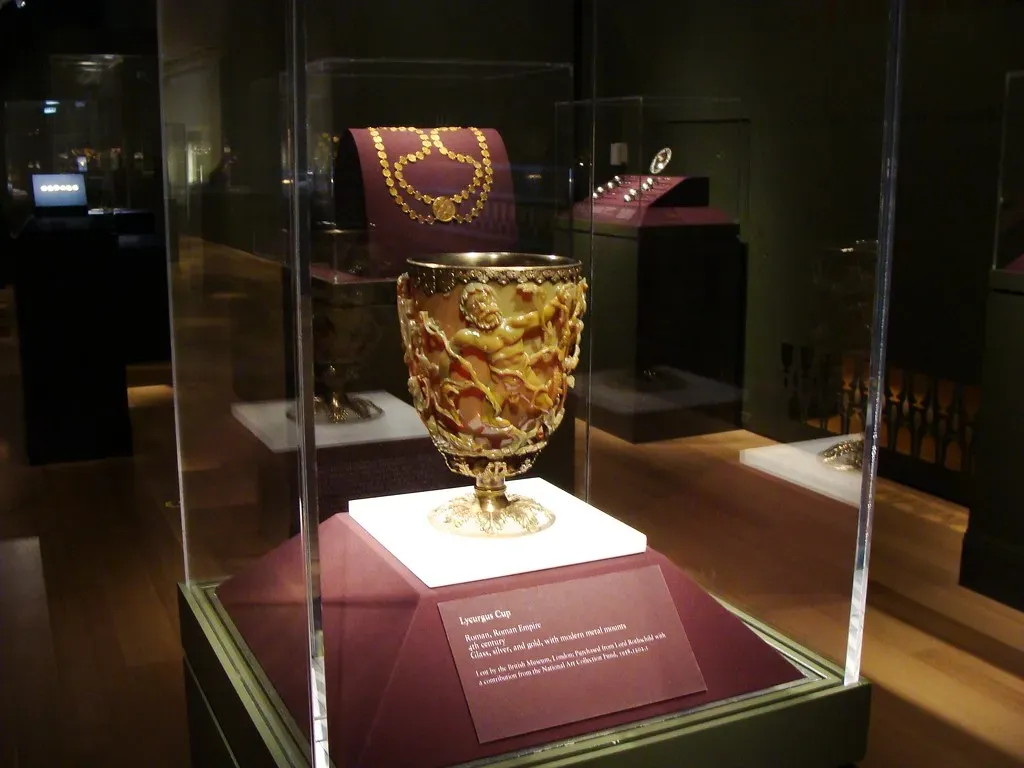
The Lycurgus Cup, a Roman glass chalice from the 4th century CE, demonstrates something we didn’t intentionally recreate until the 1990s: dichroic glass using gold nanoparticles. The cup appears jade green in reflected light but glowing red when light passes through it. This effect requires particles ground down to 50 nanometers, smaller than a wavelength of light.
When scientists analyzed the glass in 1990, they discovered gold and silver particles precisely sized and dispersed to manipulate light at the quantum level. This is nanotechnology, the cutting edge of modern materials science. The Romans somehow created this effect 1,600 years before we understood the physics involved.
Was it accidental experimentation, or did ancient craftsmen possess theoretical knowledge about particle sizes and light interaction? We know Roman glassmakers were skilled, but this level of precision suggests either remarkable trial-and-error or something more. Modern researchers are still trying to perfectly replicate the technique.
Conclusion: Knowledge Lost and Found


These ancient texts and artifacts force us to reconsider what we think we know about human intellectual history. The timeline of scientific progress isn’t as linear as we’d like to believe. Knowledge appeared, disappeared, and reappeared across millennia in patterns that challenge comfortable narratives about steady advancement from ignorance to enlightenment.
Perhaps ancient civilizations possessed sophisticated observational methods we’ve underestimated. Maybe philosophical reasoning occasionally stumbled onto truths that required modern technology to prove. Or possibly, knowledge was lost repeatedly through wars, natural disasters, and cultural collapses, forcing humanity to rediscover the same truths again and again.
The real question isn’t just how they knew, but what else might be hidden in texts we haven’t fully understood or artifacts we’ve misinterpreted. What do you think? Were ancient peoples more scientifically advanced than we give them credit for, or are we seeing patterns where none exist?


