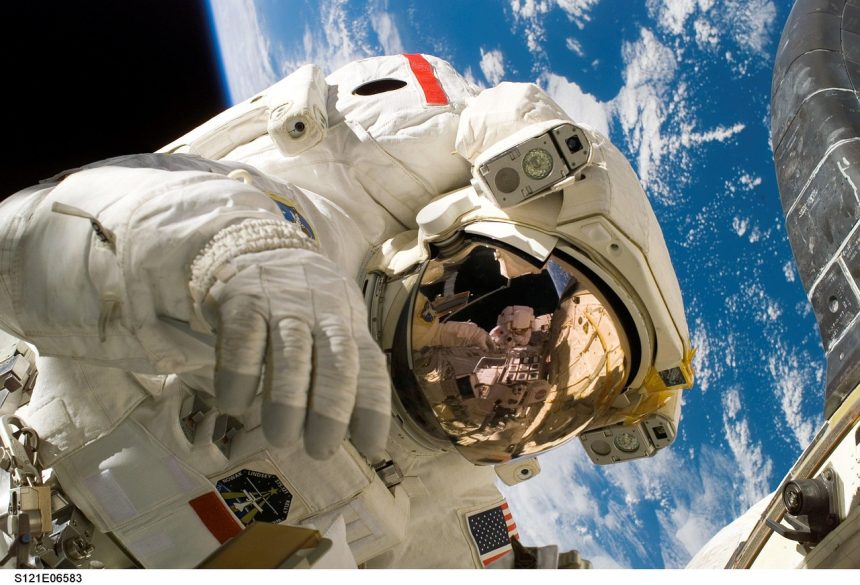

Stowing Gear for the Home Stretch (Image Credits: Pixabay)
The Artemis II astronauts completed final housekeeping tasks aboard their Orion spacecraft as it barreled toward Earth at the conclusion of a landmark 10-day mission. Commander Reid Wiseman, Pilot Victor Glover, Mission Specialist Christina Koch, and Mission Specialist Jeremy Hansen tidied the vehicle, known among the crew as the lunar cruiser, ahead of the dramatic atmospheric plunge.[1][2] During a news conference from orbit, they described their moon flyby as surreal and shared stories from the far side. Their journey represents NASA’s first crewed deep-space flight since Apollo 17 in 1972.
Stowing Gear for the Home Stretch
The crew dedicated much of Thursday to securing loose items and practicing emergency procedures. Engineers emphasized the need for a pristine interior to ensure safe reentry dynamics. Flight controllers monitored every step from Houston’s Mission Control.[1]
Orion’s couches received final adjustments, and the astronauts donned compression garments to combat post-landing dizziness. Stowage operations also preserved thousands of photos and data collected during the flight. Pilot Victor Glover highlighted the anticipation building around their return. “Riding a fireball through the atmosphere is profound as well,” he noted.[1]
Reflections from the Moon’s Far Side
Isolation behind the moon proved especially memorable for the crew. Cut off from Earth communications for nearly an hour on Monday, they conducted geological observations and savored the moment with maple cookies provided by Hansen.[3] Commander Wiseman called the experience surreal, a rare gift that demanded deep processing.
Emotional highs included naming a crater after Wiseman’s late wife, Carroll, which moved the team to tears. Glover described the total solar eclipse viewed from lunar distance as the mission’s greatest reward. Koch expressed fondness for the close-quarters camaraderie despite constant navigation challenges. These moments forged unbreakable bonds among the four explorers.[2]
Navigating the Fiery Reentry
Friday’s splashdown off San Diego demands pinpoint precision. Orion will strike the atmosphere at roughly 24,000 miles per hour, generating 5,000-degree heat on its shield.[1] Flight director Jeff Radigan stressed the critical entry angle, allowing just one degree of tolerance.
A modified trajectory, or “lofted” profile, aims to spare the heat shield undue stress after issues surfaced in the uncrewed Artemis I test. Recovery teams aboard the USS John P. Murtha stand ready with aircraft support, echoing Apollo-era collaborations. NASA officials acknowledged lingering risks but expressed confidence in the systems. The six-minute blackout during peak heating will test everyone’s resolve.
Mission Timeline and Key Achievements
| Date | Event |
|---|---|
| April 1, 2026 | Launch from Kennedy Space Center |
| April 6 | Lunar flyby; record distance of 252,756 miles from Earth |
| April 9 | Midpoint of return; final stowage |
| April 10 | Splashdown ~8:07 p.m. EDT off San Diego |
The flight shattered the Apollo 13 distance record and delivered unprecedented views of the lunar far side. Crew members beamed back over 50 gigabytes of imagery, capturing craters, Earthshine, and the Milky Way. Scientific data will refine models of lunar geology.
Key Takeaways
- Artemis II proves Orion’s readiness for deep space, paving the way for landings in Artemis III.
- The crew’s human perspective – beyond robots – captures irreplaceable stories and emotions.
- Reentry innovations address heat shield concerns for sustainable lunar program.
The Artemis II mission closes one chapter while opening doors to lunar bases and Mars ambitions. Safe return of Wiseman, Glover, Koch, and Hansen will affirm NASA’s bold vision. What moments from this journey resonate most with you? Tell us in the comments.