Everyone has a story. Maybe it was your very first poker hand, a spontaneous golf swing that somehow landed perfectly, or a business idea you pitched without a shred of experience that actually got funded. People call it beginner’s luck and then laugh it off. But what if there’s something real quietly hiding inside that phrase?
Scientists, behavioral economists, and neuroscientists have been poking at this idea for years. The findings are more surprising than you’d expect. Let’s dive in.
1. Your Brain Gets a Dopamine Hit From Early Wins
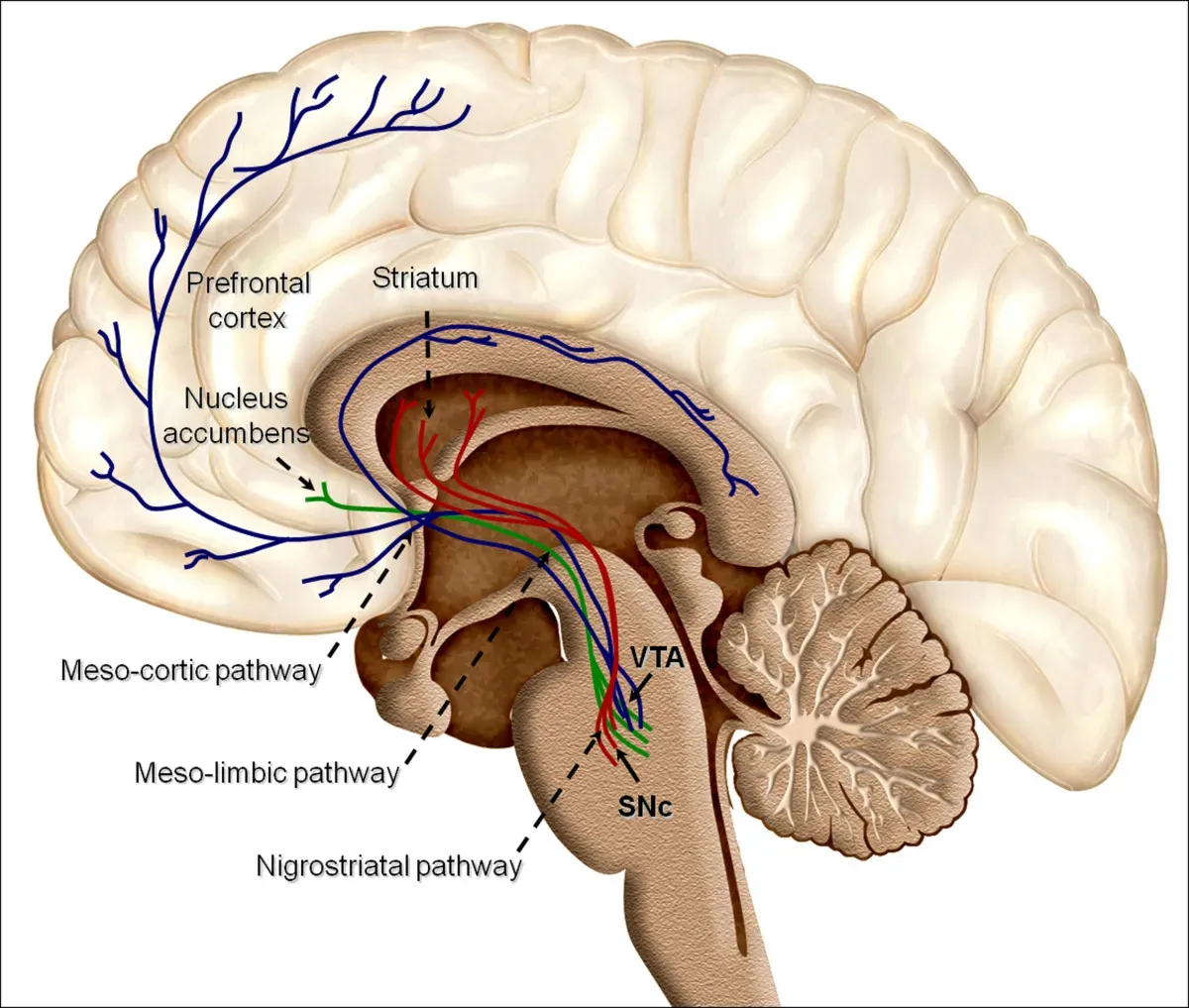
Here’s something fascinating from neuroscience. When you succeed early at something new, your brain doesn’t just note it passively. Rewards have potent effects in motivating effort, even when rewards do not depend on how well we perform. That dopamine surge from a first win actually changes how engaged and focused you become in the moments that follow.
Dopamine availability improved task performance by increasing a propensity to better adhere to task goals, suggesting engagement of instrumental motivation to optimize adherence to task goals. In plain terms: an early win makes you try harder and focus more, which genuinely improves short-term performance.
Think of it like a fuel injection at the very start of the race. A beginner riding that dopamine wave isn’t “lucky” in the mystical sense. Their brain chemistry is simply working in their favor at exactly the right moment.
2. Luck Perception Boosts Confidence and Risk-Taking

Research shows that situational luck induction boosts optimism and confidence in uncertain tasks, encouraging exploratory behavior, risk-taking, and enhanced creativity. When a beginner stumbles into early success, they feel lucky. That feeling alone is enough to change how they behave next.
Luck perception enhances an individual’s self-efficacy and sense of control over future outcomes, which in turn strengthens decision-making confidence. This is not a placebo. Confidence rooted in a lucky feeling actually changes how choices get made, often for the better in the short term.
It’s a bit like borrowing someone else’s courage. The beginner doesn’t know enough to be afraid. So they walk in bold, and boldness sometimes wins.
3. Novices Use Simple Strategies That Actually Work

Honestly, this one surprised me. You’d think experience always wins. Yet research on skill acquisition consistently shows that novices sometimes perform better initially because they rely on simple, instinctive strategies. Experts, by contrast, may overcomplicate their decisions by drawing on mental models built for different situations.
Psychologists have identified heuristics and biases that can cause people to make assumptions about factors that contribute to success, whose outcomes may have actually resulted primarily from randomness. Yet the interpretation of these biases becomes ambiguous when they represent reasonable cognitive shortcuts that offer certain advantages. A novice’s simplicity is, in some circumstances, the smarter cognitive shortcut.
This plays out in unpredictable environments especially. When the rules shift, an expert’s deep library of patterns becomes a liability. The beginner, carrying no assumptions, just reacts. Sometimes that’s exactly what the moment requires.
4. The Hot Hand Fallacy Explains Why We Notice It So Strongly

The hot hand fallacy is the tendency to believe that someone who has been successful in a task or activity is more likely to be successful again in further attempts. When a beginner wins early, observers immediately label them “lucky” and begin watching for the streak to continue. Every subsequent success gets amplified in memory.
Recent studies show that such beliefs not only persist in complex, real-world decision environments like televised game shows, but are also frequently exaggerated relative to the true statistical effect. The pattern feels more significant than it actually is, which is part of why the myth of beginner’s luck has such staying power.
Partner offer
We’re wired to see patterns, even in random data. A beginner getting three things right in a row looks like a streak. It might just be normal variance. Still, the human brain finds it impossible to ignore.
5. Regression to the Mean: Statistics Does the Explaining

Let’s be real: a lot of what we call beginner’s luck is pure statistics wearing a costume. Regression to the mean is the principle that extreme outcomes, good or bad, tend to be followed by more average ones. A beginner who performs brilliantly on day one is likely hovering near the top of their natural performance range. The next attempt will feel like a comedown, not because they got worse, but because the numbers simply returned to average.
Psychologists have identified heuristics and biases that can cause people to make assumptions about factors that contribute to the success of individuals and firms, whose outcomes may have actually resulted primarily from randomness. Beginner’s luck fits this pattern almost perfectly. An outlier first performance gets mistaken for a pattern.
What makes this really interesting is the flip side. If a beginner performs terribly on day one, nobody calls it “beginner’s curse.” We selectively remember and label the positive outliers. That selective memory is doing a lot of the work here.
6. No Pressure Means Better Performance

Here’s something behavioral research makes very clear. When no one expects much from you, you perform differently than when the weight of expectation is crushing you from above. Beginners carry almost no performance burden. They have nothing to defend and no reputation to protect.
In intertemporal decision-making, luck perception mitigates the psychological burden associated with waiting by providing both a long-term cognitive orientation and enhanced confidence in future outcomes. The same mechanism applies to performance pressure. A beginner who feels lucky, and feels no pressure to prove anything, is operating in an almost ideal psychological state.
Compare that to the seasoned expert who tightens up under scrutiny, second-guesses every move, and carries the anxiety of past failures. The beginner doesn’t have that weight. In competitive environments, that lightness is genuinely an advantage, at least for a while.
7. Fresh Perspectives Produce Surprising Early Wins

A 2024 analysis of workplace performance found that new hires often bring fresh perspectives, leading to innovative solutions and early successes before organizational norms begin to shape and limit their thinking. This is not a soft observation. It has real, measurable consequences.
A normative theory of luck predicts which performance range may be a less reliable indicator of merit and, in turn, entails fewer opportunities for learning. In other words, exceptional early results from a newcomer often reflect a lucky alignment of fresh thinking with a specific moment in time, rather than genuine mastery. Still, the outcome is real, even if the mechanism is temporary.
Think about the new employee who walks into a team and immediately spots something everyone else stopped seeing years ago. They haven’t been trained to overlook it yet. That outsider view is a legitimate competitive edge, and it expires quickly. Make no mistake though: when it works, it works spectacularly.
Conclusion: It’s Real, Just Not Magic

So is beginner’s luck real? Honestly, yes. Not in the way folklore describes it, not as some mystical force that smiles on first-timers. Rather, it emerges from a fascinating mix of dopamine-driven motivation, the psychological effects of feeling lucky, the statistical reality of regression to the mean, and the cognitive freedom that comes with having nothing to lose.
The science is clear that meta-analyses have documented robust evidence of belief-based illusions across diverse settings, reinforcing the behavioral relevance of this phenomenon beyond sports. Beginner’s luck is not one single thing. It’s several real forces converging at once, and they tend to converge most powerfully right at the beginning.
The real question isn’t whether beginner’s luck exists. It’s whether you can learn to recreate that beginner’s mindset deliberately, even after experience has set in. What do you think? Could an expert ever choose to think like a beginner again? Share your thoughts in the comments.
Partner offer
Planning a trip to Vegas?
Compare hotel rates and show tickets on VEGAS.com.