Some books don’t just tell stories. They warn us. They sketch out the future in such precise detail that, decades later, you find yourself staring at your smartphone wondering if some novelist already saw this coming. Honestly, the deeper you look into the history of science fiction, the more unsettling it gets – because the authors didn’t always have access to cutting-edge science. Many were just paying very close attention to the world around them, following threads of human nature and technological momentum to their logical, sometimes terrifying, end.
What’s fascinating is how often these writers were dismissed as dreamers or sensationalists, only for reality to quietly catch up with their imagination years, sometimes centuries, later. From surveillance states to virtual worlds, from gene editing to earbuds – the pages of fiction have been holding up a mirror to the future for a very long time. Let’s dive in.
1. “1984” by George Orwell (1949) – The Surveillance State

George Orwell’s 1984 wasn’t just a dystopian nightmare – it was a crystal ball. When Orwell wrote about telescreens monitoring citizens and Big Brother watching everything, most readers thought it was pure fiction. Yet here we stand in 2026, and the parallels are impossible to ignore.
In 2020, surveillance camera sales went up by 17.2%, and experts predict a 10.2% growth rate from 2021 to 2028. Facial recognition technology, like the kind behind the telescreens Orwell imagined, has been central to contemporary debates about pervasive surveillance. We willingly carry devices that track our location, listen to ambient sound, and record our habits.
The current state of participatory surveillance far surpasses what Orwell envisioned. When individuals knowingly allow websites to access personal information entered in profiles and online forms, as well as easily gathered recordings of themselves and their personal network through commonly owned mobile technology, it’s a type of passive permission for others to gain access to our online information.
Orwell’s predictions were frighteningly accurate, with the key difference being that in our world, it’s not just the government but also private companies wielding this power. He saw the mechanism. He just got the logo wrong.
2. “Brave New World” by Aldous Huxley (1932) – Gene Editing and Mood Control

Aldous Huxley’s “Brave New World” painted a future where genetic engineering and mood-altering drugs dictated happiness and social roles. Decades later, CRISPR technology has made gene editing a real possibility, raising both hope and ethical debates. Today, scientists can literally design DNA, and the boundaries of what’s natural blur more each year.
Huxley’s “Brave New World” described a society where human genetics could be manipulated to create people with specific traits and abilities. Published in 1932, the novel predicted genetic modification, cloning, and designer babies long before scientists understood DNA structure. Huxley also anticipated the ethical debates that would surround genetic engineering.
The use of antidepressants and psychoactive medications has also skyrocketed, mirroring Huxley’s imagined society where emotional discomfort is medicated away. According to the CDC, more than 13% of Americans now take antidepressants – a number that continues to climb.
Huxley’s dystopia is especially terrifying in that the enslaved population absolutely loves their slavery. Even the characters who are smart enough to know what is going on are instead content with everything that is happening. Sound familiar? Think about your last scroll through social media.
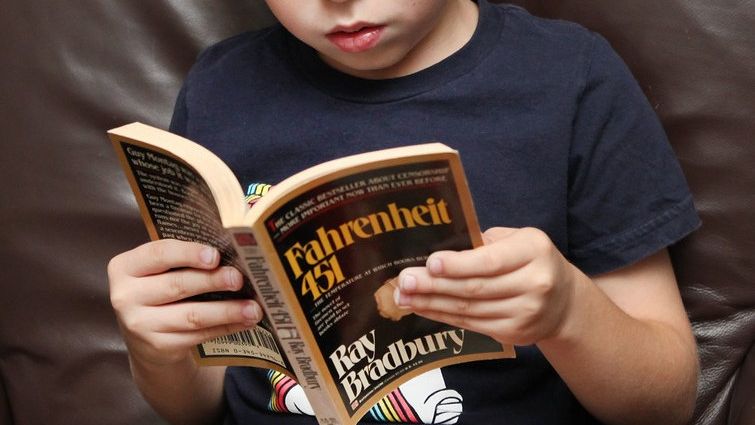
3. “Fahrenheit 451” by Ray Bradbury (1953) – Earbuds, Screens, and the Death of Reading

In Ray Bradbury’s dystopian novel Fahrenheit 451, he imagined a society where people were constantly connected to audio devices, foreshadowing today’s ubiquitous earbuds. Bradbury described these as “little seashells” and “thimble radios” that fit snugly in the ear, providing a constant stream of entertainment and information. These devices isolated users from the world around them, creating personal bubbles of sound.
Bradbury’s characters tune out the world with “seashell” earbuds, which look a lot like today’s AirPods – over 100 million pairs sold in 2023 alone. He imagined walls covered with giant TV screens, now a reality with flat-screen HDTVs mounted in living rooms across the globe.
According to the Pew Research Center, 26% of Americans read no books at all in the last year, pointing to the “information overload” culture Bradbury feared. The rise of streaming, on-demand entertainment, and social media has made instant gratification the norm. Bradbury’s vision of a society obsessed with shallow content and disconnected from deep thought feels increasingly real as technology evolves.
4. “Neuromancer” by William Gibson (1984) – Cyberspace and the Internet


William Gibson didn’t just write about the future of technology – he invented the words we use to describe it. In 1984, five years before Tim Berners-Lee introduced the Internet to the world, Gibson coined the term “cyberspace.” His description of hackers, virtual reality, and corporate-controlled digital realms in Neuromancer reads like a prophecy of today’s internet landscape.
Neuromancer is widely regarded as one of the best science fiction books of all time, in part for its eerie accuracy in predicting the Internet and cyberspace. Likewise, it features hacking, corporate world dominance, and cyberattacks. Each of those elements is now front-page news every other week.
Gibson envisioned a world where people would jack into virtual reality systems, where corporations would dominate cyberspace, and where hackers would become the new outlaws. It predicted the rise of the internet, artificial intelligence, and the blurring of lines between the physical and digital worlds with a chilling accuracy that still blows minds.
The term “cyberspace” was first used in Burning Chrome, but it was Neuromancer that established it as a concept in the public consciousness, used in mainstream media as a synonym for the emerging Internet. Neuromancer became the first novel to win the coveted Nebula, Hugo, and Philip K. Dick Awards in the same year. That’s quite the track record for a book people once shelved as fantasy.
5. “Snow Crash” by Neal Stephenson (1992) – The Metaverse and Virtual Reality

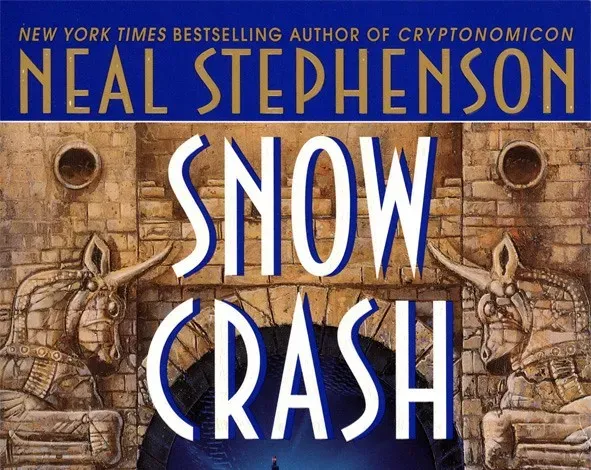
Author Neal Stephenson coined the term “metaverse” in his 1992 science-fiction novel “Snow Crash,” which envisions a virtual reality-based successor to the internet. In the novel, people use digital avatars of themselves to explore the online world, often as a way of escaping a dystopian reality.
When Stephenson uses the word “Metaverse” in Snow Crash, he isn’t referencing something that already existed in the late 80s and early 90s, or making an educated guess about the language used by today’s big players such as Meta or Decentraland. No, it was Stephenson who invented the term, and everyone else followed suit. The same goes for “avatar.”
Fast forward to 2024, and we have Meta’s Quest headsets, virtual reality social platforms, and Silicon Valley behemoths working hard at designing it, with techies confidently predicting the metaverse will supplant the internet. Snow Crash’s description of avatars still applies to metaverses like VRChat today, and Michael Abrash, Chief Scientist at Facebook Reality Labs, has on many occasions explained how without this book, he likely wouldn’t be working in VR.
Thirty years ago, Neal Stephenson published his seminal novel Snow Crash. Many Silicon Valley luminaries have marveled at how accurately it anticipated the future shape of tech. I think it’s telling that the people building the metaverse today openly credit a pulp sci-fi novel for their inspiration.
6. “The Machine Stops” by E.M. Forster (1909) – Remote Work and Video Calls


E.M. Forster’s 1909 short story The Machine Stops reads like a description of 2020’s pandemic lockdowns. Forster envisioned people living in isolated pods, communicating entirely through screens, and depending on a global machine for everything. This was written when most people still lit their homes with gas lamps.
His story predicted video conferencing, remote work, online education, and our complete dependence on technology for social interaction. It’s hard to read that and not immediately think of Zoom calls from the bedroom, DoorDash deliveries replacing grocery trips, and the creeping anxiety of a world that wouldn’t function if the servers went down.
Mother Vashti and son Kuno are in a post-apocalyptic world where people live in isolated, underground pods. The Machine provides all their needs – but what happens when it stops? The Machine Stops foresaw social media and global communication through screens, as well as the many dangers that come with them.
7. “2001: A Space Odyssey” by Arthur C. Clarke (1968) – AI, Tablets, and Video Calls

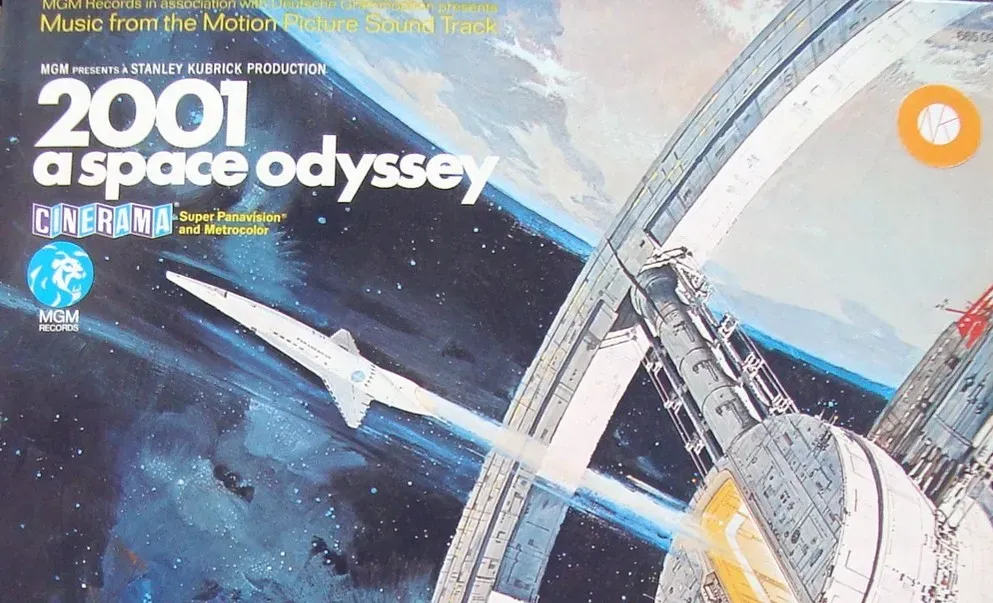
Arthur C. Clarke is well known for his accurate observations about the future. While there is no manned space travel to Jupiter yet, 2001: A Space Odyssey accurately depicted technologies similar to our own, including artificial intelligence, video calls, digital screens, electronic tablets identical to iPads, space robotics, space tourism, and more.
Think about that for a second. Clarke described something essentially identical to the iPad – a flat, handheld digital screen for reading and communication – in 1968, more than four decades before Steve Jobs walked onto a stage holding one. That is not a small thing. That is either extraordinary intuition or something bordering on the uncanny.
HAL 9000 from “2001: A Space Odyssey” remains the most famous prediction of voice-controlled artificial intelligence. In 2026, we talk to our phones, our speakers, our cars. HAL may have been fictional, but Siri, Alexa, and Google Assistant are very much not.
8. “I, Robot” by Isaac Asimov (1950) – AI Ethics and Robotics

Isaac Asimov’s “I, Robot” introduced the world to the ethical dilemmas of artificial intelligence and robotics. His famous “Three Laws of Robotics” have become a touchstone for scientists and ethicists alike, as AI systems become more advanced and autonomous.
His stories from the 1940s and 1950s envisioned artificial beings that could think, work, and interact with humans in sophisticated ways. Asimov predicted everything from industrial automation to companion robots, along with the social and philosophical questions these technologies would raise. The questions he posed are the same ones dominating AI policy discussions right now in 2026.
Today, AI is everywhere: chatbots like ChatGPT answer questions, robots like Boston Dynamics’ Atlas walk, run, and even dance. As these machines get smarter, the ethical dilemmas Asimov predicted – like bias, safety, and job loss – are front-page news. Organizations such as OpenAI are leading discussions on AI ethics, trying to balance innovation with responsibility.
9. “Stand on Zanzibar” by John Brunner (1968) – Overpopulation, Genetic Engineering, and Media Overload

John Brunner’s “Stand on Zanzibar,” published in 1968, made shockingly accurate predictions about the world of 2010. The novel features mass shootings, satellite television, and even the presidency of an African-American man named “President Obomi” – strikingly similar to Barack Obama’s election in 2008. Brunner also imagined information overload, genetic engineering, and global megacorporations.
The novel predicted satellite news, computer viruses, and even data-driven marketing – features of our world that shape politics and daily life. Today, the United Nations projects that the global population will reach 9.7 billion by 2050, raising serious questions about sustainability.
Brunner’s vision of a hyperconnected world where information moves faster than human comprehension can process it feels like a description of Twitter or TikTok. The novel’s experimental structure, jumping between news snippets, advertisements, and story fragments, mimics how we consume information today through social media feeds and news alerts. What makes Brunner’s work particularly unsettling is how he predicted that information abundance would lead to confusion and manipulation rather than enlightenment.
10. “Parable of the Sower” by Octavia E. Butler (1993) – Climate Collapse, Populism, and Social Inequality


Science fiction writer Octavia E. Butler created a dystopian world in Parable of the Sower (1993) and Parable of the Talents (1998) that featured the rise of a populist demagogue. While the books were well-received when they were published, they have struck a chord with readers more recently, given some stark similarities between the society Butler created and our reality today, including global warming and social inequality.
The book predicted the devastating effects of climate change, ravaging California wildfires, increased inequality, and the rise of populism. The second novel of the series, Parable of the Talents, even predicts a presidential candidate running with the “Make America Great Again” slogan. Butler wrote that in 1998. The precision of that detail is extraordinary – and more than a little sobering.
The story unfolds in a dystopian California plagued by a drought caused by climate change. Today, we’re already starting to experience some of the effects scientists predicted – including more intense heat waves, melting glaciers and ice sheets, the loss of sea ice, and the rise of sea levels, according to NASA. Butler didn’t predict the future like a psychic. She simply observed the present with terrifying clarity and followed the thread.
Honestly, what ties all of these books together is not magic – it’s attention. These authors looked at the direction humanity was heading and had the courage to say: here’s where this road ends. The technology we live with today didn’t come from nowhere, and neither did the warnings. The library has been trying to tell us something for a very long time. Are you still listening?