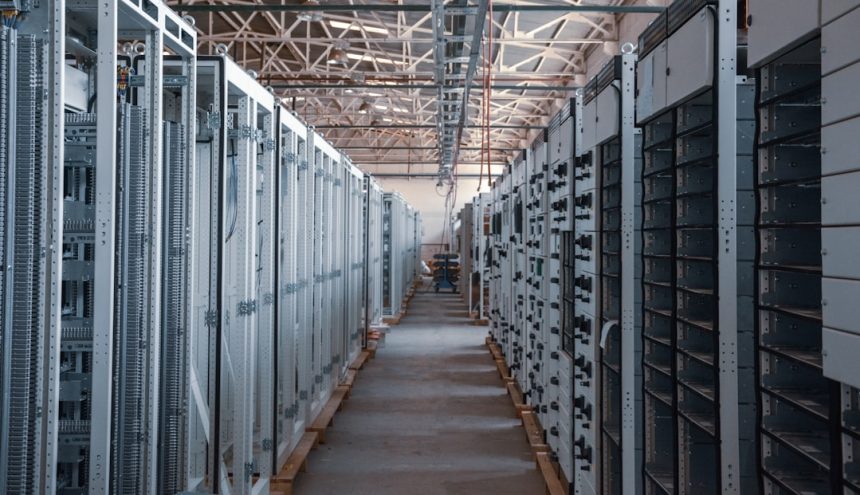

Ballot Question Driven by Developer Inquiries (Image Credits: Unsplash)
Boulder City, a Southern Nevada community southeast of Henderson, confronts a pivotal choice over its future landscape. Residents will vote in November on allowing data centers within the expansive Eldorado Valley Transfer Area, a city-owned parcel amid growing national interest in such facilities. At the same time, the City Council schedules a preliminary review next week for the city’s first proposed data center, signaling broader developer momentum.[1]
Ballot Question Driven by Developer Inquiries
Interest from unnamed developers prompted Boulder City officials to place the data center question before voters. City spokeswoman Lisa LaPlante explained that the city charter requires public approval for new land uses in the Eldorado Valley Transfer Area before any lease or sale advances to the council or planning commission. Previous voter approvals have enabled geothermal projects and other developments, though some remain unrealized.
Mayor Joe Hardy emphasized the strategic approach. “I suspect that pretty much everybody who wants to build a data center will say, ‘How about you? Do you want our data center?’ And we’ll say, ‘Show me the money,'” he stated. The 107,400-acre transfer area, acquired in 1995 for $1.28 million, generates significant revenue through existing leases, underscoring its economic importance.[1]
Townsite Solar Proposal Advances Separately
The council’s upcoming agenda features a preliminary discussion on a data center from Townsite Solar 2 LLC, linked to Houston-based Skylar Capital Management, a hedge fund specializing in natural gas and energy. Unlike projects in the transfer area, this site falls within city boundaries and bypasses voter input. The developer committed to sourcing power externally, avoiding reliance on Boulder City’s utility.
Staff reports highlight accommodations for water needs, including potential use of treated wastewater or dry cooling systems. Boulder City currently reuses only portions of its wastewater for dust control and solar operations, with the remainder evaporating unused. Officials see an opportunity to monetize this resource, contrasting with practices in the Las Vegas Valley and Laughlin, where reclaimed water returns to Lake Mead.[1]
Partner offer
Economic Boost Versus Fiscal Pressures
Leases from the transfer area contribute substantially to city finances. Projections estimate nearly $1.34 billion over the next 70 years from current agreements, plus $100,000 annually in property taxes, accounting for 34 percent of the general fund. Mayor Hardy noted the necessity of such income amid inflation-driven cost increases for police, fire, parks, and employee salaries.
Data center leases could command higher rates per acre than solar farms, given smaller footprints. Yet Boulder City maintains control over its utility and rejects power sales to these operations. The city prioritizes self-sufficiency while exploring high-value land uses to sustain services.[1]
| Land Use in Eldorado Valley Transfer Area | Acres |
|---|---|
| Total Area | 107,400 |
| Desert Tortoise Habitat (Undisturbed) | 86,000 |
| Existing Solar Farms and Natural Gas Plant | Portion of remaining 21,400 |
Residents Voice Environmental Reservations
Public sentiment leans against data centers, particularly in the transfer area. George Rhee, a UNLV physics professor and co-founder of the Boulder City Climate Action Group, described unanimous opposition at meetings. “Without any clarity on which data centers or AI developers are behind the push, voters aren’t being given the appropriate information,” he said. Rhee likened the strategy to “carpet-bombing any community.”[1]
Regional concerns amplify local debates. A Southern Nevada moratorium on evaporative cooling developments began in February 2024, targeting high water use seen in older facilities like Google’s in Henderson. Innovations such as dry cooling, exemplified by Novva’s North Las Vegas site, promise reduced consumption. Southern Nevada Water Authority General Manager John Enstminger observed, “We’re seeing the ability to expand data centers and not increase our consumptive use of water.”[1]
- High energy demands could strain grids, though Boulder City sources power externally.
- Wastewater sales offer reuse potential, supported by a pending feasibility study and $1 million federal grant.
- Modern designs minimize water needs, aligning with regional leadership in dry cooling.
- National trends show communities grappling with AI infrastructure impacts.
Key Takeaways
- Voters control transfer area uses via charter, ensuring community input.
- First data center review occurs Tuesday, separate from ballot measure.
- Revenue vital for 34% of general fund amid rising costs.
Boulder City navigates a delicate balance between economic vitality and environmental stewardship as data center proposals intensify. The November ballot and council deliberations will shape whether this desert outpost embraces the AI era’s infrastructure demands. What do you think about data centers in Boulder City? Tell us in the comments.
Partner offer
Planning a trip to Vegas?
Compare hotel rates and show tickets on VEGAS.com.