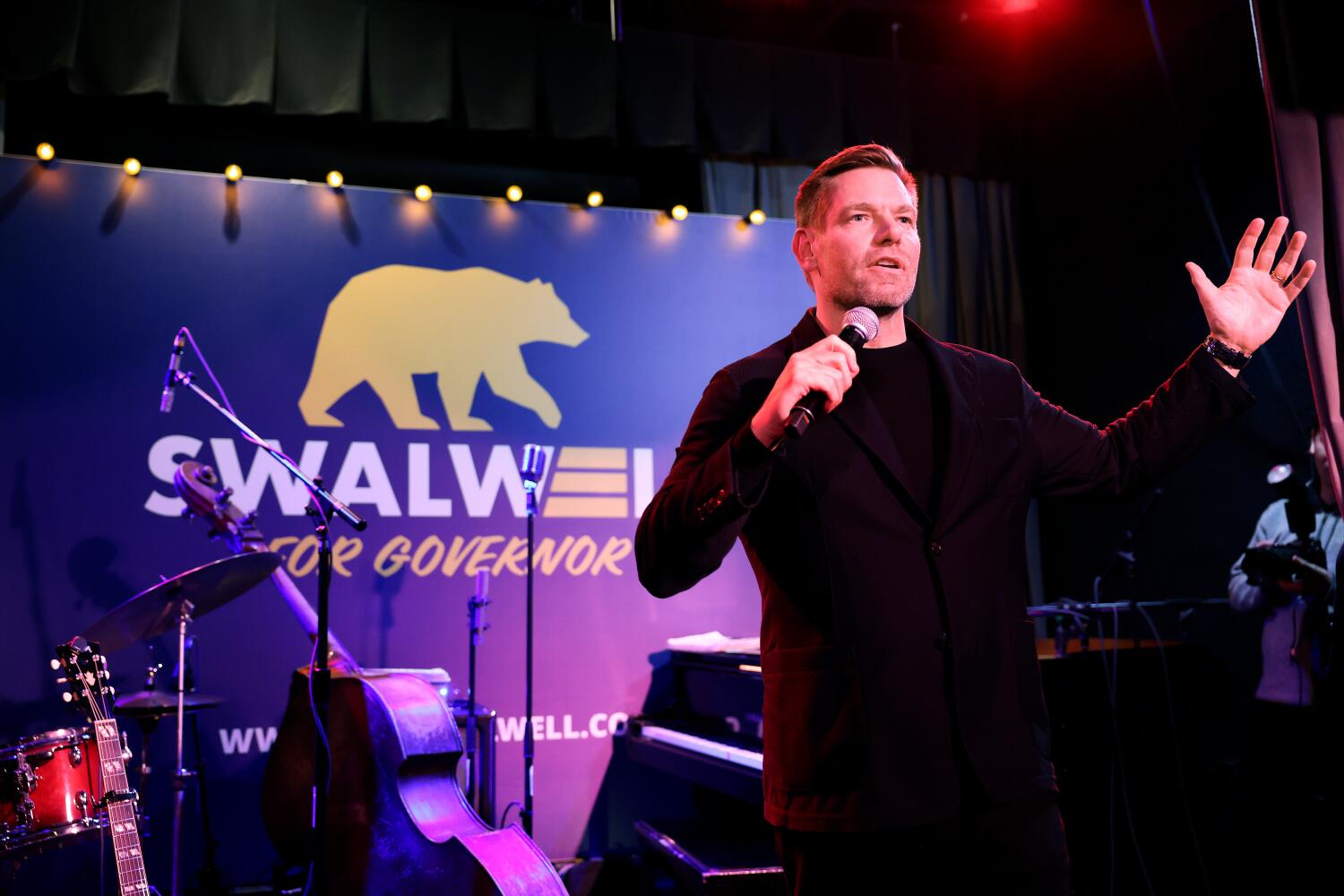
Convention Spotlights Crowded Field, No Endorsement Winner (Image Credits: Ca-times.brightspotcdn.com)
San Francisco – California Democrats convened at their state party convention united in opposition to President Trump but exposed sharp internal rifts among gubernatorial candidates vying to succeed Gov. Gavin Newsom amid a deepening affordability crisis.[1][2]
Convention Spotlights Crowded Field, No Endorsement Winner
Nine Democratic hopefuls pitched competing visions at the Moscone Center gathering, drawing over 2,300 delegates who cast votes for the party’s endorsement. None secured the required 60% threshold, underscoring the race’s uncertainty ahead of the June primary.
U.S. Rep. Eric Swalwell led with 24% support, followed by former state Controller Betty Yee at 17%, ex-U.S. Health Secretary Xavier Becerra at 14%, and financier Tom Steyer at 13%. The rest trailed with single-digit backing. Swalwell, a frequent Trump critic, framed his pitch around protection from federal overreach.[1]
Progressives Champion Bold Spending, Moderates Call for Restraint
Candidates split along ideological lines on tackling soaring housing costs, where the median single-family home exceeds $823,000, and rising utilities. Former Rep. Katie Porter and Steyer leaned progressive, advocating free childcare, tuition-free public college, and universal healthcare. Porter wielded her signature whiteboard, scrawled with an anti-Trump message, while vowing to reject billionaire influence.[1]
San Jose Mayor Matt Mahan offered a centrist counterpoint, criticizing Sacramento’s ballooning budget for failing to deliver on housing, homelessness, and schools. He urged a “back to basics” approach to restore public trust. Mahan quickly amassed over $7.3 million from tech donors, prompting jabs from rivals like Steyer, who self-funded $37 million and warned against donor sway.[1]
Trump Opposition Unites, Midterms in Focus
Delegates coalesced around resisting Trump’s second term, prioritizing House recapture in November’s midterms. Former House Speaker Nancy Pelosi rallied supporters, declaring, “We’re going to win the House. There’s absolutely no question we will win the House.”[1]
Swalwell echoed the sentiment: “The next governor has two jobs: one, to keep Donald Trump and ICE out of our streets and out of our lives, and two, to lower your costs on healthcare, on housing, on utilities.” Other contenders, including Antonio Villaraigosa and State Supt. Tony Thurmond, assailed Trump’s policies on schools and immigration. Tensions flared as speakers indirectly criticized rivals over past ICE support or corporate ties.[2]
Grassroots Frustrations Boil Over Affordability Gaps
Delegates voiced exasperation with stagnant progress despite Democratic control. SEIU California President David Huerta called for workers to dictate the agenda. In-home caregiver Mary Grace Barrios lamented exclusion from wage hikes to $25 hourly by 2030, saying it felt like attacks from within the party.
Undecided voters like school organizer Sean Frame sought a flawless fit amid the crowded field. Rep. Dave Min endorsed Porter, stressing the need for a fighter against Trump who aids everyday Californians.[1]
| Candidate | Endorsement Vote % | Key Pitch |
|---|---|---|
| Eric Swalwell | 24% | Anti-Trump fighter, cost reductions |
| Betty Yee | 17% | Grassroots focus |
| Xavier Becerra | 14% | Proven record |
| Tom Steyer | 13% | Tax billionaires, independence |
Key Takeaways
- Democrats prioritize Trump resistance and midterm gains but lack consensus on governor.
- Affordability divides progressives pushing expansive programs from moderates seeking efficiency.
- Crowded primary risks vote-splitting, potentially aiding Republicans.
California’s next leader must balance federal fights with domestic relief. What solutions would you prioritize for the state’s challenges? Share in the comments.[1]