
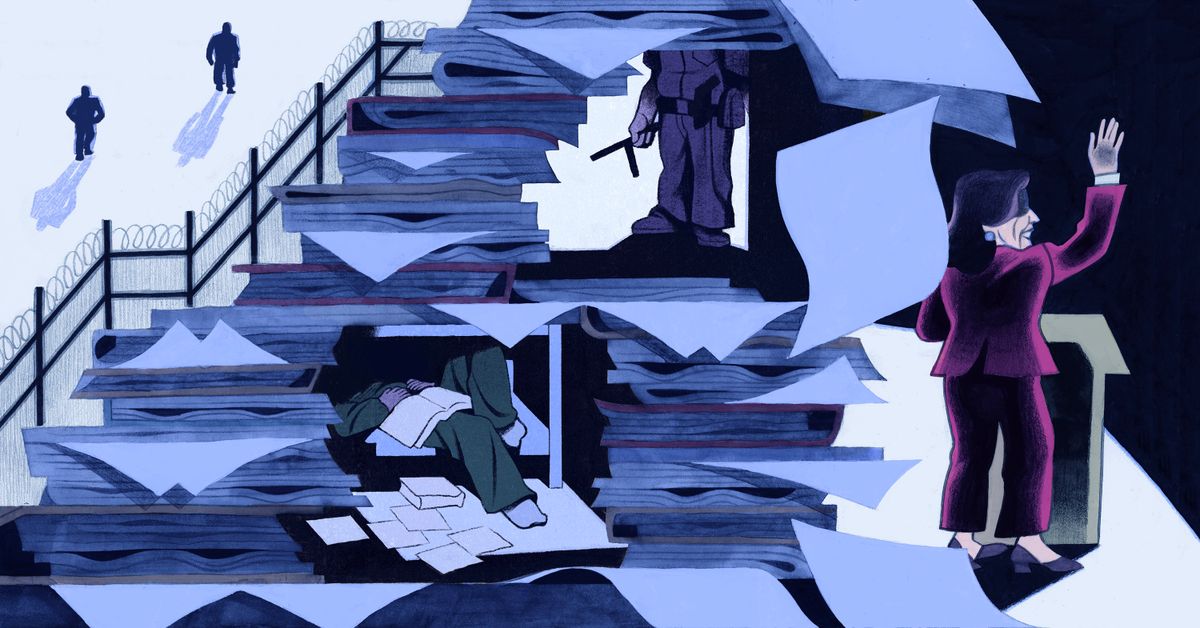
Assaults Skyrocket Following Solitary Reforms (Image Credits: Mirrorball.themarshallproject.org)
New York prisons – Escalating assaults and a crippling staffing shortage have transformed facilities into powder kegs, where desperation undermines any chance for order or rehabilitation.[1][2]
Assaults Skyrocket Following Solitary Reforms
Prison violence reached alarming levels after the 2021 HALT Solitary Confinement Act took effect in 2022. Attacks on correction officers climbed 76 percent over three years, according to the Correctional Association of New York. Prisoner-on-prisoner incidents hit 2,970 in 2024 alone, marking a 168 percent increase from the prior year.[1]
The legislation curbed extended isolation but failed to introduce balancing measures like sentence credits for good conduct. Tensions boiled over in December 2024 when body camera footage revealed officers beating restrained inmate Robert Brooks to death at Marcy Correctional Facility. Weeks later, in February 2025, guards launched an illegal strike across 41 of the state’s 42 prisons, abandoning posts and triggering month-long lockdowns. Nine inmates died during the upheaval, including Messiah Nantwi, who suffered fatal blows while restrained at Midstate Correctional Facility.[2]
Hochul’s Restrained Use of Clemency Powers
Governor Kathy Hochul holds sole authority to commute sentences in New York, yet her record remains sparse amid the turmoil. She granted just 19 commutations since taking office in 2021, alongside 101 pardons, with none issued through most of 2025 until a pair in December for nonviolent robbery cases tied to addiction.[1] A spokesperson for the governor emphasized that safety for staff and inmates ranks as a top priority, while committing to thorough clemency reviews and reentry support.
Other leaders acted more decisively. Former Governor Andrew Cuomo approved 41 commutations, including several for homicide convictions. Nationally, New Jersey’s Phil Murphy issued 40, and California’s Gavin Newsom 34, many involving serious offenses. Federally, the 2018 First Step Act enabled nearly 6,000 compassionate releases. Hochul formed an advisory panel in 2021 and streamlined applications, but applicants often receive generic updates, fostering doubt. Her January 2026 State of the State address overlooked the crisis entirely.
Legislature Sidelines Key Second-Chance Bills
Democratic majorities in Albany control broader fixes, yet they adjourned the 2025 session without advancing major reforms. Bills like the Earned Time Act, which would award reductions for program participation and good behavior, stalled despite the violence surge. The Second Look Act, allowing judicial reviews after lengthy incarceration, also languished, even as it mirrors successful federal models.
Critics argue this inaction dismantled rehabilitation incentives. Inmates convicted of violent crimes serve full minimum terms without credits, trapping thousands in de facto life sentences. Advocates such as CUNY Law professor Steve Zeidman pushed early efforts, declaring that change required persistent advocacy: “maybe it doesn’t happen because not enough people are banging the drum.”[3] The 2025 strike cost $1 billion for National Guard deployment and led to 2,000 firings, yet lawmakers proposed slashing oversight funding for 2026.
Reforms That Could Stabilize Facilities
Targeted commutations offer immediate relief for rehabilitated individuals, signaling hope that curbs recklessness. Regular releases for those showing “exceptional strides,” as one long-term inmate described in his application, could ease overcrowding and tensions.[1]
- Expand commutations to include violent offenses after decades served and proven change.
- Enact Earned Time Act for behavior-based credits.
- Pass Second Look Act for periodic sentence reviews.
- Pair reforms with body cameras and staffing boosts.
- Fund oversight to prevent abuses like the Brooks incident.
Key Takeaways
- Violence spikes post-HALT highlight the need for positive incentives alongside restrictions.
- Hochul’s limited clemencies contrast sharply with peers, prolonging desperation.
- Legislative action on Earned Time and Second Look could prevent future strikes and deaths.
Hope remains the antidote to prison anarchy; without it, cycles of violence persist, endangering everyone inside. New York leaders must prioritize these steps to rebuild safer institutions. What solutions would you prioritize? Share in the comments.