


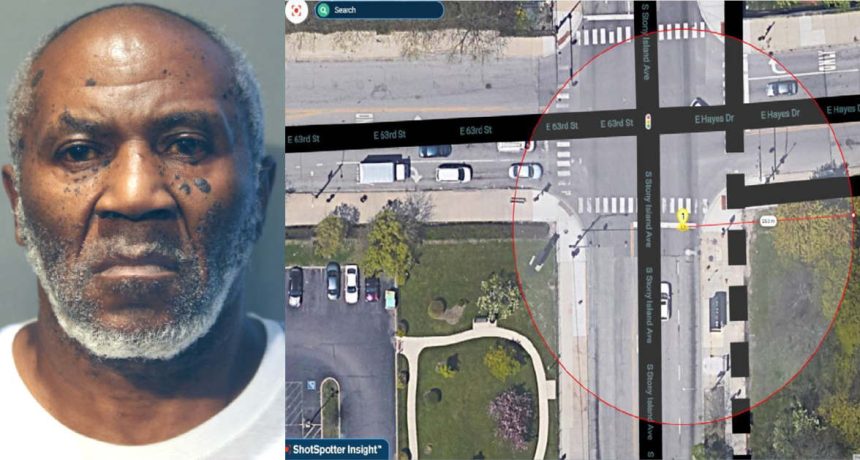


A Deadly Shooting Amid Chaos (Image Credits: Cwbchicago.com)
Chicago – A 64-year-old man walked away with a $500,000 settlement from the city after prosecutors dropped murder charges against him following nearly a year behind bars.
A Deadly Shooting Amid Chaos
The events unfolded on May 31, 2020, during one of the most violent weekends in Chicago’s history. Widespread riots and looting followed the murder of George Floyd nationwide, leading to at least 30 killings and 64 nonfatal shootings across the city.
Michael Williams drove through the 6300 block of South Stony Island Avenue that Sunday night. He had given a ride to 25-year-old Safarian Herring. As they stopped at a red light, another vehicle pulled alongside and fired a single shot into Williams’ car. Williams later recounted to CBS2 that the gunfire came from the adjacent car.
Police Build Case on Questionable Assumptions
Three months later, in August 2020, Chicago police detectives persuaded prosecutors to file first-degree murder charges against Williams. They theorized he fired the fatal shot from inside his own vehicle at close range.
The investigation hinged heavily on data from ShotSpotter, the city’s gunfire detection system at the time. The technology registered the gunshot near the southeast corner of Hayes Drive and Stony Island Avenue. However, police interpreted the alert to support their in-car shooting narrative.
Complicating matters, initial reports suggested a ShotSpotter engineer had relocated the gunshot detection more than a mile away, to 5700 South Lake Shore Drive. SoundThinking, ShotSpotter’s parent company, later clarified that the GPS coordinates remained unchanged. A city database simply converted them to an incorrect park district address on the far side of Jackson Park. Several news outlets, including the Associated Press, issued corrections after verification.
ShotSpotter’s Warning Ignored, Then Heeded
Chicago’s contract with SoundThinking explicitly cautioned against relying on ShotSpotter for gunshots fired inside enclosed vehicles. The system, designed for outdoor detection, could not accurately pinpoint such incidents.
Despite this guidance, detectives centered their case on the flawed premise. When SoundThinking learned of the prosecution’s theory, company representatives contacted the Cook County State’s Attorney’s Office. They emphasized that acoustic evidence did not support an in-car shot and reiterated the system’s limitations.
Prosecutors dismissed the charges soon after this intervention. Williams regained his freedom after spending nearly a year in jail. SoundThinking maintains that its direct involvement proved pivotal in turning the case around.
From Jail to Justice: The Lawsuit Outcome
Williams pursued a lawsuit against the city, alleging wrongful accusation and imprisonment. Chicago agreed to the $500,000 settlement, as reported in a recent city announcement. SoundThinking faced no claims in the suit.
The case highlights tensions around ShotSpotter’s role in policing. Critics have pointed to the now-discontinued system amid broader scrutiny, though records indicate it functioned as intended here – detecting a genuine outdoor gunshot.
Key Takeaways
- ShotSpotter detected a real gunshot but warned against in-vehicle assumptions.
- Police misuse of data led to the arrest; company intervention prompted dismissal.
- City database error fueled early location confusion, later corrected.
This settlement underscores the risks of over-relying on technology without heeding its boundaries. It also reveals how the same tool some blame for errors can aid in corrections. What lessons should cities draw for future policing tech? Share your thoughts in the comments.


