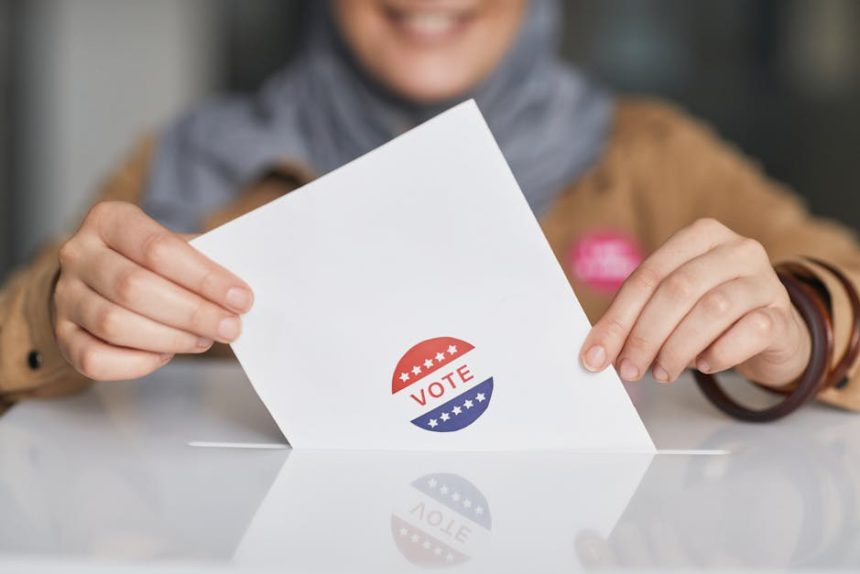
Cast Vote Records Expose Crossover Voting (Image Credits: Pexels)
Clark County – Voters in Nevada’s largest county delivered a clear signal of political independence during the 2024 general election. More than 26,300 individuals who cast ballots for President Donald Trump also selected Democratic Sen. Jacky Rosen in her successful re-election bid.[1] This crossover represented roughly 5 percent of Trump’s nearly 500,000 supporters in the county, according to anonymized cast vote records released by local election officials. The pattern highlighted the complex dynamics at play in a region long considered a Democratic stronghold but increasingly competitive.
Cast Vote Records Expose Crossover Voting
Election officials in Clark County maintain detailed cast vote records, which capture individual ballot choices without revealing voter identities. These files allowed analysts to identify overlaps between presidential and Senate races.[1] The data confirmed that over 26,300 ballots included votes for both Trump and Rosen.
About 43 percent of these split-ticket voters submitted their ballots by mail. Trump outperformed his Republican Senate counterpart, Sam Brown, across the county, yet thousands still crossed party lines for Rosen. Meanwhile, Rosen and her Democratic presidential running mate, Kamala Harris, each secured just over 50 percent of the local vote in a tightly contested field.
Asymmetric Splits Favor Democrats Locally
Split-ticket voting did not occur symmetrically. Only around 8,400 Harris supporters backed Brown, amounting to about 1.6 percent of Harris’s total in Clark County.[1] This disparity suggested stronger crossover appeal for Rosen among Republicans than for Brown among Democrats.
- Trump-Rosen overlap: More than 26,300 voters (5 percent of Trump’s county total).
- Harris-Brown overlap: Approximately 8,400 voters (1.6 percent of Harris’s total).
- Mail voting share among Trump-Rosen splits: 43 percent.
- Rosen’s Clark County margin over Brown: Nearly 7 percentage points.
Such patterns reflected voter priorities that transcended strict party allegiance, particularly in a high-turnout election where local issues like tourism and housing influenced choices.
Partner offer
Nevada’s Split Outcomes Reflect Voter Nuance
Trump secured Nevada’s six electoral votes, flipping the state red for the first time since 2004. Rosen, however, held her Senate seat with a statewide victory margin of about 12,000 votes.[2] Clark County results amplified this divide, where Democrats maintained an edge in the Senate race despite Trump’s strong performance.
Brown trailed Rosen significantly in urban Clark County, which encompasses Las Vegas and accounts for the bulk of Nevada’s population. Trump’s gains in the county helped offset Democratic advantages elsewhere, but Rosen’s incumbency and focus on issues like veterans’ affairs resonated with a subset of his base.
Implications for the Silver State’s Political Future
The 2024 results pointed to a maturing electorate in Nevada, less wedded to straight-party voting. Clark County’s crossover figures challenged assumptions about partisan lockstep, especially as Republicans expanded their voter registration edge statewide.[3]
Analysts noted that mail ballots, which comprised a notable portion of the Trump-Rosen splits, played a key role in final tallies. County officials certified the results amid scrutiny, confirming the integrity of the process across all 17 Nevada counties.[4]
Key Takeaways
- Over 26,300 Clark County voters bridged party lines for Trump and Rosen.
- Split-ticket rates were higher for Republicans crossing to Democrats than vice versa.
- Rosen’s local strength helped secure her narrow statewide win.
These findings from cast vote data offered a window into voter independence that could shape strategies for upcoming cycles. What patterns do you see emerging in Nevada politics? Share your thoughts in the comments.
Partner offer
Planning a trip to Vegas?
Compare hotel rates and show tickets on VEGAS.com.