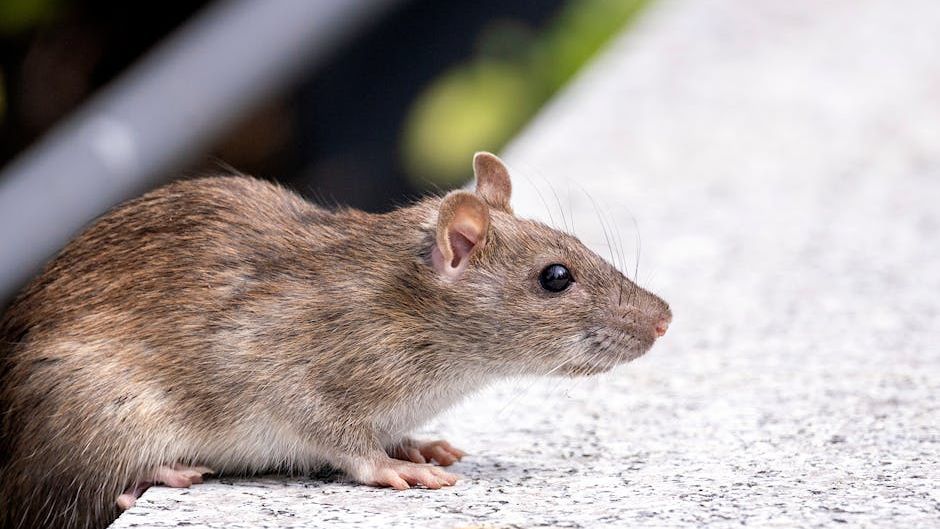
The Rodent Virus Spillover Study From UC Davis Is the Clearest Evidence Yet That Climate Change Is a Direct, Measurable Public Health Threat to Americans – Image for illustrative purposes only (Image credits: Pexels)
A cruise ship docking in Argentina was intended as the start of a long-awaited trip. Instead, several passengers fell ill with a rodent-spread virus before the voyage ended, drawing brief attention to a pathogen few had considered. At the same time, a quieter effort at the University of California, Davis, produced detailed projections of where similar threats might surface in the decades ahead. The work translates complex climate and ecological data into maps that show how changing conditions could bring certain viruses closer to new populations.
Mapping Future Exposure Through Machine Learning
The UC Davis team built its analysis around machine learning models that combine climate forecasts, rodent habitat ranges, and human population patterns. These tools project conditions over the next 20 to 40 years rather than offering immediate predictions. The approach focuses on arenaviruses such as Guanarito, Junin, and Machupo, which currently circulate mainly in limited rural zones in South America. By running multiple climate scenarios, the researchers identified regions where suitable conditions for rodent hosts and human contact could overlap more frequently.
Results remain measured. The models highlight possible expansion zones without claiming certainty about exact outbreak locations or timing. They also note that rodent movement depends on many local factors beyond temperature and rainfall alone. Still, the patterns suggest that areas previously considered low risk could see increased exposure as habitats shift.
Understanding the Viruses and Their Effects
Arenaviruses cause hemorrhagic fevers with fatality rates ranging from five to thirty percent in documented cases. No broadly approved treatments exist for most of these pathogens. A vaccine licensed in Argentina for Junin virus offers limited cross-protection against related strains such as Machupo, yet coverage remains narrow. Historical outbreaks have stayed largely rural because the viruses live in rodents that farm workers or residents in specific zones encounter most often.
Partner offer
Rodents do not respect administrative borders. When their environments change, they carry the viruses into fresh settings. This movement creates the core concern behind the projections: communities that have never encountered these diseases could face new risks without prior preparation or awareness.
Closing the Awareness Gap Among Health Officials
Lead author Pranav Kulkarni noted that most public health officials remain unfamiliar with these particular viruses. That observation points to a practical challenge. Climate discussions often center on visible events such as heat waves or storms, while slower ecological changes receive less notice. The Davis study attempts to make those slower changes more visible by releasing the underlying data through an open-source platform called AtlasArena.
The platform allows other researchers and agencies to review and build on the findings. Whether health authorities in countries including Chile, Brazil, or parts of the southern United States will actively use the tool remains an open question. Many organizations still focus resources on responding to past events rather than anticipating new ones shaped by environmental shifts.
What the Projections Mean Going Forward
The study supplies one of the more precise links yet between rising temperatures, altered rainfall, and the possible redistribution of rodent-borne illness. It does not claim that every projected area will experience outbreaks, nor does it tie specific recent incidents directly to climate trends. Additional field studies will be needed to test and refine the maps.
Public health planning benefits when such tools are available early. The UC Davis work offers a starting point for monitoring and targeted surveillance in places the models flag as higher risk. How widely that information is examined and acted upon will determine its real-world value.
Key points from the research include:
- Projections cover 20–40 years using climate, rodent, and population data.
- Focus remains on arenaviruses with limited current treatments or vaccines.
- Open data platform released to support further study and planning.
- Uncertainty persists around exact timing and local outbreak likelihood.
Partner offer
Planning a trip to Vegas?
Compare hotel rates and show tickets on VEGAS.com.