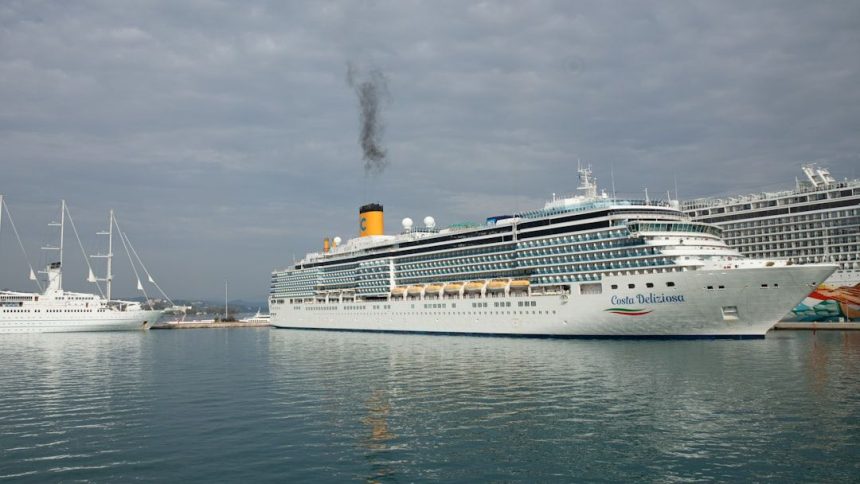


3 people evacuated from cruise ship impacted by hantavirus outbreak – Image for illustrative purposes only (Image credits: Unsplash)
Praia, Cape Verde — Three patients suspected of hantavirus infection were medically evacuated Wednesday from the MV Hondius, a Dutch-flagged expedition cruise ship anchored off this West African coast, and flown to the Netherlands for advanced treatment. The World Health Organization coordinated the operation amid an outbreak that has claimed three lives and prompted strict isolation measures for the 147 passengers and crew aboard.[1][2] Two laboratory-confirmed cases highlight the severity of the situation, though officials emphasized the low risk to the broader public.[3]
Timeline of the Deadly Outbreak
The MV Hondius departed Ushuaia, Argentina, on April 1 for an Antarctic expedition, stopping at remote South Atlantic islands including South Georgia, Nightingale Island, Tristan da Cunha, Saint Helena, and Ascension Island.[1] Illnesses emerged between April 6 and 28, with the first death occurring around April 11 when a Dutch man fell ill at sea.[4] His wife, also Dutch, disembarked at Saint Helena on April 24, later died in a Johannesburg hospital after testing positive for hantavirus, and a German passenger succumbed aboard the ship shortly after.[3]
A 69-year-old British national was evacuated to South Africa on April 27 and remains in intensive care with a confirmed case.[4] The cluster was reported to WHO on May 2, triggering an international response as the ship reached Cape Verde.[1] No rodents have been found on board, leaving investigators probing possible exposures at ports or rare human-to-human spread.[3]
Details of Wednesday’s Evacuations
The three evacuated individuals included a 41-year-old Dutch national, a 56-year-old British national, and a 65-year-old German national, one of whom was the ship’s doctor in serious but improving condition.[2] Health workers in protective gear assisted with the air ambulance transfer, arranged by WHO, the ship’s operator Oceanwide Expeditions, and authorities from Cape Verde, the Netherlands, the United Kingdom, Spain, and others.[5] Two remained in serious condition, while the third, a close contact of the deceased German passenger, showed no symptoms.[2]
Earlier medical flights had taken patients to South Africa, where tests confirmed the Andes strain of hantavirus, known for limited person-to-person transmission in close-contact settings.[5] Contact tracing continues across Europe and Africa for those who left the ship at prior stops, with a new confirmed case reported in Switzerland involving a passenger who disembarked at Saint Helena.[5]
Hantavirus: A Rare Rodent-Borne Threat
Hantavirus primarily spreads through contact with infected rodents’ urine, feces, or saliva, often in rural areas, causing hantavirus pulmonary syndrome with symptoms like fever, headache, muscle aches, nausea, and rapid progression to severe respiratory distress.[1] The incubation period ranges from one to eight weeks, complicating outbreak control on a vessel like the MV Hondius.[3]
- Fever and chills
- Gastrointestinal issues (nausea, vomiting, abdominal pain)
- Shortness of breath and pneumonia
- Acute respiratory distress and shock in severe cases
While human-to-human transmission is rare globally, the Andes virus strain identified here has shown limited spread in previous South American outbreaks, particularly among close contacts.[1] No specific vaccine or antiviral exists; treatment focuses on supportive care in intensive units.[4]
The Ship’s Uncertain Path Forward
Cape Verde authorities barred passengers from disembarking as a precaution, confining the multinational group to cabins with enhanced hygiene, ventilation, and symptom monitoring protocols.[4] The vessel now heads to Spain’s Canary Islands, likely Tenerife’s Granadilla port, for screening and potential disembarkation, a move approved by Madrid despite objections from local leaders concerned about insufficient consultation.[5]
The journey could take three to four days, with Oceanwide Expeditions dispatching infectious disease specialists from the Netherlands.[5] Passengers, representing 23 nationalities, face prolonged uncertainty, though operators report morale remains steady.[3] One body remains aboard pending further arrangements.[2]
Global Coordination and Risk Assessment
WHO activated a three-tier response, sharing passenger lists with Argentina and engaging labs in South Africa and Senegal for sequencing.[1] “WHO currently assesses the risk to the global population from this event as low,” the agency stated, urging no travel restrictions or panic.[1][3] Involved nations include the Netherlands’ RIVM institute and foreign ministry, alongside the UK, Germany, and France, where a contact case emerged.[5]
Quarantine measures could extend up to 45 days, aligned with monitoring needs.[1] As investigations probe the outbreak’s source—possibly rodents at remote stops—authorities stress vigilant prevention without broader alarm.
This incident underscores the challenges of containing zoonotic diseases in confined, international settings, yet coordinated efforts offer hope for safe resolution and lessons for future voyages.