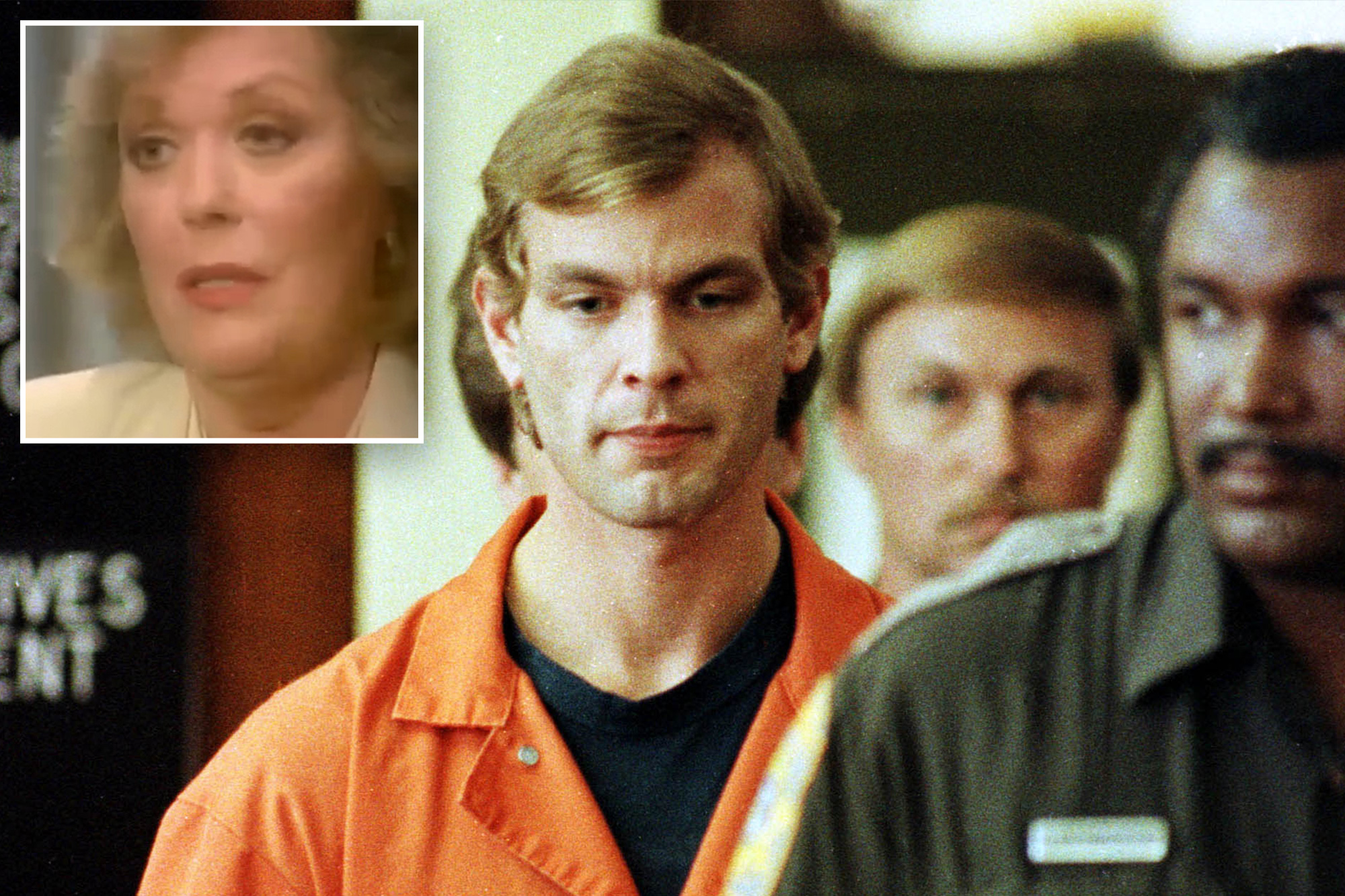
A Mother’s Unshakable Defense (Image Credits: Nypost.com)
Milwaukee – A resurfaced interview has brought renewed attention to the words of Joyce Dahmer, who described her son Jeffrey’s gruesome acts in a way that defies comprehension.[1][2]
A Mother’s Unshakable Defense
Jeffrey Dahmer’s mother stunned a criminal psychologist with her perspective on her son’s crimes. She told Dr. Eric Hickey that Jeffrey never intended harm despite killing, dismembering, and cannibalizing 17 men and boys between 1978 and 1991.[1]
“He killed them, but he never tried to hurt them,” Joyce Dahmer stated during the conversation, which Hickey later recalled in connection with his research.[1][2]
Hickey, who has studied serial offenders for decades, shared this detail as part of a broader discussion on killers’ psyches. The remarks originated from a 1994 appearance on “Hard Copy,” where Joyce appeared to defend her son publicly.[3]
This denial persisted even after the full horror of Dahmer’s apartment emerged, including preserved body parts and evidence of necrophilia.
Who Was Joyce Dahmer?
Joyce Flint Dahmer raised Jeffrey in a turbulent household marked by her mental health struggles and a bitter divorce from Lionel Dahmer. She spoke to her son regularly by phone while he was imprisoned.[4]
After his 1994 murder by a fellow inmate, Joyce maintained contact with family but largely stayed out of the spotlight. She passed away in 2000 from breast cancer.[2]
Her comments to Hickey reflected a common pattern among parents of notorious killers: a refusal to fully reconcile the monster with the child they knew. Joyce viewed Jeffrey as a “victim of a compulsion,” as she once told reporters.[5]
Psychologists note such responses often stem from denial, guilt, or distorted attachment.
Dr. Hickey’s Analysis of Dahmer
Dr. Eric Hickey classified Dahmer as a sociopath rather than a pure psychopath. He described Dahmer as capable of distorted guilt and even affection toward his mother.[1]
One chilling detail Hickey recounted involved Dahmer arranging eight human heads on a table, inspired by the film Hellraiser III. Dahmer explained it allowed him to be “surrounded by my friends” who could “never leave” and were “physically part of me” through cannibalism.[1][3]
Hickey also highlighted a statistic: 40 percent of necrophiles in the U.S. work in mortuaries or funeral homes, linking it to unmet sexual needs.[1]
- Sociopathic traits: Ability to feel some remorse or attachment.
- Contrast with psychopaths: Lack of empathy, sadism as core processing.
- Dahmer’s logic: Possession through consumption and preservation.
- Family bond: Persistent love despite evidence.
- Research application: Insights inform studies of other killers.
The Resurfacing and Modern Context
The interview gained traction again through the true crime podcast “Catching Evil,” where Hickey drew parallels to Christopher Wilder, a 1980s killer with a potentially higher victim count.[2]
Released on platforms like Spotify, the episode prompted shares across social media, sparking debates on parental denial.[1]
Experts involved, including former detective Dr. Nelson Andreau, emphasized how killers like Dahmer hid in plain sight. The podcast seeks tips on unsolved cases, underscoring ongoing investigations.[3]
Public reaction mixes horror with fascination, as seen in recent online discussions.
| Killer Type | Key Traits | Example |
|---|---|---|
| Sociopath | Guilt possible, attachments form | Dahmer’s mother love |
| Psychopath | Sadism central, no empathy | Wilder’s escalation |
Key Takeaways
- Joyce Dahmer’s words reveal deep denial amid undeniable atrocities.
- Hickey’s work bridges past cases to current probes.
- Parental perspectives complicate understanding serial killers.
Joyce Dahmer’s defense endures as a haunting reminder of love’s limits in the face of evil. What do you think about a mother’s bond with such a son? Tell us in the comments.