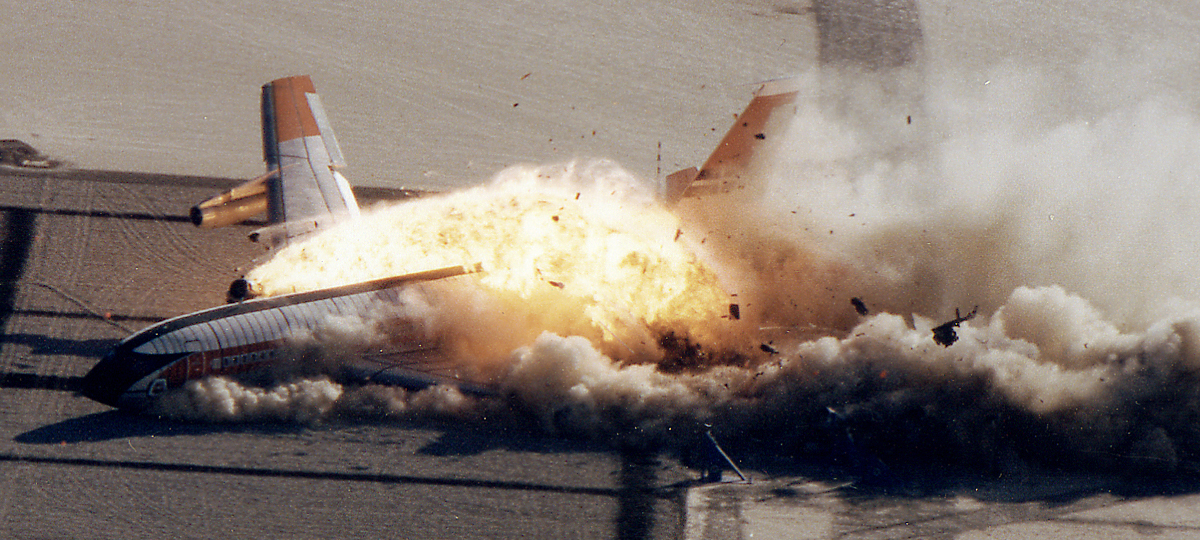

Runway Chaos: The Moment of Impact (Image Credits: Upload.wikimedia.org)
New York City’s LaGuardia Airport – A regional jet operated for Air Canada struck a Port Authority fire truck on a runway late Sunday, killing both pilots and sending dozens to hospitals. The crash unfolded just after the plane touched down from Montreal, highlighting vulnerabilities in ground operations at one of the nation’s busiest airports. Emergency responders rushed to the scene as investigators began piecing together the sequence of events.[1][2]
Runway Chaos: The Moment of Impact
Air traffic control recordings captured the tension in real time. A controller had cleared the fire truck to cross the runway, but seconds later issued frantic commands: “Stop, stop, stop, Truck One.”[2] The Air Canada Express Flight 8646, a Bombardier CRJ-900 with 72 passengers and four crew members, was rolling at about 24 miles per hour when it collided with the vehicle around 11:38 p.m. on March 22.
The fire truck had been dispatched to address reports of an odor on a United Airlines flight that had experienced rejected takeoffs earlier. The pilots, based out of Canada, bore the brunt of the impact. No other fatalities occurred, though the two officers in the truck suffered broken limbs and received treatment in stable condition.
Injuries and Evacuation Efforts
Paramedics transported 41 people from the scene to nearby hospitals, including passengers, crew, and firefighters. By Monday morning, 32 had been released, but nine remained under care, some with serious injuries.[1] One flight attendant was found outside the aircraft, strapped to her jumpseat after being ejected; she underwent surgery for a broken leg.
Passengers described a grinding noise followed by a jolt during braking. With the lead flight attendant missing, those in the rear took initiative, opening doors and climbing over wings to evacuate. An unaccompanied minor on board was quickly reunited with family. Air Canada set up a hotline for relatives: 1-800-961-7099.[3]
Airport Paralysis and Broader Disruptions
LaGuardia shuttered all operations immediately after the crash, canceling over 500 flights and diverting others to JFK and Newark. Roads and highway exits around the airport closed, stranding travelers. The facility remained grounded until 2 p.m. Monday, when one runway reopened for a Delta flight to Atlanta – the first departure in nearly 15 hours.[2]
Authorities urged the public to avoid the area while New York Police managed traffic chaos. The incident rippled nationwide, with airlines warning of lingering delays. LaGuardia, handling over 900 daily flights as a Delta hub, felt the strain acutely.
Investigations Underway Amid Official Mourning
The National Transportation Safety Board dispatched a “go team” to lead the probe, supported by the FAA and Canada’s Transportation Safety Board. Focus areas include air traffic control staffing – nationally strained – and whether the controller’s attention divided by the prior United emergency contributed. One recording revealed a controller admitting, “I messed up,” though a colleague reassured him.[2]
Port Authority Executive Director Kathryn Garcia confirmed the fire truck’s response to the unrelated odor call. Air Canada President and CEO Michael Rousseau called it “a very somber day,” expressing sorrow for those affected.[2] New York Governor Kathy Hochul offered condolences, while Canadian Prime Minister Mark Carney described the news as “deeply saddening.”
Key Takeaways
- Two pilots killed; 41 injured total, with 32 released from hospitals.
- Fire truck responded to separate United flight emergency.
- LaGuardia closed for 14+ hours, reopening one runway Monday afternoon.
This rare ground collision underscores the precision required in airport operations, where aircraft and vehicles share tight spaces. As the NTSB delves deeper, answers on preventability may emerge. What do you think contributed to this tragedy? Share in the comments.