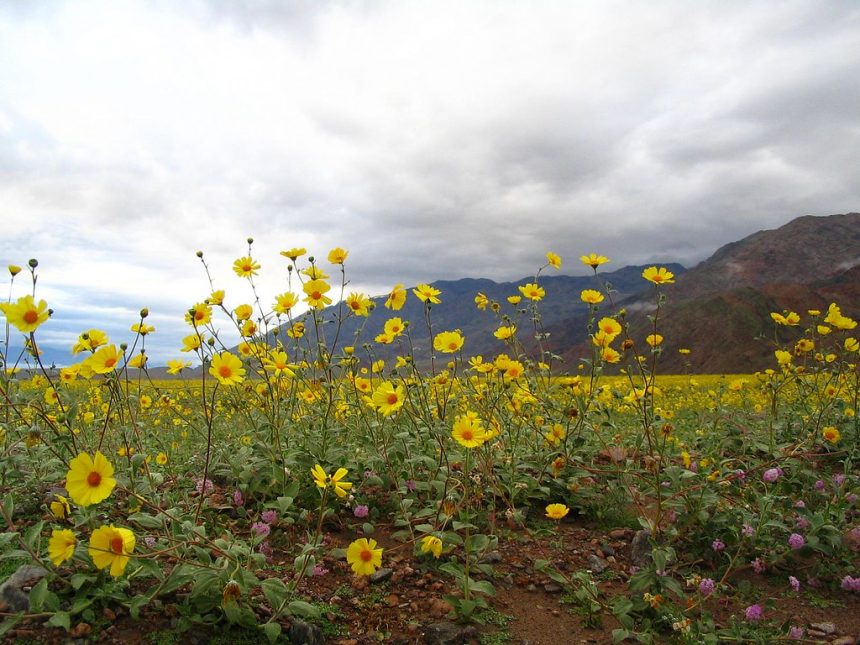
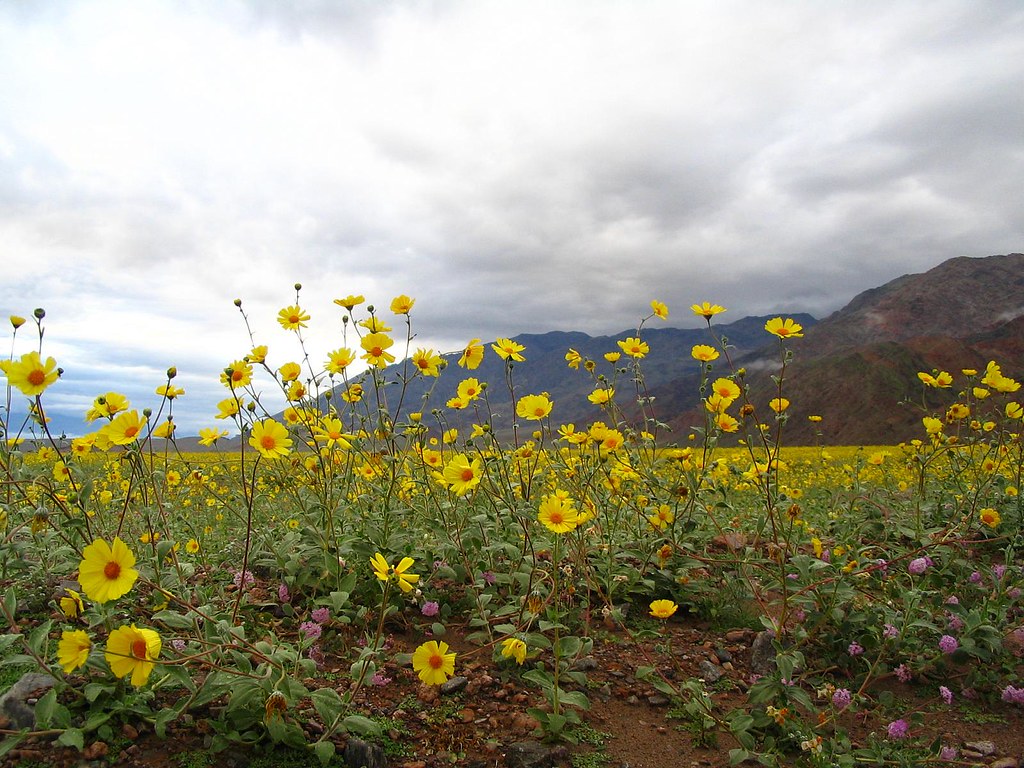

Record Rains Spark Desert Revival (Image Credits: Flickr)
Death Valley National Park – Vibrant patches of wildflowers have begun carpeting the typically stark desert floor, hinting at a superbloom that park leaders now anticipate this spring.[1]
Record Rains Spark Desert Revival
Heavy precipitation at the close of 2025 awakened long-dormant seeds across the park, turning barren hillsides green and dotted with blooms. Officials noted that such conditions had not aligned for a major display since 2016. Acting Deputy Superintendent Abby Wines observed the transformation firsthand near the Furnace Creek Visitor Center. “It looks like it will be a superbloom – maybe not fully developed yet – but we’re heading in that direction,” she stated during a recent visit.[1]
Ranger Matthew Lamar attributed the surge to timely fall, winter, and early spring moisture that soaked deep into the soil. These events occur roughly once every decade, drawing crowds eager for the spectacle. Early warmth has accelerated the process, with lower elevations showing the most promise first. Park staff expect the display to intensify through late February.[2]
Hotspots Bursting with Desert Gold
The southern reaches lead the show, where hills near Ashford Mill ruins glow with dense yellow desert gold and purple desert sand verbena. Visitors reported inhaling sweet scents reminiscent of lavender along Jubilee Pass Road. Patches extend across from Harmony Borax Works and into the Greenwater Range foothills. One camper from Belgium marveled at the sight: “It’s beautiful because it shows that there’s life here, and that the desert is not barren and dead.”[1]
Further north, greenery blankets alluvial fans along Badwater Road and Mud Canyon. Blooms will progress to higher ground as temperatures climb. Here are prime early viewing areas:
- Ashford Mill and surrounding hills
- Jubilee Pass Road ridges
- Badwater Basin south sections
- Furnace Creek wash approaches
- North Highway initial stretches
Species Thriving in Harsh Conditions
Desert gold dominates the yellow expanses, joined by verbena’s purple hues and occasional white accents from species like notch-leaf scorpionweed. Smaller “belly flowers” reward those who kneel close, including Mojave poppy and the striking desert fivespot with its fuchsia petals and pink spots. These annuals rely on a seed bank that endures years of drought. Ecologist Tiffany Pereira emphasized their role: “Our desert environment is not as desolate as we think. It’s teeming with life.”[1]
Bees already pollinate the fields, ensuring future cycles. One poppy can yield hundreds of seeds, underscoring why trampling threatens sustainability. Blooms shift by elevation, as shown below:
| Elevation | Peak Timing |
|---|---|
| Below 3,000 feet | Late February |
| 3,000–4,000 feet | March–April |
| Around 5,000 feet | April–May |
Planning Your Desert Outing
Southern Nevadans can reach the park in roughly two hours from Las Vegas, ideal for day trips or overnights. Options include four in-park hotels like the Inn at Death Valley, plus nearby spots in Beatty or Tecopa. Campgrounds such as Furnace Creek remain open, though some roads carry flood damage from recent storms.[3]
Rangers urge sticking to trails to safeguard seeds. Book accommodations early, as demand surges. Mild weather could extend the show into May, but heat will eventually claim the petals.
Key Takeaways
- Head south first for the strongest displays; watch for northward migration.
- Avoid picking flowers to preserve the seed bank for future years.
- Check road conditions and weather before traveling.
Death Valley’s fleeting superbloom reveals the desert’s hidden vitality, a cycle of endurance amid extremes. Southern Nevadans and beyond should seize this moment – what’s your plan to catch the colors? Tell us in the comments.