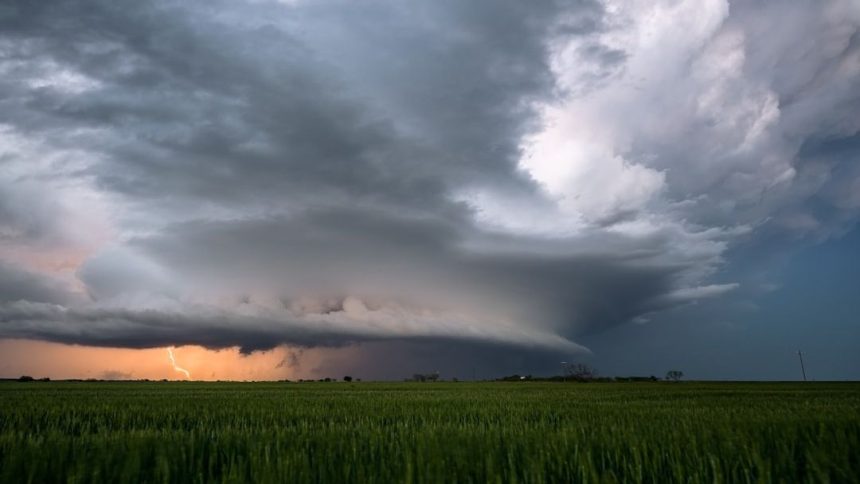


7 july: multi cell storm and shelf cloud from it, occurred in Berezhnoye – Image for illustrative purposes only (Image credits: Unsplash)
Berezhnoye, Russia — Residents of the small village of Berezhnoye in Vologda Oblast witnessed a striking meteorological display on July 7. A multi-cell storm developed overhead, culminating in the formation of a prominent shelf cloud. Local weather enthusiast paralilipiped documented the event through a gallery of photos shared on Reddit’s stormchasing community.[1][2]
The images highlight the raw power of the storm system, drawing views from global audiences interested in severe weather phenomena. Such captures offer rare glimpses into localized convective activity in northern Russia.
The Storm Takes Shape
Multi-cell storms consist of multiple thunderstorm cells that interact and regenerate over time. In Berezhnoye, this system produced the conditions for a shelf cloud to emerge at its leading edge. The photos reveal the cloud’s horizontal structure arching low across the sky, a hallmark of strong downdrafts and gust fronts.[1]
Posted just days ago, the gallery garnered upvotes in dedicated subreddits like r/stormchasing and r/weather. No reports of damage or severe impacts surfaced from the event, emphasizing its visual drama over destructive force.[2] The submission links to the full photo set, showcasing the progression from storm buildup to cloud formation.
Paralilipiped, an active contributor to weather forums, timed the post amid a series of recent shares. This pattern suggests ongoing monitoring of regional convective weather.
Decoding the Shelf Cloud Phenomenon
Shelf clouds, also known as arcus clouds, arise from cool air outflow under a thunderstorm’s base. They appear as a broad, wedge-shaped feature rolling ahead of the storm, often signaling intense winds beneath. The Berezhnoye example fits this profile precisely, as depicted in the captured images.
These formations intrigue observers because they mimic apocalyptic scenes yet pose no direct threat beyond the associated gusts. In this case, the cloud’s structure stood out against the surrounding landscape, underscoring the storm’s intensity. Weather communities praised the clarity of the shots, which preserve the moment for study and appreciation.
Similar visuals have appeared in other storm reports, but this one highlights activity in a less-documented area. Vologda Oblast’s continental climate fosters such summer outbursts, though specifics for July 7 remain tied to eyewitness accounts.
Storm Chasing Insights from the Region
Paralilipiped has shared multiple Berezhnoye events recently, including a squall line on August 10 and a possible HP supercell on August 16. These posts indicate a hotspot for severe weather documentation in Vologda Oblast.[3][4] The July 7 multi-cell storm fits into this sequence of convective highlights.
Such contributions enrich online meteorology discussions, bridging local observations with international interest. Enthusiasts track these for patterns in Russian storm behavior, where vast terrain amplifies isolated cells.
- July 7: Multi-cell storm with shelf cloud.
- August 10: Squall line and structural shelf cloud.
- August 16: Supercell, likely high-precipitation type.
Looking Ahead to Summer Skies
Events like the Berezhnoye storm remind observers of nature’s unpredictability in temperate zones. As warmer months progress, similar setups could recur, prompting vigilance from locals and chasers alike. These documented moments not only captivate but also aid in understanding broader atmospheric dynamics.
The photos endure as a testament to the beauty and force hidden in everyday weather shifts.