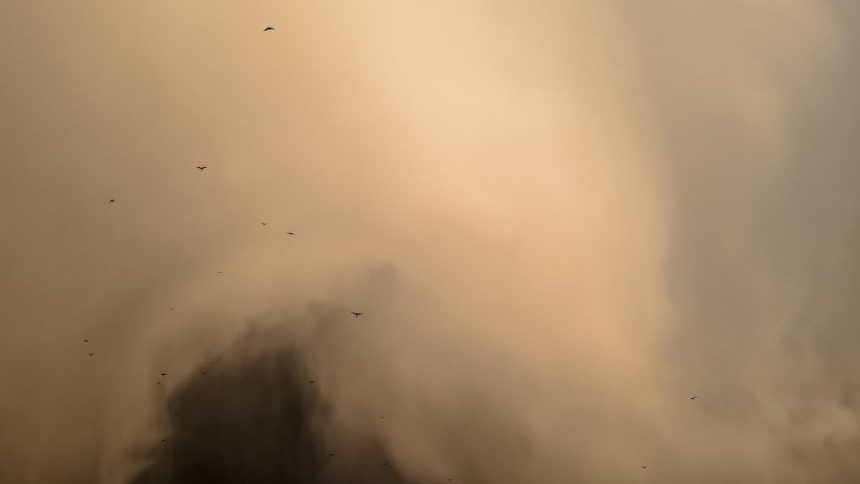
Most people hear a high-wind warning and think about downed trees and power outages. They close the windows, maybe cancel a barbecue, and wait it out. What they rarely think about is what those winds are actually carrying, and what happens to their lungs long after the gusts die down.
The truth is, every major wind event kicks up a storm of invisible threats that can linger for hours, days, and in some cases, weeks. The dust and particles that settle on your car, your porch, and in your airways are not just dirt. They are a complex mix of fine particles, metals, pollutants, and in many cases, living microorganisms. Let’s dive in.
A Planet Choking on Dust: The Scale of the Problem

The numbers here are genuinely staggering. Every year, around 2,000 million tons of sand and dust enter the atmosphere, which is roughly equivalent to 307 Great Pyramids of Giza stacked into the sky. Think about that for a moment. That is not a gradual trickle. That is a relentless, planet-wide dust machine running every single day.
More than 80% of the global dust budget originates from the North African and Middle Eastern deserts, and this dust can be transported for hundreds and even thousands of kilometers, crossing continents and oceans. So the idea that dust only affects people who live near deserts is simply wrong.
The World Meteorological Organization estimates that between 2018 and 2022, around 3.8 billion people, nearly half the world’s population, were exposed to dust levels exceeding the World Health Organization’s annual safety threshold for PM10. Half the world. That is not a niche environmental concern anymore. That is a global public health emergency that most people are completely unaware of.
What High Winds Actually Lift Into the Air You Breathe

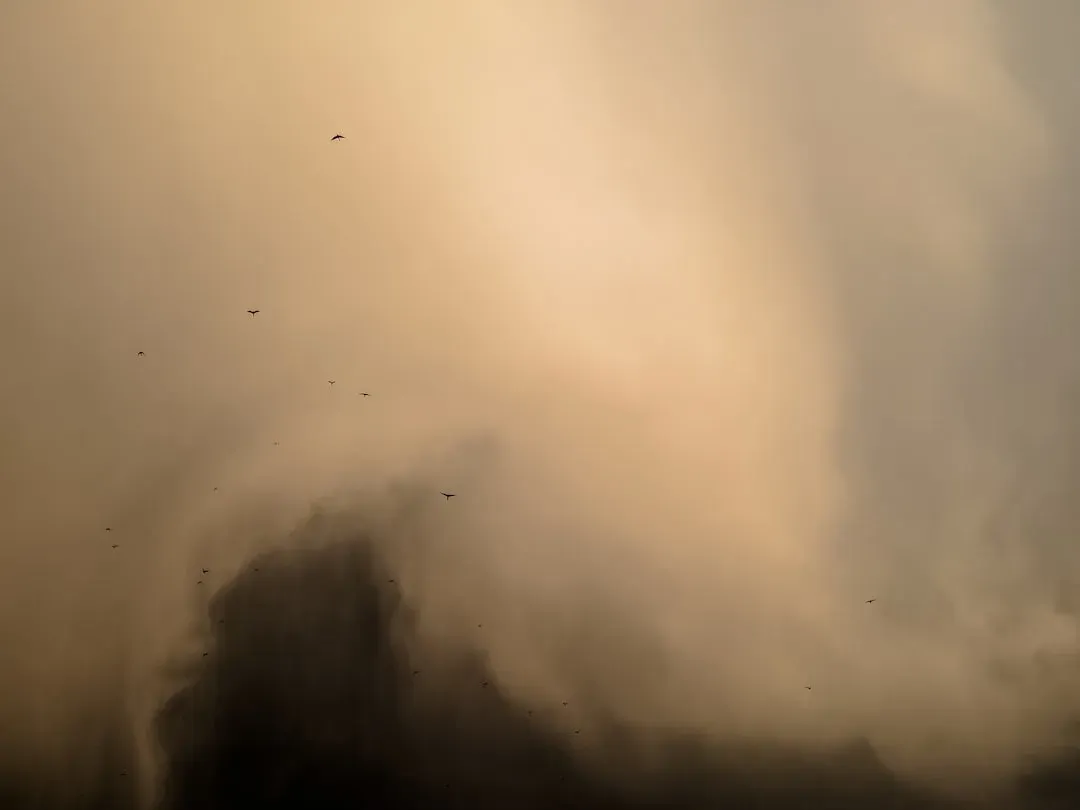
Here’s the thing that most health bulletins gloss over. When high winds tear across dry, exposed ground, they do not just stir up harmless dirt. Dust storms are caused by a mix of weather conditions, the natural environment, and human activity, and in dry areas with loose, exposed soil, high winds can pick up large amounts of dust. That dust is a cocktail of whatever has been sitting on, and in, that soil for years.
Dust storms push fine particles deep into lungs, and for people with asthma or COPD, flare-ups come quickly. Even healthy adults feel eye irritation, scratchy throats, headaches, or chest tightness after exposure. These symptoms often get brushed off as seasonal allergies or a mild cold. They rarely get connected to the wind event that happened two days earlier.
Coarse particles, called PM10, can include wind-blown dust, ash, pollen and smoke, while fine particles, PM2.5, are most often linked to burning processes but may include toxic compounds, salts and metals. Both categories come into play during major wind events, and both carry distinct health consequences.
The Fine Particle Threat: Small Enough to Be Deadly

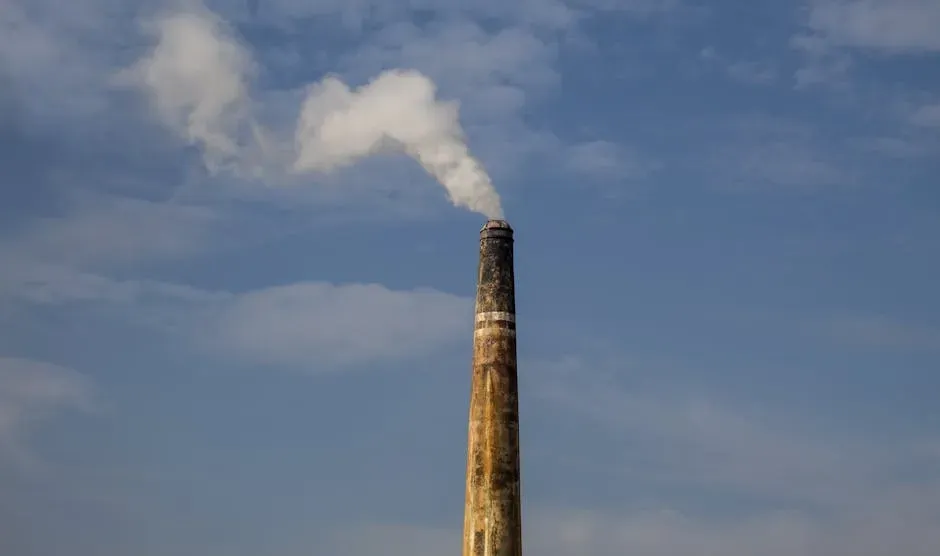
PM2.5. Those four characters represent one of the most dangerous airborne threats in modern life. For PM2.5, short-term exposures of up to 24 hours have been associated with premature mortality, increased hospital admissions for heart or lung causes, acute and chronic bronchitis, asthma attacks, emergency room visits, respiratory symptoms, and restricted activity days. That is a terrifying list for a particle you cannot even see without a microscope.
These fine particles can penetrate deep into people’s lungs and even cross into the bloodstream, where they contribute to a range of chronic and acute health risks. Honestly, the bloodstream part is the piece that should stop people in their tracks. This is not just a lung problem. It is a whole-body problem.
Researchers estimate that PM2.5 is responsible for more than 50,000 premature deaths in the United States every year. Long-term exposure over months to years has been linked to premature death, particularly in people who have chronic heart or lung diseases, and reduced lung function growth in children. These are not distant statistics. These are real people in real communities.
Hospital Admissions Spike When the Wind Blows

It is not just about feeling lousy for a few days. The connection between wind-driven dust events and actual hospital admissions is well documented by research. Short-term exposure to PM2.5 increases the risk for hospital admission for cardiovascular and respiratory diseases. The timing of that spike is even more alarming than most people realize.
For single-day exposure models, the effects of PM2.5 were highest on the same day and decreased in later days, suggesting that exposure to PM2.5 may increase the risk of hospital admission within hours of exposure. Hours. Not weeks, not months. People are landing in emergency rooms on the very same day a dust event hits their area.
Analysis using ambient air quality data from California found that PM2.5 exposure contributes to roughly 5,400 premature deaths due to cardiopulmonary causes per year in that state alone. Additionally, PM2.5 contributes to about 2,800 hospitalizations for cardiovascular and respiratory diseases and about 6,700 emergency room visits for asthma each year in California. Scale those numbers nationally, and the picture becomes overwhelming.
Who Is Most at Risk When Dust Fills the Air

Not everyone is equally vulnerable, and understanding who bears the greatest burden matters. These adverse health effects have been reported primarily in infants, children, and older adults with preexisting heart or lung diseases. Children are a particularly concerning case because their lungs are still developing, and damage done early can last a lifetime.
Children and infants are susceptible to harm from inhaling pollutants because they inhale more air per pound of body weight than adults. They breathe faster, spend more time outdoors, and have smaller body sizes. In plain terms, a child running outside during a post-wind dust event is breathing in comparatively far more harmful particles than the adult watching from the window.
People of color are disproportionately exposed to unhealthy air and are more likely to be living with one or more chronic conditions that make them especially vulnerable to air pollution. The 2024 State of the Air report found that a person of color in the U.S. is 2.3 times more likely than a white individual to live in a community with a failing grade on all three air pollution measures. Environmental justice and air quality are deeply, unavoidably linked.
Dust as a Living Carrier: The Microbial Threat Nobody Talks About

Here is where things get genuinely unsettling, and I think this is the part most people would never guess. Dust does not just carry dirt and chemicals. It carries living things. Research has shown that with the occurrence of dust storms originating from different sources, in addition to transporting suspended solids, pathogenic bacteria and fungi are also transmitted by dust storms from near and far places, causing respiratory and pulmonary problems, upper respiratory tract infections, and cardiovascular disease.
Meticulous sequencing techniques in one study detected bacterial genomes from 117 families and fungal genomes from 164 families in airborne dust samples. The analysis identified several pathogenic bacteria and fungi, many of which are listed in the World Health Organization’s global priority list of human pathogens. Think about that next time a dust storm blows through your neighborhood.
Long-distance transport for over 2,000 kilometers is possible in the free troposphere for air masses originating in agricultural regions enriched in fertilizers and pesticides. Once bacteria originating from different sources enter the air environment, they can be transported upward by convective air currents, and due to their small size, they can persist in the atmosphere for a long time. The idea that your local wind event is carrying African or Middle Eastern microbes to your doorstep sounds like science fiction. It is not.
How Climate Change Is Supercharging the Problem

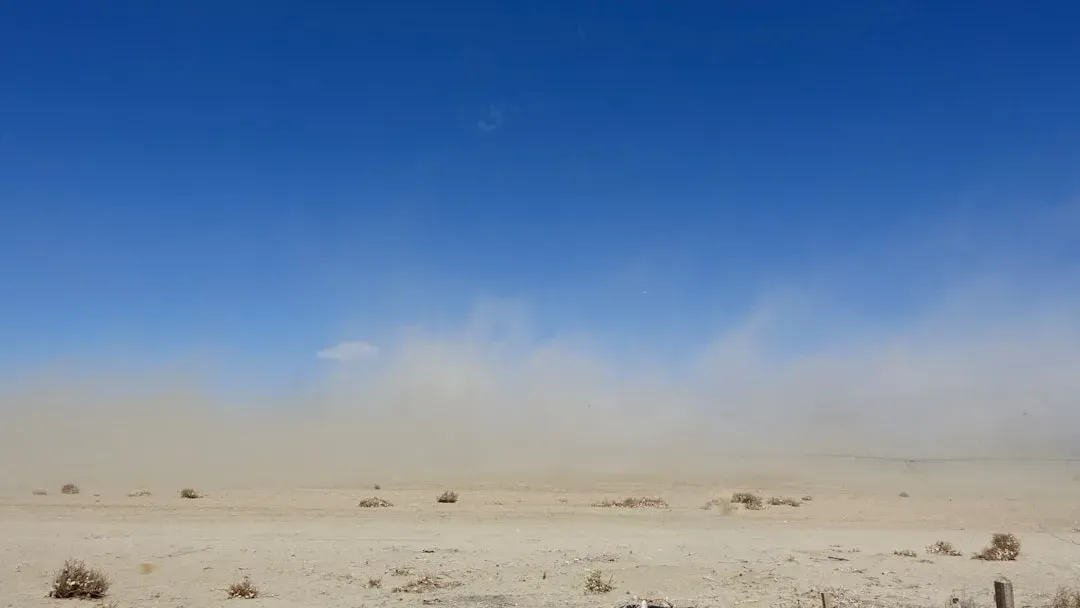
It would be hard to discuss dust health risks in 2026 without talking about climate change, because the two are now firmly intertwined. According to researchers, climate change as well as the loss of vegetation and soil health is supercharging dangerous storm systems, which are reaching higher wind speeds and moving closer to areas where humans live.
In regions like El Paso, Texas, 2023 and 2024 were the two hottest years ever recorded, and historic heat has further dried out already-parched vegetation, leaving little organic material to anchor dust and sand to the ground in surrounding areas. More bare soil means more dust. More heat means more wind instability. It is a vicious cycle that feeds itself.
Much of global dust is a natural process, but poor water and land management, drought, and environmental degradation are increasingly to blame for the worsening situation. The pattern is not random. Longer warm seasons dry soils faster. Droughts run hotter. Fields left bare between crops or after tillage lose their protective skin. Human choices are amplifying a natural hazard into a chronic health crisis.
The Staggering Economic Cost Behind the Health Burden

It would be a mistake to think this is purely a medical story. The economic toll is enormous and still largely underestimated. In the United States alone, dust and wind erosion cost an estimated 154 billion dollars in 2017, more than a fourfold increase over the 1995 calculation. The estimate included costs to households, crops, wind and solar energy, mortality from fine dust exposure, health costs due to Valley fever, and transport.
The true cost of dust was certainly much higher, since reliable national-scale evaluations of many of dust’s other economic impacts on human morbidity, the hydrological cycle, aviation, and rangeland agriculture were not available. In other words, even that alarming number is probably a significant undercount. The hidden costs, including reduced productivity, missed work days, and long-term healthcare needs, push the real figure much higher.
The World Meteorological Organization’s 2025 Airborne Dust Bulletin warns that sand and dust storms are taking an increasing toll on human health, economies, and ecosystems, affecting around 330 million people in over 150 countries. That is roughly the entire population of the United States affected globally by a hazard that rarely makes front-page news.
America’s Air Quality Crisis in the Context of Wind Events

Dust events do not land on a clean slate. They land on a country where the baseline air quality is already a serious concern. The 2024 “State of the Air” report found that despite decades of progress cleaning up air pollution, roughly 39% of Americans, a total of 131.2 million people, still live in places with failing grades for unhealthy levels of ozone or particle pollution. When a dust storm hits one of these already-struggling communities, the air quality spike can be catastrophic.
The 2024 report found that 65 million people lived in counties that experienced unhealthy spikes in particle pollution, the highest number reported in 14 years. In the three years covered by the report, individuals in the U.S. experienced the highest number of days when particle pollution reached “very unhealthy” and “hazardous” levels in 25 years of reporting.
One air quality monitoring station in El Paso showed a daily average concentration of fine particulate matter at nearly 64 micrograms per cubic meter during 2025’s dust season, which is well above what the EPA considers an unhealthy level of particulate pollution for anyone to be exposed to. Residents in those communities are not just having bad air days. They are living through a slow-motion public health event.
What Happens After the Dust Settles: The Lingering Danger

This is perhaps the most overlooked piece of the entire story. The wind warning expires, the skies clear, and people assume the danger is over. It is not. Premature deaths from breathing fine particles can occur on the very day that particle levels are high or up to a month or two afterward. Most premature deaths are from respiratory and cardiovascular causes. The body does not process the assault from a dust event in a day or two.
The effects of long-term PM10 exposure are less clear, although several studies suggest a link between long-term PM10 exposure and respiratory mortality. A number of airborne fungal species cause various health problems including allergic reactions, infectious diseases, respiratory ailments, and pathologic conditions like aspergillosis, asthma, hypersensitivity, and pneumonitis. These conditions do not announce themselves as dust-related. They show up weeks later as a persistent cough, a worsening of asthma, or a spike in blood pressure.
The dust carried by these storms includes not only nutrients but also pollutants and pathogens that can affect air quality and public health. Communities in the path of these dust plumes may experience increased respiratory issues, allergies, and diseases, highlighting the need for global health monitoring and preparedness. The warning sirens stop. The health risk does not.
Conclusion: The Warning We Hear Versus the Risk We Ignore

High-wind warnings are treated as weather advisories. They should be treated as public health alerts. The gap between those two framings is where millions of people are quietly suffering, getting sick, and in some cases, dying. The dust that follows a wind event is not a nuisance. It is a carrier of particles, pollutants, and pathogens that the human body was never designed to handle in the concentrations modern conditions produce.
The research is not ambiguous. Major institutions from the WHO to the American Lung Association to the World Meteorological Organization have all pointed in the same direction. The air we breathe during and after wind events carries measurable, serious, and in many cases preventable health consequences. What we do with that information is a question of political will, public awareness, and personal action.
Next time a high-wind warning flashes across your phone, think beyond the fallen branches. Think about what is riding on those invisible gusts straight into your home, your lungs, and your bloodstream. What would you do differently if you truly understood what was in the air? Tell us in the comments.