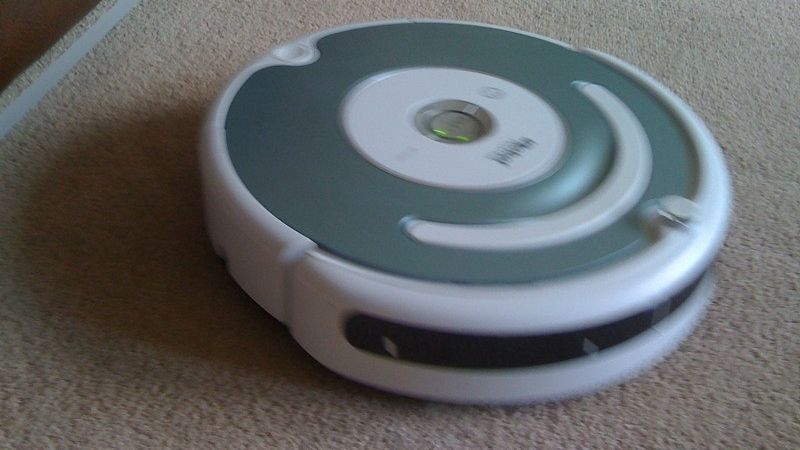
Roomba pioneer aims to crack the household market again with an AI-powered pet robot – Image for illustrative purposes only (Image credits: Flickr)
Colin Angle, the robotics leader behind the Roomba vacuum’s rise, revealed a prototype for an AI-driven pet robot this week that could reshape companionship in homes. The device, named Familiar, promises to learn from its owners and provide emotional engagement without the demands of traditional pets. This launch arrives amid rapid AI progress, enabling behaviors once confined to science fiction, and targets demographics wary of live animal care.
A Fresh Start Post-iRobot
Angle co-founded iRobot in 1990 and served as its CEO for over two decades, guiding the Roomba to become the first mass-market home robot in 2002. Competition intensified in recent years, particularly from Chinese rivals, leading to challenges for the Massachusetts-based firm. He stepped down as CEO and chairman in 2024 after Amazon abandoned its acquisition plans.
Familiar Machines & Magic emerged shortly afterward in Woburn, Massachusetts, operating in stealth until Angle demonstrated a prototype at The Wall Street Journal’s Future of Everything conference in New York. The company draws on Angle’s experience in consumer robotics, shifting focus from cleaning tools to interactive companions. This pivot reflects broader industry trends toward emotionally responsive machines.
Distinct Design Steers Clear of Familiar Tropes
The Familiar prototype resembles a bulldog in size, featuring large expressive eyes, bear-like ears, and soft paws covered in touch-sensitive fur. It performs inviting stretches to encourage interaction, avoiding humanoid or exact animal mimics. Angle explained that this form factor sidesteps preconceptions tied to dogs, cats, or people.
“We chose a form factor that’s not a human, not a dog, not a cat, because we wanted to steer away from all of those preconceptions,” Angle stated. The name “Familiar” nods to folklore companions like a witch’s cat or wizard’s owl, a term he successfully trademarked. Such deliberate choices aim to foster affection rather than novelty.
AI Advances Fuel Lifelike Interaction
Generative AI, accelerated by tools like ChatGPT, powers the robot’s ability to process speech, adapt behaviors, and emit animal-like sounds without verbal responses. Audio sensors act as “ears,” allowing it to learn from household conversations and routines. Angle noted the timing: “I couldn’t have done this six months ago.”
The robot follows owners to rooms like the kitchen or nudges them toward activity, emphasizing huggability over gimmicks. “The challenge is to make something that’s not a watch-me toy,” Angle said. “This is about having something that you want to hug, you want to pet. When it’s happy, that makes you happy.” Past efforts, such as Sony’s Aibo in the 1990s and its 2018 revival, fell short of this depth, according to Angle.
What matters now: AI’s role in enabling real-time learning positions Familiar beyond toys, potentially aiding emotional well-being amid rising isolation.
Advisers and Societal Applications
Angle assembled a team of robotics luminaries, including Marc Raibert of Boston Dynamics, known for the Spot robot, and Cynthia Breazeal, creator of early social robots like Kismet and Jibo. Maja Matarić, a University of Southern California professor and pioneer in socially assistive robotics, joined after interacting with the prototype. She instinctively hugged and petted it, highlighting its appeal.
Matarić’s research underscores that cute, vulnerable designs outperform alternatives in human-robot bonds. She envisions uses in nursing homes or mental health support, now feasible with AI speech comprehension. “Before generative AI, robots could not readily understand what people were saying,” she observed. One key audience includes retirees, who often avoid pets due to care burdens despite their desire for companionship.
While commercial availability remains distant, Familiar represents a calculated evolution in home robotics. Angle’s track record suggests potential for mainstream adoption, provided it delivers genuine emotional connection. The venture underscores how AI could quietly transform daily life, bridging technology and human needs in subtle, enduring ways.