
Something noticeable is happening on college campuses across the United States. Fields that once drew long waitlists and enthusiastic freshmen are now quietly losing students, semester after semester. The reasons range from artificial intelligence upending job markets to ballooning student debt forcing families to do sharper math about return on investment.
Researchers studying public opinion on higher education have found that cost, flexibility, and career relevance now shape how people evaluate a college degree’s worth, with students getting “more precise about what kind of education they want” rather than simply following long-established paths. The result is a measurable reshuffling of which majors thrive and which ones quietly fade.
English Literature: A Decades-Long Retreat


The number of students majoring in English across the U.S. declined by roughly a third between 2011 and 2021, and at one point only about seven percent of Harvard freshmen planned to major in the humanities. That trend has continued. More recent data shows that English experienced the largest decrease in college enrollment per major, falling by more than ten percent.
Declines in traditional humanities majors point to skepticism about their return on investment, driven by economic pressures, uncertainties, and ballooning student loan debt, with students and their families increasingly hesitant to invest in fields with less clear career trajectories. The shift isn’t about a sudden dislike of reading or writing – it’s a cold calculation about what a degree is worth in today’s job market.
Journalism: An Industry Under Siege


Faculty members at institutions like the University of New Hampshire have voted to eliminate journalism majors following a decline in enrollment, with programs potentially cut as early as the 2025-2026 academic year. This isn’t an isolated case. The dwindling of journalism programs is emblematic of broader industry challenges, with journalism jobs growing in some major cities but at low salaries, and media layoffs on pace for up to 10,000 jobs lost in 2024 alone.
Going to school for journalism, particularly at the master’s degree level, has sometimes left graduates with debts as high as six figures. When the credential costs that much and the industry offers that level of instability, it’s not hard to understand why prospective students are steering toward other fields. Journalism isn’t disappearing as a practice, but as a formal undergraduate major it’s clearly on shaky ground.
Computer Science: The Fall of a Former Golden Child
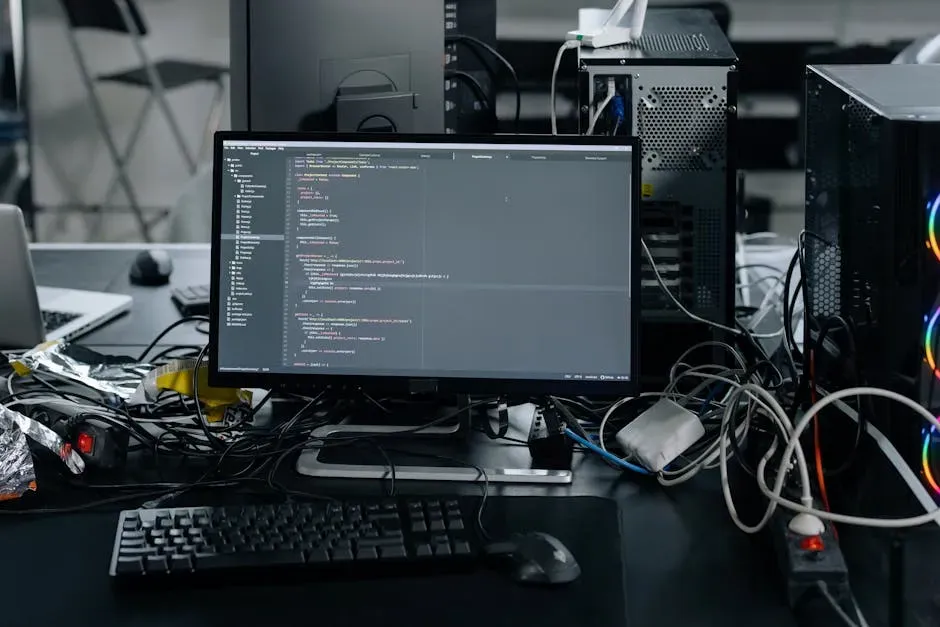
For years, Computer Science was one of the strongest and fastest-growing academic areas, with its position remaining stable – until 2025, when it experienced its first enrollment decline after years of sustained growth, dropping roughly eight percent. Headlines about tech layoffs, combined with the rapid rise of AI, have introduced significant uncertainty into what was once seen as a stable, high-growth field.
Enrollment in Computer and Information Science programs declined across all award and institution types in fall 2025, ranging from a drop of nearly four percent at undergraduate institutions to a fourteen percent fall at the graduate level. Recent graduates in computer science and computer engineering have seen some of the highest unemployment rates among new degree holders, and experts say that while the field isn’t dying, it’s no longer the clear-cut path it once was.
Liberal Arts and Humanities: A Broad Retreat


Data from the U.S. Department of Education’s National Center for Education Statistics revealed that the number of bachelor’s degrees in humanities awarded by four-year universities declined from about seventeen percent of all degrees in the 2010-11 academic year to under thirteen percent by 2020-21. That’s a meaningful structural shift, not a blip. More recent figures show that liberal arts and humanities majors experienced a further decline in enrollment of more than seven percent.
Some private universities have gone further, disbanding entire programs in English, history, philosophy, and sociology – a reminder of the growing institutional pressure on these fields of study. The irony is that employers consistently say they want workers who can think critically and communicate clearly – skills the humanities have always been designed to cultivate.
Partner offer

Visual and Performing Arts: Passion Meets Financial Reality


Visual and performing arts experienced among the largest decreases in enrollment of any major category, falling by more than eighteen percent in a recent reporting period. The job market for fine art and studio artists is highly competitive, making it difficult to secure stable employment, with many graduates struggling to find steady work and often relying on low-paying or unpredictable freelance opportunities.
Some institutions have responded by consolidating separate programs into more streamlined degrees, with fine arts programs in areas like drawing, painting, printmaking, and sculpture being merged into a single studio arts degree. This restructuring reflects a real tension between institutional cost-cutting and preserving creative disciplines that have genuine cultural value but uncertain financial returns for graduates.
Communications and Advertising: Disrupted by the Digital Age

An enrollment decline of nearly nine percent has been reported in the field of communications and journalism combined, as students question whether a traditional communications degree translates into meaningful career preparation. The rise of automation and artificial intelligence is reshaping demand for traditional white-collar jobs, reflected in lower enrollment trends for certain majors including communications-adjacent fields.
Advertising and marketing communications programs, once popular for their perceived creative-meets-business appeal, are facing a different kind of disruption. Digital platforms now do in minutes what once required entire creative departments, and AI-generated copy is increasingly good enough for entry-level tasks. Students are weighing those realities carefully before committing four years and tens of thousands of dollars.
Kinesiology and Exercise Science: A Post-Pandemic Correction


Among the biggest decreases in student interest tracked from 2021 to 2025, kinesiology and exercise science recorded one of the steepest drops, down roughly forty-one percent in prospective student interest. Physical therapy followed closely behind. Nursing saw the steepest overall decline in health science interest, falling from nearly seven percent of all prospective students to just over four percent, with the broader health sciences area declining across the board.
Part of this correction appears to be a hangover from the pandemic era, when health-adjacent fields surged in appeal. In the years following the pandemic, interest in nursing saw a substantial downward swing and is only starting to recover, suggesting these enrollment cycles can be sharp and relatively short-lived. Still, exercise science programs in particular are struggling to distinguish themselves in a job market where certifications often carry more weight than four-year degrees.
Political Science: Growing Cynicism About Government Careers

Political science was once a reliable on-ramp to law school, government service, or policy work – and those pipelines still exist. The problem is that students are increasingly skeptical about both the cost of the degree and the career math on the other side. Falling enrollment has been worsened by a decline in perception of the value of a college degree broadly, with only about one in four Americans now saying that having a bachelor’s degree is extremely or very important to getting a good job, according to the Pew Research Center.
About thirteen percent of bachelor’s degree students say they’ve already changed their major or field of study because of AI, and roughly forty-seven percent of all college students say they’ve given at least some consideration to changing their major due to AI’s impact on the job market. Political science students, who often rely on writing, research, and policy analysis – skills increasingly replicable by AI tools – are not immune to this anxiety. Students in programs perceived as vulnerable to automation are the most likely to say they’re reconsidering their academic direction due to AI, according to the Lumina Foundation-Gallup survey.
What This Shift Really Tells Us

Researchers at the National Student Clearinghouse note that students are continuing to shift out of more traditional pathways into shorter-term, more flexible, and more job- and career-oriented fields. Academic trends often mirror shifts and priorities in public life and societal issues, and each shift tells a story about how students are navigating an uncertain future.
Roughly one in five recent graduates regret their major, according to a recent ZipRecruiter report surveying graduates from the class of 2025 and students set to graduate in spring 2026. That statistic captures the core anxiety driving this reshuffling. Students aren’t abandoning these fields out of indifference – they’re making harder, more calculated choices about where to invest their time, money, and four years of their lives in a rapidly changing world.
Partner offer
Planning a trip to Vegas?
Compare hotel rates and show tickets on VEGAS.com.