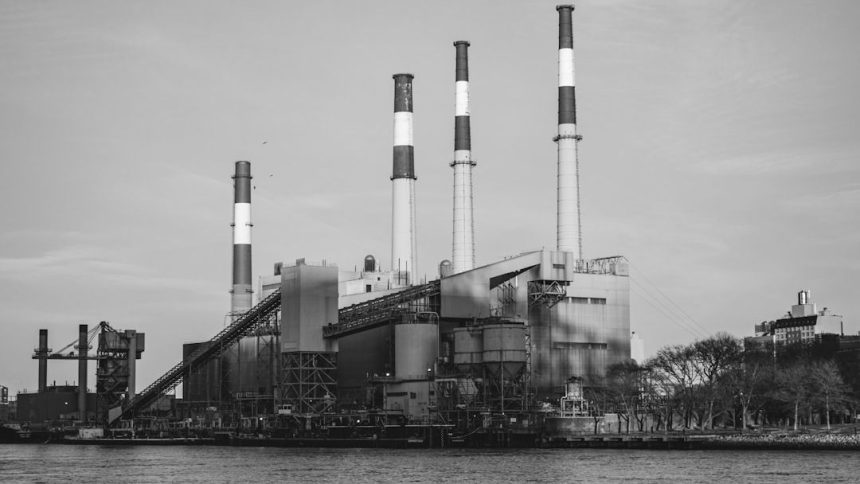

Por qué un centro de datos de Nevada quiere construir su propia central temporal de gas natural – Image for illustrative purposes only (Image credits: Unsplash)
Storey County, Nevada — A surge in data center development has pushed one company to seek regulatory approval for its own temporary natural gas power plants, marking what experts call a first for the state. Fleet Data Centers aims to generate more than 350 megawatts to support its expanding facilities in the Tahoe Reno Industrial Center, where utility provider NV Energy struggles to keep pace. This move highlights the intense energy demands of the region’s tech growth and the lengths operators are willing to go to avoid construction delays.
A Growing Demand Outstrips Supply
Fleet Data Centers filed requests on April 20 with Nevada’s energy regulators for permission to build on-site power generation. The company plans a 144-megawatt temporary plant to serve its South Valley campus and a separate 218-megawatt Peru Ridge project for another data center site, both within the Tahoe Reno Industrial Center. These facilities would rely on natural gas and diesel until permanent utility connections become available.
NV Energy has determined it requires 47 percent more statewide power than anticipated just two years ago to meet demands from data centers and other large customers. Without interim solutions, Fleet’s projects risk significant setbacks, according to the filings.
The Projects in Detail
If approved, construction on both plants would begin in early 2027 and wrap up by year’s end. The generated electricity would power the data centers directly, bypassing NV Energy’s transmission grid entirely. Proponents argue this approach sidesteps lengthy state regulatory hurdles for new utility infrastructure.
Storey County Commissioner Clay Mitchell described the development as a sign of shifting dynamics in the energy landscape. “I think it’s a signal of the times,” he said in an interview. “Everyone is doing their calculations on the power needed. They’re all competing for the advantage of being the first.”
These 350 megawatts would exceed one-quarter of the 1,200 megawatts of natural gas capacity NV Energy plans to develop over the next two decades, based on current customer requests. The temporary plants are slated to operate for two to three years, bridging the gap until the utility expands service.
Partner offer
Economic Stakes Ride on Quick Power
The Tahoe Reno Industrial Center has become a hotspot for data centers, drawing major investments to northern Nevada. Agreements between developers and county officials allow expedited permits for various projects in the site’s core area, streamlining approvals without full county commission review.
Delays from power shortages could stall this momentum, threatening substantial economic contributions to Storey County and Nevada’s broader economy. Large-scale energy production already exists in the industrial park, but self-generation by data operators represents a newer trend, Mitchell noted.
Pushback from Watchdog Groups
Environmental advocates and energy oversight organizations express alarm over the proposal. By generating power on-site and off the utility grid, the projects could evade standard public input processes overseen by state regulators.
Olivia Tanager, director of the Sierra Club’s Toiyabe Chapter, highlighted this risk. Not using NV Energy’s network “excludes the public from the process,” she said, as it limits the scrutiny typically applied to grid-connected facilities. Critics also worry the initiative might hinder Nevada’s goals for cutting carbon emissions.
Navigating Nevada’s Energy Options
Nevada’s framework already accommodates big energy users seeking alternatives. A 2001 law known as 704B lets major consumers switch from NV Energy to other providers, though they must adhere to the state’s renewable portfolio standards. Companies like MGM Resorts and mining operations have used this pathway while still relying on the utility’s infrastructure.
The Fleet proposal differs by focusing on temporary, self-built generation rather than permanent shifts or third-party deals. Neither project would affect NV Energy’s rates or service for existing customers. As data center expansion accelerates, such innovations underscore the tension between rapid growth and traditional utility planning.
This development signals how Nevada’s economic ambitions are reshaping its energy sector, forcing operators, regulators, and communities to adapt swiftly to unprecedented demands.
Partner offer
Planning a trip to Vegas?
Compare hotel rates and show tickets on VEGAS.com.