Most famous novels don’t arrive fully formed. They start with a dare, a delayed train, a dream, or a magazine assignment that goes sideways.
The eight books below all have well documented beginnings. Some began as small, almost accidental moments, and each one led somewhere much bigger.
Frankenstein and the Summer Without Sun


In 1816, Mary Shelley was staying near Lake Geneva with Percy Shelley, Lord Byron and John Polidori. Bad weather kept the group indoors, and Byron proposed that each person write a ghost story. Mary was only eighteen at the time.
The gloom wasn’t a coincidence. The eruption of Mount Tambora in 1815 had disrupted weather across the Northern Hemisphere, and 1816 became known as the Year Without a Summer. Mary struggled for days to find an idea, then reported a waking vision that grew into the novel, which appeared anonymously in 1818.
Dracula and a Book About Wallachia

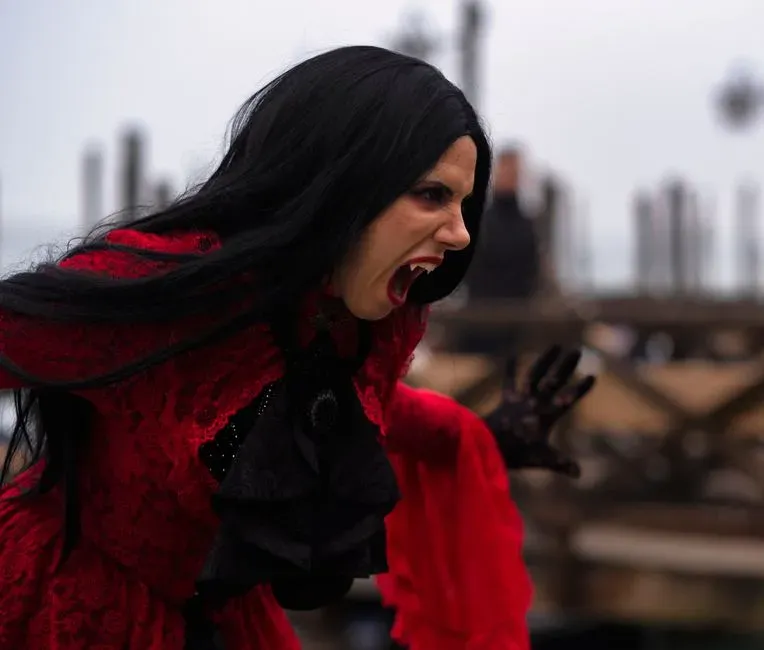
Bram Stoker spent roughly seven years researching before Dracula came out in 1897. His working notes show he was interested in Eastern European folklore long before he settled on a plot. A visit to the English seaside town of Whitby in 1890 gave him the setting for the ship’s arrival.
He also read a book by William Wilkinson about Wallachia and Moldavia, where he found the name Dracula. Stoker’s early title for the novel was reportedly The Un-Dead. The character grew from those notes rather than from one single spark.
Little Women and a Publisher’s Request


Louisa May Alcott didn’t set out to write her best known book. Thomas Niles, a publisher at Roberts Brothers, asked her in 1867 to write a story for girls. Alcott was doubtful, since she preferred other kinds of writing.
She drew on her own childhood and her three sisters instead. The first part appeared in 1868 and a second part followed in 1869. Readers wanted more, and the publisher’s request turned into her lasting success.
Dune and an Assignment About Sand


In 1957, Frank Herbert traveled to the Oregon coast to report on efforts to stabilize shifting sand dunes with planted grasses. The magazine piece was never completed, though the research stayed with him. He became fascinated by how people could reshape a hostile landscape.
That interest grew into a science fiction saga. Dune was serialized in Analog magazine in the mid 1960s and then published as a book in 1965 by Chilton, a company better known for auto repair manuals. Many publishers had turned it down first.
Partner offer

Harry Potter and a Stalled Train

In 1990, J.K. Rowling was on a train from Manchester to London that was delayed for hours. During the wait, the idea of a boy who doesn’t know he’s a wizard came to her. She had no pen handy, so she thought it through in her head.
She started writing soon afterward, and the first novel was published in 1997 in Britain. The story took about seven years from that first idea to the shelf. Rowling has often described the train as the origin of the whole series.
Twilight and a Dream in a Meadow


Stephenie Meyer has said the book began with a vivid dream on June 2, 2003. In it, a young woman talked with a sparkling vampire in a meadow. She woke and wrote down as much as she could recall.
That scene became a chapter in the finished novel. Twilight was published in 2005 and launched a four book series. Meyer had no prior experience as a published author.
The Hunger Games and Late Night Television

Suzanne Collins has said the idea arrived while she was flipping between channels one night. One screen showed reality competition programming, and the other showed coverage of the war in Iraq. The two images blurred together in her mind.
She has also pointed to the Greek myth of Theseus and the Minotaur as an influence, since it involves young people sent as tribute. The novel was published in 2008 and became the first of a trilogy. Its premise came from television and mythology working side by side.
The Handmaid’s Tale and a Divided Berlin


Margaret Atwood began writing The Handmaid’s Tale in West Berlin in the spring of 1984. The city was still divided by the Wall, and she visited places behind the Iron Curtain. Living there shaped her sense of how surveillance and control affect ordinary life.
She continued the manuscript while teaching in Alabama, and the book was published in 1985. Atwood has said she included only events that had happened somewhere in history. That approach helps explain why the novel still feels grounded.
Where These Stories Ended Up


Each of these novels remains in print and widely read. Frankenstein, Dracula and Little Women are now more than a century and a half old, while the newer titles have all been adapted for screen.
Their starting points were a contest, a research trip, a request, an assignment, a delay, a dream, a television screen and a city split in two.
Partner offer
Planning a trip to Vegas?
Compare hotel rates and show tickets on VEGAS.com.