The Roman Empire stands as one of history’s most influential civilizations, leaving behind a legacy that still shapes our world today. Built from about 300 BC through the expansion and consolidation of the Roman Republic and, later, the Roman Empire, Roman roads were physical infrastructure vital to the maintenance and development of the Roman state. From the grand arenas where gladiators fought for their lives to the military camps where disciplined legions prepared for conquest, life in ancient Rome was governed by a rigid social hierarchy and a culture that valued order, spectacle, and engineering prowess. This vast empire stretched across three continents at its height, encompassing diverse peoples united under Roman rule. Understanding how different groups lived within this complex society reveals not just ancient history, but the foundations of Western civilization itself.
The Rise and Reach of the Empire
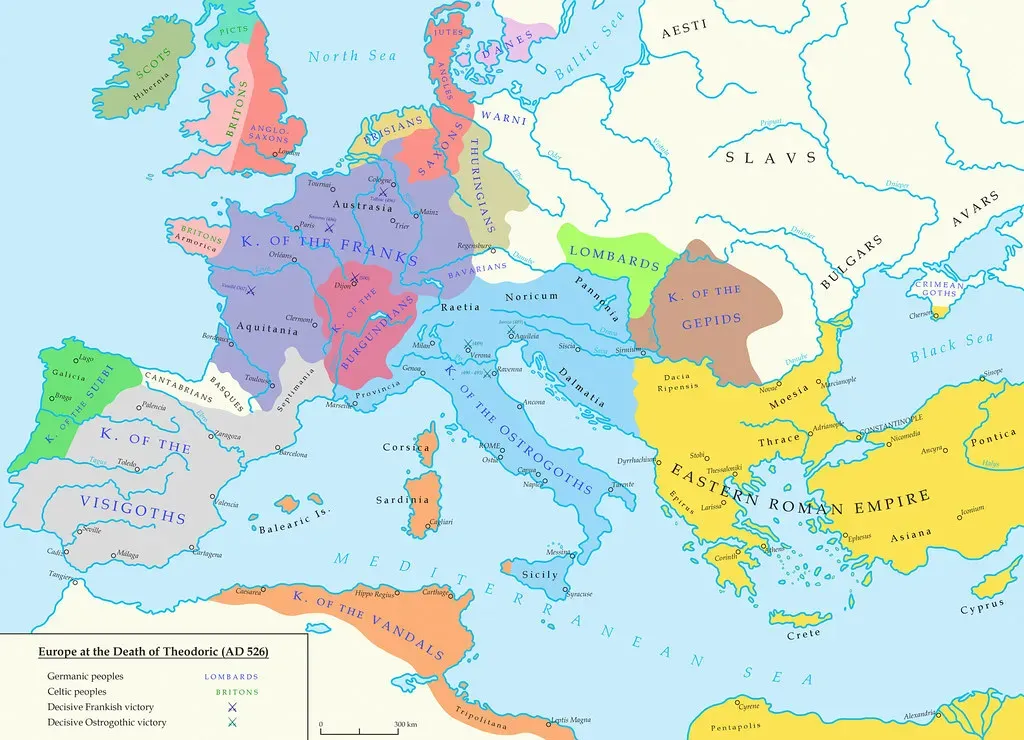
At the height of its dominance, the Roman Empire included over 55 million people, stretching from Britain to Egypt and Syria and covering nearly 4 million square kilometers. This extraordinary expansion began when Octavian became Emperor Augustus in 27 BCE, transforming Rome from a republic into an empire. The Western Roman Empire lasted until 476 CE, while the Eastern portion endured as the Byzantine Empire until 1453. The sheer geographic scope of Roman control created a unified world unlike anything seen before, connecting disparate regions through trade, language, and governance.
The empire’s success depended heavily on its ability to integrate conquered peoples into Roman society while maintaining military dominance. Across territories in Europe, North Africa, and Western Asia, Roman culture spread through carefully planned infrastructure and strategic settlements. Cities modeled on Rome itself sprang up throughout the provinces, bringing Roman law, architecture, and social customs to lands thousands of miles from the capital. This cultural diffusion created a shared identity that transcended local differences, though it never completely erased indigenous traditions.
The Strict Social Pyramid
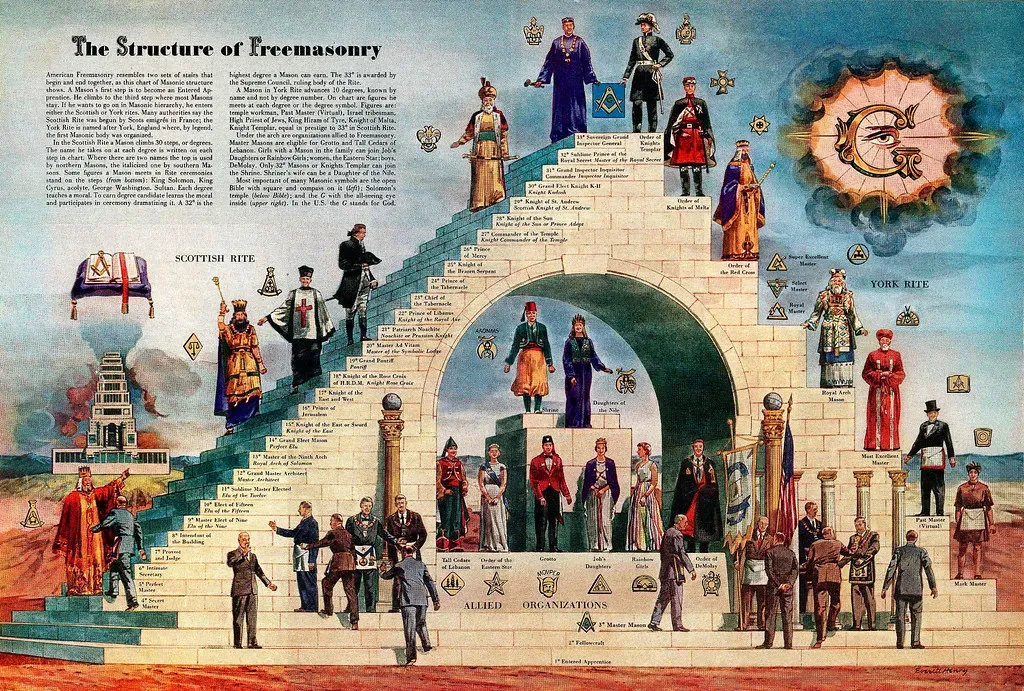
The Roman social structure was a complex hierarchical system that organized society into distinct classes with varying rights and privileges. At the top were patricians and wealthy citizens, followed by equites, common plebeians, freedmen, and finally slaves at the bottom. This pyramid determined everything from political power to legal protections. Patricians were considered the upper class in early Roman society. They controlled the best land and made up the majority of the Roman senate. Birth into a patrician family meant access to political office, religious authority, and social prestige that plebeians could never fully attain.
The equites evolved from their original role as cavalry soldiers into Rome’s influential business class, occupying a critical middle position in the social hierarchy between the senatorial aristocracy and common citizens. Meanwhile, plebeians constituted the majority of the population, working as farmers, craftsmen, merchants, and laborers. Freedmen were freed slaves who, once freed, became full Roman citizens, however they were not considered equal to other citizens because of their former status as slaves or their descent from former slaves, thus they joined the ranks of the lower-class plebeians. At the bottom were slaves, who had no legal rights and were considered property rather than people.
Blood Sport and the Arena
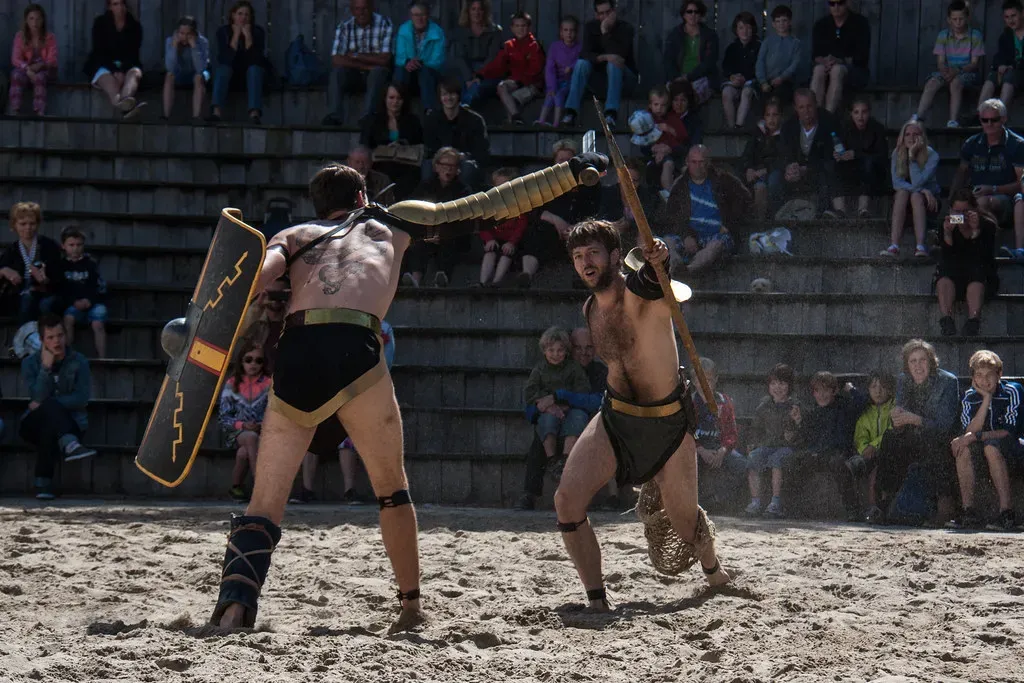
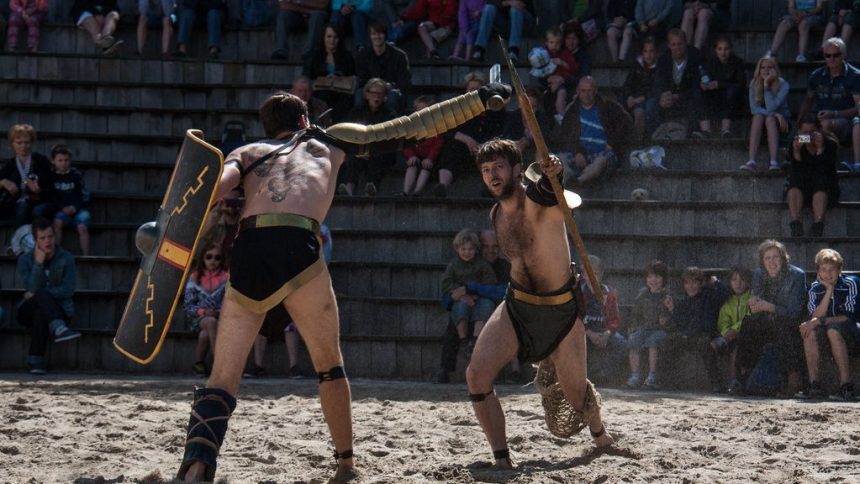
Gladiatorial combat defined Roman entertainment like nothing else, combining extreme violence with theatrical spectacle. These fighters trained in special schools called ludi, where they learned specialized combat techniques and fighting styles. Many male gladiators were enslaved persons or prisoners of war, but young freemen could also volunteer to risk their lives in hopes of fame and fortune. The life of a gladiator was brutal and often short, yet some achieved celebrity status, becoming sex symbols revered by crowds across the empire.
The Colosseum in Rome could seat around fifty thousand spectators, creating an atmosphere of mass entertainment unprecedented in the ancient world. Gladiatorial games served multiple purposes beyond simple amusement. They demonstrated Roman power, reinforced social hierarchies, and provided a controlled outlet for bloodlust that might otherwise threaten public order. Sponsors of games gained political capital and popular support, making these spectacles as much about politics as entertainment. Victorious gladiators could win their freedom, though many died in the arena before achieving that dream.
Proof of Human Versus Beast

Bite marks found on a skeleton discovered in a Roman cemetery in York have revealed the first archaeological evidence of gladiatorial combat between a human and a lion. This remarkable discovery, published in 2025, provided the first direct physical evidence confirming what ancient texts had long described. The bite marks were likely made by a lion, which confirms that the skeletons buried at the cemetery were gladiators, rather than soldiers or slaves, as initially thought and represent the first osteological confirmation of human interaction with large carnivores in a combat or entertainment setting in the Roman world. The finding came from Driffield Terrace in York, one of the best-preserved gladiator graveyards ever discovered.
The lion bite wound was confirmed by comparing it to sample bites from a lion at a zoo and was not healed and is therefore likely to have been his cause of death. Analysis of the skeleton points towards this being a Bestarius, a gladiator role undertaken by volunteers or slaves. This evidence demonstrates that elaborate animal spectacles happened far from Rome, even in distant provinces like Britain. It confirms that exotic beasts were transported across the empire specifically for arena entertainment, representing massive logistical undertakings that showcased Roman organizational capabilities.
Women in the Arena
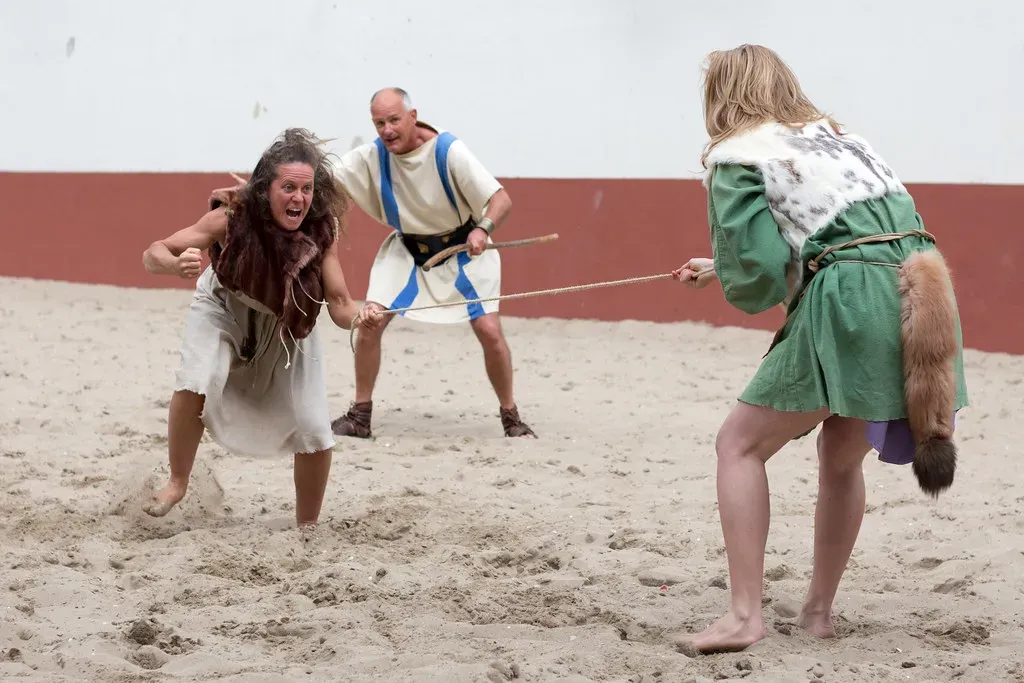
Female gladiators in ancient Rome referred to by modern-day scholars as gladiatrix may have been uncommon but they did exist. Evidence suggests that a number of women participated in the public games of Rome even though this practice was often criticized by Roman writers and attempts were made to regulate it through legislation. Historical inscriptions and literary references confirm their presence, though they remained relatively rare compared to male fighters. An ancient marble relief found in Halicarnassus, in what is now Turkey, shows two women battling with shields, swords and leg protections. The figures are labeled Amazon and Achillia, likely stage names to evoke Greek mythology. An inscription over their heads indicates they fought to an honorable draw.
Society viewed female gladiators with mixed fascination and scandal. The Roman senate passed laws in A.D. 11 and A.D. 19 banning upper class women and freeborn women under age 20 from fighting as gladiators. Eventually, around A.D. 200, emperor Septimius Severus banned female gladiators because after one show, jokes about the fierceness of the women were directed at other very prominent women. These bans suggest that female gladiatorial combat was happening regularly enough to require legal prohibition, and that concerns about social propriety ultimately outweighed the novelty value these fighters provided to audiences.
Daily Life in City and Countryside
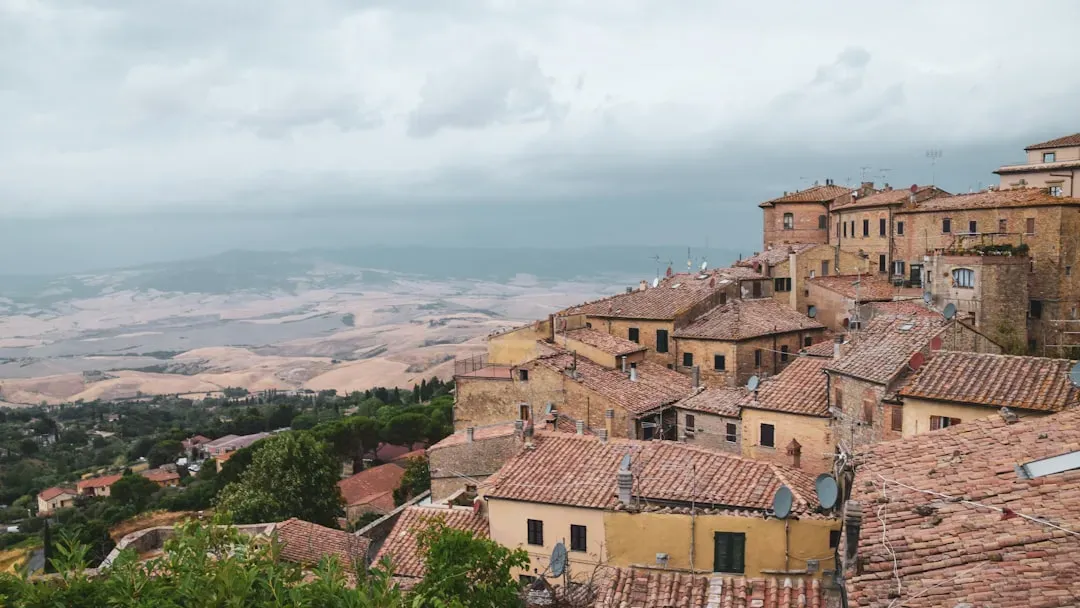
The contrast between wealthy and poor Romans extended beyond status to their physical living conditions. Most urban Romans crowded into insulae, multi-story apartment buildings that were often poorly constructed and prone to fire. These cramped quarters lacked running water and proper sanitation, forcing residents to rely on public facilities. Meanwhile, wealthy citizens enjoyed spacious domus homes featuring central courtyards, private gardens, elaborate decorations, and sometimes even vacation villas in the countryside. The elite could escape the noise and filth of the city whenever they pleased.
Rural life differed significantly from urban existence. Farmers and agricultural workers constituted the backbone of the Roman economy, producing the grain, olives, and wine that fed the empire. These country dwellers lived simpler lives, often in small villages or on large estates owned by wealthy landowners. While they avoided the urban crowding and disease, they also lacked access to the entertainment, culture, and opportunities that cities offered. The relationship between city and countryside remained essential, with rural production sustaining urban consumption in a delicate economic balance.
The Culture of Public Baths

Public baths represented one of the most democratic aspects of Roman society, where citizens from all classes could mingle in relative equality. The Baths of Caracalla were started by the emperor Septimius Severus and completed only later by his son Caracalla in the year 216 A.D. One of the largest and best-preserved thermal complexes of the ancient world, it had the capacity for 8000 people to use its various services daily. These facilities offered far more than simple bathing. They included gyms, libraries, shops, massage chambers, and social gathering spaces where Romans could exercise, conduct business, gossip, and relax.
The guests could choose between cold baths, warm baths, hot baths, and a giant waist deep swimming pool. In most cases the baths were available for a small fee but there were occasions in which the emperor in power would grant free entrance to everyone. Romans from all social classes flocked to the baths whenever they had a chance. The bathhouse became a central feature of Roman social life, where political deals were made, friendships formed, and news exchanged. This shared cultural practice helped unify Roman society across class lines and spread throughout the provinces as a marker of civilization.
The Disciplined Legions
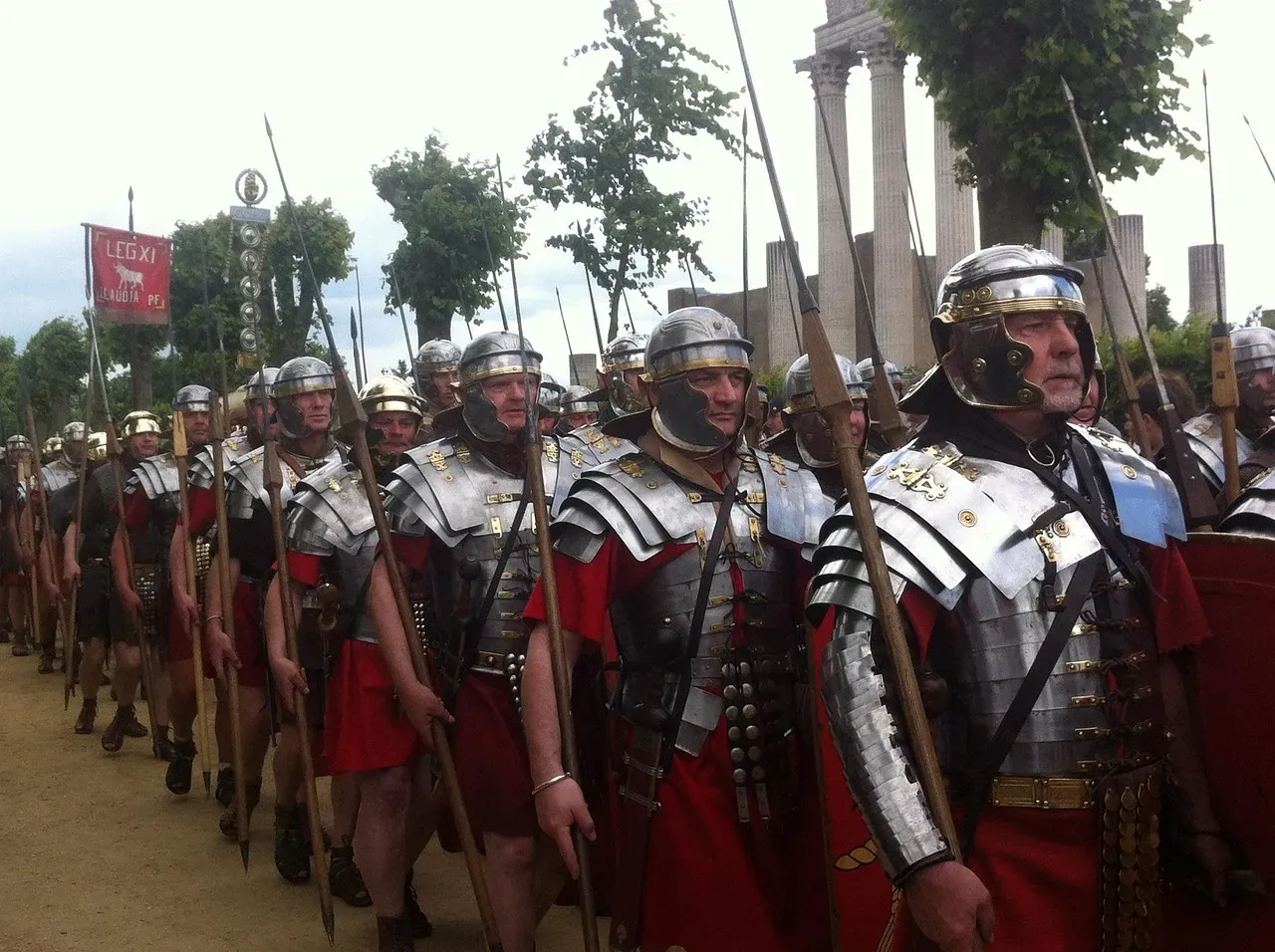
The Roman military machine represented the most professional and effective fighting force the ancient world had ever seen. Rigorous training transformed recruits into disciplined soldiers capable of extraordinary feats. Before being dispatched on campaigns, new recruits would embark on around 4 months of rigorous training. This training programme began with marching and progressed to sparring, weaponry training and strategic exercises such as formation drills. By the time training was completed, soldiers would be able to march 20 miles a day in full armour. This conditioning prepared them for the grueling demands of military campaigns across diverse and challenging terrain.
The average day’s march of a legionary army was 20 miles, a rate as good as any foot-propelled military force in ancient or modern history. Soldiers carried substantial loads including armor, weapons, tools for building camps, and several days of food rations. Soldiers would be expected to embark on either a reasonable march or a heavier march, which meant walking 20 or 30 miles, respectively. After the day’s march, soldiers would build a camp surrounded by a perimeter wall. This combination of mobility and defensive capability gave Roman forces tremendous tactical advantages over less organized opponents.
Women’s Roles and Restrictions
Women in Roman society occupied a complex position, possessing more rights than their counterparts in many ancient civilizations yet still facing significant legal and social limitations. Legally, Roman women were considered under the authority of their fathers or husbands. They could own property and run businesses, but their civic participation was restricted. Upper-class women managed households, oversaw slaves, and exercised influence through their husbands and sons. Some educated women became poets, physicians, or businesswomen, carving out spaces of autonomy within patriarchal constraints.
The primary expectation for Roman women centered on marriage and motherhood, particularly producing legitimate heirs. Wealthy patrician women enjoyed more freedom than their plebeian counterparts, including access to education and participation in social events. However, female virtue and propriety remained paramount concerns, with women’s behavior constantly scrutinized for potential scandal. Despite these restrictions, some women wielded considerable power behind the scenes, influencing political decisions and managing vast fortunes. Their contributions to Roman society, though often overlooked by ancient historians, proved essential to the empire’s functioning.
Engineering Marvels that Endure
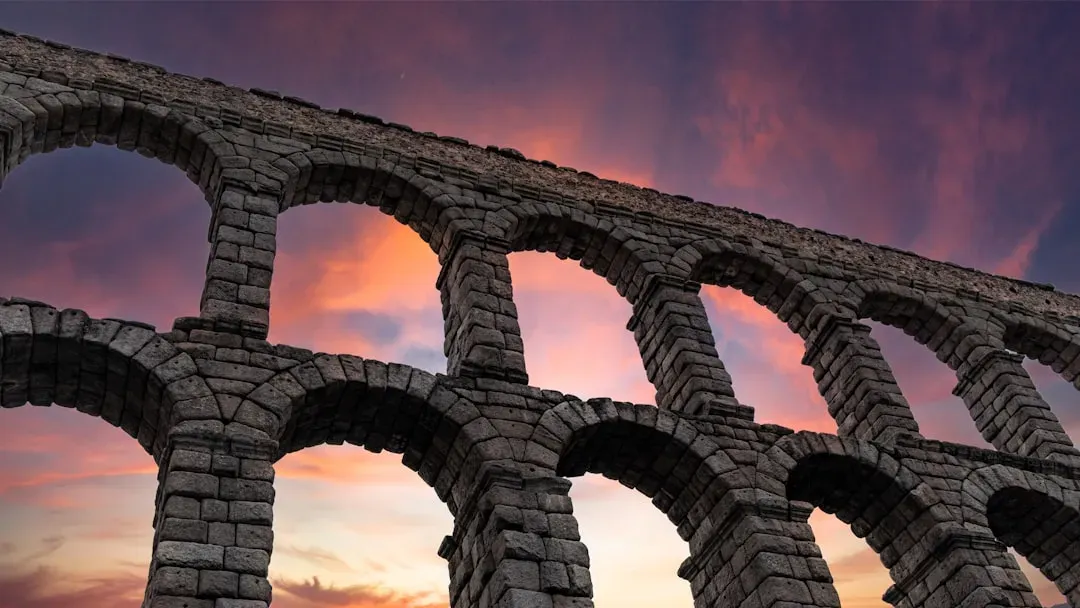
Roman engineering achievements remain visible across Europe and the Mediterranean nearly two thousand years later, testament to the empire’s technical brilliance. Roman roads stretched for 53,000 miles and passed through tunnels as long as 3.5 miles. Recent digital mapping efforts have revealed even more extensive networks, with more than 180,000 miles of Roman roads identified, enough to circle the Earth more than seven times, including tens of thousands of miles of newly identified roads. These roads facilitated military movements, trade, communication, and cultural exchange on an unprecedented scale.
Aqueducts represented another triumph of Roman engineering, bringing fresh water from distant sources into cities throughout the empire. During the Imperial age Rome could count on 11 functioning aqueducts that supplied the city’s fountains, baths and cisterns with fresh spring water. A rough estimate states that each Roman citizen could rely on nearly 900 liters of water per day, for a population of slightly over one million people. The construction of these systems required precise surveying, massive labor forces, and sophisticated understanding of hydraulics. Many aqueducts incorporated both underground channels and dramatic arched bridges that still stand today, symbols of Roman ambition and capability that continue to inspire wonder.
Life in the Roman Empire varied dramatically depending on one’s position in the social hierarchy, yet certain experiences united people across classes. Whether watching gladiators in the arena, bathing in public thermae, or traveling roads that connected distant provinces, Romans participated in a shared culture that defined their world. The empire’s legacy persists in our languages, laws, architecture, and infrastructure, reminding us that while empires rise and fall, their influences echo through millennia.