There’s something magical about seeing your favorite book characters leap off the page and onto the screen, though honestly, that magic sometimes feels more like a curse. Book lovers have watched their beloved stories transformed into everything from cinematic masterpieces to unwatchable disasters. The journey from page to screen is tricky business, where one wrong move can alienate an entire fanbase.
Still, when done right, adaptations can introduce stories to millions who might never crack open the book. We’re living through a golden age of literary adaptations, where streaming platforms are fighting over every bestseller they can find. Let’s dive into the adaptations that got it spectacularly right and the ones that, well, made us want to throw things at our screens.
The Lord of the Rings: When Everything Goes Right
Peter Jackson’s Lord of the Rings trilogy achieved what seemed impossible, earning 17 Academy Awards out of 30 total nominations and setting records that still stand today. The Return of the King won all 11 Oscars for which it was nominated, tying with Ben-Hur and Titanic for the most Academy Awards ever won by a single film. The trilogy grossed over $2.9 billion worldwide, making it one of the highest-grossing film series of all time. Critics praised Jackson’s vision for capturing Tolkien’s epic while making it accessible to newcomers who’d never heard of hobbits or the One Ring.
Harry Potter: Faithful Magic That Paid Off
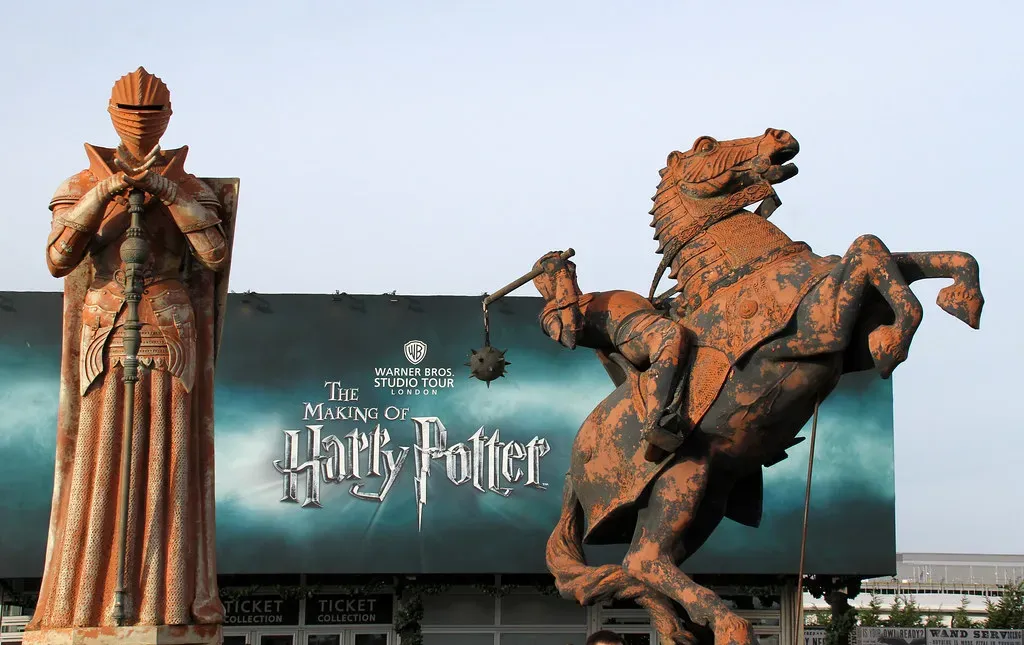
The Harry Potter film series has grossed over $7.7 billion worldwide as of 2022, making it the fourth highest-grossing film franchise of all time. What made these adaptations work was their commitment to the source material, even when it meant splitting the final book into two films. All eight releases became top-rank box office hits, with every single film appearing on the list of highest-grossing films worldwide. The casting choices proved brilliant, letting audiences watch Daniel Radcliffe, Emma Watson, and Rupert Grint grow up alongside their characters through a decade of releases.
Netflix’s Adaptation Formula: Bridgerton and The Witcher
Bridgerton became Netflix’s most watched original series ever, with its first season accumulating 625 million hours of viewing within its first four weeks. The Witcher’s first season generated 541 million hours across 76 million accounts, with viewing data suggesting most subscribers completed the entire season. These numbers reveal something crucial about book adaptations in the streaming era. Platforms need content that keeps viewers hooked episode after episode, and both series delivered that addictive quality that makes you hit “next episode” at 2 a.m.
The 3 Body Problem: Science Fiction Done Right
Netflix’s adaptation of Liu Cixin’s Hugo Award-winning novel The 3 Body Problem, released in March 2024, proved to be an enormous critical and popular success. The series tackled complex scientific concepts and sweeping philosophical questions while remaining accessible to mainstream audiences. Even veterans of the original novels acknowledged that the books themselves had a fever-dream intensity and strangeness that challenged adaptation. Yet the show managed to capture the essence of first contact with alien intelligence while navigating the drama of China’s Cultural Revolution, proving that cerebral science fiction can work on screen.
Dune Part Two: Villeneuve’s Visionary Achievement
Denis Villeneuve’s Dune: Part Two continued adapting Frank Herbert’s legendary sci-fi novel with sweeping visuals, political drama, and deep mythology. Where previous attempts to adapt Dune had failed or disappointed, Villeneuve understood that the key was committing fully to the scale and weirdness of Herbert’s universe. The film didn’t shy away from the book’s complex political maneuvering or its mystical elements. Instead, it embraced them, creating a cinematic experience that felt both epic and intimate, proving that sometimes the most challenging books just need directors willing to take risks.
It Ends With Us: Controversy and Box Office Success
When It Ends with Us hit theaters in August 2024, it generated big box office numbers and juicy behind-the-scenes gossip while continuing the success of self-publishing pioneer Colleen Hoover. The film tackled themes of emotional abuse and domestic violence based on Hoover’s own parents’ relationship, which she called the hardest book she’d ever written. However, the adaptation showed a significant gap between its 8.3 Goodreads rating and 6.5 IMDB rating, representing a 27.4% difference in audience satisfaction. The disconnect suggests that while mainstream audiences embraced the film, book fans felt something crucial was lost in translation.
Uglies: Netflix’s Recent Disaster
Netflix’s 2024 adaptation of the 2005 YA dystopian novel Uglies earned the distinction of worst recent book-to-movie adaptation with a 16% rating on Rotten Tomatoes, where critics noted it didn’t have much going on inside. The film struggled with a premise that felt outdated in 2024, asking audiences to believe conventionally attractive stars like Joey King were “ugly” during an era pushing for more inclusive beauty standards, making its message about beauty and authenticity seem tone-deaf. The clunky CGI and outdated feel of a YA dystopia arriving years after the genre’s peak didn’t help matters.
The Witcher Season Three: When Fandom Fractures
The Witcher’s second season amassed 462.5 million hours of view-time, placing both seasons on Netflix’s most-viewed TV shows of all time list. Yet by season three, something shifted. Fans complained about departures from the source material and Henry Cavill’s announcement that he’d leave after season three sent shockwaves through the community. Netflix announced in October 2022 that Liam Hemsworth would replace Cavill as Geralt of Rivia starting with the fourth season. The controversy highlighted how delicate the relationship between adaptation and source material can be, especially when passionate fans feel their story is being mishandled.
Eragon and The Last Airbender: Lessons in How Not to Adapt
Rotten Tomatoes’ 2025 audience rankings continue to list Eragon and The Last Airbender among the lowest-rated adaptations due to deviation from source material. These films became cautionary tales in Hollywood, showing what happens when studios fundamentally misunderstand what made the books or shows work. Eragon stripped away the depth and world-building that made Christopher Paolini’s fantasy epic resonate with readers. The Last Airbender somehow made the vibrant, emotionally rich animated series feel lifeless and confusing. Both proved that big budgets and visual effects mean nothing if you lose the story’s heart.
One Day: When Second Chances Work

Netflix’s 2024 series One Day adapted David Nicholls’ novel that had already been made into a 2011 movie, yet the new version proved audiences needed this story retold, with viewers hooked before the couple’s first St. Swithin’s Day together. The show followed Emma and Dexter for two decades worth of July 15ths in this friends-to-lovers story, with the book’s structure naturally fitting the pacing of a series. This adaptation demonstrated that sometimes a beloved book deserves multiple attempts, each offering a different interpretation. The series format allowed deeper character development than the film could achieve in two hours, proving format matters as much as faithfulness.
What makes a great adaptation, then? It’s hard to say for sure, but the best ones seem to understand that slavish devotion to every page isn’t always the answer. Sometimes it’s about capturing the spirit, the feeling, the reason people fell in love with the story in the first place. The worst adaptations forget that entirely, treating beloved books as mere intellectual property to be exploited. Did any of these surprise you?