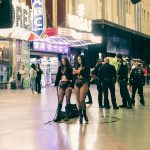
Chaos Erupts at Permitted Rally (Image Credits: Nypost.com)
New York City – Two Pennsylvania teenagers allegedly lobbed improvised explosive devices at demonstrators gathered outside Mayor Zohran Mamdani’s residence during an anti-Muslim rally, fueling a federal probe into ISIS-inspired terrorism.[1][2]
Chaos Erupts at Permitted Rally
A right-wing demonstration dubbed “Stop the Islamification of NYC” drew crowds to the grounds near Gracie Mansion on March 7. Far-right activist Jake Lang organized the event, where participants chanted calls to deport Muslims from the United States. Counterprotesters soon arrived, escalating tensions into physical clashes.[3]
Amid the disorder, Emir Balat, 18, and Ibraham Kayumi, 19, both from Bucks County, Pennsylvania, lit and threw two devices toward the main group of protesters. Authorities later recovered a third item from their nearby vehicle. No one suffered injuries as the explosives failed to fully detonate. Police arrested the pair on the spot, launching an immediate investigation.[1]
Deadly Devices and Chilling Confessions
NYPD Commissioner Jessica Tisch described the thrown objects as genuine improvised explosive devices packed with triacetone triperoxide, or TATP – known as the “Mother of Satan” for its instability. One contained shrapnel like bolts and screws, capable of causing severe harm or fatalities. “These were not hoax devices, nor smoke devices. It is, in fact, an improvised explosive device that could have caused serious injury or death,” Tisch stated at a Monday press conference.[1]
Federal charges soon followed, including five counts such as providing material support to a foreign terrorist organization. The suspects admitted ISIS inspirations to detectives. Balat pledged allegiance to the group in writing and expressed hopes his attack would exceed the 2013 Boston Marathon bombing’s toll. Kayumi referenced watching ISIS videos and claimed affiliation. The FBI raided their homes, uncovering bomb-making materials.[2]
Mayor’s Response Draws Mixed Reactions
Flanked by Commissioner Tisch outside Gracie Mansion, Mamdani condemned the violence without directly labeling the perpetrators’ ideology. “They are suspected of coming here to commit an act of terrorism,” he said. “Anyone who comes to New York City to bring violence to our streets will be held accountable in accordance with the law.”[1]
Later statements acknowledged the ISIS allegiance: “Emir Balat and Ibraham Kayumi have been charged with committing a heinous act of terrorism and proclaiming their allegiance to ISIS. They should be held fully accountable.” Critics noted his emphasis on the original rally’s “bigotry and racism” over the bombers’ radical ties. As the city’s first Muslim mayor, Mamdani defended free speech rights even for offensive protests. He remarked that anti-Muslim sentiment felt familiar to him and the city’s one million Muslims.[3]
Charges and Investigation Milestones
- Two IEDs thrown; third recovered from suspects’ vehicle.
- Devices used TATP explosive with shrapnel in one.
- Suspects charged with material support to ISIS and weapons of mass destruction use.
- Balat sought attack larger than Boston Marathon.
- NYPD and FBI probe self-radicalization via social media.
Broader Shadows Over the City
The incident unfolded amid rising anti-Muslim incidents, with NYPD logging seven hate crimes against Muslims in January 2026 alone – up from none the prior year. Mamdani’s democratic socialist views and stances on global conflicts have intensified local divides. Counterterrorism experts highlighted youth mobilization online across ideologies as a growing threat.[3]
Authorities stressed ISIS’s global record of violence. The episode underscored challenges in policing protests while addressing extremism from multiple fronts.
Key Takeaways
- FBI treats case as ISIS-inspired terrorism with no active recruitment evident.
- Mayor’s words balanced accountability and protest rights.
- Devices posed real lethal risk despite failure to explode.
This close call at Gracie Mansion serves as a stark reminder of extremism’s reach in urban centers. How should leaders navigate such volatile moments without fueling further division? Share your thoughts in the comments.