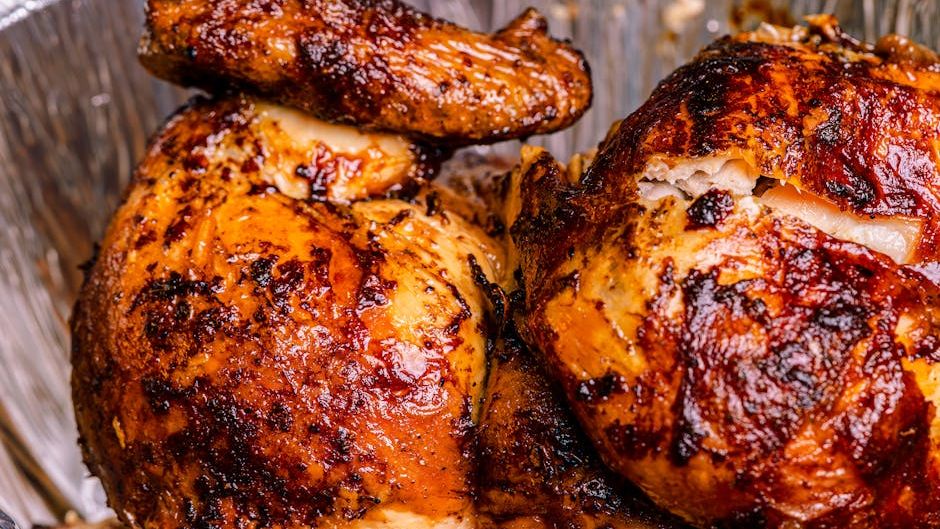
Democrats Clash Over Rotisserie Chicken – Image for illustrative purposes only (Image credits: Pexels)
The U.S. House of Representatives delivered a rare show of unity Thursday by approving an amendment to the 2026 Farm Bill. This change allows recipients of the Supplemental Nutrition Assistance Program to purchase hot rotisserie chickens at grocery stores. The measure passed overwhelmingly amid broader debates over agriculture and nutrition policy.[1]
A Simple Fix for Everyday Needs
Low-income families, seniors, and others relying on SNAP often face hurdles when preparing meals at home. Current rules restrict benefits to cold foods, pushing shoppers toward refrigerated rotisserie chickens that lose freshness quickly. Rep. Rick Crawford (R-Ark.) championed Amendment 272, which updates the 2008 Food and Nutrition Act to explicitly include hot rotisserie chickens.[2]
This adjustment recognizes the practical value of a $5 to $6 bird that yields multiple meals. Governors in Arkansas and seven other states had sought waivers from the USDA, but federal law required congressional action. The provision applies only to grocery stores accepting SNAP, preserving restrictions on restaurants.[2]
Why This Poultry Matters
Hot rotisserie chicken stands out as a nutrient-dense protein source that aligns with USDA dietary guidelines. Recipients can use it straight from the deli case or incorporate it into salads, soups, and casseroles for variety. Without reliable ovens or time, many struggle to reheat cold versions, leading to waste and added costs.[2]
Partner offer
Sen. Shelley Moore Capito (R-W.Va.) highlighted the human element. “Allowing SNAP recipients to purchase hot rotisserie chicken is a simple, practical step to make the program work better for the people it serves,” she stated. “For seniors, working families, and those without reliable access to cooking equipment, this is about convenience and dignity.”[1]
Bipartisan Backing with Pockets of Pushback
The amendment sailed through on a 384-35 vote, with 196 Democrats joining 187 Republicans in support.[3] This lopsided tally contrasted with the farm bill’s narrower 224-200 passage along party lines. Twenty-three Republicans and 12 Democrats opposed the change, including House Minority Leader Hakeem Jeffries and two other New York Democrats.[4]
Some Democrats, like Rep. Grace Meng (D-N.Y.), argued for going further. She promoted her Hot Foods Act to cover all prepared hot items, questioning limits on just chicken. Still, the broad consensus underscored shared priorities on nutrition access.[1]
Key Vote Breakdown:
- Yes: 384 (196 Democrats, 187 Republicans)
- No: 35 (12 Democrats, 23 Republicans)
Heading to the Senate
The provision now travels with the farm bill to the Senate, where bipartisan sponsors await. Sens. Jim Justice (R-W.Va.), John Fetterman (D-Pa.), Shelley Moore Capito (R-W.Va.), and Michael Bennet (D-Colo.) introduced companion legislation earlier this month.[1] No new funding or eligibility expansions accompany the tweak, keeping costs neutral.
If enacted, the rule takes effect upon presidential signature, offering immediate relief at checkout lines nationwide. This targeted update signals Congress’s willingness to modernize aid programs without overhauling them.
Partner offer
Planning a trip to Vegas?
Compare hotel rates and show tickets on VEGAS.com.