There’s a frightening moment every driver dreads – flashing lights in your rearview mirror on a dark stretch of highway. Your instinct is to pull over, comply, and trust the badge. But what if the person walking toward your window isn’t a real officer at all? What if the badge is fake, the uniform is a costume, and your compliance puts you in serious danger?
This isn’t a fringe scenario anymore. Across the United States, including heavily trafficked corridors like the I-15, reports of police impersonators conducting fake traffic stops have been climbing with alarming consistency. Let’s dive in.
1. The Scale of the Problem Is Bigger Than You Think


Most people assume police impersonation is rare – the kind of thing you see in crime dramas, not on your daily commute. Honestly, that assumption is part of what makes this crime so effective. Studies on police impersonation show that roughly about nearly half of all impersonation incidents occur on highways, roads, or similar transit corridors, making traffic stops the single most common scenario in which criminals pose as officers.
Here’s the thing: these crimes are also notoriously under-reported. Police impersonation crimes are more widespread than many people assume, but they are often not systematically tracked by law enforcement agencies across the country. That gap in data makes the true scale of the problem nearly impossible to pin down – which is exactly what makes it so dangerous.
2. Real Cases on the Road: What’s Actually Happening

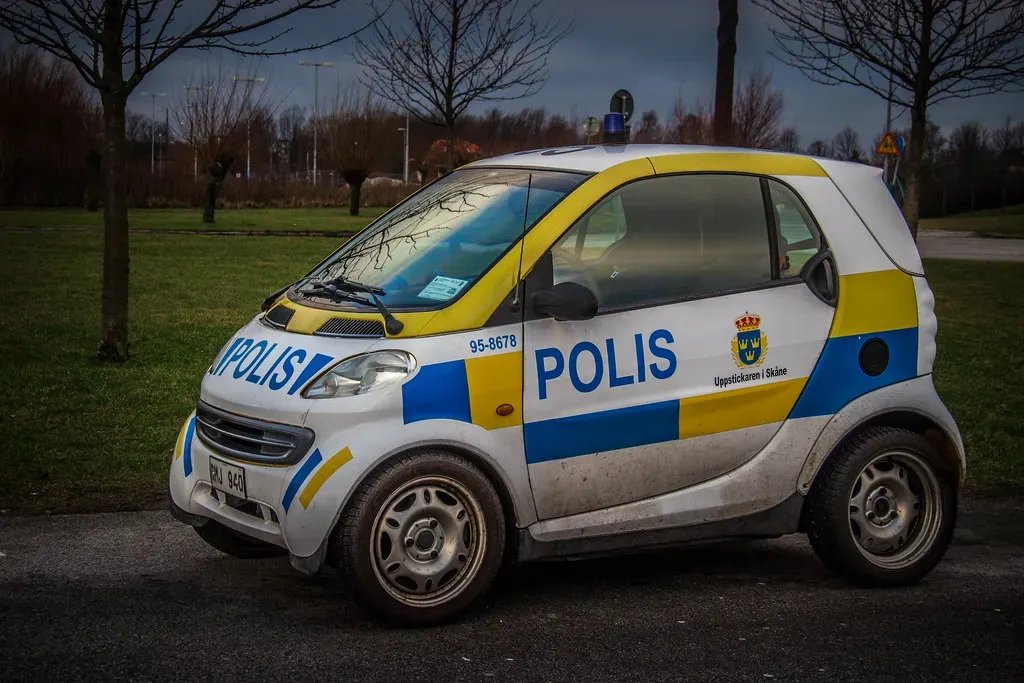
One California driver near the I-15 North at Mission Gorge and Friars Road encountered a gray Dodge Durango that aggressively tried to run them off the road before flashing red and blue lights in an attempt to pull them over. It sounds like something out of a movie. It wasn’t. The driver noticed heavily tinted windows and an unusual light setup, so they called 911 and were told it was not a real officer.
In Marshall County, Mississippi, the Sheriff’s Office issued a public warning after receiving reports of a man in an unmarked white Chevrolet Impala who allegedly pulled over several unsuspecting victims while posing as a police officer. The car had a blue light bar just under the front windshield visors, and the suspect was described as a tall, thin man in his 20s wearing a shirt with “POLICE” written across the chest. Ordinary enough to be convincing. Dangerous enough to be terrifying.
3. Teenagers, Retirees, and Everyone In Between: Who Are These Impersonators?

You might picture a hardened criminal pulling this stunt. The reality is far stranger. Maryland State Police investigated a Salisbury teenager accused of impersonating a state trooper and conducting fake traffic stops across Wicomico County, with 19-year-old Jayden Ballard served a criminal summons in February 2025. Investigators believe Ballard had gained access to a marked Maryland State Police vehicle and was operating the patrol vehicle while wearing a Maryland State Police uniform throughout the county.
On the complete other end of the age spectrum, a Florida man appeared in court on charges of impersonating police, accused of turning on lights and a siren in his car to pull over another driver, with 59-year-old Carlos Barros-Villahermosa allegedly following an 18-year-old in Kissimmee using lights and sirens on his SUV. He was charged with impersonating a police officer and false imprisonment. Age is no barrier, it seems, when the motive is control over another person.
4. The Props They Use: Fake Lights, Fake Badges, and Real Fear

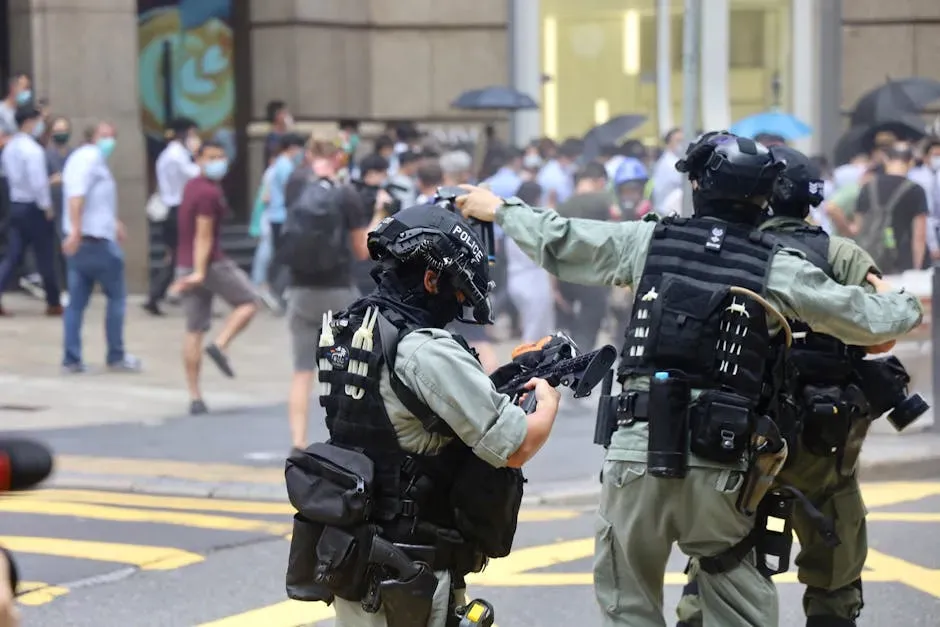
One of the most chilling parts of these crimes is how easy the props are to acquire. Experts say police impersonation crimes often involve fake badges, uniforms, emergency lights, or police-style vehicles that make the impersonator appear fully legitimate to their victims. One can purchase a police vehicle on used-car websites, with other companies selling new cars that can be customized with police graphics and sirens – a quick search garners hundreds of results, allowing just about anyone to appear as an official actor of the government.
In Arizona, a citizen reported seeing an individual in a black Ford F-150 on State Route 303 pulling over another driver, with red and blue flashing lights visible on the suspect vehicle’s front windshield – and the suspect even identified himself as an FBI agent during the interaction. Following a lengthy investigation, AZDPS troopers arrested 53-year-old Roderick A. Gaines, who was booked into the Maricopa County Jail and faces one charge of impersonating a peace officer and one charge of unlawful imprisonment. One civilian tip led to that arrest. That matters.
5. The Crimes They Commit Once They Have You Stopped


Let’s be real – some of these people are not just thrill-seekers. Criminals impersonating law enforcement have committed robbery, kidnapping, and sexual assault by exploiting the public’s trust in police uniforms and authority. In Raleigh, North Carolina, a man purported to be an ICE officer and allegedly sexually assaulted a woman at a local hotel, with police reports indicating that he “threatened to deport the victim if she did not have sex with him” and “displayed a business card with a badge on it.”
In South Carolina, Sean-Michael Johnson, 33, was charged with kidnapping and impersonating a police officer after allegedly detaining a group of Latino men along a Charleston County road, accused of “willfully and unlawfully presenting himself as an ICE Agent and detaining a vehicle of individuals from moving.” Johnson was charged with three counts of kidnapping, impersonating a law enforcement officer, petty larceny, and assault and battery. The badge, real or fake, becomes a weapon.
6. The Rise of Fake Federal Agents: A Brand New Threat


There’s a newer and arguably more alarming layer to this crisis. A CNN review of court filings, social media posts, and local news stories found two dozen incidents of people posing as ICE officers in 2025, representing a notable jump – more incidents than during the prior four presidential terms combined, dating back to President Barack Obama’s first term. That is a staggering escalation in a very short window of time.
Although impersonating a federal officer is already a crime, the persistence and geographic spread of ICE imposters has drawn scrutiny from civil rights advocates, immigrant groups, and state officials, who describe the issue as a chronic public-safety crisis. The FBI recently issued a memo, citing a string of incidents in which masked criminals posing as immigration officers robbed and kidnapped victims, suggesting agents clearly identify themselves while in the field. Even the FBI is sounding the alarm now.
7. Why These Crimes Are So Hard to Investigate

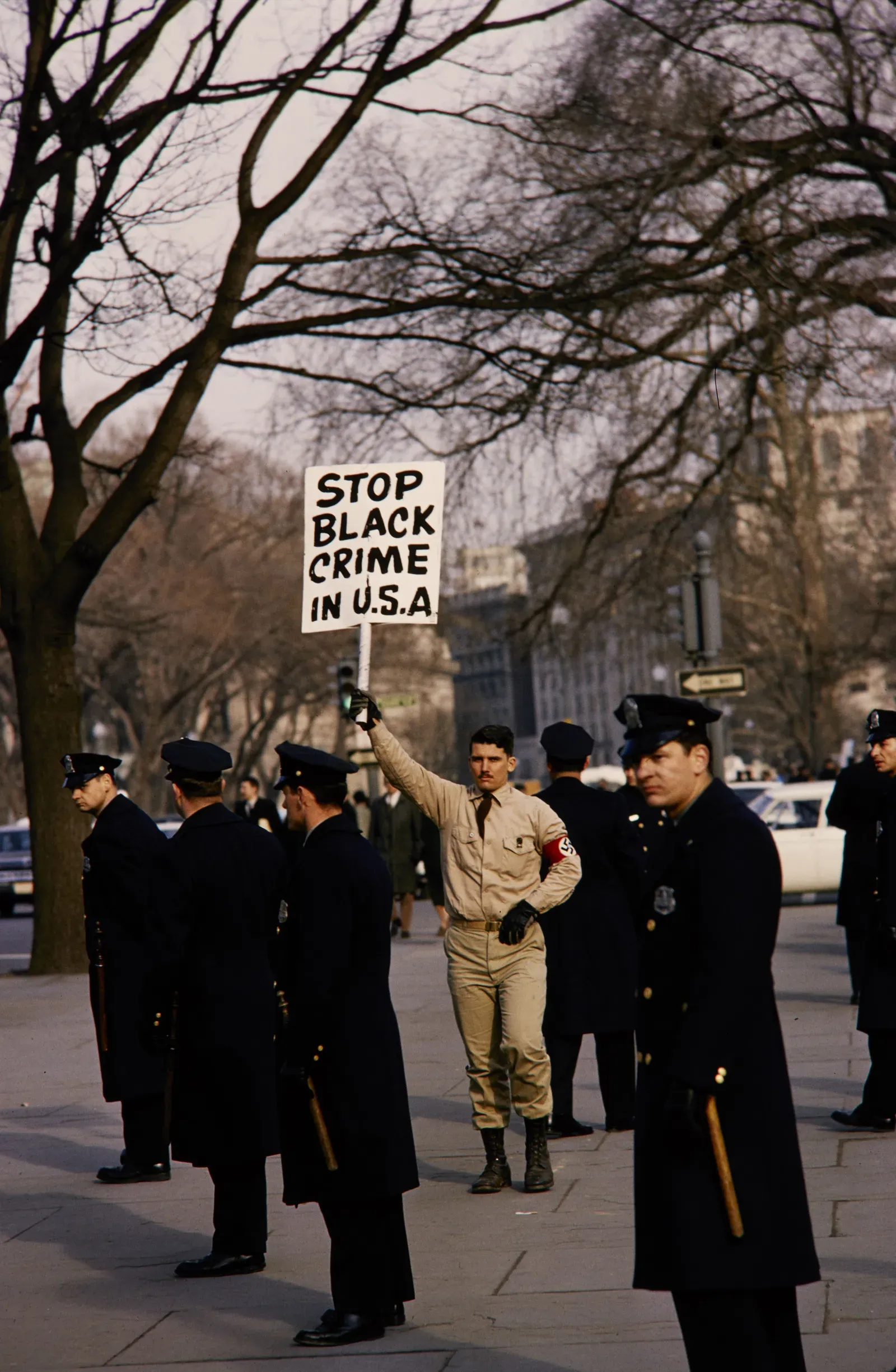
In many impersonation incidents, a single offender targets one victim, and most cases involve no witnesses, making these crimes extraordinarily difficult to detect and investigate. Think about it like this – imagine being robbed in a soundproof room. No cameras, no bystanders, and your main witness is a terrified driver who may not even be certain it wasn’t a real cop. That is the investigative nightmare these cases create.
In Pierce County, Washington, a driver was arrested for impersonating a police officer using blue flashing lights – the suspect had ignored a prior warning and was caught pulling over another driver with the fake lights. That case was only cracked because a real officer happened to be nearby and spotted the pattern. Most victims are never that lucky. The absence of systematic tracking means law enforcement is often reacting, not preventing.
8. What the Legal Consequences Actually Look Like


Here’s where things get genuinely frustrating. In many jurisdictions, impersonating a police officer is treated as a misdemeanor for a first offense, though it can escalate to a felony for repeat offenders or when other crimes are committed alongside it. In one Michigan case, an 18-year-old was arraigned on a misdemeanor charge of impersonating a police officer and released on a $5,000 personal bond. For someone who just staged a fake traffic stop, that feels remarkably light.
Federal impersonation carries heavier penalties. The charging statutes for impersonation of a federal agent provide a sentence of no greater than five years in prison, three years of supervised release, and a fine of $250,000. The gap between state misdemeanor treatment and federal felony consequences is enormous – and that inconsistency in the legal system creates pockets where impersonators know they can operate with relatively low risk. I think that gap urgently needs closing.
9. How to Tell a Real Traffic Stop from a Fake One


So what should you actually do if flashing lights appear in your mirror on a stretch of dark highway? In California, both the California Highway Patrol and local police departments are required to have two specific things on their vehicles – a solid red light and a siren. If the lights look off, too blue, too small, or mounted in an unusual spot like the dash or visor rather than the roof, that is your first red flag. Heavily tinted windows on the “officer’s” vehicle are another.
You have the right to slow down and drive to a well-lit, populated area before pulling over. Turn on your hazard lights to signal you are acknowledging the stop but proceeding carefully. Law enforcement has confirmed you should call 911 if you ever don’t believe you are being pulled over by a real officer. Dispatch can verify in real time whether a patrol unit has been assigned to your location. That single phone call could be the difference between a routine stop and something far worse.
10. The Broader Warning: Public Trust Is Being Weaponized


The deepest and most troubling dimension of this entire problem is not any individual case – it’s what it says about the exploitation of trust. During the second Trump administration, The American Prospect reported what it called “chronic cases” of individuals impersonating United States Immigration and Customs Enforcement agents to prey on immigrant communities. Impersonation of law enforcement is not an uncommon occurrence in the United States, but aggressive immigration policies and the particular ways in which ICE enjoys anonymity have led to increased opportunities for such behavior, endangering and exploiting immigrants and their communities.
The appearance of masks, vests, and unmarked vehicles can make it nearly impossible for civilians to tell the difference between a real officer and a criminal impersonator. California’s new No Secret Police Act limits the use of masks during arrests except in undercover or high-risk operations, a sign that states are beginning to recognize the crisis. The badge – real or counterfeit – is being used as a weapon of fear. And until that is fully confronted, every driver alone on a dark highway is at least a little bit vulnerable.
Conclusion: Stay Alert, Stay Skeptical, Stay Safe

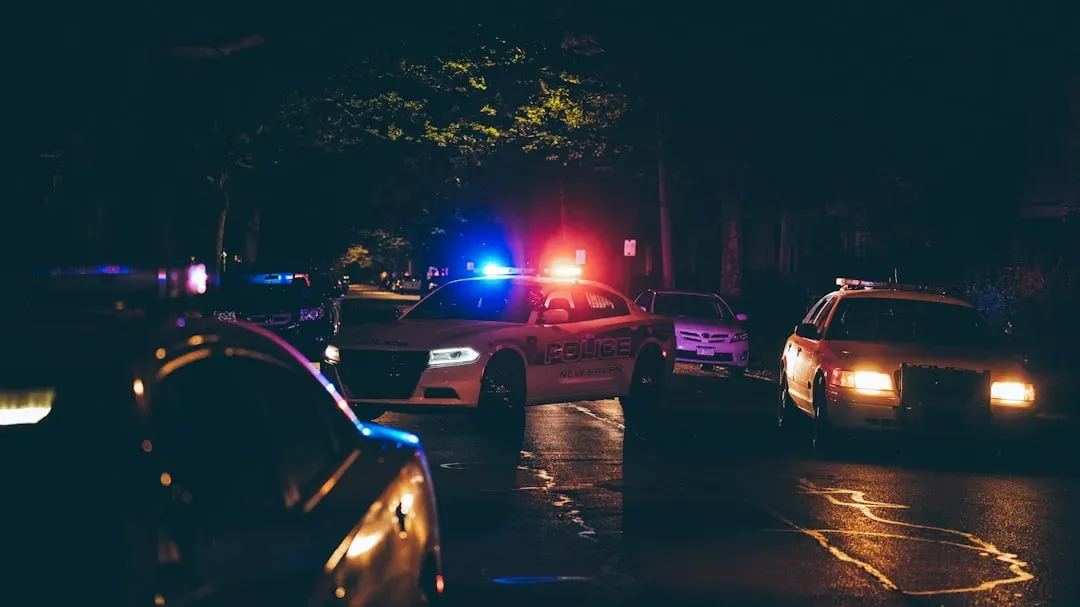
The image of flashing lights in your mirror triggering instant compliance is something criminals are actively counting on. They know that most people don’t question a badge, don’t scrutinize the light setup, and don’t think to call 911 before pulling over. That blind spot is their greatest tool.
The good news is that awareness genuinely changes outcomes. The California driver near the I-15 who called 911 before stopping almost certainly avoided something terrible. That instinct – pause, verify, trust your gut – is exactly what these impersonators fear most. A skeptical driver is not an easy target.
The next time you see flashing lights on a lonely stretch of highway, take a breath. Slow down. Turn on your hazards. And if something feels even slightly off, pick up the phone before you pull over. That moment of hesitation might be the most important decision you make that day. What would you have done before reading this?