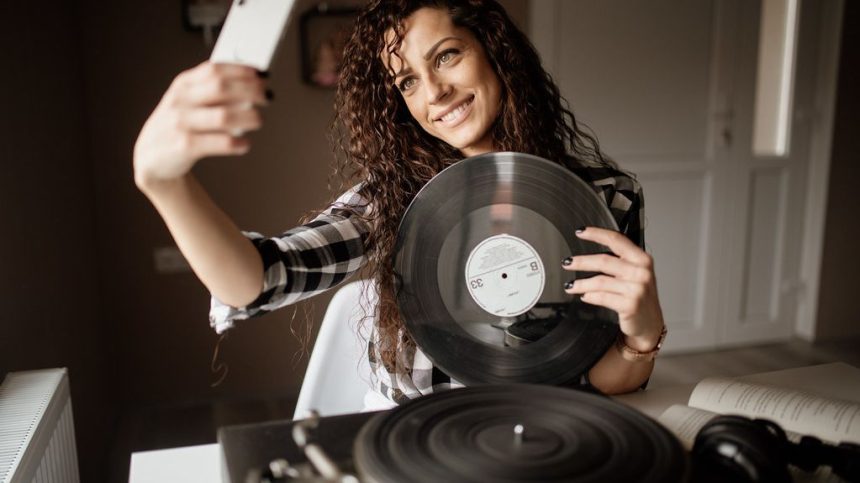
Nobody seriously saw this coming. Back in the early 2000s, if you had told a music executive that vinyl records would one day outsell CDs again, you would have been laughed out of the room. The format was written off. Dead. Irrelevant in an age of MP3s, iPods, and then streaming.
Yet here we are, in 2026, watching one of the most surprising cultural reversals in modern music history play out in real time. Turntables are back on shelves at Target. Young people are filming “vinyl hauls” on TikTok. Record pressing plants are running at near full capacity and still struggling to keep up. So how exactly did a century-old format stage this kind of comeback? Let’s dive in.
From Near Extinction to 18 Straight Years of Growth

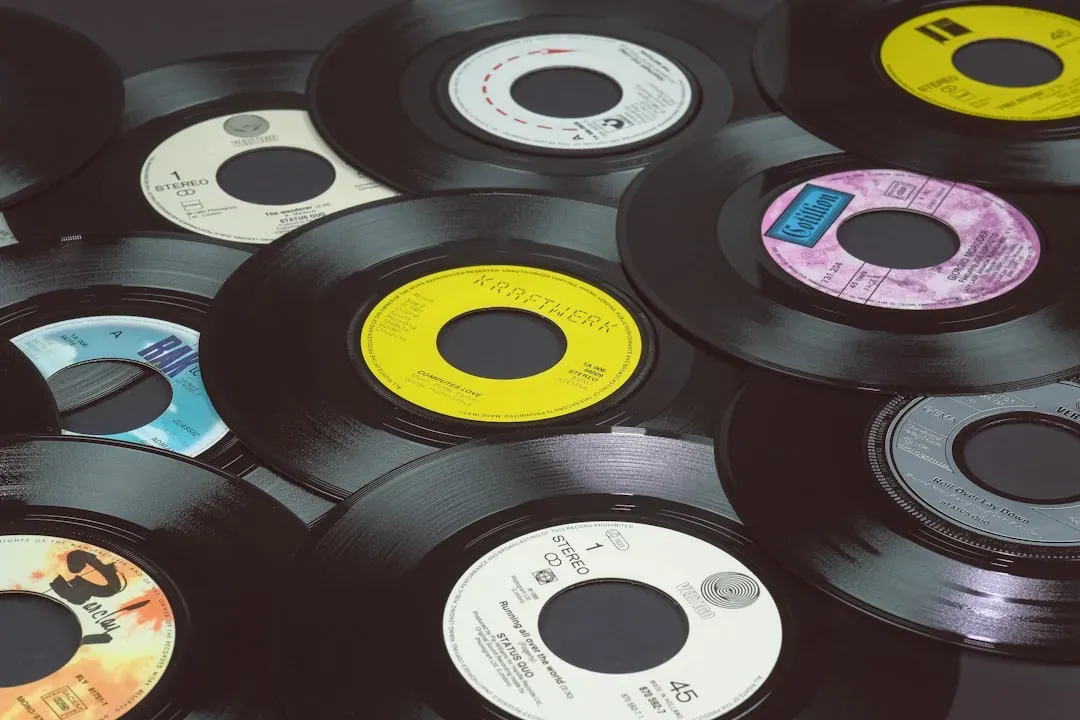
Let’s be real – the situation for vinyl looked absolutely grim around the mid-2000s. Sales of vinyl LP records faded quickly in the 1990s as CDs and cassettes gained popularity, leading the vinyl record industry to bottom out in 2006. At that point, fewer than a million records were being sold in the United States per year. That is not a category in decline. That is a category on life support.
What followed was one of the slowest, most stubborn, and ultimately remarkable turnarounds in entertainment history. Vinyl album sales in the United States increased for the 18th consecutive year in 2024, with 43.6 million EPs and LPs sold, up from less than a million in 2006 when the vinyl comeback began. Think about that trajectory for a moment. It is like watching a glacier move – you barely notice it year to year, but look back two decades and the landscape has completely changed.
Vinyl posted its 18th straight year of growth in 2024, scoring nearly three-quarters of physical format revenue at $1.4 billion – its highest since 1984. That last part is worth pausing on. The highest revenue since 1984. That is the year “Purple Rain” came out. That is not nostalgia. That is a genuine market force.
Vinyl Beats CDs for the First Time Since the 1980s

One of the most jaw-dropping milestones of this entire story happened quietly, without much fanfare. In 2020, LP sales topped CD sales for the first time since the 1980s. It barely made headlines compared to everything else happening in the world that year, but the music industry felt the tremor immediately. A format that was considered obsolete had just lapped the format that supposedly killed it.
The gap only grew wider from there. By 2024, vinyl music sales of $1.4 billion on 43.6 million units easily outpaced sales of CDs at $541 million on 33 million units. That word “easily” does a lot of heavy lifting. Vinyl was not just edging ahead – it was pulling away. LP sales outpaced CDs for a third year in a row, with 2024 sales of 44 million records versus 33 million compact discs.
Honestly, the CD comparison matters because it tells you something about how consumers think about physical music now. The CD was always seen as a purely functional format – convenient, durable, good enough. Vinyl is something else entirely. It carries a weight, both literal and symbolic, that the plastic disc never quite managed to claim.
The Pandemic Lit a Fuse Nobody Expected

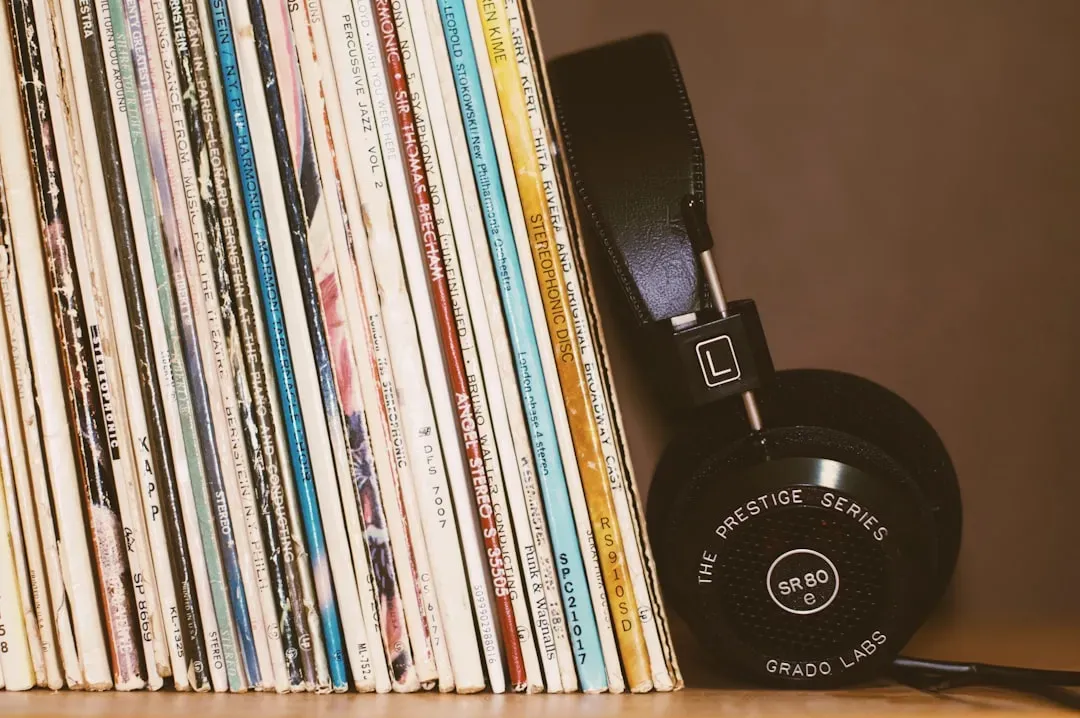
The turning point came in 2020 when vinyl records became popular again during pandemic lockdowns, as people sought tangible, meaningful music experiences at home. This is a detail that keeps coming up in almost every account of the vinyl revival, and honestly it makes perfect sense. Streaming had made music frictionless, almost invisible. Then suddenly people were stuck at home with nothing but time, and that friction started to feel less like a burden and more like a ritual.
The pandemic surge was not a brief spike that faded when lockdowns lifted. After a record-breaking year in 2020, consumption of vinyl more than doubled in the first half of 2021 alone. That kind of momentum does not come from boredom. It comes from genuine, renewed attachment to a format. People were not just buying records to pass the time. They were rediscovering what it felt like to sit down with an album and actually listen.
Vinyl record sales had been on the rise for 16 straight years, with an extra bump in demand during the pandemic. The pandemic did not create the vinyl revival. It poured fuel on a fire that had been quietly burning for over a decade.
Gen Z Enters the Room and Changes Everything


Here is the thing that surprises most people. The vinyl revival is not being driven by aging baby boomers searching for nostalgia. Vinyl records are popular again, but it is not just audiophiles or nostalgic boomers fueling the resurgence. Gen Z is playing an outsized role in the revival of vinyl sales, which have grown on average by 18% annually in the past five years. A generation that grew up with Spotify and AirPods is choosing to buy a format that requires a dedicated machine, a needle, and some patience.
About 60% of Gen Z say they buy records, according to Futuresource Consulting’s Audio Tech Lifestyles report. That is a staggering number. Gen Z is more likely, at 61%, than Millennials at 53% and Gen X at 27%, to replace digital habits with vinyl listening to improve their mental well-being. It is almost ironic. The most digitally saturated generation is the one most hungry for an analog experience.
Fifty-six percent of Gen Z fans like vinyl for its aesthetic, while 37% use it as home decor, according to a Vinyl Alliance survey. Some audiophiles find that unsettling, but I think it reveals something interesting. For Gen Z, vinyl is not just a listening format. It is a statement, a collectible, a piece of identity displayed on a wall or a shelf.
TikTok and Social Media: The Unexpected Amplifier

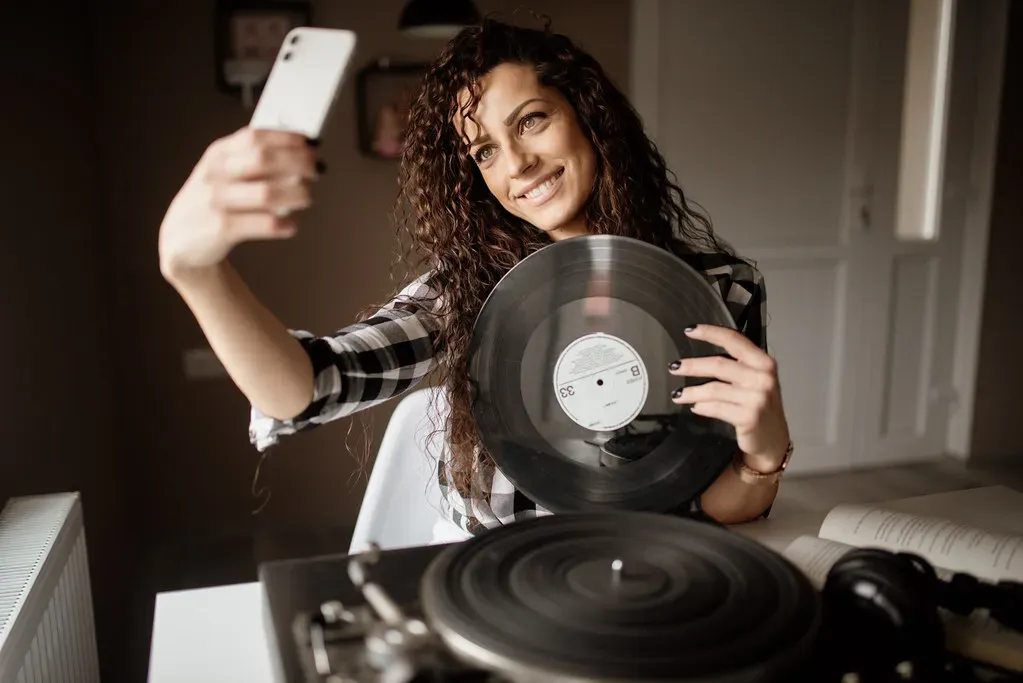
No serious analysis of this vinyl revival can ignore the role of social media, and TikTok in particular. With over 252 million posts on TikTok relating to “vinyl” or “vinyl records,” social media platforms provide an accessible entry point for younger generations to get into the culture. Gen Z shares videos of their vinyl hauls, turntables playing favorite purchases, and walls decorated with colorful disks and sleeves.
Social media has made vinyl collecting visually appealing and shareable, while the format provides permanent ownership in an increasingly subscription-based digital world. That last part is crucial. In a world where your music library can disappear tomorrow if Spotify changes its terms, owning a physical record feels like a form of resistance. A small, satisfying act of permanence.
Streaming platforms like Spotify and Apple Music often serve as gateways to vinyl records. Gen Z listeners discover new artists digitally, then seek out physical copies of their favorite albums. The two formats are not in competition. They are feeding each other in a cycle that the music industry is only beginning to fully understand and monetize.
Taylor Swift and the Superstar Effect

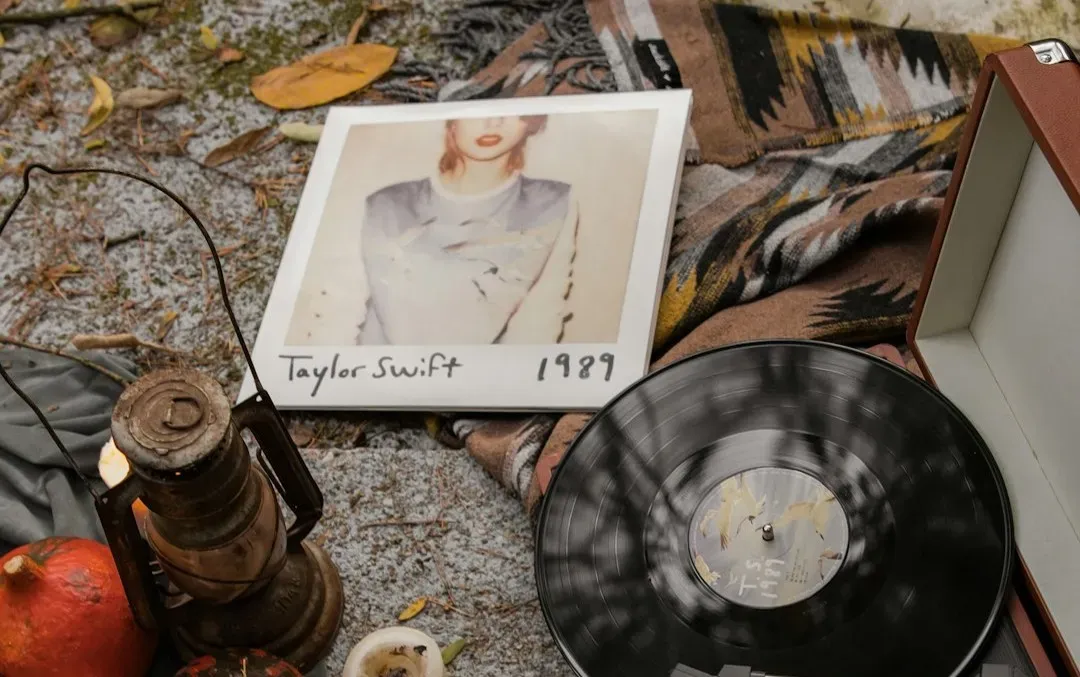
It would be impossible to write about the vinyl comeback without dedicating serious space to one person. Taylor Swift’s impact on vinyl sales has been, in a word, extraordinary. Swift’s 2024 album “The Tortured Poets Department” sold 859,000 LPs in the album’s first week alone, beating the previous record set by herself. The album ended up becoming the best-selling vinyl album of the year with 1.489 million copies sold.
Swift sold 1.695 million vinyl LPs across her entire catalog in 2022, with one of every 25 vinyl LPs sold that year in the United States being a Swift album – a sum larger than the next two biggest sellers of vinyl combined, Harry Styles with 719,000 and the Beatles with 553,000. Let that land. She outsold the Beatles in vinyl. In 2022. It sounds like something you would make up.
Swift’s strategy of releasing multiple variants per album also pushed the boundaries of what vinyl collecting even means. Many albums today have multiple physical variants, ranging from different record colors to alternative album covers and even bonus tracks not released on streaming. All of these drive the desire to collect multiple, if not all, variants. More recently, Swift’s 2025 album “The Life of a Showgirl” sold 1.334 million LPs during its first week of release, already making it the best-selling vinyl album of 2025 so far.
Record Store Day and the Power of Community

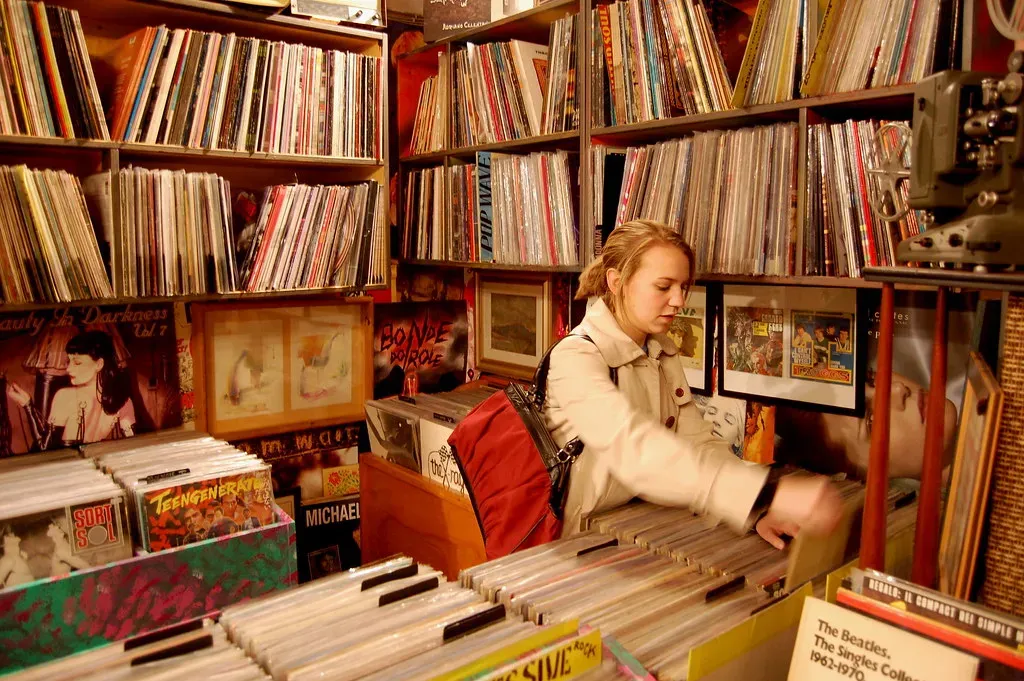
Record Store Day, established in 2007, played a crucial role in vinyl’s revival by creating annual celebration events that brought communities together around physical music. It is hard to overstate what this event did for the format’s cultural legitimacy. It turned record buying from a solitary habit into a communal ritual. Lines wrapped around stores. Limited editions sold out in minutes. The whole thing felt like an event worth being part of.
Held on one Saturday every April and every Black Friday in November, the day brings together fans, artists, and thousands of independent record stores around the world. Record Store Day 2016 produced the biggest week of sales for the vinyl LP format since the introduction of SoundScan. That kind of cultural moment is impossible to manufacture through advertising alone. It requires genuine enthusiasm, and Record Store Day had it in abundance.
Independent record stores became the beating heart of this revival. Since mid-2024, indie stores have accounted for 40% of all vinyl album sales and 29% of all physical sales – in both cases the largest single channel for vinyl purchasing. For a format that was nearly abandoned, that is a remarkable community-driven resurgence.
The Pressing Plant Problem: Success Has a Cost
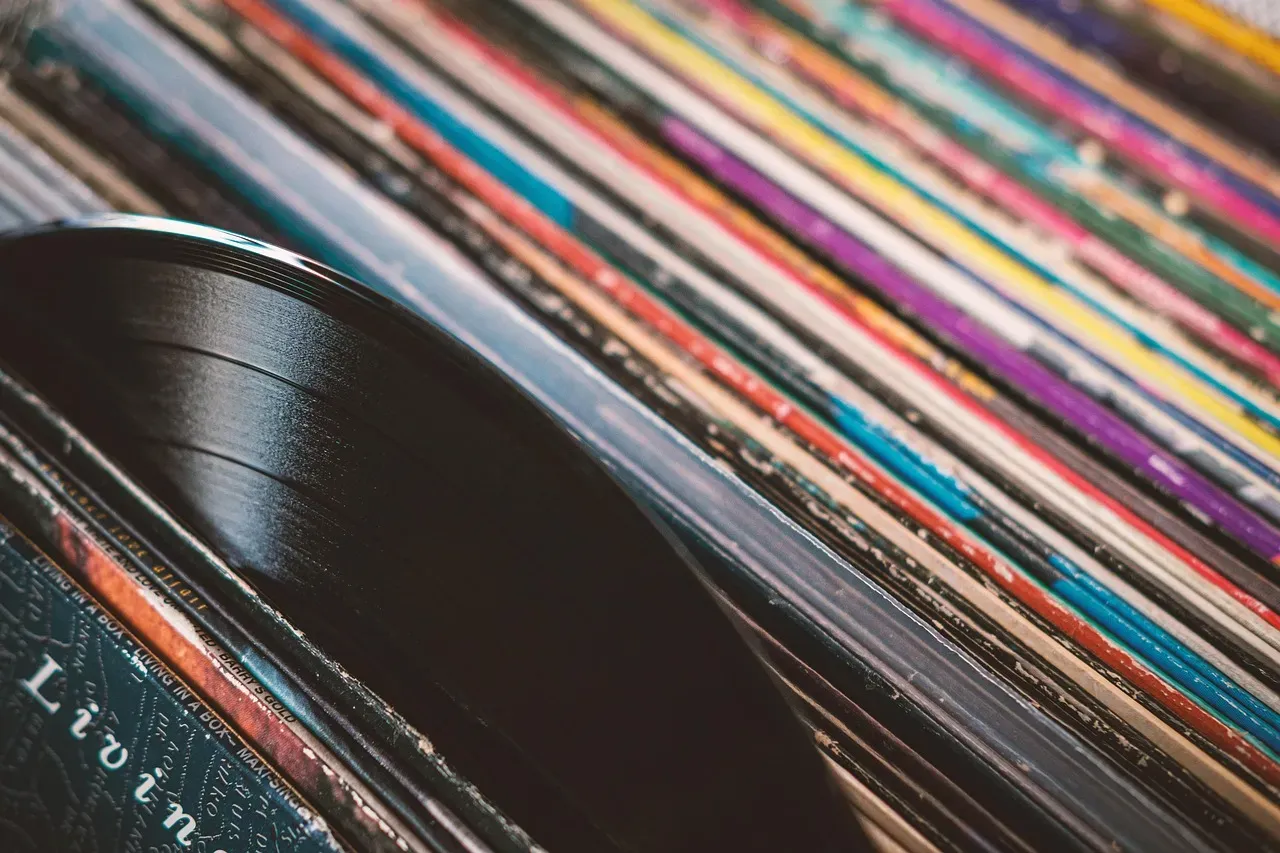
Here is the less glamorous side of the vinyl revival, and it is a genuinely complicated story. Demand exploded. Supply could not keep up. Only about 30 vinyl pressing plants operate in the United States as of 2025, creating significant supply constraints that contribute to high prices and long wait times. Think of it like a restaurant that suddenly triples its customer base overnight but still only has one kitchen.
In 2021, lead times averaged 27 weeks for new vinyl albums compared to 6 weeks of lead time in 2019. For artists planning an album launch, that kind of unpredictability is genuinely painful. You cannot build a marketing campaign around a release date when you cannot confirm when the records will actually exist. A critical shortage of PVC, the material used to manufacture records, slowed production at pressing facilities worldwide. There are only a limited number of functioning pressing plants, many of which are decades old and run near full capacity.
The drop in vinyl sales in parts of 2024 had less to do with the relevance of the medium and much more to do with economic factors. Inflation, higher interest rates, and the increased cost of living made purchasing multiple $40-plus vinyl records, along with box sets and reissues priced between $50 and $200, less affordable for many music fans. It is not that people stopped loving vinyl. It is that loving vinyl became increasingly expensive.
The Global Market and Where It Is Heading

This is not just an American story. The vinyl revival is a global phenomenon with some genuinely impressive numbers attached to it. The global vinyl record market size reached $1.9 billion in 2024, and the market is expected to reach $3.5 billion by 2033, exhibiting a compound annual growth rate of 6.8% during 2025 to 2033. That is the kind of growth trajectory that makes investors pay attention.
In the UK, 6.7 million vinyl albums were sold in 2024, a 9.1% increase from the previous year, marking the 17th consecutive year of growth and the highest total in three decades. Meanwhile, the BBC reported that for the first time since 1992, vinyl records have been included in the set of goods used by the UK’s Office for National Statistics to track prices and calculate the rate of inflation. That is about as official as cultural relevance gets.
LP sales are forecast to reach 46 to 48 million units and $2.4 billion in sales by 2025, further increasing to 65 to 70 million units and $5.5 to $6.2 billion by 2035. Those projections suggest this is not a trend winding down. It is a trend that is still gathering momentum.
Vinyl vs. Streaming: Not a Battle, But a Balance
One of the most common misconceptions about the vinyl revival is that it represents some kind of rebellion against streaming. It really does not. Streaming remains the biggest driver of the recorded music sector, accounting for roughly 84% of total revenue in 2024. Nobody is suggesting the turntable will replace the smartphone. That would be like arguing that candles will replace electricity because some people prefer candlelit dinners.
Interestingly, vinyl LPs appear to have become something of a collector’s item for fans who listen to music digitally but still want to own a physical object. According to Luminate, only half of vinyl buyers actually own a record player. That statistic is endlessly fascinating to me. Roughly half of people buying records are buying them as objects, as artifacts, as things. The music inside is almost secondary.
Vinyl records accounted for 8% of recorded music revenues in the U.S. in 2024, as streaming continues to be the industry’s biggest moneymaker by far. Moreover, vinyl is still far away from its glory days in the 1970s, when more than 300 million LPs and EPs were sold per year. Context matters. The vinyl revival is real, it is sustained, and it is culturally meaningful. But it is not a takeover. It is a coexistence.
Conclusion

The story of vinyl’s comeback is, at its core, a story about what people actually want from music – and from life. In an era of infinite digital access, where every song ever recorded is three taps away, millions of people are choosing to slow down, handle a physical object, drop a needle, and listen. That choice costs more money, takes more time, and requires more effort. People are making it anyway.
The numbers back it up at every turn. Eighteen consecutive years of growth. $1.4 billion in US revenue in 2024. A global market on track to nearly double by the early 2030s. Gen Z, the most digitally wired generation in history, buying records in record stores and filming themselves doing it. However big or small the impact of rising LP sales on the music industry’s bottom line may be, it’s fascinating to witness a hundred-year-old technology come back from near extinction.
The vinyl record should have been dead and buried by now. Instead, it is one of the most interesting growth stories in all of media. What does that tell us about what we really value when the algorithm is finally switched off? That might be the most important question this whole revival is quietly asking. What do you think? Drop your thoughts in the comments – we would genuinely love to know if you are part of this vinyl wave or watching from the streaming sidelines.