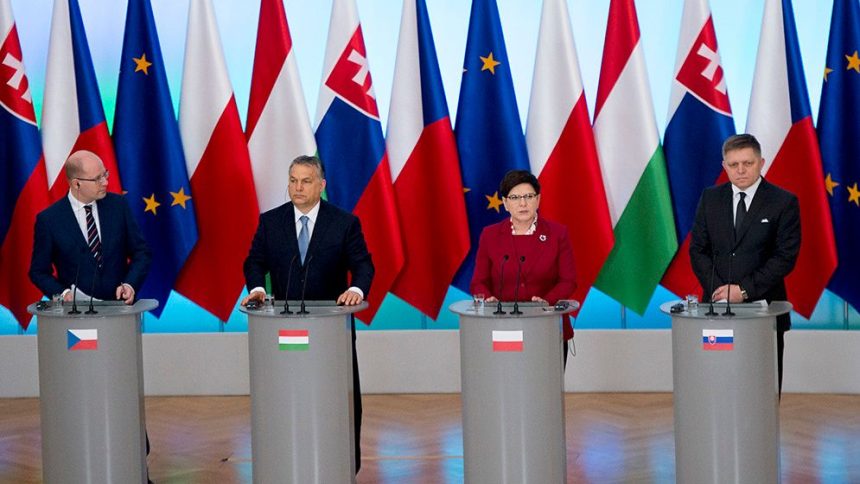
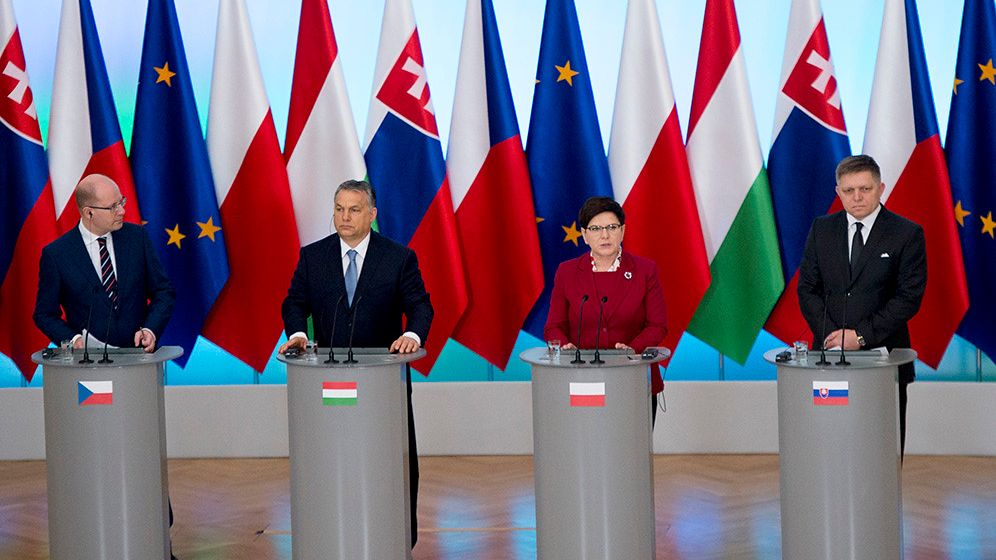
Hungarian PM Magyar looks to revive – and expand – Visegrad group – Image for illustrative purposes only (Image credits: Flickr)
Hungary’s recently elected prime minister has placed renewed emphasis on regional cooperation in Central Europe. Péter Magyar chose Warsaw for his first official trip abroad, signaling a deliberate effort to mend ties strained by previous leadership. The move comes as the Visegrad Group seeks to regain relevance within the European Union after years of internal friction.
Divisions That Weakened the Original Bloc
The Visegrad Four, formed by Hungary, Poland, Slovakia and the Czech Republic, was originally designed to advance shared Central European priorities in Brussels. Over time, however, sharp disagreements eroded its collective voice. The most notable rift emerged between Hungary’s former prime minister Viktor Orbán and Poland’s Donald Tusk, whose differing stances on Russia and EU integration created lasting tensions.
These fractures reduced the group’s ability to coordinate effectively on major policy questions. Observers noted that the bloc’s influence declined noticeably in recent years as bilateral disputes overshadowed joint initiatives. Magyar’s election in April has opened a new chapter, with the incoming leader explicitly aiming to reset the dynamic.
Ambitious Plans for Expansion
During the Warsaw press conference, Magyar expressed readiness to enlarge the format beyond its current four members. He suggested that countries such as Austria, Romania, Croatia, Slovenia and several Western Balkan states could join future cooperation efforts. The Nordic countries were also mentioned as possible participants in an expanded arrangement.
Such growth would mark a significant departure from the group’s traditional scope. Proponents argue that a wider membership could amplify Central European perspectives on EU matters ranging from security to economic policy. Magyar framed the idea as a practical step toward greater regional cohesion rather than a symbolic gesture.
Positive Signals from the Polish Side
Polish Prime Minister Donald Tusk welcomed the overture, describing the meeting as a long-awaited opportunity to resume structured dialogue. He emphasized that Hungary and Poland share nearly identical interests in Brussels and on broader geopolitical questions. Tusk pledged that the two nations would act together as a unified force in advancing those priorities.
Energy security emerged as an immediate area for joint work. Tusk highlighted Poland’s successful shift away from Russian gas and oil supplies, offering Hungary access to that experience. Magyar responded positively, noting that reduced dependence on single suppliers would strengthen both countries’ resilience.
Concrete Steps Ahead
Magyar indicated that Hungary, as the current rotating president of the Visegrad Group, could host a summit in Budapest before the end of June. The gathering would serve as a platform to discuss both revival measures and potential enlargement. He also used the Warsaw visit to contrast Hungary’s recent infrastructure record with Poland’s effective use of EU funds, citing his train journey from Kraków as an example.
These early moves suggest a focus on tangible outcomes over rhetoric. By prioritizing practical cooperation on energy and infrastructure, the new Hungarian government hopes to demonstrate the benefits of renewed regional alignment. The coming months will reveal whether the proposed expansion gains traction among prospective partners.