There was a specific kind of Friday night ritual that only existed for about two decades. You’d pile into the car, argue about which movie to get, and wander the aisles under buzzing fluorescent lights hoping the good copy of the new release wasn’t already checked out. That whole experience, rewind fees and all, belonged to a handful of chains that most people under thirty have never set foot in. Some of these stores were regional legends. Others briefly ruled the entire country before disappearing almost overnight. Here’s a look back at nine of them, and what actually happened to each.
Blockbuster Video

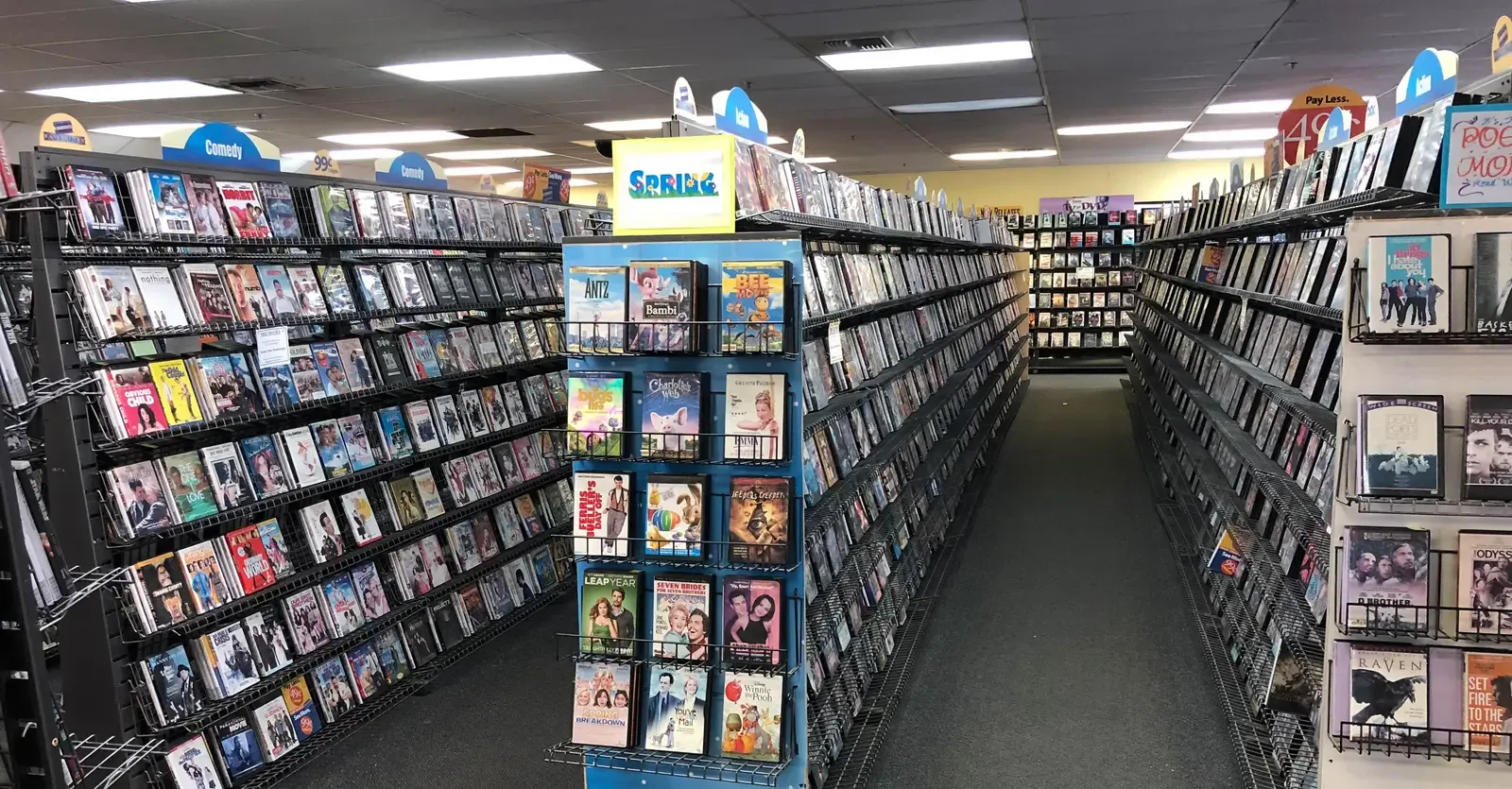
Blockbuster is the one everyone remembers first, and for good reason. It grew from a single Dallas store in 1985 into a retail giant with thousands of locations worldwide by the early 2000s, largely by outspending and outbuilding every regional competitor it came across. The blue and yellow ticket-stub logo became shorthand for movie night itself.
Streaming and DVD-by-mail services eventually did what no competitor could, and the company filed for bankruptcy in 2010. A single franchise location in Bend, Oregon kept the name alive for years afterward, becoming something of a tourist attraction and a punchline about the last of its kind. It closed its doors to regular retail operations, though the brand itself has occasionally resurfaced through licensing deals and novelty pop-ups.
Hollywood Video


Hollywood Video was built specifically to compete with Blockbuster, and for a while it actually managed to. Founded by Mark Wattles in 1988, the chain would quickly expand following the company’s initial public offering in 1993, which led to them being the largest direct competitor to Blockbuster in the urban market. The stores had a darker, moodier look than Blockbuster’s brighter aisles, and an aggressive 1996 expansion planted purple marquee letters in 43 states.
Towards the end of the 1990s, Hollywood Video was the first major chain to introduce DVD rentals in their stores, and would expand into the internet with the purchase of Reel.com in July 1998. A hostile takeover attempt from Blockbuster in late 2004 instead ended with a friendlier buyout by Movie Gallery in January 2005. Hollywood Video ceased operations in May 2010, when Movie Gallery, its parent company, declared Chapter 7 bankruptcy, with its last US store closing on July 31, 2010.
Movie Gallery


Movie Gallery never had the flash of its bigger rivals, and that was intentional. Headquartered in Dothan, Alabama, Movie Gallery catered to smaller towns major chains ignored, offering lower franchise fees and flexible floor plans. That strategy worked well enough that the chain ballooned to 2,500 stores by 2006, absorbing local brands like Movie Starz and Video King.
The 2005 purchase of Hollywood Video looked like a win at the time, since it made Movie Gallery the second largest video rental chain in the country. In practice, the acquired debt combined with the rapid rise of DVD-by-mail services proved fatal. Debt from the Hollywood Video buyout plus rapid DVD-by-mail erosion pushed the company into liquidation just four years later.
Family Video

Family Video is the chain that quietly outlasted almost everyone, and its longevity came down to one unusual decision. Unlike most competitors, Family Video owned the real estate housing their stores, helping the company avoid unsuccessful lease negotiations that led to the demise of Blockbuster, Movie Gallery, and Hollywood Video, and rather than depending on the revenue-sharing model used by others, the chain bought and owned its movies to keep all the rental profit. That ownership model, paired with a footprint concentrated in smaller Midwestern towns, let it survive years past its rivals.
The company even leaned into partnerships to stay relevant as the industry contracted. In 2013, following the continued decline of competing video rental stores, Family Video formed a partnership with Marco’s Pizza, providing space for the franchise in many of its stores as a way to deliver video rentals with pizza orders, and also leased space to other retailers such as hair salons and fitness centers. The chain eventually wound down its rental operations in 2021, closing out one of the longest runs in the industry’s history.
Erol’s Video Club

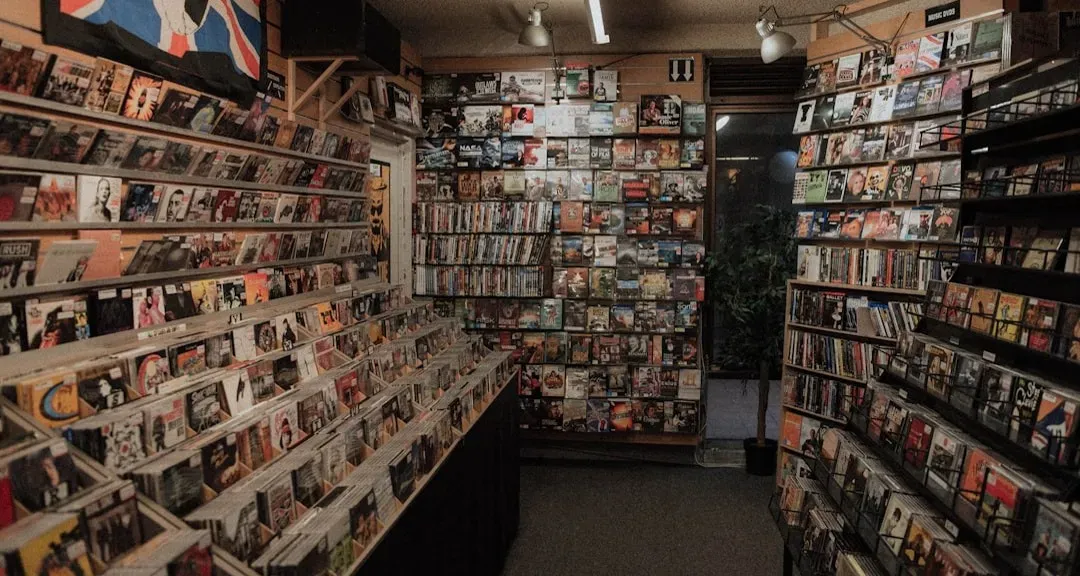
If you grew up around Washington DC in the 1980s, Erol’s was simply how you rented movies. Founded by Erol Onaran, a Turkish immigrant who arrived in the U.S. with just $16 in his pocket, the company evolved from a TV repair shop into a video rental business around 1980. The chain grew fast, and at its peak, Erol’s grew to roughly 250 locations and became the largest privately owned video chain in America.
It also had a reputation for range that the bigger chains didn’t bother matching. While competitors focused on Hollywood blockbusters, Erol’s built a reputation for its deep catalog, carrying everything from foreign films to hard-to-find titles and local documentaries. That independence eventually gave way to consolidation, and in 1990, Onaran sold the company to Blockbuster for $40 million, a deal that helped cement Blockbuster’s dominance in the region.
West Coast Video


West Coast Video started small and expanded through acquisition rather than slow organic growth. In 1983, Elliot Stone opened the first West Coast Video store in Northeast Philadelphia, and during the next three months established the chain by launching three more stores. The real turning point came a few years later, when West Coast Video acquired all 455 National Video stores in September 1988, giving the chain 660 stores total and making it the world’s largest video rental chain at that time.
The chain kept expanding into the following decade, reaching a revenue of a quarter billion dollars by 1990 and pushing into Canada shortly after. It eventually followed the industry’s broader decline into liquidation by 2009, though a handful of independently run stores kept the West Coast Video name going for a while longer before fading out entirely.
Suncoast Motion Picture Company


Suncoast was less about renting and more about owning, which made it a different animal from the rest of this list. The chain launched in Roseville, Minnesota in 1986 as Paramount Pictures, a joint venture between the Paramount movie studio and Musicland, before Musicland changed the store’s name to Suncoast Motion Picture Company once Paramount pulled out in 1988. You’d find it tucked into malls everywhere, easy to spot thanks to its distinctive red neon sign hanging over the entrance.
At its height in the 1990s, the chain eventually commanded some four hundred locations in its prime. The rise of online retail and eventually streaming chipped away at the mall-browsing model Suncoast depended on, and the brand was gradually absorbed and reshaped, with some locations folded into FYE stores after Trans World Entertainment took over.
National Video


National Video has a strange origin story, born out of market research rather than a love of movies. Founder Ron Berger started by selling 300 copies of a survey and pocketing more than $25,000, which he used to start a chain of franchised video rental stores called National Video. The franchising model spread quickly, and by 1985, there were nearly 600 National Video franchises in operation, generating nearly $8 million in annual sales.
Blockbuster’s rise proved impossible to compete with directly, and Berger later admitted as much. Wherever Blockbuster opened a store, Berger remarked in a 1994 Forbes interview, they killed us. The National Video brand itself was eventually absorbed, with West Coast Video acquiring all 455 National Video stores in September 1988, bringing that particular chapter to a close.
Video Update

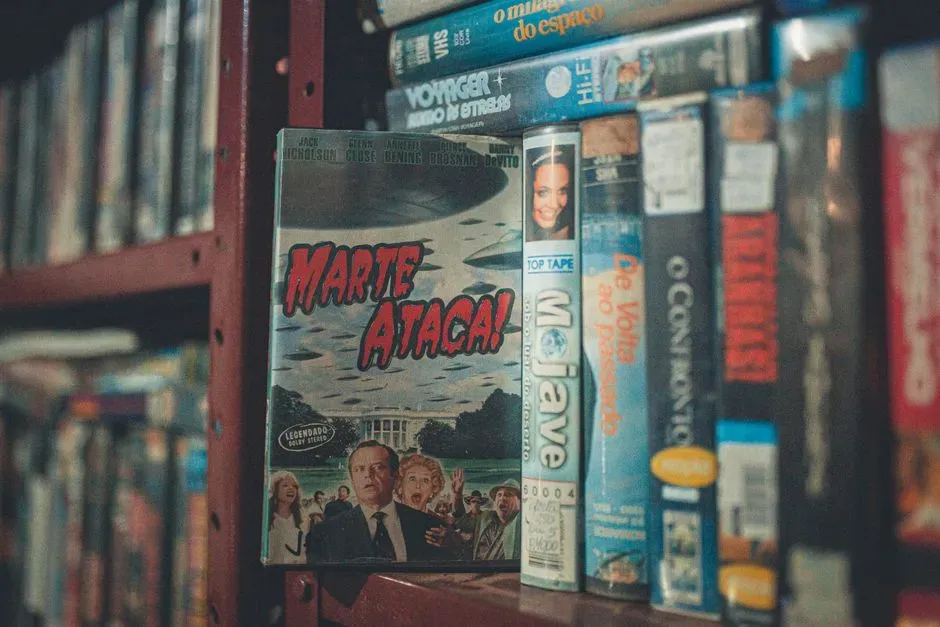
Video Update never reached the national name recognition of Blockbuster or Hollywood Video, but it was a familiar sight across the upper Midwest and parts of the West through the 1990s. The Minnesota-based chain expanded through the decade by buying up smaller regional operators, a common survival tactic for mid-size rental companies trying to compete with the bigger national names. It merged with another regional chain, Moovies, in the late 1990s to build enough scale to keep pace with the industry’s biggest players.
The combined company struggled with the same pressures that eventually took down nearly every other name on this list, from oversaturated markets to the slow bleed of DVD-by-mail competition. Video Update filed for bankruptcy in the early 2000s, and its remaining stores were sold off or shuttered not long after. For anyone who grew up in a town too small for a Blockbuster, it was often the only rental option in town, which is exactly why people still remember the name.
If you can picture the smell of a rental store carpet or the specific dread of a late fee notice, you lived through something that genuinely does not exist anymore in the same form. These nine chains, in their own regional or national ways, shaped how an entire generation spent its weekends. What replaced them is more convenient in almost every measurable way, yet it rarely gives anyone a story worth telling twenty years later.