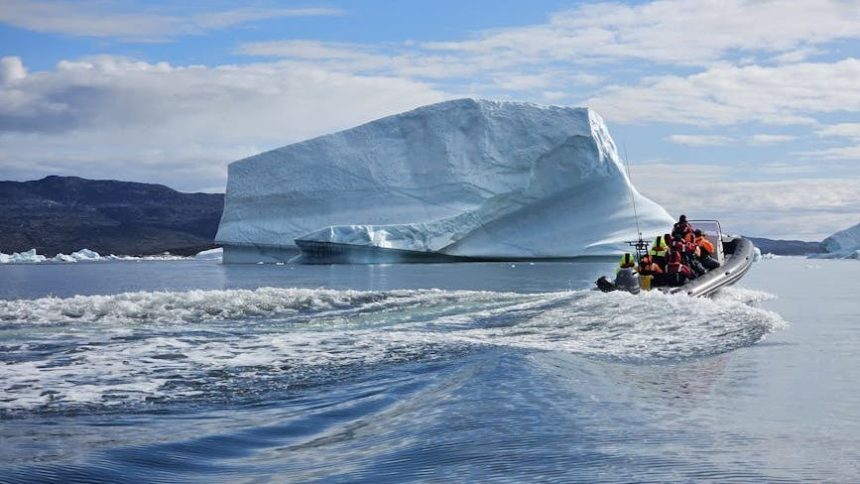


Melting ice led to a tsunami in Greenland. It could happen again. – Image for illustrative purposes only (Image credits: Pexels)
Greenland – A sudden landslide sent towering waves racing through a narrow fjord, slamming back and forth against the steep walls for hours. The event unfolded after prolonged melting weakened the slopes above the water. Scientists now see the incident as a warning sign of hazards that could strike again as Arctic temperatures continue to climb.
What Happened in the Fjord
The landslide released an enormous volume of rock and debris into the water. This displacement created a series of powerful waves that surged repeatedly along the confined channel. Observers noted the water level rising and falling dramatically as the energy reflected off the fjord sides. No immediate reports of injuries emerged, yet the scale of the waves underscored the destructive potential of such events in remote coastal areas.
Partner offer

Role of Melting Ice
Warming temperatures have accelerated ice loss across Greenland in recent years. The reduced ice cover left underlying slopes less stable and more prone to sudden failure. In this case, the combination of thawing permafrost and retreating glaciers appears to have set the stage for the collapse. Researchers link the timing directly to the broader pattern of ice melt observed throughout the region.
Risk of Repeat Events
Similar conditions exist in other Greenland fjords where ice continues to retreat. A repeat landslide could generate comparable waves with little advance notice. Coastal communities and research stations in the area remain vulnerable because monitoring networks are still limited. Experts emphasize that ongoing climate trends make future incidents more likely rather than less.
Broader Climate Context
The Greenland event fits into a larger picture of changing Arctic dynamics. Rising global temperatures are reshaping landscapes that once seemed permanent. Coastal erosion and slope instability now appear as direct consequences of these shifts. Continued observation will help determine how quickly such risks evolve in the coming seasons.
Partner offer
Planning a trip to Vegas?
Compare hotel rates and show tickets on VEGAS.com.