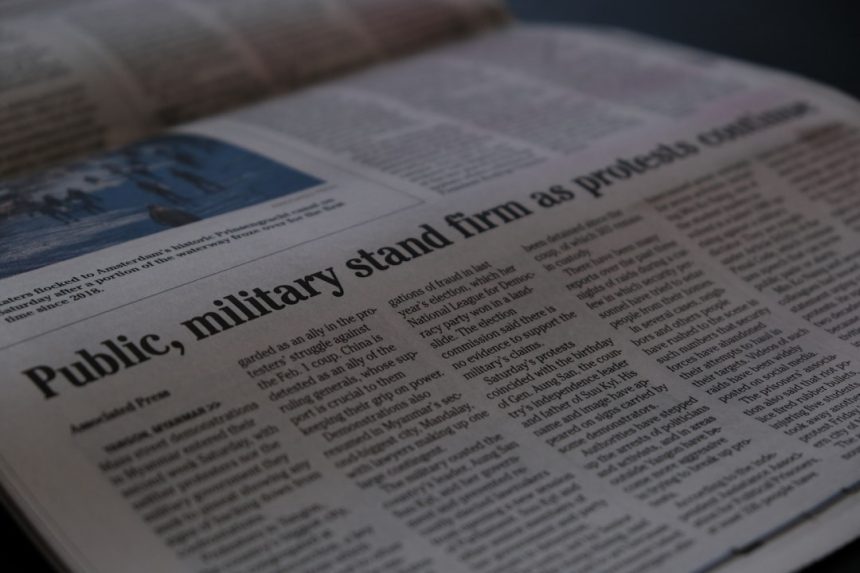

Courts Force an End to Decades-Old Deal (Image Credits: Unsplash)
Las Vegas – The Las Vegas Review-Journal’s move to halt printing of the Las Vegas Sun insert has prompted strong reactions from subscribers who prize competing editorial perspectives. This decision, finalized after years of court battles, ended a unique arrangement that delivered both conservative and liberal viewpoints in a single daily paper. Readers now question whether the city can afford to lose such plurality amid a shifting media landscape.[1][2]
Courts Force an End to Decades-Old Deal
Federal courts ruled the newspapers’ 2005 joint operating agreement unenforceable, paving the way for the Review-Journal to stop production of the Sun insert on April 3, 2026. The pact, rooted in the 1970 Newspaper Preservation Act, allowed shared printing and distribution while preserving separate newsrooms. Judges determined the update lacked required Justice Department approval, a requirement upheld by the U.S. Supreme Court when it declined the Sun’s appeal in February.[2][3]
The Review-Journal cited legal obligations and the Sun’s alleged breaches, including low-quality content and subscription discouragement campaigns. This marked the close of the nation’s last such agreement, one that had sustained the Sun since 1989 amid financial woes.[4] Subscribers opened their papers that Friday to find no insert, signaling a shift after 76 years of intertwined print runs.
Readers Voice Support for Dual Perspectives
Subscriber Linda Wallers captured widespread sentiment in a letter published April 11. She described the loss as depriving readers of an “opposing perspective,” essential for challenging assumptions and fostering critical thinking. Wallers urged the Review-Journal to reflect on editorial plurality as a service to democracy.[1]
Other letters echoed this concern. One called the move “short-sighted,” while supporters praised environmental benefits and dismissed fears of a media monopoly.[1] These responses highlight a divide: some see the Sun’s digital presence as sufficient, others view print access as irreplaceable for broad readership.
Historical Roots of Rival Voices
The Review-Journal traces its origins to 1909, evolving into Nevada’s largest daily with conservative editorials under Adelson family ownership. The Sun launched in 1950 as a liberal counterpoint, backed by the Greenspun family after labor disputes with the Review-Journal. Their 1989 joint operating agreement transformed the Sun into an insert, with the larger paper managing operations and sharing revenues.[3]
A 2005 amendment made the Sun a daily fixture, but tensions rose after 2019 when Review-Journal owners sought termination. Litigation dragged on for over six years, costing both sides dearly as print circulation declined nationwide.
What Plurality Brings to Public Discourse
Journalism experts emphasize the benefits of diverse viewpoints in combating echo chambers. In Las Vegas, the pairing offered conservatives and liberals a bundled challenge to their views, promoting nuanced civic debate. Without it, reliance on digital sources risks fragmentation.[4]
Consider these key advantages of editorial plurality:
- Encourages critical evaluation of arguments from multiple angles.
- Reduces bias reinforcement by exposing readers to contrasts.
- Strengthens democracy through informed, tested public opinion.
- Preserves local journalism traditions amid digital shifts.
- Fosters accountability as outlets compete for credibility.
The Sun maintains an online edition and social media reach, yet print’s tangibility reached older demographics less inclined to screens.
| Aspect | Review-Journal | Las Vegas Sun |
|---|---|---|
| Editorial Lean | Conservative | Liberal |
| Founded | 1909 | 1950 |
| Ownership | Adelson family | Greenspun family |
| Role in JOA | Production, distribution | Editorial content |
Future Uncertain for Local Print News
Ongoing litigation leaves room for reversal, with the Sun pushing for resumed printing. The Review-Journal welcomes competition but refuses to subsidize it, stating the Sun must “stand up on its own two feet.”[2] As Nevada’s media scene grows with independents, the core issue persists: does bundled diversity justify forced partnerships?
Key Takeaways
- The JOA’s end eliminates the last U.S. newspaper print-sharing deal.
- Readers value contrasting editorials for healthier discourse.
- Digital options exist, but print loss impacts accessibility.
This saga underscores journalism’s evolving challenges. Las Vegas residents face a pivotal moment to define their news diet. What do you think about the balance of voices in local media? Tell us in the comments.