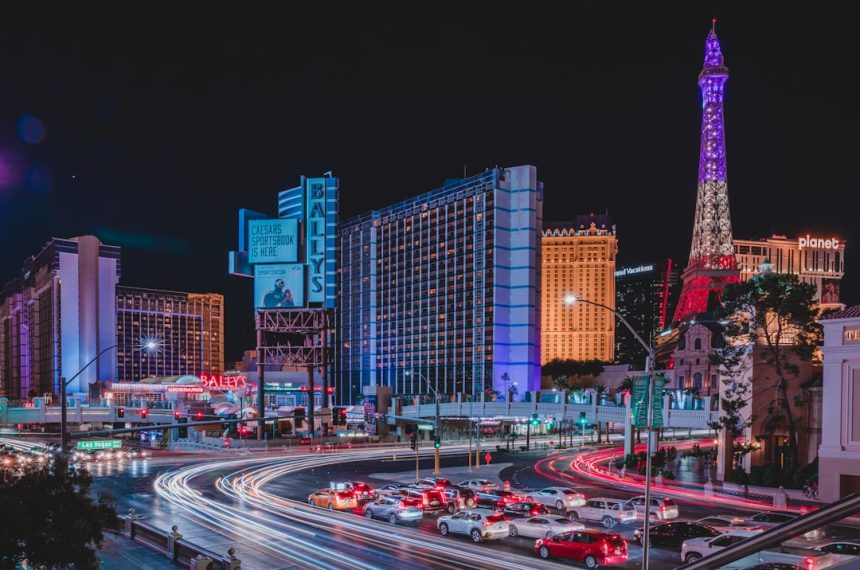

Global Oil Shock Hits Home (Image Credits: Unsplash)
Las Vegas – The ongoing war in Iran has triggered sharp increases in fuel prices that now threaten the city’s vital tourism sector. Oil market disruptions have led to higher costs for gasoline and jet fuel, directly impacting airfares and road trips to the Strip. Local leaders and industry experts monitor these developments closely as spring travel ramps up.[1][2]
Global Oil Shock Hits Home
The conflict erupted in late February 2026 with U.S. and Israeli strikes on Iranian targets. West Texas Intermediate crude oil jumped from around $67 per barrel to more than $112 by early April. This volatility stemmed from disruptions in key shipping routes like the Strait of Hormuz, through which 20% of global oil flows.[1][3]
Jet fuel prices followed suit. The U.S. average reached $4.64 per gallon by late March, an 86% rise from $2.50 before the war. Globally, prices doubled to over $195 per barrel equivalent. West Coast hubs, including those supplying Las Vegas, faced extra strain from halted Asian imports.[1]
Air Travel Expenses Climb Steeply
Airlines quickly responded to the fuel crunch. United Airlines added a $10 baggage fee for most passengers, while JetBlue hiked similar charges. United CEO Scott Kirby stated, “We have to raise prices to deal with higher fuel prices.” He warned of challenges if oil remained elevated.[1]
Average U.S. airfares hit $465 in early April, up 24% from the prior year. Harry Reid International Airport reported 3.9 million passengers in February, down 3.3% year-over-year. Year-to-date figures showed a nearly 6% decline, with domestic flights off by 5%.[1] UNLV economist Nicholas Irwin noted that even $30 to $40 ticket hikes could deter marginal travelers. “That’s not good for the local economy,” he said.[3]
Nevada Gas Prices Break Records
Drivers felt the impact at local pumps. Nevada’s average regular gasoline price stood at $5.009 per gallon as of April 7, up from $4.117 a month earlier. Some North Las Vegas stations topped $5.19.[2][4]
| Fuel Type | Current (Apr 7) | Week Ago | Month Ago |
|---|---|---|---|
| Regular | $5.009 | $4.931 | $4.117 |
| Mid-Grade | $5.317 | $5.239 | $4.386 |
| Premium | $5.612 | $5.531 | $4.662 |
| Diesel | $6.401 | $6.159 | $4.520 |
California prices neared $6 per gallon, a 28% jump, affecting drive-in visitors from the state’s large market. Rideshare drivers reported squeezed profits, with some fearing they could not continue amid further rises.[1][4]
Tourism Leaders Assess the Risks
Las Vegas Convention and Visitors Authority President Steve Hill acknowledged the pressures. “Rising gas prices and significantly higher jet fuel costs are impacting travel affordability,” he said. The group stayed focused on promoting the destination.[1]
- Short-term dips possible from uncertainty, similar to 2003 Iraq War when March visitation fell 7.4% amid 44.7% West Coast gas hikes.
- Quick rebounds historically as conflicts fade to background noise.
- Drive markets like California and Arizona most vulnerable to fuel costs.
- No nonstop Middle East flights reduce direct security fears.
- Travelers often adjust budgets rather than cancel trips to entertainment hubs.
University of Florida’s Nasim Binesh, a former UNLV researcher, predicted limited long-term effects. Nevada Resort Association’s Virginia Valentine highlighted past resilience through pandemics and recessions.[5][1]
Budget Warnings Echo Through City Hall
City officials eyed fiscal fallout. Manager Mike Janssen warned of tourism declines hitting consolidated tax revenue, projected at 2.5% to 3% growth before the war. “It’s a significant increase… we’re trying to plan for something that could be more impactful,” he said.[1]
Governor Joe Lombardo emphasized economic diversification, citing 44,500 new jobs and sports events like Formula 1. Still, 2025 visitor volume dropped 7.5%, with room occupancy down 3.3%.[1]
Key Takeaways
- Fuel prices have surged 20-80% since late February, raising airfares and gas costs for Vegas trips.
- Tourism faces short-term pressure but historical patterns suggest resilience.
- Local budgets brace for revenue dips if visitation softens further.
Las Vegas has weathered global storms before, yet sustained high fuel costs test its adaptability. Travelers weigh pricier getaways against the Strip’s allure. What do you think about these rising costs? Tell us in the comments.