Most people picture Las Vegas and immediately think slot machines, casino floors, and cocktail waitresses weaving through crowds of tourists. That image is not wrong, exactly. Gaming and hospitality remain a massive part of the city’s DNA. But here’s the thing – the actual job market has been quietly, steadily shifting for years now, and the numbers tell a story that might surprise even longtime locals.
The Las Vegas economy is no longer a one-trick pony. Three distinct industries have surged forward in recent years, creating tens of thousands of new positions that have nothing to do with a dealer’s chip count or a hotel room turndown service. Let’s dive in.
1. Healthcare: The Quietly Massive Giant You Probably Overlook


Honestly, healthcare might be the least “Vegas” story in this whole article, but it is arguably the most important one. Education and health services added over 4,200 jobs in Las Vegas compared to the same time last year, and more than 12,000 jobs since early 2023, driven largely by ongoing investment in healthcare and biotech industries. That kind of growth does not happen by accident.
In the first quarter of 2025, education and health services showed a net gain of 1,838 jobs across Nevada – the largest gain of any sector in the entire state. Think about that for a moment. More new jobs in healthcare than in gaming, hospitality, retail, or any other sector. Many health and tech-related roles also tend to offer higher starting wages than traditional hospitality jobs, and they often come with clearer long-term career paths.
Nevada would see much-needed wage gains and economic stability if it could attract more companies in higher-paid industries, such as technology and healthcare – a view echoed by Nevada’s chief economist at DETR. The population boom is fueling this. By 2042, Clark County is expected to hit 3 million residents, up from its current 2.41 million, and that growth will spur demand for housing, services, and new infrastructure. More people means more hospitals, clinics, specialists, and support staff – a feedback loop that shows no signs of reversing.
Adding further momentum, Roseman University of Health Sciences is launching a four-year Doctor of Medicine program after receiving Preliminary Liaison Committee on Medical Education accreditation, signaling that the region is investing in homegrown medical talent too. The healthcare sector is not just growing. It’s building roots.
2. Construction: Building the New Las Vegas, One Crane at a Time


Drive through Las Vegas right now and the skyline tells the story better than any report could. Cranes. Lots of them. Nevada’s construction industry contributed $20.8 billion to the state’s GDP in 2024, or about 7.8 percent of its total output, according to the Federal Reserve Bank of St. Louis – the second largest share in the U.S. behind only Utah. That is a staggering figure for a state most outsiders associate purely with casino floors.
The construction industry in Las Vegas grew by 32 percent from January 2018 to January 2023, one of the strongest rates of any industry in the city over that period. The drivers are clear. Las Vegas continues to attract new residents drawn by its relatively affordable cost of living, warm climate, and job opportunities, and population growth is a significant driver of construction demand, particularly in the residential and commercial sectors – as more people choose to live and work there, the need for housing, office spaces, and infrastructure increases.
The city’s population growth spurred development with over $8.12 billion of new major projects delivered in 2023, another $2 billion under construction for 2024 and 2025, and an additional $17.25 billion of announced and proposed projects expected to keep the momentum going. Think of it like this: every tourist destination eventually becomes a place where real people want to live, and that’s exactly what’s happening here. Most of the growth in major construction now falls into the mixed-use category, which was outpacing the traditional hospitality sector as of late 2024 – a telling shift in priorities.
Sustained expansion in key sectors, particularly construction and healthcare, will be important in the near term, and this growth is paving the way for renewed economic opportunities across the region, according to the Las Vegas Global Economic Alliance’s December 2024 employment review. It is worth noting, though, that the sector is not without volatility. High interest rates and material costs have created headwinds. The longer-term structural demand for new housing and infrastructure, however, remains very much intact.
3. Logistics and Warehousing: The Invisible Engine Nobody Talks About

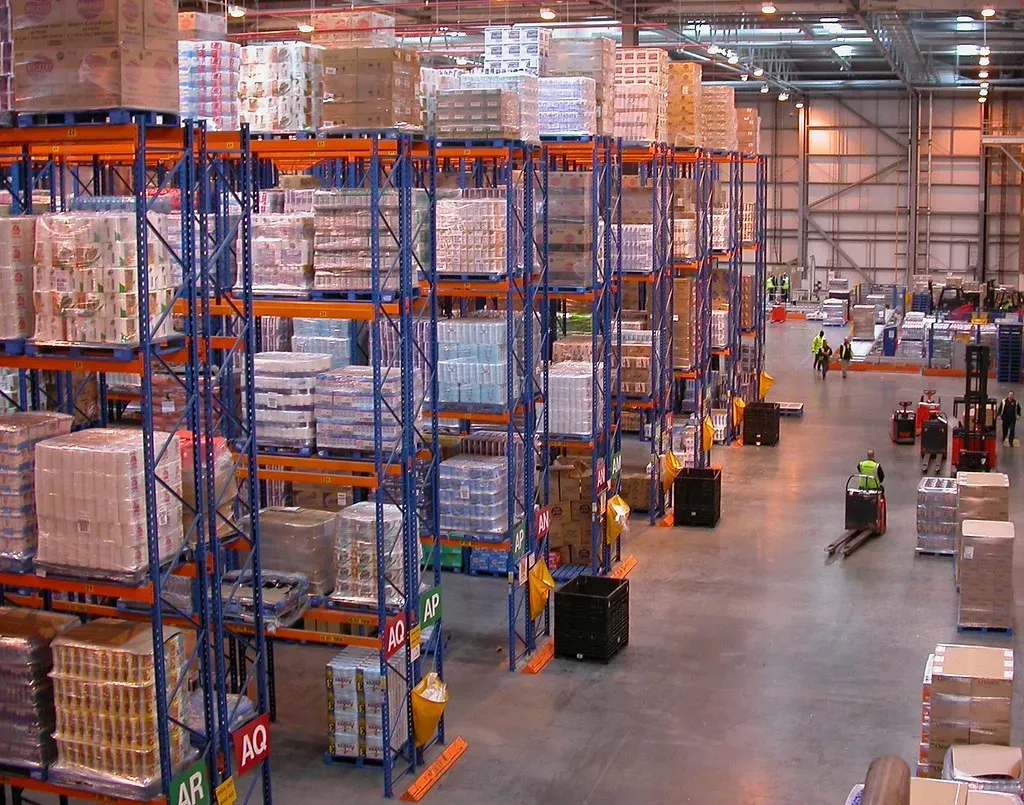
Let’s be real – when most people think about job growth in Las Vegas, they are not picturing warehouse workers in North Las Vegas or distribution center managers in Henderson. But they probably should be. Transportation and warehousing in Southern Nevada grew by 7,100 jobs in a single year, achieving a double-digit percentage growth rate – fueled almost entirely by the boom in online commerce.
Las Vegas’s warehouse labor force stands at over 52,000 workers and is expected to grow nearly 14 percent by 2033, according to CBRE Labor Analytics. The geography here is almost too perfect. About 24 percent of the U.S. population lives within a two-day drive of Nevada, making it a very attractive option for any business in e-commerce. That logistical sweet spot has attracted a wave of major operators.
Amazon alone has expanded its footprint in Southern Nevada significantly since 2019, growing from five facilities to over 20, including three cross-dock locations in Henderson and Las Vegas. Meanwhile, Prologis is developing an 11 million-square-foot industrial complex at Apex Industrial Park in North Las Vegas, one of the largest projects of its kind anywhere in the country. Amazon has also purchased 300 acres in El Dorado Valley for future use, with DIV Industrial acquiring an additional 94 acres for a project called El Dorado Valley Logistics Center.
A business-friendly tax climate, strong labor pool, and proximity to many major markets make Las Vegas an ideal location for warehousing and distribution operations. Nevada charges no corporate or personal income tax – a fact that continues to lure businesses away from neighboring California. Retail trade in Nevada was a key contributor to growth in Q4 2024, increasing by over 4 percent, with the recovery in e-commerce sales and logistics driving that strong result. The logistics sector is no longer a secondary story in Las Vegas. It has become one of the primary chapters.
Conclusion: Las Vegas Is Betting on More Than Just Gaming


The data is clear. Las Vegas is no longer a city where economic destiny is tied exclusively to who rolls the dice or how many tourists land at Harry Reid International Airport on a given weekend. That does not mean bellhops and bartenders are going away anytime soon – only that the region is slowly adding more white coats and warehouse vests to the sea of casino uniforms. The valley’s hiring map is shifting, not flipping overnight.
Healthcare is building long-term institutional depth. Construction is reshaping both the skyline and the housing stock. Logistics is quietly becoming the connective tissue of the entire western U.S. supply chain. In Q4 2024, the top five private industries contributing to the state’s total Gross State Product included healthcare and social assistance alongside real estate, accommodation, retail trade, and construction. Gaming did not make that list.
Las Vegas has always been a city that reinvents itself. The shift happening right now in its labor market might be the most consequential reinvention yet. So – did you really think healthcare workers and warehouse managers were outpacing casino dealers in Nevada’s fastest-growing city? What does that tell you about where America’s economy is actually heading?